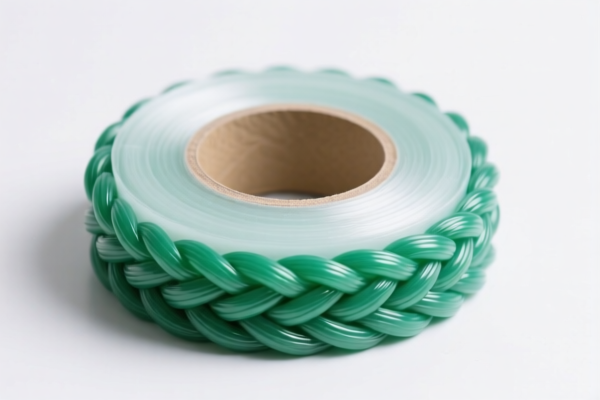
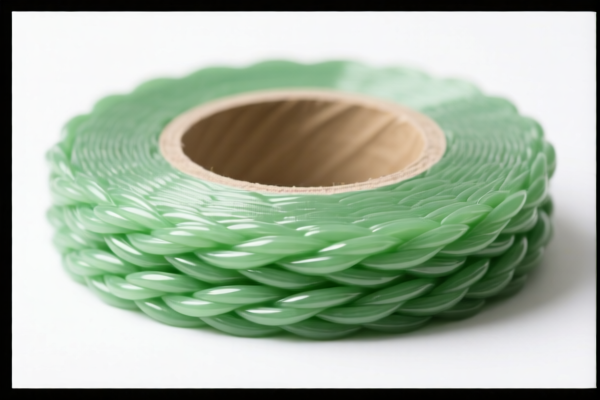
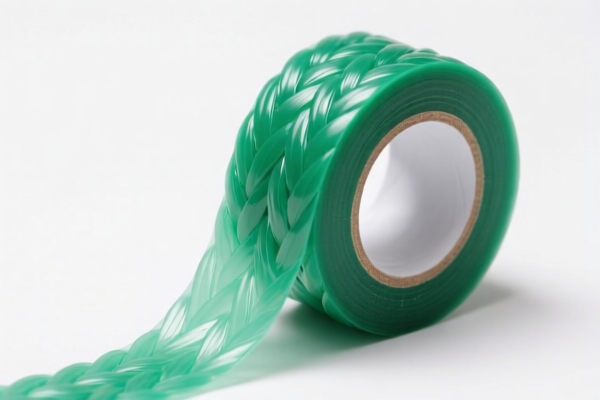
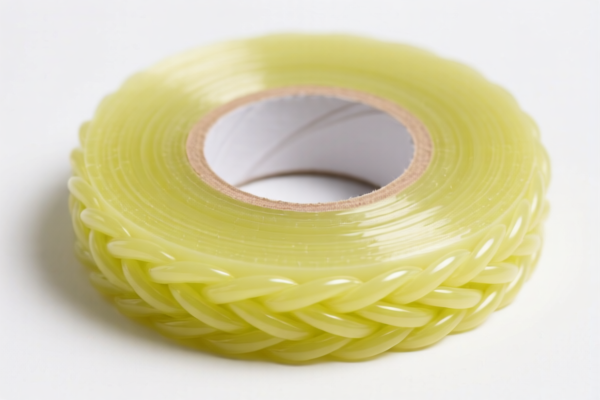
matte polypropylene tape
CN → US| HS Code | Tariff Rate | Origin | Destination | Doc |
|---|---|---|---|---|
| 5606000090 | 43.0% | CN | US | Official Doc |
| 3926903500 | 24.0% | CN | US | Official Doc |
| 3926909989 | 22.8% | CN | US | Official Doc |
| 3920200015 | 39.2% | CN | US | Official Doc |
| 3920200055 | 39.2% | CN | US | Official Doc |
Product Images
AI Analysis
🎀 Matte Polypropylene Tape (Matte PP Ribbon)
🌐 HS Code Reference & Clearance Guide | 2026 Latest Tariff Analysis | Professional Clearance Strategy
📌 I. Product Definition & Classification: What Exactly Is "Matte Polypropylene Tape"?
Matte Polypropylene Tape (often referred to as PP Ribbon, Satin Ribbon, or Decorative Tape) is a synthetic textile or plastic product widely used in gift wrapping, packaging, garment trimming, and handicrafts. In international trade, its classification depends heavily on two factors:
1. Material Structure: Is it considered a "Textile" (Yarn/Filament based) or a "Plastic Product" (Film/Sheet based)?
2. Physical Form: Is it processed into a "String/Braid" (Woven) or a "Flat Strip/Sheet" (Extruded)?
⚠️ Critical Distinction:
- If the tape is made by extruding PP film into a flat strip (common for satin/matte ribbons), it often falls under Plastics (Chapter 39).
- If the tape is made by weaving PP filaments (yarns), it is classified as a Textile Product (Chapter 56).
- Matte Finish: The "matte" surface is a cosmetic treatment and does not change the fundamental chemical composition, but it may affect whether it's viewed as a finished good or a raw material.
📦 II. HS Code Classification Details (2026 Latest Tariff Authority Comparison)
Based on the provided data, here are the 5 possible HS Codes with detailed explanations for each classification logic.
| HS Code | Product Description | Classification Logic & Summary | Tax Rate (Total) |
|---|---|---|---|
5606.00.00.90 |
Synthetic Fiber Tape (Textile Category) |
Logic: Classified as "Tapes & Similar Articles" made of Synthetic Fibers (Polypropylene). Assumes the tape is made from PP Filaments/Yarns (woven or braided). No elastomers involved. | 43.0% |
3926.90.35.00 |
Plastic Ribbon (Unbeaded) (Plastic Category) |
Logic: Classified as "Other Plastic Articles." Specifically for PP Plastic in the form of colorful ribbons/tapes that are not strung into beads. Fits the logic of general plastic decorations. | 24.0% |
3926.90.99.89 |
Other Plastic Tape (Plastic Category) |
Logic: Classified as "Other Plastic Articles." For PP Plastic in a form of colorful tape not specifically listed elsewhere. A "catch-all" for plastic tapes not fitting the "beaded" or specific decorative criteria. | 22.8% |
3920.20.00.15 |
Decorative PP Strip (Plastic Category) |
Logic: Classified under "Other Plates, Sheets, Film, Foil, and Strip" of Propylene Polymers. Specifically identified as a Strip/Belt used for decorative or gift wrapping purposes. | 39.2% |
3920.20.00.55 |
Other PP Polymer Strip (Plastic Category) |
Logic: Classified under "Other Plates, Sheets, Film, Foil, and Strip" of Polypropylene Polymers. A broader category for PP strips that don't fit specific sub-codes. | 39.2% |
🔍 Key Insight:
- Textile Path (5606): Highest tax (43%) but correct if the product is woven PP tape (yarn-based).
- Plastic Path (3926): Lower tax (22.8% - 24%) if the product is extruded PP film ribbon (common for satin/matte gift ribbons).
- Plastic Path (3920): Higher tax (39.2%) for PP strips used for decoration, often applied to packaging materials or industrial strips rather than loose ribbons.
💰 III. 2026 Latest Tariff Rate Breakdown (Including Surcharges & Policy Add-ons)
✅ Applicable Country: United States (US)
✅ Country of Origin: China (CN)
✅ Effective Date: 2025/2026 (Current Tariff Regime)
🎯 1. 5606.00.00.90 —— Synthetic Fiber Tape (Textile)
| Item | Detail |
|---|---|
| Base Rate | 8.0% |
| Section 301 Surcharge | +25.0% |
| 122 Clause Surcharge | +10.0% |
| Total Tax Rate | 43.0% |
| Tax Calculation | CIF Value × 43% |
| De Minimis Exemption | ❌ NOT Eligible |
| Legal Basis | Section 301 (301 Tariff List) + 122 Clause (Specific Chinese Import Restrictions) |
📌 Explanation:
- Base 8%: Standard MFN (Most Favored Nation) duty for synthetic fiber tapes.
- 25% Surcharge: Applied to all Chinese goods under Section 301 (List 3/4).
- 10% Surcharge: Specific "122 Clause" tariff targeting certain synthetic fiber/textile imports from China.
- Result: This is the highest cost option. Use only if the product is clearly woven PP tape.
🎯 2. 3926.90.35.00 —— Plastic Ribbon (Unbeaded)
| Item | Detail |
|---|---|
| Base Rate | 6.5% |
| Section 301 Surcharge | +7.5% |
| 122 Clause Surcharge | +10.0% |
| Total Tax Rate | 24.0% |
| Tax Calculation | CIF Value × 24% |
| De Minimis Exemption | ❌ NOT Eligible |
| Legal Basis | Section 301 (Applicable to other plastic articles) + 122 Clause |
📌 Explanation:
- Base 6.5%: Standard duty for other plastic articles.
- 7.5% Surcharge: Lower Section 301 rate for this specific plastic sub-category.
- 10% Surcharge: 122 Clause still applies.
- Result: Best tax rate among all options (24%). Ideal if the product is extruded PP ribbon (common for gift wrapping).
🎯 3. 3926.90.99.89 —— Other Plastic Tape
| Item | Detail |
|---|---|
| Base Rate | 5.3% |
| Section 301 Surcharge | +7.5% |
| 122 Clause Surcharge | +10.0% |
| Total Tax Rate | 22.8% |
| Tax Calculation | CIF Value × 22.8% |
| De Minimis Exemption | ❌ NOT Eligible |
| Legal Basis | Section 301 (Catch-all plastics) + 122 Clause |
📌 Explanation:
- Base 5.3%: Lowest base rate.
- 7.5% Surcharge: Same as above.
- 10% Surcharge: 122 Clause applies.
- Result: Lowest total tax rate (22.8%). Suitable if the product is a generic plastic tape not specifically listed as "beaded ribbon."
🎯 4. 3920.20.00.15 & 55 —— PP Polymer Strip/Deco Tape
| Item | Detail |
|---|---|
| Base Rate | 4.2% |
| Section 301 Surcharge | +25.0% |
| 122 Clause Surcharge | +10.0% |
| Total Tax Rate | 39.2% |
| Tax Calculation | CIF Value × 39.2% |
| De Minimis Exemption | ❌ NOT Eligible |
| Legal Basis | Section 301 (Full 25% applies to PP strips) + 122 Clause |
📌 Explanation:
- Base 4.2%: Very low base rate for PP strips.
- 25% Surcharge: Full Section 301 rate applies (higher than the 7.5% for other plastics).
- 10% Surcharge: 122 Clause applies.
- Result: High tax (39.2%). Avoid unless the product is strictly defined as a PP strip for industrial/packaging use, not a loose ribbon.
🛠️ IV. Practical Clearance Advice (Pitfall Avoidance Guide)
✅ 1. Preparation Checklist (Non-negotiable)
| Document | Required | Explanation |
|---|---|---|
| ✅ Product Specification Sheet | ✔️ | Must specify Material: PP (Polypropylene). Form: Ribbon/Tape/Strip. Width: e.g., 3mm, 10mm. Usage: Gift wrapping, decoration. |
| ✅ Product Photos | ✔️ | Clear images showing texture (Matte/Satin) and cross-section (to prove if it's woven or extruded film). |
| ✅ Commercial Invoice | ✔️ | Description: "Matte Polypropylene Ribbon, for Gift Wrapping". Avoid vague terms like "Plastic Tape." |
| ✅ Packing List | ✔️ | Specify if goods are in rolls or cut strips. |
| ✅ HS Code Pre-Ruling | ✔️ | Strongly Recommended: Apply for an Advance Ruling from CBP to confirm 3926.90.35.00 vs 5606.00.00.90. |
✅ 2. Declaration Strategy (Key Mnemonics)
🔥 "Material Matters: Woven = 5606 (43%), Extruded = 3926 (24%)!"
| Scenario | Recommended HS Code | Tax Rate | Risk |
|---|---|---|---|
| Woven PP Tape (Yarn-based, textile-like) | 5606.00.00.90 |
43% | High tax, but correct if woven. |
| Extruded PP Ribbon (Film-based, satin/matte) | 3926.90.35.00 |
24% | Best Option. Low tax, correct for gift ribbons. |
| Generic PP Strip (Industrial/Packaging) | 3920.20.00.15 |
39.2% | High tax due to 25% surcharge. |
| Unlisted Plastic Tape | 3926.90.99.89 |
22.8% | Lowest tax, but may trigger CBP inquiry. |
📌 Critical Tip:
- Most "Matte Polypropylene Tape" for gift wrapping/decoration is extruded film, not woven. Therefore,3926.90.35.00(24%) or3926.90.99.89(22.8%) is usually the correct and cost-effective classification.
- Do not classify extruded PP ribbon as5606.00.00.90(43%) just because it looks like fabric. This will lead to underpayment penalties.
✅ 3. Special Cases
| Case | Handling Advice |
|---|---|
| Product with Beads | If beads are strung, it may fall under different codes. If unbeaded (as per data), 3926.90.35.00 is ideal. |
| Elastic PP Tape | If elastomers are involved, 5606 classification changes. The data specifies no elastomers, so stick to standard 5606 or 3926. |
| Mixed Shipment | If shipping both woven tape and extruded ribbon, separate declarations are required to apply correct rates. |
🌍 V. Global Market Comparison (2026)
| Country | Recommended HS Code | Tax Rate | Note |
|---|---|---|---|
| 🇺🇸 USA | 3926.90.35.00 |
24% | Best for extruded PP ribbon. |
| 🇨🇳 China | 3926.90.35.00 |
~6-10% | Low import duty, no Section 301. |
| 🇪🇺 EU | 3926.90.99 |
~4-6% | No US-style surcharges. |
| 🇬🇧 UK | 3926.90.99 |
~4-6% | Post-Brexit tariffs apply. |
📌 Conclusion:
- The US is the most expensive market due to Section 301 (25% or 7.5%) and 122 Clause (10%).
- For Matte PP Tape, aiming for3926.90.35.00(24%) is the strategic best practice for extruded ribbons.
📌 VI. Common Errors & Pitfalls (Lessons Learned)
❌ Error 1: Classifying extruded PP ribbon as 5606.00.00.90 (Textile).
👉 Consequence: Pay 43% tax instead of 24%. Overpayment of ~19%!
❌ Error 2: Classifying woven PP tape as 3926.90.99.89 (Plastic).
👉 Consequence: CBP rejects declaration, demands reclassification to 5606, leading to delays + penalties.
❌ Error 3: Omitting "Matte" or "Satin" in description.
👉 Consequence: CBP may classify as "plain plastic strip" (3920), triggering 39.2% tax due to higher Section 301 rate.
❌ Error 4: Using "Plastic Tape" without specifying Polypropylene (PP).
👉 Consequence: CBP may assume PVC or PE, leading to incorrect HS Code and audit risk.
✅ Correct Declaration Example:
"Matte Polypropylene Ribbon, Extruded, for Gift Wrapping, Width: 10mm, No Beads, HS Code: 3926.90.35.00"
🎯 VII. Conclusion: Precision Saves Money!
🎯 Key Takeaway:
🔹 "Woven = 5606 (43%) | Extruded = 3926 (24%)"
🔹 "Matte PP Ribbon for Gifts? Use 3926.90.35.00 to save 19%!"
🔹 "Always confirm material structure: Filament (Textile) vs. Film (Plastic)."
📌 Pro Tip:
If your product is extruded PP ribbon (most common for matte/satin gift ribbons), apply for an HS Code Pre-Ruling to lock in the 24% rate under 3926.90.35.00. This is the safest and most cost-effective strategy for the US market.
📣 Immediate Action:
📞 Verify Product Structure: Is it woven or extruded?
📄 Prepare Tech Specs: Show PP polymer structure.
🚀 Declare Accurately: Avoid the 43% trap!
💼 Profit Margin Protection: Save 19% tax with correct classification!
✨ Professional Clearance, Starts with Precise Classification!
💼 Every Percent Saved is Pure Profit!
Customer Reviews
About HS Code Classification
The Harmonized System (HS) is an internationally standardized nomenclature developed by the World Customs Organization (WCO) to classify traded products. Over 200 countries use the HS system as the basis for customs tariffs, trade statistics, and import/export regulations.
Each HS code follows a hierarchical structure:
- Chapter (2 digits) — Broad category of goods (e.g., Chapter 84: Machinery and Mechanical Appliances)
- Heading (4 digits) — More specific grouping within the chapter
- Subheading (6 digits) — Internationally standardized breakdown, used by all WCO member countries
- National subdivisions (8-10 digits) — Country-specific extensions for further classification, such as US HTSUS 10-digit codes
Correct HS code classification is essential for smooth customs clearance, accurate duty payment, and compliance with trade regulations. Misclassification can lead to customs delays, overpayment of duties, or penalties.
When importing from CN to US, the applicable tariff rates may include:
- Most-Favored-Nation (MFN) rate — The standard duty rate applied to WTO members
- General rate — Applied to countries without trade agreements
- Trade remedy duties — Additional tariffs such as Section 301 (anti-dumping), Section 232 (national security), or countervailing duties
The information provided on this page is for reference purposes only. For official classification, please consult with your local customs authority or a licensed customs broker.