mbs rubber additive
CN → US| HS Code | Tariff Rate | Origin | Destination | Doc |
|---|---|---|---|---|
| 3812105000 | 40.0% | CN | US | Official Doc |
| 2934201000 | 41.5% | CN | US | Official Doc |
| 2934201500 | 41.5% | CN | US | Official Doc |
| 3812101000 | 41.5% | CN | US | Official Doc |
| 2930306000 | 38.7% | CN | US | Official Doc |
Product Images
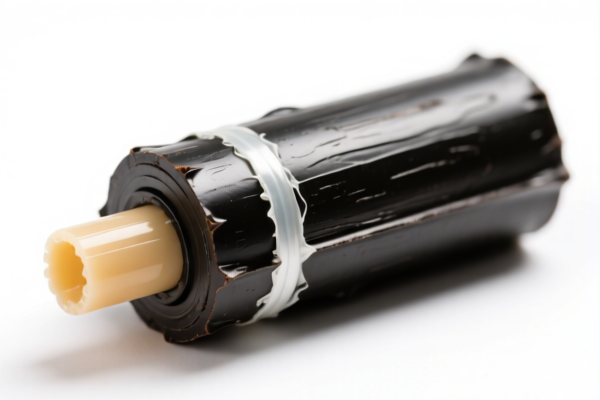
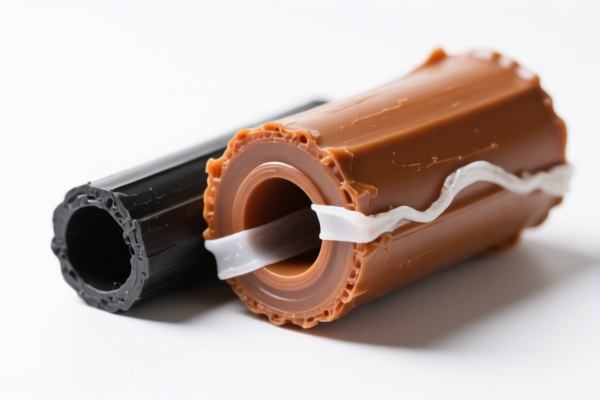
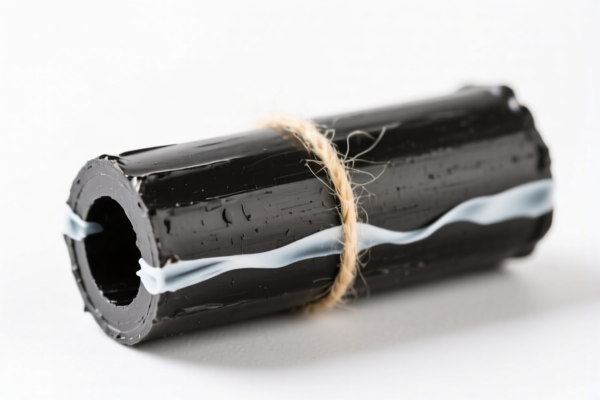
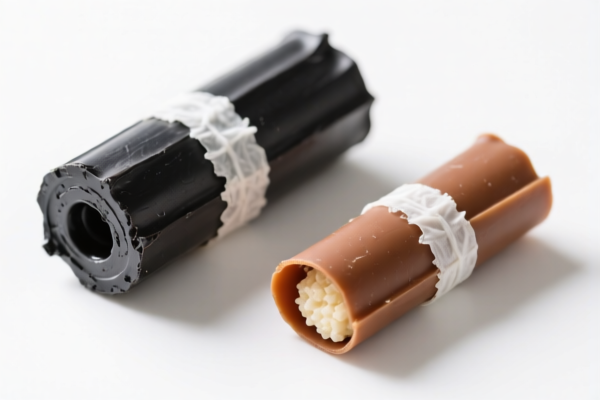
AI Analysis
🧪 MBTS Rubber Additive (2-Mercaptobenzothiazole)
🌐 HS Code Classification & Customs Clearance Guide | 2026 Tax Rate Analysis | Strategic Trade Strategy
📌 Part 1: Product Definition & Chemical Identity – What is MBTS?
MBTS (2-Mercaptobenzothiazole) is a vital rubber accelerating agent used primarily in the vulcanization of natural and synthetic rubbers. In international trade, its classification depends on whether it is declared by its chemical structure (Harmonized System Chapter 29) or its functional use (Chapter 38).
Two Main Classification Logics: 1. Chemical Structure Route (Chapter 29): MBTS contains a benzothiazole heterocyclic ring. It is classified as an organic heterocyclic compound. 2. Functional Use Route (Chapter 38): MBTS is a specialized additive for rubber processing. It is classified as a rubber preparation/auxiliary agent.
⚠️ Key Distinction Point:
- If the focus is on molecular structure (pure chemical substance) → Go to Chapter 29.
- If the focus is on industrial application (rubber vulcanization accelerator) → Go to Chapter 38.
- Note: The choice significantly impacts the Total Tax Rate (Base + Section 301 + Section 232/IEEPA).
📦 Part 2: Detailed HS Code Classification Matrix (2026 Latest Tariff Schedule)
The following table maps the 5 specific HS Codes from the provided data to their logical justifications and tax implications.
| HS Code | Classification Logic / Summary | Primary Basis | Total Tax Rate |
|---|---|---|---|
3812.10.50.00 |
Rubber Auxiliary Agent: MBTS is classified as "Other rubber accelerators." | Functional Use: It is used specifically to accelerate rubber vulcanization. | 40.0% |
2934.20.10.00 |
Heterocyclic Compound: MBTS contains a benzothiazole ring structure, fitting organic heterocyclic compounds. | Chemical Structure: Based on the IUPAC chemical classification of the benzothiazole ring. | 41.5% |
2934.20.15.00 |
Benzothiazole Derivative: Specifically for 2-mercaptobenzothiazole, matching the benzothiazole ring definition. | Chemical Structure: More specific sub-heading for benzothiazole derivatives. | 41.5% |
3812.10.10.00 |
Aromatic Rubber Accelerator: MBTS is an aromatic rubber accelerator, matching material and use. | Functional Use: Emphasizes the aromatic nature and rubber-specific application. | 41.5% |
2930.30.60.00 |
Other Sulfur Organic Compounds: Fallback category for sulfur-containing organic compounds not specified elsewhere. | Chemical Composition: Broad category for organosulfur compounds if specific heterocyclic codes don't apply. | 38.7% |
🔍 Critical Insight:
- The Tax Rate Variance ranges from 38.7% to 41.5%. - Chapter 29 codes generally carry a higher base rate (6.5%) compared to Chapter 38.10.10 (6.5%) or 38.12.50 (5.0%). - 2930.30.60.00 offers the lowest total tax (38.7%) due to a lower base rate (3.7%), but it is a "residual" category and may face stricter scrutiny regarding its applicability vs. specific heterocyclic codes.
💰 Part 3: Detailed Tariff Breakdown (US Import Context)
✅ Applicable Country: United States (US)
✅ Country of Origin: China (CN)
✅ Effective Date: Post-2025 Trade Policies (Section 301 & IEEPA)
🎯 1. High Tax Bracket: 2934.20.10.00, 2934.20.15.00, 3812.10.10.00
Total Tax: 41.5%
| Component | Rate | Description |
|---|---|---|
| Base Tariff | 6.5% | Standard MFN rate for Heterocyclic Compounds (Ch 29) or Specific Rubber Agents (Ch 38). |
| Section 301 Tariff | 25.0% | Additional duties on Chinese goods under US Trade Act Section 301. |
| IEEPA / Sec 232 | 10.0% | Additional tariff applicable to certain industrial/chemical imports from China. |
| TOTAL | 41.5% | Calculation: (Base + 25% + 10%) applied to CIF value. |
📌 Explanation:
- These codes represent the most common and defensible classifications for MBTS based on strict chemical or functional definitions.
- The 6.5% base rate is standard for these specific subheadings.
- The 35% additional duty (25% + 10%) is mandatory for Chinese-origin goods.
🎯 2. Mid Tax Bracket: 3812.10.50.00
Total Tax: 40.0%
| Component | Rate | Description |
|---|---|---|
| Base Tariff | 5.0% | Standard MFN rate for "Other" rubber accelerators. |
| Section 301 Tariff | 25.0% | Additional duties under Section 301. |
| IEEPA / Sec 232 | 10.0% | Additional tariff. |
| TOTAL | 40.0% | Calculation: (5% + 25% + 10%) applied to CIF value. |
📌 Advantage:
- Saves 1.5% compared to the Chapter 29 codes due to the lower 5.0% base rate.
- Risk: Must prove it is strictly a "rubber accelerator" and not a general chemical.
🎯 3. Low Tax Bracket: 2930.30.60.00
Total Tax: 38.7%
| Component | Rate | Description |
|---|---|---|
| Base Tariff | 3.7% | Standard MFN rate for "Other sulfur organic compounds." |
| Section 301 Tariff | 25.0% | Additional duties under Section 301. |
| IEEPA / Sec 232 | 10.0% | Additional tariff. |
| TOTAL | 38.7% | Calculation: (3.7% + 25% + 10%) applied to CIF value. |
⚠️ Caution:
- This is the cheapest option but also the riskiest.
- Customs may argue that MBTS is specifically a heterocyclic compound (Ch 29) or rubber agent (Ch 38), making "Other Sulfur Organic Compounds" (Ch 29) an incorrect classification.
- Only use if you have strong legal justification or a prior ruling.
🛠️ Part 4: Customs Clearance Practical Advice (Pitfall Avoidance)
✅ 1. Documentation Checklist (Essential for Clearance)
| Document | Required? | Purpose |
|---|---|---|
| Product Specification Sheet | ✔️ | Must list CAS Number (149-30-4), Purity %, and Physical State. |
| Certificate of Analysis (COA) | ✔️ | Proves chemical composition and purity. |
| Letter of Declaration | ✔️ | Clearly state intended use: "Rubber Vulcanization Accelerator." |
| Structure Diagram | ✔️ | For Ch 29 codes, show the Benzothiazole ring to justify heterocyclic classification. |
| Supply Chain Proof | ✔️ | To confirm Country of Origin (China) for Section 301 application. |
| Safety Data Sheet (SDS) | ✔️ | Required for hazardous material handling (MBTS is an irritant). |
✅ 2. Declaration Strategy
🔥 "Specify Use, Prove Structure!"
| Scenario | Recommended HS Code | Reasoning |
|---|---|---|
| Pure Chemical, Lab Grade | 2934.20.10.00 or 2934.20.15.00 |
Strongest chemical justification. High certainty. |
| Industrial Grade, Rubber Additive | 3812.10.50.00 |
Best balance of Lower Tax (40%) and High Certainty. |
| Uncertain Classification | 2930.30.60.00 |
High Risk. Only use if legal counsel advises. Potential for reclassification & penalties. |
💡 Pro Tip:
- If you choose3812.10.50.00, explicitly label the commercial invoice as "Rubber Accelerator MBTS".
- If you choose2934.20.10.00, label it as "2-Mercaptobenzothiazole, Heterocyclic Compound".
- Do not mix descriptions. Consistency between documents, labels, and HS code is critical.
✅ 3. Special Cases
| Case | Action |
|---|---|
| Mixed Containers | If MBTS is mixed with other chemicals, declare separately. Mixed shipments complicate classification. |
| Small Quantity Samples | Still subject to Section 301. De minimis exemption ($800) may apply if shipped via Section 321, but verify current rules. |
| Pre-Ruling Request | For large volumes, request a US Customs Binding Ruling to lock in the HS code and tax rate. |
🌍 Part 5: Global Market Comparison (2026)
| Region | Recommended HS Code | Est. Total Duty (China Origin) | Key Requirement |
|---|---|---|---|
| 🇺🇸 USA | 3812.10.50.00 or 2934.20.10.00 |
40.0% - 41.5% | Strict Section 301 + IEEPA enforcement. |
| 🇨🇳 China (Import) | 2934.20.10.00 |
Low/Moderate | Focus on chemical purity standards. |
| 🇪🇺 EU | 2934.20.10.00 |
~6.5% (No Section 301) | REACH Registration required for sulfur compounds. |
| 🇮🇳 India | 2934.20.10.00 |
Varies | BIS Certification may be needed. |
📌 Conclusion:
- USA is the most expensive market due to additive tariffs.
- EU and China have lower barriers but strict chemical safety regulations (REACH, GB Standards).
📌 Part 6: Common Errors & Pitfalls (Lessons Learned)
❌ Error 1: Using 2930.30.60.00 without justification.
👉 Result: Customs may reclassify to 2934.20.10.00, resulting in back taxes + interest.
❌ Error 2: Declaring as "Chemical Raw Material" without specifying "Rubber Accelerator."
👉 Result: Ambiguity leads to delays, possible inspection, and potential misclassification.
❌ Error 3: Ignoring Section 301 and IEEPA rates.
👉 Result: Underpayment of duties by 35%. Severe penalties.
✅ Correct Approach:
"MBTS (2-Mercaptobenzothiazole), CAS 149-30-4, Purity ≥98%, Used as Rubber Vulcanization Accelerator. HS Code: 3812.10.50.00."
🎯 Part 7: Conclusion – Professional Classification, Cost Optimization!
🎯 Key Takeaways:
1. Best Balance: 3812.10.50.00 (40.0%) offers a lower base rate than Chapter 29 codes and is functionally accurate.
2. Safest Chemical Classification: 2934.20.10.00 (41.5%) is robustly justified by chemical structure.
3. Highest Risk/Lowest Reward: 2930.30.60.00 (38.7%) is tempting but risky. Only use with legal backing.
🔹 "Structure vs. Function: Choose your path wisely."
🔹 "40% vs 41.5%: A 1.5% saving can make a difference in bulk contracts."
🔹 "Never ignore Section 301: It’s 35% of your cost!"
📌 Final Recommendation:
For most commercial shipments of MBTS Rubber Additive, 3812.10.50.00 is the optimal choice for balancing tax efficiency (40%) and classification compliance. Ensure all documentation explicitly states its use as a rubber accelerator to support this classification.
✨ Precision in Classification = Precision in Profit.
💼 Let every dollar count in your supply chain.
Customer Reviews
About HS Code Classification
The Harmonized System (HS) is an internationally standardized nomenclature developed by the World Customs Organization (WCO) to classify traded products. Over 200 countries use the HS system as the basis for customs tariffs, trade statistics, and import/export regulations.
Each HS code follows a hierarchical structure:
- Chapter (2 digits) — Broad category of goods (e.g., Chapter 84: Machinery and Mechanical Appliances)
- Heading (4 digits) — More specific grouping within the chapter
- Subheading (6 digits) — Internationally standardized breakdown, used by all WCO member countries
- National subdivisions (8-10 digits) — Country-specific extensions for further classification, such as US HTSUS 10-digit codes
Correct HS code classification is essential for smooth customs clearance, accurate duty payment, and compliance with trade regulations. Misclassification can lead to customs delays, overpayment of duties, or penalties.
When importing from CN to US, the applicable tariff rates may include:
- Most-Favored-Nation (MFN) rate — The standard duty rate applied to WTO members
- General rate — Applied to countries without trade agreements
- Trade remedy duties — Additional tariffs such as Section 301 (anti-dumping), Section 232 (national security), or countervailing duties
The information provided on this page is for reference purposes only. For official classification, please consult with your local customs authority or a licensed customs broker.