mc4 connector
CN → US| HS Code | Tariff Rate | Origin | Destination | Doc |
|---|---|---|---|---|
| 8536694020 | 35.0% | CN | US | Official Doc |
| 8536694010 | 35.0% | CN | US | Official Doc |
Product Images
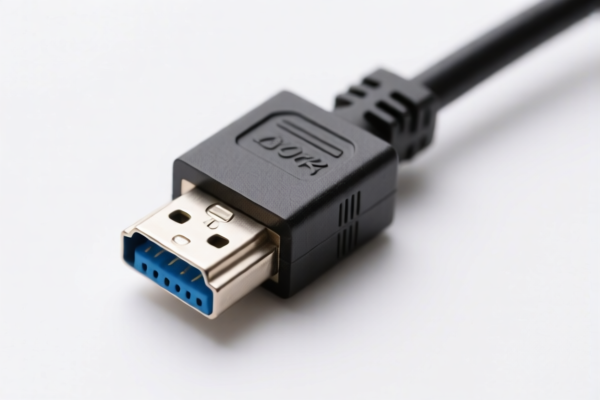
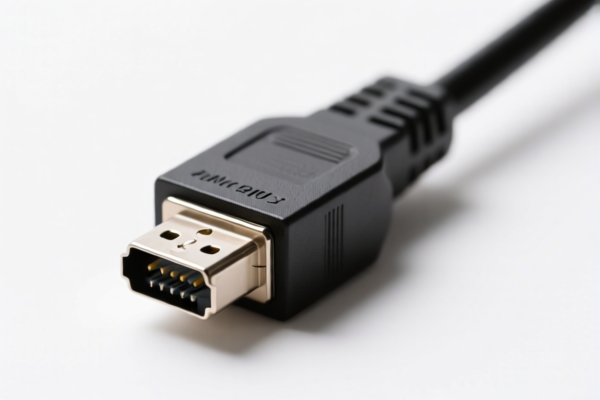
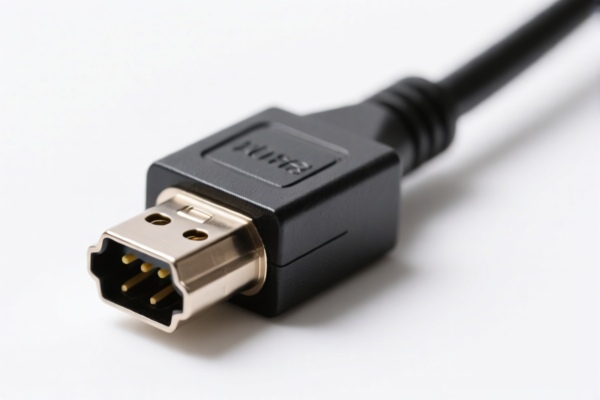
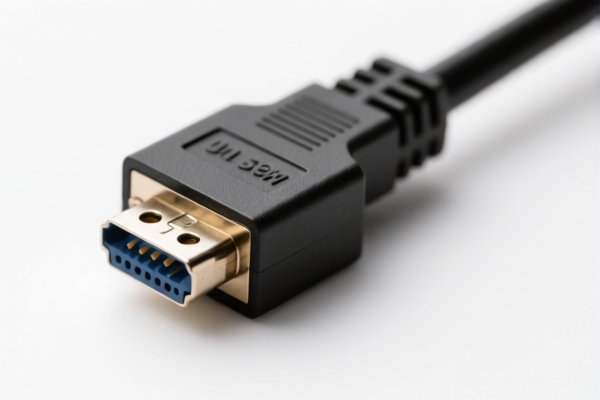
AI Analysis
🔌 MC4 Connectors (Photovoltaic Interconnects)
🌐 HS Code Reference & Customs Clearance Guide | 2026 Latest Tariff Analysis | Professional Clearance Strategy
📌 I. Product Definition & Classification: Do You Really Understand "MC4 Connectors"?
MC4 connectors are the industry-standard photovoltaic (PV) connectors used to connect solar panels to each other and to inverters or junction boxes. In international trade, they are classified as electrical apparatus for making connections to electrical circuits.
While they look like simple plugs, their classification depends heavily on their electrical properties and voltage rating. They are generally categorized under Chapter 85 (Electrical machinery and equipment), specifically for apparatus for making connections for voltages not exceeding 1,000 V.
⚠️ Key Distinction:
- If the connector is a standard photovoltaic interconnect rated ≤ 1,000V → It falls under 8536.69 (Other connectors).
- If it is a specialized coaxial or multicontact type within that range → It falls under specific sub-headings of 8536.69.40.
- Crucial Note: MC4 connectors are NOT simple plugs/sockets (8536.31) but are considered "other connectors" due to their locking mechanism and specific PV application, often classified under 8536.69.
📦 II. HS Code Classification Details (2026 Latest Tariff Authority Comparison)
Based on the provided data, MC4 connectors (being photovoltaic connectors typically rated ≤ 1,000V) fall into the following categories under 8536.69:
| HS Code | Product Description | Applicable Scenario | Voltage Rating |
|---|---|---|---|
8536.69.40.10 |
Coaxial Connectors | Specialized PV systems using coaxial transmission for signal/power hybrid? Note: Standard MC4 is usually not coaxial, but if declared as such or similar multicontact cylindrical connectors. | ≤ 1,000 V |
8536.69.40.20 |
Cylindrical Multicontact Connectors | Standard MC4 Connectors (Male/Female), ribbon/flat cable connectors, rack & panel connectors. Most PV MC4 plugs fall here as "other cylindrical multicontact connectors." | ≤ 1,000 V |
🔍 Important Clarification:
- Standard MC4 connectors are cylindrical and multicontact (typically 2 pins: positive/negative). Therefore,8536.69.40.20is the most likely accurate classification for standard MC4 PV connectors.
- If the connector is specifically designed as a coaxial type (rare for standard MC4, more common in RF applications), it would be8536.69.40.10.
- Do not classify under 8536.30 (Plugs and sockets) unless explicitly stated as such, as customs often prioritize the more specific "connector" category for industrial PV components.
💰 III. 2026 Latest Tariff Rate Details (Including Surcharge & Policy Add-ons)
✅ Applicable Country: United States (US)
✅ Origin: China (CN)
✅ Effective Date: From November 10, 2025 (and subsequent imports)
🎯 1. 8536.69.40.20 —— Cylindrical Multicontact Connectors (Standard MC4)
| Item | Content |
|---|---|
| Basic Tariff Rate | 0.0% (ad valorem) |
| USITC Surcharge | +25.0% (Section 301 Tariff) |
| Total Tax Rate | 25.0% |
| Tax Calculation | CIF Value × 25% |
| De Minimis Eligibility | ❌ No (Deny De Minimis) |
| Legal Basis Path | USITC:8536.69.40.20 → FOOTNOTE:301.8536.69.40.20 |
📌 Explanation:
- The base tariff for this subheading is 0%, meaning the standard MFN rate is zero.
- However, due to Section 301 tariffs against Chinese goods, a 25% surcharge is applied.
- Total Effective Tax: 25%.
- This is a high-cost item for importers; cost calculation must include this 25% levy.
🎯 2. 8536.69.40.10 —— Coaxial Connectors
| Item | Content |
|---|---|
| Basic Tariff Rate | 0.0% (ad valorem) |
| USITC Surcharge | +25.0% (Section 301 Tariff) |
| Total Tax Rate | 25.0% |
| Tax Calculation | CIF Value × 25% |
| De Minimis Eligibility | ❌ No (Deny De Minimis) |
| Legal Basis Path | USITC:8536.69.40.10 → FOOTNOTE:301.8536.69.40.10 |
📌 Note:
- Same tariff structure as above.
- Even if classified as coaxial, the 25% surcharge remains.
🛠️ IV. Customs Clearance Practical Advice (Real-World Pitfall Avoidance)
✅ 1. Required Documentation Checklist (Mandatory)
| Document | Must Provide | Explanation |
|---|---|---|
| ✅ Product Specification Sheet | ✔️ | Must clearly state voltage rating (≤ 1,000V), current rating (e.g., 30A), and insulation class. |
| ✅ Photos (Clear Labels) | ✔️ | Show the connector housing, metal pins, and any UL/CE marks. |
| ✅ Commercial Invoice | ✔️ | Must describe as "PV Connector, MC4 Type, Cylindrical Multicontact" – avoid vague terms like "plastic plug." |
| ✅ Certificate of Origin (CO) | ✔️ | To prove origin (China) for tariff application. |
| ✅ UL/CE Test Reports | ✔️ | Crucial for PV components to prove safety compliance. |
| ✅ Packing List | ✔️ | Detail quantity and unit price clearly. |
✅ 2. Declaration Tips (Key Mantra)
🔥 “Be Precise: Say ‘Multicontact’, Not ‘Plug’; Declare Voltage, Avoid ‘De Minimis’!”
| Situation | Correct Declaration | Wrong Practice |
|---|---|---|
| Standard MC4 PV Connector | 8536.69.40.20 - Cylindrical Multicontact Connector |
Declare as "Plastic Plug" (8536.31) → Risk of misclassification & penalty |
| Connector + Wire Harness | Declare as Connector if harness is minimal; otherwise, consider Assembly | Splitting connector and wire to lower tax → HIGH RISK |
| Voltage > 1,000 V | NOT in this HS Code → Falls under 8536.90 or 8537 | Declare ≤ 1,000V falsely → Smuggling/Fraud |
| Coaxial Type (RF) | 8536.69.40.10 |
Declare as "Cylindrical" → May trigger audit |
📌 Critical Warning:
- Do NOT use the "De Minimis" exemption ($800) for MC4 connectors from China. The 25% tariff applies, and shipments are not eligible for de minimis clearance.
- Ensure the description explicitly mentions "Photovoltaic" and "≤ 1,000 V" to justify the 8536.69 classification.
✅ 3. Special Case Handling
| Situation | Handling Advice |
|---|---|
| OEM Custom MC4 | Provide customer PO and technical drawings. Ensure specs match standard MC4 to avoid reclassification. |
| MC4 with Integrated Surge Protection | May shift to 8536.90 (Other apparatus). Requires additional documentation and potentially higher tariffs. Consult a broker. |
| Kit with MC4 + Cable | If sold as a "Kit," declare the primary component (Connector). If cable value dominates, consider 8544 (Insulated wires). |
| Non-Chinese Origin | If sourced from Vietnam/Malaysia, provide CO to avoid the 25% surcharge. |
🌍 V. Global Market Clearance Comparison (2026 Latest)
| Country/Region | Recommended HS Code | Tariff (China Origin) | Certification Required | Notes |
|---|---|---|---|---|
| 🇺🇸 USA | 8536.69.40.20 |
25% | UL/CE | High tariff; no de minimis |
| 🇨🇳 China | 8536.69.40.20 |
0% | CCC (if applicable) | Domestic trade |
| 🇪🇺 EU | 8536.69.90 |
0% | CE | RoHS compliance mandatory |
| 🇦🇺 Australia | 8536.69.90 |
5% | RCM | Standard PV safety |
| 🇯🇵 Japan | 8536.69.90 |
0% | PSE | Quality certification critical |
📌 Conclusion:
- USA is the only major market imposing the 25% surcharge on Chinese-origin MC4 connectors.
- Cost Optimization: Consider sourcing MC4 connectors from Vietnam, Malaysia, or Thailand to avoid the 25% US surcharge.
- EU/Australia are more favorable with 0-5% tariffs.
📌 VI. Common Errors & Pitfall Guide (Lessons Learned)
❌ Error 1: Declaring MC4 as "Plastic Plug" (8536.31)
👉 Consequence: Customs may reclassify to 8536.69, apply 25% tariff retroactively, and issue a penalty.
❌ Error 2: Claiming "De Minimis" for $800 shipments of MC4 connectors from China
👉 Consequence: Shipment seized or returned; 25% tax still owed + storage fees.
❌ Error 3: Vague Description "Solar Connector"
👉 Consequence: Customs requests additional documentation, causing delay (7-14 days).
❌ Error 4: Ignoring Voltage Rating
👉 Consequence: If > 1,000V, it’s not 8536.69 → Misclassification Risk.
✅ Correct Approach:
"MC4 Photovoltaic Connector, Cylindrical Multicontact, 1000V DC, 30A, UL Certified, Model XYZ"
🎯 VII. Conclusion: Professional Declaration, Save Money, Avoid Delays!
🎯 Remember the Mantra:
🔹 "MC4 is Cylindrical Multicontact, not a simple plug."
🔹 "25% Tax for China, No De Minimis, Be Precise!"
🔹 "Origin Matters: Vietnam/Malaysia = 0% US Tariff!"
📌 Pro Tip:
If your supply chain allows, shift sourcing to non-Chinese countries for US-bound MC4 connectors to save 25% on every shipment.
For US imports, always apply for an Advance Ruling if you have large volumes to lock in the HS Code and avoid disputes.
📣 Immediate Action:
📞 Contact a licensed customs broker + Provide UL Reports + Verify Origin
🚀 Clear Your PV Connectors Smoothly, Maximize Profits, Stay Compliant!
✨ Professional Clearance Starts with Accurate Classification!
💼 Every Percent of Tax Matters – Don’t Leave Money on the Table!
Customer Reviews
About HS Code Classification
The Harmonized System (HS) is an internationally standardized nomenclature developed by the World Customs Organization (WCO) to classify traded products. Over 200 countries use the HS system as the basis for customs tariffs, trade statistics, and import/export regulations.
Each HS code follows a hierarchical structure:
- Chapter (2 digits) — Broad category of goods (e.g., Chapter 84: Machinery and Mechanical Appliances)
- Heading (4 digits) — More specific grouping within the chapter
- Subheading (6 digits) — Internationally standardized breakdown, used by all WCO member countries
- National subdivisions (8-10 digits) — Country-specific extensions for further classification, such as US HTSUS 10-digit codes
Correct HS code classification is essential for smooth customs clearance, accurate duty payment, and compliance with trade regulations. Misclassification can lead to customs delays, overpayment of duties, or penalties.
When importing from CN to US, the applicable tariff rates may include:
- Most-Favored-Nation (MFN) rate — The standard duty rate applied to WTO members
- General rate — Applied to countries without trade agreements
- Trade remedy duties — Additional tariffs such as Section 301 (anti-dumping), Section 232 (national security), or countervailing duties
The information provided on this page is for reference purposes only. For official classification, please consult with your local customs authority or a licensed customs broker.