measuring ruler
CN → US| HS Code | Tariff Rate | Origin | Destination | Doc |
|---|---|---|---|---|
| 9017800000 | 40.3% | CN | US | Official Doc |
| 9017208080 | 39.6% | CN | US | Official Doc |
| 9017308000 | 38.9% | CN | US | Official Doc |
| 9031200000 | 36.7% | CN | US | Official Doc |
| 9017208040 | 39.6% | CN | US | Official Doc |
Product Images
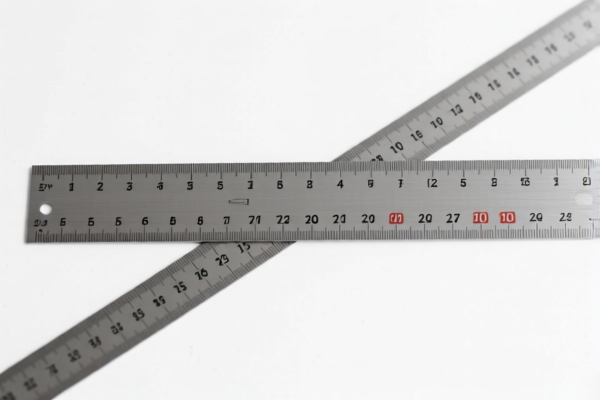
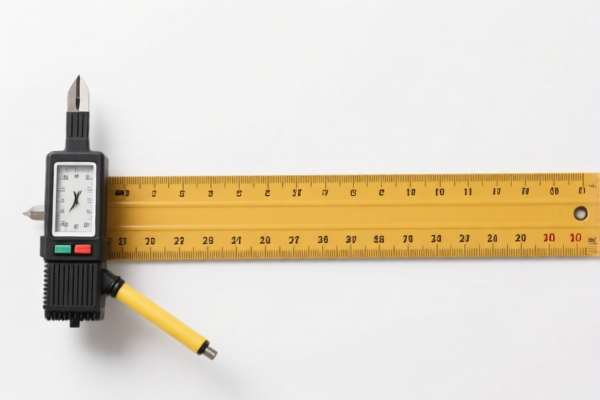
AI Analysis
📏 Measuring Ruler (Handheld Length Measuring Instruments)
🌐 HS Code Reference & Customs Clearance Guide | 2026 Latest Tariff Analysis | Professional Level Strategy
📌 Part 1: Product Definition and Classification: Do You Really Understand the "Measuring Ruler"?
A measuring ruler is a fundamental tool for length measurement. In international trade, it is classified based on its precision level, material, and specific mechanical/electronic features. While often perceived as a simple tool, customs authorities scrutinize these items under Chapter 90 (Optical, Photographic, Cinematographic, Measuring, Checking, Precision, Medical or Surgical Instruments).
⚠️ Key Distinction Points:
- General Purpose/Simple Tools: Basic steel/plastic rulers, tape measures without complex indexing → Often fall under 9017 (General Measuring Instruments).
- Precision/Specific Tools: Vernier calipers, micrometers, or specialized gauge blocks → May fall under 9031 (Measuring/Checking Instruments) if they meet specific precision criteria.
- Material/Structure: The presence of electronic components, complex gearing, or specific industrial applications can shift the code.
📦 Part 2: HS Code Classification Details (2026 Latest Tariff Authority Comparison)
Based on the provided data, here are the four most likely HS Codes for "Measuring Ruler," ranked by tariff efficiency and technical fit.
| HS Code | Summary of Classification Logic | Total Tax Rate (US/CN) | Tax Detail Breakdown |
|---|---|---|---|
| 9031.20.00.00 | Best Fit for Precision/Instrumentation: Matches "Measuring or Checking Instruments, Appliances." No material conflict. Best for high-precision rules. | 36.7% | Base: 1.7% Add-on: 25.0% Section 122: 10.0% |
| 9017.30.80.00 | General Measuring Tools: Matches "Length Measuring Instruments and Gauge Blocks." Broad category for standard calipers/gauges. | 38.9% | Base: 3.9% Add-on: 25.0% Section 122: 10.0% |
| 9017.20.80.80 | Handheld Length Instruments: Other handheld length measuring instruments, classified under "Other" categories. Standard for general-purpose rulers. | 39.6% | Base: 4.6% Add-on: 25.0% Section 122: 10.0% |
| 9017.80.00.00 | Other Measuring Instruments: General catch-all for handheld length measuring instruments that don't fit specific sub-headings. | 40.3% | Base: 5.3% Add-on: 25.0% Section 122: 10.0% |
🔍 Priority Recommendation:
- If your ruler is a high-precision instrument (e.g., digital calipers, precision gauge blocks), aim for 9031.20.00.00 (Lowest Base Rate: 1.7%).
- If it is a standard handheld ruler (tape measure, steel rule), use 9017.20.80.80.
- Avoid 9017.80.00.00 unless necessary, as it has the highest total tax burden among the options.
💰 Part 3: 2026 Latest Tariff Rate Explanation (Detailed Tax Breakdown)
✅ Applicable Market: United States (US)
✅ Country of Origin: China (CN)
✅ Effective Date: Current rates apply for imports from China.
🎯 1. The "122 Clause" & Section 301 Tariffs
For all HS Codes listed above, the total tax is composed of three distinct layers:
| Tax Component | Rate | Legal Basis | Description |
|---|---|---|---|
| Base Tariff | 1.7% – 5.3% | HTSUS Section 9017/9031 | The standard Most Favored Nation (MFN) duty rate for measuring instruments. |
| Section 301 Add-on | 25.0% | US Trade Act Sec. 301 | Heavy punitive tariff on Chinese-made industrial and consumer goods, including measuring tools. |
| Section 122 Tariff | 10.0% | U.S. Code Title 19, Sec. 1522 | Additional duty imposed under specific trade provisions (often related to national security or specific trade remedies). |
| TOTAL EFFECTIVE RATE | 36.7% – 40.3% | Sum of above | This is the final landed cost multiplier. |
📌 Critical Insight:
- The 25% + 10% (Total 35%) add-on tariffs dominate the cost structure.
- The difference in Base Rate (1.7% vs 5.3%) only accounts for a 3.6% variation in the final tax.
- Strategy: While 9031.20.00.00 offers the lowest total tax (36.7%), the margin of savings vs. 9017.80.00.00 (40.3%) is small. The primary goal is to ensure correct classification to avoid penalties, not just minor tariff optimization.
🛠️ Part 4: Customs Clearance Practical Advice (Pitfall Avoidance Guide)
✅ 1. Documentation Checklist (Must-Have)
| Document | Requirement | Purpose |
|---|---|---|
| Product Specification Sheet | ✔️ Must include material (steel, plastic, ceramic), type (flexible, rigid, digital), and scale precision. | Determines if it’s "handheld" (9017) or "precision instrument" (9031). |
| Commercial Invoice | ✔️ Explicitly state: "Handheld Measuring Ruler, Length: [X]m, Material: [Y], For Industrial Use." | Prevents misclassification as general "tools" or "stationery." |
| Product Photos | ✔️ Show scale markings, brand, model number, and any electronic components (if digital). | Visual proof for CBP (Customs and Border Protection). |
| Origin Declaration | ✔️ Certificate of Origin (CO) if claiming any potential exemptions (rare for CN goods in this category). | Verifies Country of Origin for Section 301 application. |
✅ 2. Classification Strategy (Key Mnemonic)
🔥 "Precision Goes to 9031, General Goes to 9017, Check the Base Rate!"
| Scenario | Recommended HS Code | Why? |
|---|---|---|
| Digital Vernier Caliper / Micrometer | 9031.20.00.00 |
Fits "Measuring/Checking Instruments" definition. Lowest base duty (1.7%). |
| Standard Steel Tape Measure / Ruler | 9017.20.80.80 |
Fits "Handheld Length Measuring Instruments." Standard for general trade. |
| Complex Mechanical Gauge Block Set | 9017.30.80.00 |
Specifically for "Gauge Blocks." |
| Simple Plastic/Steel Rule (No complex mechanism) | 9017.80.00.00 |
"Other" category if it doesn't fit 9017.20 or .30 precisely. |
✅ 3. Special Cases & Warnings
| Situation | Handling Advice |
|---|---|
| Digital/Electronic Rulers | Do NOT classify under electronics (e.g., 8543). If the primary function is measurement, it stays in 9017/9031. |
| Ruler with Built-in Calculator | Still likely 9017/9031 if measurement is the primary function. Be prepared to justify this to CBP. |
| Packaged as a Gift Set | If a ruler is part of a larger gift set, the entire set may be classified by its principal character. Keep the ruler as the dominant feature. |
| Low Value Shipments (<$800) | ⚠️ Warning: Section 301 (25%) and Section 122 (10%) taxes may still apply to de minimis shipments depending on current CBP enforcement. Do not assume tax-free entry. |
🌍 Part 5: Global Market Comparison (2026 Perspective)
| Market | Recommended HS Code | Est. Tariff (China Origin) | Notes |
|---|---|---|---|
| 🇺🇸 USA | 9031.20.00.00 |
36.7% | High taxes due to 301 + 122 clauses. |
| 🇨🇳 China | 9017.20.80.80 |
Low/0% | Domestic trade uses different codes; export to China has low duties. |
| 🇪🇺 EU | 9017.20 |
~0-2.5% | EU generally does not impose Section 301-style tariffs. |
| 🇯🇵 Japan | 9017.20 |
~3-5% | Moderate duties, no punitive add-ons. |
📌 Conclusion:
- The USA is the most challenging market for measuring rulers due to aggressive additive tariffs.
- For other markets, the base tariff is significantly lower, making 9017.20.80.80 or 9017.30.80.00 more cost-effective.
📌 Part 6: Common Errors & Pitfalls (Lessons Learned)
❌ Error 1: Classifying a Digital Caliper under "Electronics" (e.g., 8543).
👉 Consequence: CBP will reclassify it to 9031.20.00.00 + back taxes + penalties.
✅ Fix: Primary function is measurement → Chapter 90.
❌ Error 2: Assuming all rulers are "Stationery" (HS 9609/9608).
👉 Consequence: Misclassification. Measuring instruments belong in Chapter 90.
✅ Fix: If it has precise scale markings for industrial/commercial use, it’s a Measuring Instrument.
❌ Error 3: Ignoring the Section 122 (10%) tariff.
👉 Consequence: Underestimating landed cost. Many importers only budget for the 25% Section 301 tax.
✅ Fix: Always calculate Base + 25% + 10% for US-bound goods from China.
🎯 Part 7: Conclusion: Precision in Classification Saves Money
🎯 Key Takeaway:
🔹 "Precision Instruments (9031) vs. Handheld Tools (9017)" is the core decision.
🔹 "Base Rate is King, but Add-ons are the Wall": The 35% add-on tax is unavoidable for Chinese goods. Optimize the Base Rate (1.7% vs 5.3%) where possible.
🔹 "Document Everything": Clear specs prevent CBP from assigning the "Other" category (9017.80) with the highest base rate.
📌 Pro Tip:
If you are importing high-volume measuring tools, consider Advance Rulings from CBP to lock in the HS Code classification. This provides legal certainty and avoids surprise audits.
📣 Immediate Action:
📞 Verify Product Specs: Is it a simple ruler or a precision instrument?
📝 Select HS Code: Prefer9031.20.00.00for precision,9017.20.80.80for general use.
🚀 Calculate Landed Cost: Include 35% Add-on Taxes in your pricing model!
✨ Professional Customs Clearance Starts with Accurate Classification!
💼 Every 0.1% in base rate counts when volume is high!
Customer Reviews
About HS Code Classification
The Harmonized System (HS) is an internationally standardized nomenclature developed by the World Customs Organization (WCO) to classify traded products. Over 200 countries use the HS system as the basis for customs tariffs, trade statistics, and import/export regulations.
Each HS code follows a hierarchical structure:
- Chapter (2 digits) — Broad category of goods (e.g., Chapter 84: Machinery and Mechanical Appliances)
- Heading (4 digits) — More specific grouping within the chapter
- Subheading (6 digits) — Internationally standardized breakdown, used by all WCO member countries
- National subdivisions (8-10 digits) — Country-specific extensions for further classification, such as US HTSUS 10-digit codes
Correct HS code classification is essential for smooth customs clearance, accurate duty payment, and compliance with trade regulations. Misclassification can lead to customs delays, overpayment of duties, or penalties.
When importing from CN to US, the applicable tariff rates may include:
- Most-Favored-Nation (MFN) rate — The standard duty rate applied to WTO members
- General rate — Applied to countries without trade agreements
- Trade remedy duties — Additional tariffs such as Section 301 (anti-dumping), Section 232 (national security), or countervailing duties
The information provided on this page is for reference purposes only. For official classification, please consult with your local customs authority or a licensed customs broker.