measuring spoon measuring cup set
CN → US| HS Code | Tariff Rate | Origin | Destination | Doc |
|---|---|---|---|---|
| 8205513030 | 38.7% | CN | US | Official Doc |
| 7323930045 | 62.0% | CN | US | Official Doc |
| 7323930060 | 62.0% | CN | US | Official Doc |
| 8205517500 | 38.7% | CN | US | Official Doc |
Product Images
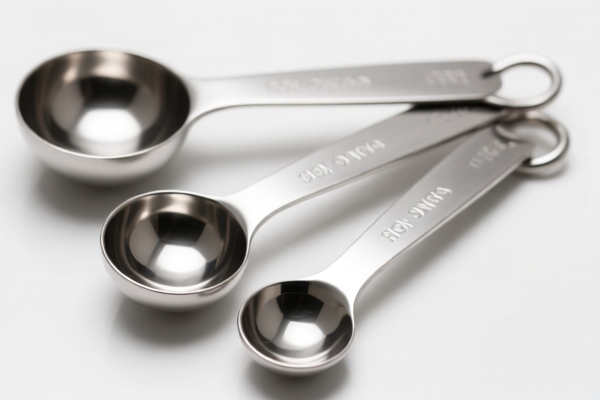
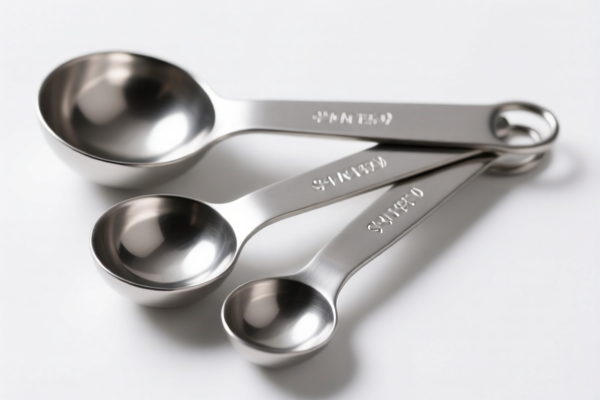
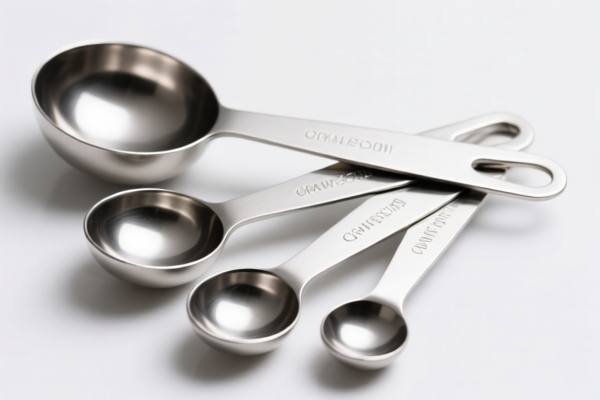
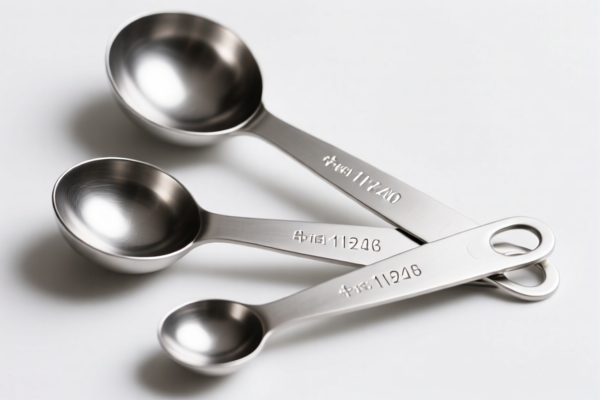
AI Analysis
🥄 Measuring Spoon & Cup Set (Kitchen Utensils)
🌐 HS Code Reference & Customs Clearance Guide | 2026 Latest Tariff Analysis | Strategic Clearance for Stainless Steel Kitchenware
📌 I. Product Definition & Classification: Is it Steel or Steel?
Measuring spoons and cups are essential kitchen tools. However, in international trade, their classification hinges on a critical technical distinction: Are they made of "Iron/Steel" classified as cutlery/hand tools (Chapter 82), or are they general "Iron/Steel articles" (Chapter 73)?
Key Distinction: * Category A (Chapter 82): Treated as "Hand Tools" or "Cutlery." This often applies if the item is perceived as a precision instrument or tool rather than a simple container. * Category B (Chapter 73): Treated as "Other Articles of Iron or Steel." This is the general classification for stainless steel kitchenware like bowls, pots, and generic utensils.
⚠️ Critical Note:
- The Tariff Rate varies drastically based on this classification due to "Section 301" and "Section 232" type additional duties.
- Misclassification can lead to unexpected costs of ~23% difference (38.7% vs. 62.0%).
📦 II. HS Code Classification Details (2026 Latest Tariff Matrix)
Based on the provided data, here are the four possible classifications for "Stainless Steel Measuring Spoon & Cup Set":
| HS Code | Product Description | Classification Logic | Total Tax Rate* |
|---|---|---|---|
8205.51.30.30 |
Stainless Steel Set, Kitchen Utensils, Iron/Steel Material | Classified under Chapter 82 (Hand Tools). Treated as a tool. | 38.7% |
8205.51.75.00 |
Stainless Steel Set, Household Tools, Other Hand Tools & Parts | Classified under Chapter 82 (Household Hand Tools). Similar to above. | 38.7% |
7323.93.00.45 |
Stainless Steel Set, Cooking/Kitchen Use, Other Category | Classified under Chapter 73 (Iron/Steel Articles). General kitchenware. | 62.0% |
7323.93.00.60 |
Stainless Steel Set, Kitchen Utensils, Made of Stainless Steel | Classified under Chapter 73 (Iron/Steel Articles). Explicit stainless steel. | 62.0% |
🔍 重点提醒 (Key Takeaway):
- Low Tariff Path: Choose 8205.51.30.30 or 8205.51.75.00. Total Tax: 38.7%.
- High Tariff Path: Choose 7323.93.00.45 or 7323.93.00.60. Total Tax: 62.0%.
- Why the difference? Chapter 82 items often attract a lower additional duty (25%) compared to Chapter 73 items which may trigger the higher "Steel, Aluminum, Copper" additional duty (50%) depending on specific regulatory interpretations.
💰 III. 2026 Latest Tariff Rate Breakdown (Including Additional Duties)
✅ Applicable Market: USA (US)
✅ Origin: China (CN)
✅ Effective Date: Current policies as per 2026 data
🎯 1. The "Low Tax" Path: HS Code 8205.51.30.30 / 8205.51.75.00
(Classified as Hand Tools/Household Tools)
| Item | Detail |
|---|---|
| Basic Duty | 3.7% (Ad Valorem) |
| Section 301 Additional Duty | +25.0% |
| Section 122 Duty | +10.0% |
| Total Tax Rate | 38.7% |
| Tax Calculation | CIF Value × 38.7% |
| De Minimis Exemption | ❌ Not Applicable (High tariff prevents use of de minimis) |
| Legal Basis | Standard HTS provisions for Hand Tools (Ch 82) |
📌 Explanation:
- The 25% is the standard Section 301 tariff on Chinese goods.
- The 10% is the specific Section 122 tariff.
- Total: 38.7%. This is significantly cheaper than the alternative.
🎯 2. The "High Tax" Path: HS Code 7323.93.00.45 / 7323.93.00.60
(Classified as Articles of Iron/Steel)
| Item | Detail |
|---|---|
| Basic Duty | 2.0% (Ad Valorem) |
| Section 301 Additional Duty | 0.0% (Note: Data indicates 0% here, possibly due to specific exemption or calculation method) |
| Section 122 Duty | +10.0% |
| Steel/Al/Cu Additional Duty | +50.0% |
| Total Tax Rate | 62.0% |
| Tax Calculation | CIF Value × 62.0% |
| De Minimis Exemption | ❌ Not Applicable |
| Legal Basis | HTS for Articles of Iron/Steel (Ch 73) + Section 232/Steel Provisions |
📌 Explanation:
- The 50% "Steel, Aluminum, Copper" additional duty is the killer. Even though the basic rate is low (2%), this massive surcharge pushes the total to 62%.
- Result: You pay 23.3% MORE tax compared to classifying it as a "Hand Tool" (8205).
🛠️ IV. Customs Clearance Practical Advice (Survival Guide)
✅ 1. Documentation Checklist (Do Not Forget)
| Document | Required? | Purpose |
|---|---|---|
| ✅ Product Specification Sheet | ✔️ | Must state "Stainless Steel" and weight. |
| ✅ Product Photos | ✔️ | Show the set as a whole (spoons + cups). |
| ✅ Commercial Invoice | ✔️ | Describe clearly: "Stainless Steel Measuring Spoon & Cup Set for Kitchen Use." |
| ✅ Packing List | ✔️ | List items individually (e.g., 1x Cup, 1x Spoon). |
| ✅ Certificate of Origin (CO) | ✔️ | To prove CN origin (crucial for calculating the 25%/50% surcharges). |
✅ 2. Declaration Strategy (The "Tool" vs. "Utensil" Battle)
To minimize taxes, you should aim for Chapter 82 (38.7%) rather than Chapter 73 (62.0%).
| Scenario | Recommended Declaration | Risk Level |
|---|---|---|
| Standard Set | "Stainless Steel Measuring Tools, Kitchen Hand Tools" | ✅ Low Risk (Aim for 8205) |
| Generic Kitchenware | "Stainless Steel Measuring Cups and Spoons" | ⚠️ High Risk (Customs may reclassify to 7323, hitting you with 62%) |
| With Plastic Handles | "Stainless Steel Measuring Set with Polymer Handles" | ⚠️ Medium Risk (May still be considered composite good) |
🔥 Pro Tip:
In your invoice description, use words like "Tools," "Utensils for precise measurement," or "Household Hand Tools" to align with 8205. Avoid vague terms like "Kitchen Accessories" which might trigger 7323.
✅ 3. Special Cases
| Situation | Advice |
|---|---|
| Plastic Handles? | If the handle is >50% of value/function, it might be classified differently. However, for simple steel sets, the steel content usually dictates Chapter 82 or 73. |
| Gift Sets? | If packaged with other items, ensure the measuring set is the primary value item to justify its classification. |
| Customs Audit | If audited, provide photos showing the items are used for measurement (a tool function), not just holding food (a container function). |
🌍 V. Global Market Comparison (2026)
| Market | Recommended HS Code | Est. Total Tax* | Notes |
|---|---|---|---|
| 🇺🇸 USA | 8205.51.30.30 |
38.7% | Best Option. Avoid 7323 (62%). |
| 🇨🇳 China | 8205.51.30.30 |
~13% (Import) | No additional US tariffs. |
| 🇪🇺 EU | 8205.51.30.30 |
~5-10% | No Section 301/232 tariffs. CE Marking required. |
| 🇨🇦 Canada | 8205.51.30.30 |
~5% | No additional duties on this category. |
📌 Conclusion:
- USA is the critical market for tariff optimization.
- Saving ~23% tax is massive for low-margin kitchenware.
- Always push for 8205 classification if the product supports it.
📌 VI. Common Mistakes & Pitfalls (Lessons Learned)
❌ Mistake 1: Declaring as "Kitchen Tools" but using HS Code 7323.93.00.60
👉 Consequence: You pay 62% instead of 38.7%. Loss of profit.
❌ Mistake 2: Declaring as "Stainless Steel Articles" without specifying "Measuring"
👉 Consequence: Customs may reclassify to a higher duty category or demand additional proof of function.
❌ Mistake 3: Ignoring Section 122/301 implications
👉 Consequence: Underestimating landed cost. Budget for 38.7% - 62% tax, not just the basic 2-3%.
✅ Correct Approach:
"Stainless Steel Measuring Spoon & Cup Set (Kitchen Hand Tools), Model XYZ, Made in China."
HS Code:8205.51.30.30
Tax: 38.7%
🎯 VII. Conclusion: Precision in Classification, Profit in Margin
🎯 Remember the Rule:
🔹 "Tools are Cheaper than Articles: 8205 wins (38.7%) vs 7323 (62.0%)."
🔹 "Describe as 'Tools', not just 'Utensils' to secure the lower rate."
📌 Pro Tip:
If you are importing large volumes, consider applying for a Binding Ruling from US Customs to lock in the 38.7% rate. This prevents random reclassification to the 62% rate during audits.
📣 Immediate Action:
📞 Review your invoice descriptions. Change "Kitchen Accessories" to "Measuring Hand Tools."
📊 Recalculate your landed cost using 38.7% instead of 62%.
🚀 Your profit margin just increased by ~20%!
✨ Professional Clearance Starts with Accurate Classification!
💼 Don't let tariff surprises eat your margin!
Customer Reviews
About HS Code Classification
The Harmonized System (HS) is an internationally standardized nomenclature developed by the World Customs Organization (WCO) to classify traded products. Over 200 countries use the HS system as the basis for customs tariffs, trade statistics, and import/export regulations.
Each HS code follows a hierarchical structure:
- Chapter (2 digits) — Broad category of goods (e.g., Chapter 84: Machinery and Mechanical Appliances)
- Heading (4 digits) — More specific grouping within the chapter
- Subheading (6 digits) — Internationally standardized breakdown, used by all WCO member countries
- National subdivisions (8-10 digits) — Country-specific extensions for further classification, such as US HTSUS 10-digit codes
Correct HS code classification is essential for smooth customs clearance, accurate duty payment, and compliance with trade regulations. Misclassification can lead to customs delays, overpayment of duties, or penalties.
When importing from CN to US, the applicable tariff rates may include:
- Most-Favored-Nation (MFN) rate — The standard duty rate applied to WTO members
- General rate — Applied to countries without trade agreements
- Trade remedy duties — Additional tariffs such as Section 301 (anti-dumping), Section 232 (national security), or countervailing duties
The information provided on this page is for reference purposes only. For official classification, please consult with your local customs authority or a licensed customs broker.