measuring tools
CN → US| HS Code | Tariff Rate | Origin | Destination | Doc |
|---|---|---|---|---|
| 9025198060 | 35.0% | CN | US | Official Doc |
| 9025114000 | 10.0% | CN | US | Official Doc |
| 9017308000 | 38.9% | CN | US | Official Doc |
| 9031808085 | 35.0% | CN | US | Official Doc |
| 9017304000 | 40.8% | CN | US | Official Doc |
Product Images
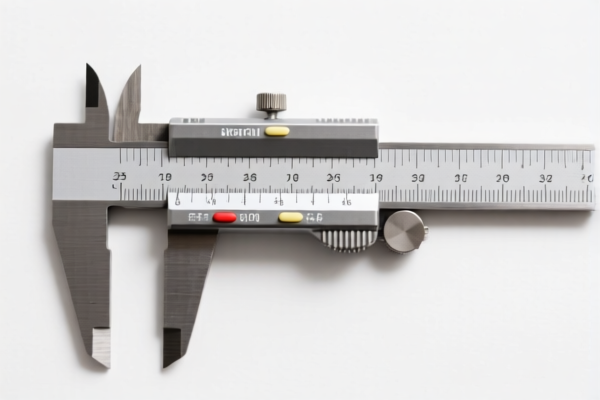
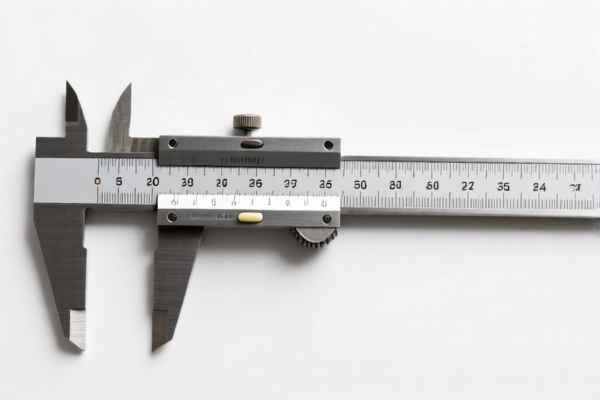
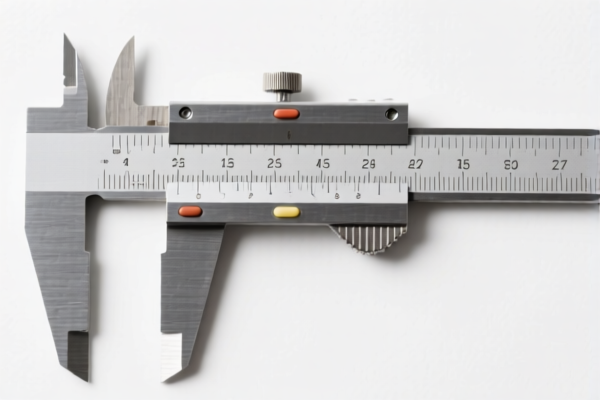
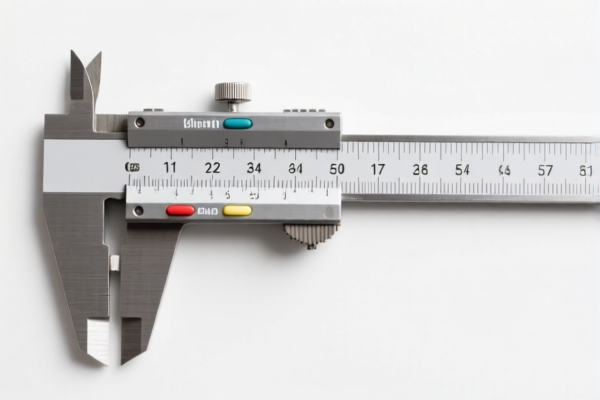
AI Analysis
🛠️ Measuring Tools: Precision, Compliance & Tariff Navigation (2026 Guide)
🌐 HS Code Reference & Customs Clearance Guide | 2026 Latest Tariff Analysis | Professional Clearance Strategy
📌 I. Product Definition & Classification: Do You Really Understand "Measuring Tools"?
"Measuring Tools" is a broad category in international trade, encompassing devices used to determine dimensions, temperature, pressure, or other physical quantities. For customs purposes, they are strictly categorized by function, technology, and specific application.
1. Temperature & Heat Measurement: * Thermometers/Pyrometers: Devices for measuring temperature (e.g., clinical, industrial, infrared). * Key Distinction: Mechanical vs. Digital; Clinical vs. Industrial use.
2. Length & Dimensional Measurement: * Hand Tools: Calipers, micrometers, gauges, rulers. * Key Distinction: Manual tools vs. Optical/Digital instruments.
3. General/Other Measuring Instruments: * Check/Testing Instruments: Devices that do not fit into specific technical categories (e.g., multi-function testers, general lab equipment). * Key Distinction: "General purpose" vs. "Specialized technical."
⚠️ Critical Classification Point:
- If the device measures temperature → Look at Chapter 90.25.
- If the device measures length/dimensions (manual) → Look at Chapter 90.17.
- If the device is a general check/verification tool → Look at Chapter 90.31.
📦 II. HS Code Classification Details (2026 Latest Tariff Authority Reference)
Based on the provided data for "Measuring Tools", the following HS Codes are identified as "Possible Fits" (indicating no material/conflict conflicts, but requiring specific product description confirmation).
| HS Code | Product Description (Summary) | Category | Estimated Total Tax |
|---|---|---|---|
9025.19.80.60 |
Thermometers/Pyrometers: Measuring instruments, specifically in the broad category of thermometers/high-temp pyrometers. Lacks specific material description but no conflict. | Temperature | 35.0% |
9025.11.40.00 |
Thermometers/Manometers: Instruments for measuring temperature, pressure, etc. Usage attribute consistent, no material/shape conflict. | Temperature/Pressure | 10.0% |
9017.30.80.00 |
Hand-held Length Tools: Measuring instruments in the category of hand-held length measuring instruments. Generic description, "catch-all" category. | Length (Manual) | 38.9% |
9031.80.80.85 |
General Check/Testing Instruments: Matches usage of "measuring or检验 instruments/machines." Other catch-all category, no conflict. | General/Other | 35.0% |
9017.30.40.00 |
Length Tools (Micrometers/Calipers): Usage logically includes micrometers, calipers, etc. Description missing, but not directly false. | Length (Precision) | 40.8% |
🔍 Key Insight:
-9025.11.40.00offers the lowest tax rate (10%) but is specific to thermometers/manometers.
-9017codes are for length measurement. If your tool is a caliper or ruler, these apply.
-9031.80.80.85is the safest "general" catch-all for non-specific measuring devices, but carries a 35% tax.
- "Possible Fit" means the HS Code is compatible with the description, but you must confirm the exact technical specification to avoid reclassification penalties.
💰 III. 2026 Latest Tariff Rate Breakdown (Including Surtaxes & Policy Add-ons)
✅ Applicable Country: United States (US)
✅ Origin: China (CN)
✅ Effective Date: From November 10, 2025 (including subsequent imports)
🎯 1. 9025.19.80.60 —— Thermometers/Pyrometers (General)
| Item | Content |
|---|---|
| Base Duty | 0.0% (Ad Valorem) |
| Section 301 Surtax | +25.0% (From USITC Footnote 9903.88.01) |
| IEEPA Surtax | +10.0% (Against China/HK products, from Nov 10, 2025) |
| Total Tax Rate | 35.0% |
| Tax Calculation | CIF Value × 35% |
| De Minimis Exemption | ❌ Not Allowed (deny_de_minimis) |
| Legal Basis Path | IEEPA:9903.01.25 → IEEPA:9903.01.24 → USITC:9025.19.80.60 → FOOTNOTE:9903.88.01 |
📌 Explanation:
- 25% is the Section 301 tariff for Chinese-made goods.
- 10% is the IEEPA tariff specific to certain electronic/measuring categories.
- Total 35% is significant. Ensure the product is strictly a thermometer/pyrometer to avoid being misclassified as a more heavily taxed item.
🎯 2. 9025.11.40.00 —— Thermometers/Manometers (Specific)
| Item | Content |
|---|---|
| Base Duty | 0.0% |
| Section 301 Surtax | 0.0% |
| IEEPA Surtax | +10.0% |
| Total Tax Rate | 10.0% |
| Tax Calculation | CIF Value × 10% |
| De Minimis Exemption | ❌ Not Allowed (deny_de_minimis) |
| Legal Basis Path | IEEPA:9901.25 → IEEPA:9903.01.24 → USITC:9025.11.40.00 → FOOTNOTE:9903.88.01 |
📌 Note:
- This is the most cost-effective HS Code in the dataset.
- It applies specifically to thermometers and manometers (pressure gauges).
- Crucial: If your product is a general measuring tool not fitting this specific description, using this code is high risk for misdeclaration.
🎯 3. 9017.30.80.00 —— Hand-Held Length Measuring Instruments (Generic)
| Item | Content |
|---|---|
| Base Duty | 3.9% |
| Section 301 Surtax | +25.0% |
| IEEPA Surtax | +10.0% |
| Total Tax Rate | 38.9% |
| Tax Calculation | CIF Value × 38.9% |
| De Minimis Exemption | ❌ Not Allowed |
| Legal Basis Path | IEEPA:9903.01.25 → IEEPA:9903.01.24 → USITC:9017.30.80.00 → FOOTNOTE:9903.88.01 |
📌 Explanation:
- Higher base duty (3.9%) than temperature tools.
- Applies to generic hand-held length tools (e.g., rulers, simple calipers).
- If your tool is more precise (micrometer), see code below.
🎯 4. 9031.80.80.85 —— Other Measuring/Checking Instruments (General Catch-All)
| Item | Content |
|---|---|
| Base Duty | 0.0% |
| Section 301 Surtax | +25.0% |
| IEEPA Surtax | +10.0% |
| Total Tax Rate | 35.0% |
| Tax Calculation | CIF Value × 35% |
| De Minimis Exemption | ❌ Not Allowed |
| Legal Basis Path | IEEPA:9903.01.25 → IEEPA:9903.01.24 → USITC:9031.80.80.85 → FOOTNOTE:9903.88.01 |
📌 Note:
- Use this when the measuring tool does not fit specifically into temperature (9025) or length (9017) categories.
- Common for multi-functional testers, general lab verification devices.
🎯 5. 9017.30.40.00 —— Length Measuring Tools (Micrometers/Calipers Specific)
| Item | Content |
|---|---|
| Base Duty | 5.8% |
| Section 301 Surtax | +25.0% |
| IEEPA Surtax | +10.0% |
| Total Tax Rate | 40.8% |
| Tax Calculation | CIF Value × 40.8% |
| De Minimis Exemption | ❌ Not Allowed |
| Legal Basis Path | IEEPA:9903.01.25 → IEEPA:9903.01.24 → USITC:9017.30.40.00 → FOOTNOTE:9903.88.01 |
📌 Warning:
- This is the highest tax rate (40.8%) in the dataset.
- Applies to specific precision tools like micrometers and calipers.
- Ensure your product is indeed a precision length tool; otherwise, you may be able to use the generic9017.30.80.00(38.9%) or another category if applicable.
🛠️ IV. Customs Clearance Practical Advice (Battle-Tested Pitfall Guide)
✅ 1. Required Documentation List (Non-Negotiable)
| Document | Mandatory | Explanation |
|---|---|---|
| ✅ Product Specification Sheet | ✔️ | Must include: Type of measurement (Temp/Length/General), Range, Accuracy, Power Source. |
| ✅ Circuit/Structure Diagram | ✔️ | Crucial to distinguish between "Component" (Cheaper) and "Instrument" (Higher Tax). |
| ✅ Product Photos (Clear) | ✔️ | Show brand, model, input/output, display screen, and any certification marks. |
| ✅ Third-Party Test Report | ✔️ | FCC, CE, RoHS, UL (if applicable). |
| ✅ Commercial Invoice | ✔️ | Must clearly state: "Measuring Tool: [Specific Type], Model: [XYZ]." |
| ✅ Packing List | ✔️ | Detail all components (e.g., probe, cable, case). |
✅ 2. Declaration Strategy (Key Mnemonic)
🔥 "Specific Over Generic, Function Over Form!"
| Scenario | Correct Declaration Strategy | Risk of Wrong Declaration |
|---|---|---|
| Thermometer | Use 9025.11.40.00 (10%) or 9025.19.80.60 (35%) |
Misdeclaring as "General Instrument" (35%) if specific code applies → Overpaid Tax (No refund easy). |
| Caliper/Micrometer | Use 9017.30.40.00 (40.8%) or 9017.30.80.00 (38.9%) |
Misdeclaring as "Electronic Instrument" → Potential Underpayment penalties. |
| Multi-Function Tester | Use 9031.80.80.85 (35%) |
Avoid using "Thermometer" code if it also measures resistance → Misclassification. |
| Raw Sensor (No Housing) | Check if it's a "Part" (Chapter 90) or "Component" (Chapter 85) | Misdeclaring as "Instrument" → High Risk of Rejection. |
✅ 3. Special Situation Handling
| Situation | Handling Advice |
|---|---|
| OEM Custom Measuring Tools | Provide client order + design drawings. Avoid vague terms like "Tool." Use technical name. |
| Digital vs. Analog | Digital may fall under Chapter 85 if it's a "Module." Analog is Chapter 90. Confirm structure. |
| Temperature + Pressure | If a single device measures both, choose the primary function or the specific code (9025.11.40.00 covers both). |
| Used/Refurbished Tools | Must declare condition. Some codes may not allow used goods. |
🌍 V. Global Market Comparison (2026 Latest)
| Country/Region | Recommended HS Code | Tariff (China Origin) | Certification Required | Notes |
|---|---|---|---|---|
| 🇺🇸 USA | 9025.11.40.00 (if Temp) |
10% | FCC + RoHS | Lowest tax if specific temp/pressure tool. |
| 🇺🇸 USA | 9031.80.80.85 (General) |
35% | FCC + RoHS | Safe catch-all, but higher tax. |
| 🇨🇳 China | 9025.11.40.00 |
10% | CCC + RoHS | Import tax lower than US surtaxes. |
| 🇪🇺 EU | 9025.11.40.00 |
0% (if CE) | CE + RoHS | No Section 301/IEEPA equivalents. |
| 🇬🇧 UK | 9025.11.40.00 |
0% (if UKCA) | UKCA + RoHS | Post-Brexit rules apply. |
📌 Conclusion:
- USA is the most complex market due to Section 301 (25%) and IEEPA (10%) surtaxes.
- EU/UK/China have no equivalent "Trade War" tariffs, making them more cost-effective for Chinese-manufactured measuring tools.
- Strategy: For US imports, strive to classify under9025.11.40.00(10%) if your product is a thermometer/manometer. This saves 25-30% in taxes compared to generic classifications.
📌 VI. Common Errors & Pitfall Guide (Blood & Tears Lessons)
❌ Error 1: Declaring a Digital Thermometer as a "General Instrument" (9031)
👉 Consequence: Tax jumps from 10% to 35%. Overpayment.
✅ Fix: Use 9025.11.40.00.
❌ Error 2: Declaring a Caliper as a "Part" or "Accessory"
👉 Consequence: If declared as "Part of Machine," it might be 0% but rejected for lacking context. If declared as "Tool," it's 40.8%. Misdeclaration risk.
✅ Fix: Be explicit: "Manual Caliper, Steel, 6-inch."
❌ Error 3: Ignoring the IEEPA 10% Surtax
👉 Consequence: All HS Codes in the dataset (except 9025.11.40.00's base) include the 10% IEEPA. Forgetting this leads to budget shortfall.
✅ Fix: Always include IEEPA in cost calculations.
❌ Error 4: Vague Description "Measuring Device"
👉 Consequence: Customs may reclassify to the highest applicable rate (40.8%) or detain for inspection.
✅ Fix: Use specific technical names: "Infrared Thermometer," "Digital Caliper," "Pressure Gauge."
🎯 VII. Conclusion: Precision in Classification, Profit in Clearance!
🎯 Remember the Mnemonic:
🔹 "Temp/Pressure first (10%), Length next (39-41%), General last (35%)!"
🔹 "Specific HS Code saves 25-30% in US Taxes!"
🔹 "IEEPA 10% is unavoidable for China-origin, plan for it!"
📌 Pro Tip:
If your measuring tool is multi-functional (e.g., a device that measures Temp AND Voltage), consult a customs broker before shipment. Misclassification can lead to audit penalties and delayed release.
📣 Immediate Action:
📞 Contact a Licensed Customs Broker
📄 Provide Detailed Specs (Input/Output, Function, Structure)
🚀 Apply for Pre-Ruling if High Value
✨ Professional Clearance Starts with Precise Classification!
💼 Every Percentage Point Saved is Pure Profit!
Customer Reviews
About HS Code Classification
The Harmonized System (HS) is an internationally standardized nomenclature developed by the World Customs Organization (WCO) to classify traded products. Over 200 countries use the HS system as the basis for customs tariffs, trade statistics, and import/export regulations.
Each HS code follows a hierarchical structure:
- Chapter (2 digits) — Broad category of goods (e.g., Chapter 84: Machinery and Mechanical Appliances)
- Heading (4 digits) — More specific grouping within the chapter
- Subheading (6 digits) — Internationally standardized breakdown, used by all WCO member countries
- National subdivisions (8-10 digits) — Country-specific extensions for further classification, such as US HTSUS 10-digit codes
Correct HS code classification is essential for smooth customs clearance, accurate duty payment, and compliance with trade regulations. Misclassification can lead to customs delays, overpayment of duties, or penalties.
When importing from CN to US, the applicable tariff rates may include:
- Most-Favored-Nation (MFN) rate — The standard duty rate applied to WTO members
- General rate — Applied to countries without trade agreements
- Trade remedy duties — Additional tariffs such as Section 301 (anti-dumping), Section 232 (national security), or countervailing duties
The information provided on this page is for reference purposes only. For official classification, please consult with your local customs authority or a licensed customs broker.