mechanical damper
CN → US| HS Code | Tariff Rate | Origin | Destination | Doc |
|---|---|---|---|---|
| 8481909060 | 85.0% | CN | US | Official Doc |
| 8481909081 | 35.0% | CN | US | Official Doc |
Product Images
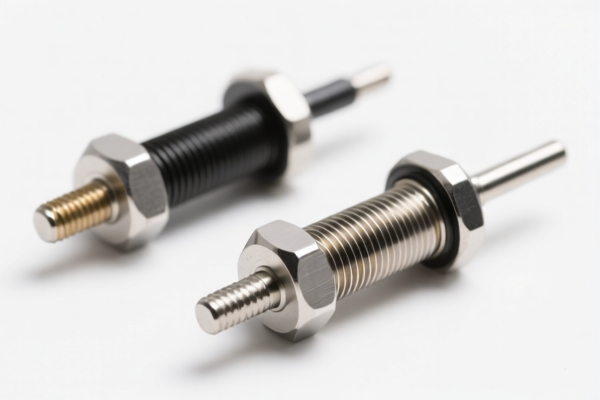
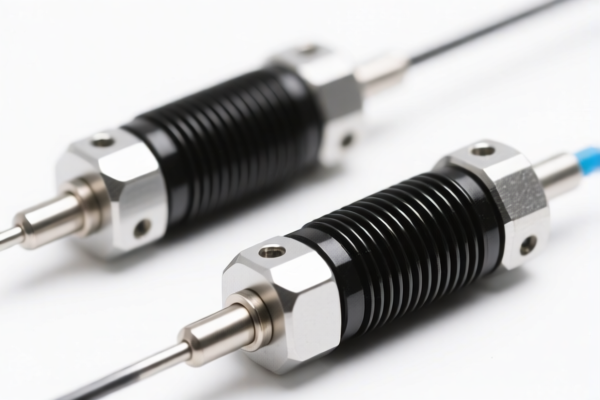
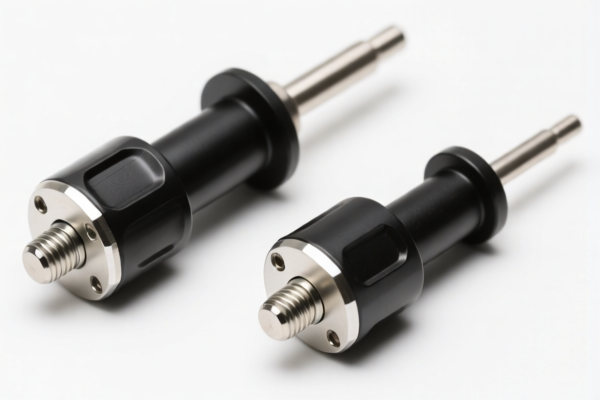
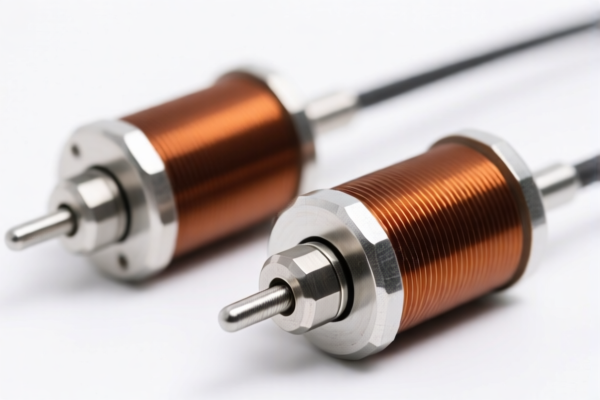
AI Analysis
🚪 Mechanical Dampers & Valves for Industrial Systems (Pipes, Boilers, Tanks)
🌐 HS Code Reference & Customs Clearance Guide | 2026 Latest Tariff Analysis | Professional Clearance Strategy
📌 1. Product Definition & Classification: What is a "Mechanical Damper" in Trade?
In international trade, the term "Mechanical Damper" is ambiguous and highly context-dependent. In industrial contexts (especially involving pipes, boiler shells, tanks, and vats), a "damper" often refers to flow control appliances, such as taps, cocks, valves, or pressure-reducing valves.
However, if it is not a complete valve but a component of a valve, it falls under Parts of Valves.
Critical Distinction for Classification: 1. Valve Bodies: The main housing/body of a valve. If the item is a hollow casing designed to be part of a valve system (without the internal moving mechanism like the stem or disc), it is classified as a "Valve Body". 2. Forged Parts: If the part is a steel forging specifically designed as a component of a tap, cock, or valve, it may be classified under "Steel Forgings".
⚠️ Key Classification Point:
- If the item is a complete valve or a valve body (cast or machined housing) → 8481.90.90.60
- If the item is a steel forging specifically for valves/taps → 8481.90.90.81
📦 2. HS Code Classification Details (2026 Latest Tariff Authority Match)
Based on the provided data, here are the two possible HS Codes for "Mechanical Dampers" classified as valve components or bodies:
| HS Code | Product Description | Applicable Scenario | Key Feature |
|---|---|---|---|
8481.90.90.60 |
Parts of Taps, Cocks, Valves: Valve Bodies | Main housing/casing of valves for pipes, boilers, tanks; pressure-reducing valves; thermostatically controlled valves. | Valve Body (Hollow structure, not necessarily forged) |
8481.90.90.81 |
Parts of Taps, Cocks, Valves: Steel Forgings | Specific steel forgings used as parts of taps, cocks, or valves. | Steel Forging (Manufactured via forging process) |
🔍 Important Note:
- Both codes fall under Chapter 84: Nucleic reactors, boilers, machinery and mechanical appliances; parts thereof.
- Specifically under 8481: Taps, cocks, valves and similar appliances, for pipes, boiler shells, tanks, vats or the like.
- The distinction lies in the manufacturing process and specific part type: "Other Other" (8481.90.90.60) vs. "Other" (8481.90.90.81).
💰 3. 2026 Latest Tariff Rate Details (Detailed Breakdown)
✅ Applicable Country: USA (US)
✅ Origin: China (CN)
✅ Effective Time: As per current USITC and US Customs regulations (2025/2026)
🎯 1. 8481.90.90.60 —— Valve Bodies
| Item | Content |
|---|---|
| Base Tariff | 0.0% (Ad Valorem) |
| Additional Tariff (Section 301) | +25.0% (Steel, Aluminum, Copper Products Additional Tariff) |
| Total Tariff Rate | 75.0% |
| Tax Calculation | CIF Value × 75.0% |
| De Minimis Exemption | ❌ Not Available (High tariff rate exceeds de minimis thresholds) |
| Legal Basis Path | USITC:8481.90.90.60 → Footnote: Steel/Aluminum/Copper Additional Tariff |
📌 Explanation:
- The Base Tariff is 0%, making it duty-free in normal circumstances.
- However, it is subject to the 50% Additional Tariff for steel, aluminum, and copper products (under certain trade actions).
- Plus a 25% Section 301 Additional Tariff for Chinese goods.
- Total Effective Rate: 0% + 25% + 50% = 75%.
- Warning: This is an extremely high tariff rate. Importers must verify if the product qualifies for any exemptions (e.g., specific exclusion numbers).
🎯 2. 8481.90.90.81 —— Steel Forgings (Parts)
| Item | Content |
|---|---|
| Base Tariff | 0.0% (Ad Valorem) |
| Additional Tariff (Section 301) | +25.0% |
| Total Tariff Rate | 25.0% |
| Tax Calculation | CIF Value × 25.0% |
| De Minimis Exemption | ❌ Not Available |
| Legal Basis Path | USITC:8481.90.90.81 → Footnote: 25% Additional Tariff |
📌 Explanation:
- The Base Tariff is 0%.
- It is subject to the 25% Section 301 Additional Tariff for Chinese goods.
- Total Effective Rate: 0% + 25% = 25%.
- Advantage: This tariff is significantly lower than the 75% rate for valve bodies, if the product can be legitimately classified as a "Steel Forging" rather than a general "Valve Body."
🛠️ 4. Customs Clearance Practical Advice (Pitfall Avoidance Guide)
✅ 1. Preparation Checklist (Mandatory Documents)
| Document | Required | Description |
|---|---|---|
| ✅ Product Specification Sheet | ✔️ | Must specify: Material (Steel, Aluminum, etc.), Manufacturing Process (Cast vs. Forged), Intended Use (Valve Body vs. Forging). |
| ✅ Technical Drawings | ✔️ | Show dimensions, structure, and whether it is a hollow body or a solid forging. |
| ✅ Product Photos | ✔️ | Clear images of the item, including any markings (e.g., "Forged," "Body," "Part #"). |
| ✅ Commercial Invoice | ✔️ | Must accurately describe the item as "Valve Body" or "Steel Forging Part" – Do NOT use generic terms like "Damper". |
| ✅ Bill of Lading | ✔️ | Standard shipping document. |
| ✅ Certification of Origin | ✔️ | To prove origin as China (CN). |
✅ 2. Declaration Strategy (Crucial Tips)
🔥 Golden Rule:
"Be Specific! Avoid 'Damper' – Use 'Valve Body' or 'Steel Forging'!"
| Scenario | Correct Declaration | Incorrect Declaration | Consequence |
|---|---|---|---|
| Hollow Valve Housing | 8481.90.90.60 – "Valve Body for Pressure Reducing Valve" |
"Mechanical Damper" | Misclassification risk → 75% Tariff |
| Steel Forging Component | 8481.90.90.81 – "Steel Forging for Tap/Valve Part" |
"Mechanical Damper Part" | Misclassification risk → 25% Tariff |
| Generic Term | N/A | "Damper" | Customs will query → Delay + Potential Re-classification |
📌 Key Advice:
- If the part is a forged steel component, insist on 8481.90.90.81 (25% tariff).
- If the part is a cast or machined valve body, it will likely fall under 8481.90.90.60 (75% tariff).
- Do not use the word "Damper" in customs declarations. Use the precise technical term: "Valve Body" or "Steel Forging Part."
✅ 3. Special Circumstances
| Situation | Handling Advice |
|---|---|
| OEM Parts for Valves | Provide original equipment manufacturer (OEM) documentation to prove the part is specifically for valves/taps. |
| Mixed Materials | If the part contains non-steel materials (e.g., plastic inserts), verify if it still qualifies as "Steel Forging" or "Valve Body" under the tariff. |
| Small Parts | Even small parts like valve bodies are subject to the high tariffs. No de minimis exemption for high-value or restricted items. |
🌍 5. Global Market Comparison (2026 Latest)
| Country/Region | Recommended HS Code | Tariff Rate | Certification | Notes |
|---|---|---|---|---|
| 🇺🇸 USA | 8481.90.90.60 |
75.0% | N/A | High tariff for Valve Bodies. |
| 🇺🇸 USA | 8481.90.90.81 |
25.0% | N/A | Lower tariff for Steel Forgings. |
| 🇪🇺 EU | 8481.90.90 |
Varies | CE, RoHS | Check specific EU tariff schedules. |
| 🇨🇳 China | 8481.90.90 |
Varies | CCC (if applicable) | Domestic trade, lower tariffs. |
| 🇬🇧 UK | 8481.90.90 |
Varies | UKCA | Post-Brexit rules apply. |
📌 Conclusion:
- USA is the most challenging market for these products due to high additional tariffs.
- Differentiation between "Valve Body" and "Steel Forging" can save 50% in tariffs (75% vs 25%).
- Accurate classification is critical to avoid cost overruns and customs delays.
📌 6. Common Errors & Pitfalls (Lessons Learned)
❌ Error 1: Using "Mechanical Damper" as the product name.
👉 Consequence: Customs may not recognize the term, leading to queries, delays, or re-classification into higher-tariff categories.
❌ Error 2: Classifying all valve components as "Steel Forgings" to avoid the 75% tariff.
👉 Consequence: If the part is not a forging (e.g., it is cast or machined from billet), customs will reject the classification and apply the 75% tariff + penalties.
❌ Error 3: Ignoring the "Steel, Aluminum, Copper Products Additional Tariff."
👉 Consequence: Unexpected 50% surcharge on valve bodies, leading to significant cost increases.
✅ Correct Practice:
"Valve Body for Pressure Reducing Valve, Cast Steel, Model XYZ, for Industrial Pipe Systems"
OR
"Steel Forging Part for Valve Assembly, Material: AISI 304, Forged, Model ABC"
🎯 7. Conclusion: Precise Classification, Cost Efficiency!
🎯 Remember the Key Takeaway:
🔹 "Damper" is a dangerous word. Use "Valve Body" (75%) or "Steel Forging" (25%).
🔹 Classify correctly to save 50% in tariffs!
🔹 Always provide technical drawings and material specifications.
📌 Pro Tip:
If your supplier is in Vietnam, Mexico, or Thailand, check if they can claim Free Trade Agreement (FTA) benefits (e.g., USMCA, ASEAN) to reduce or eliminate tariffs.
Consult a professional customs broker for pre-classification advice before shipping.
📣 Immediate Action:
📞 Contact your customs broker with product photos and specifications.
📄 Request a binding ruling from US Customs if the classification is uncertain.
🚀 Optimize your supply chain to minimize tariff impact!
✨ Professional Customs Clearance Starts with Accurate Classification!
💼 Every dollar saved in tariffs is pure profit!
Customer Reviews
About HS Code Classification
The Harmonized System (HS) is an internationally standardized nomenclature developed by the World Customs Organization (WCO) to classify traded products. Over 200 countries use the HS system as the basis for customs tariffs, trade statistics, and import/export regulations.
Each HS code follows a hierarchical structure:
- Chapter (2 digits) — Broad category of goods (e.g., Chapter 84: Machinery and Mechanical Appliances)
- Heading (4 digits) — More specific grouping within the chapter
- Subheading (6 digits) — Internationally standardized breakdown, used by all WCO member countries
- National subdivisions (8-10 digits) — Country-specific extensions for further classification, such as US HTSUS 10-digit codes
Correct HS code classification is essential for smooth customs clearance, accurate duty payment, and compliance with trade regulations. Misclassification can lead to customs delays, overpayment of duties, or penalties.
When importing from CN to US, the applicable tariff rates may include:
- Most-Favored-Nation (MFN) rate — The standard duty rate applied to WTO members
- General rate — Applied to countries without trade agreements
- Trade remedy duties — Additional tariffs such as Section 301 (anti-dumping), Section 232 (national security), or countervailing duties
The information provided on this page is for reference purposes only. For official classification, please consult with your local customs authority or a licensed customs broker.