medical grade ethylene elastomer resin
CN → US| HS Code | Tariff Rate | Origin | Destination | Doc |
|---|---|---|---|---|
| 3901901000 | 35.0% | CN | US | Official Doc |
| 3901909000 | 41.5% | CN | US | Official Doc |
| 3902201000 | 35.0% | CN | US | Official Doc |
| 3902900050 | 41.5% | CN | US | Official Doc |
Product Images
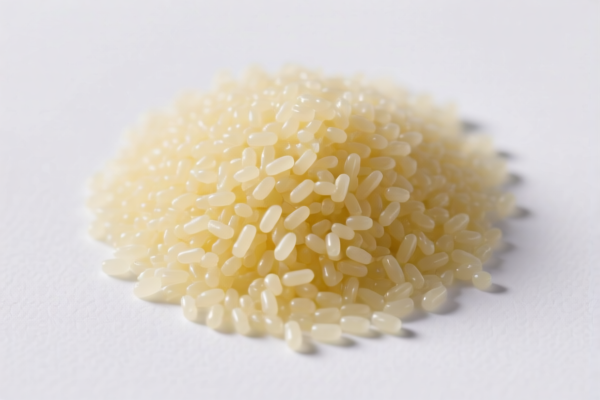
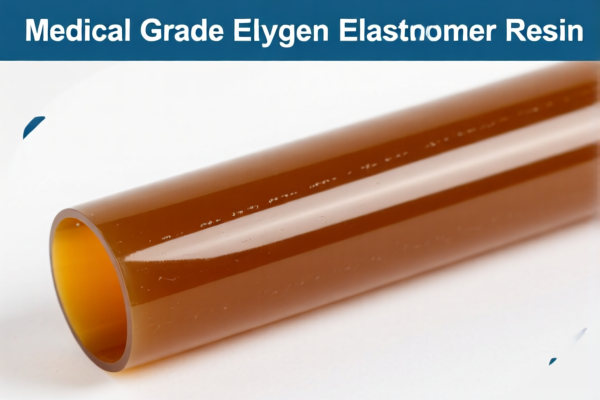
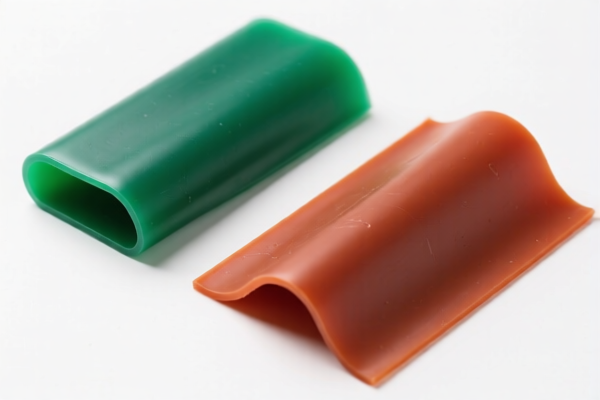
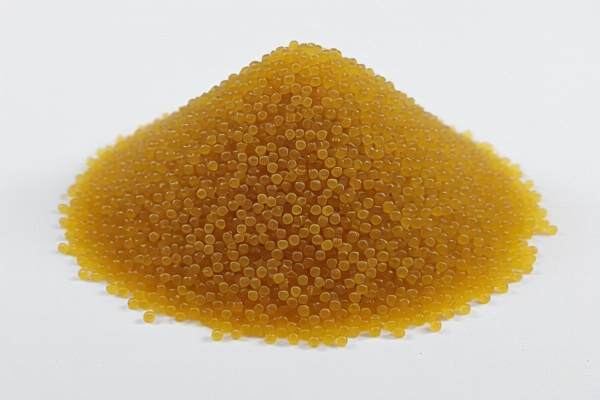
AI Analysis
🧪 Medical Grade Ethylene Elastomer Resin (Polymer of Ethylene)
🌐 HS Code Reference & Customs Clearance Guide | 2026 Latest Tariff Analysis | Professional Clearance Strategy
📌 Part I: Product Definition and Classification: What is "Medical Grade Ethylene Elastomer Resin"?
"Medical Grade Ethylene Elastomer Resin" refers to polymers of ethylene in primary forms that possess elastomeric properties (rubber-like elasticity). In the context of international trade and customs classification, the key distinction lies not in the "medical grade" certification itself, but in the physical form and chemical structure of the polymer.
Key Distinction Points: 1. Elastomeric vs. Non-Elastomeric: * Elastomeric: If the polymer behaves like rubber (high elasticity, low modulus), it falls under specific elastomer subheadings. * Non-Elastomeric: If it is a rigid or semi-rigid plastic (like standard PE/HDPE/LDPE), it falls under "Other" categories. 2. Primary Form: The resin must be in primary forms (granules, powders, liquids) suitable for further processing (e.g., extrusion, molding) rather than finished medical devices.
⚠️ Critical Classification Logic:
- If the product is Elastomeric (rubber-like): It is classified under 3901.90.10.00.
- If the product is Non-Elastomeric (standard plastic): It is classified under 3901.90.90.00.
- "Medical Grade" is a quality specification, not a classification criterion. Customs classifies based on material composition and physical state, not end-use or certification level.
📦 Part II: HS Code Classification Details (2026 Latest Tariff Alignment)
Based on the provided data, here are the two possible classifications for Ethylene Polymers in primary forms:
| HS Code | Product Description | Applicable Scenario | Key Feature |
|---|---|---|---|
3901.90.10.00 |
Polymers of ethylene, in primary forms: Other: Elastomeric | Ethylene-propylene rubber (EPR/EPDM), Ethylene-vinyl acetate (EVA) elastomers, Medical-grade silicone-ethylene blends (if ethylene-based elastomer) | ✅ Elastomeric (Rubber-like) |
3901.90.90.00 |
Polymers of ethylene, in primary forms: Other: Other: Other | Standard Low-Density Polyethylene (LDPE), Linear Low-Density Polyethylene (LLDPE), High-Density Polyethylene (HDPE) in primary forms | ❌ Non-Elastomeric (Plastic-like) |
🔍 Important Note:
- Many "medical grade" ethylene-based materials are actually Elastomers (e.g., for tubing, seals, catheters). These should be classified under3901.90.10.00.
- If the material is standard PE (e.g., for packaging or rigid containers), it falls under3901.90.90.00.
- Do not misclassify elastomeric medical resins as standard plastics to avoid tariff penalties.
💰 Part III: 2026 Latest Tariff Rate Breakdown (Detailed Tax Clauses)
✅ Applicable Country: United States (US)
✅ Origin: China (CN) (Based on the 25% additional tariff context)
✅ Effective Date: Current trade war tariffs apply
🎯 1. 3901.90.10.00 — Ethylene Polymers, Elastomeric
| Item | Detail |
|---|---|
| Base Tariff | 0.0% (Ad Valorem) |
| Additional Tariff (Section 301) | +25.0% |
| Total Tax Rate | 25.0% |
| Tax Calculation | CIF Value × 25% |
| De Minimis Exemption | ❌ Not Applicable (Deny de minimis for Chinese origin goods under Section 301) |
| Legal Basis Path | HTSUS:3901.90.10.00 → USITC Footnote 9903.88.01 (Section 301 Additional Duty) |
📌 Explanation:
- Although the base duty is 0%, the 25% additional tariff applies due to the Section 301 trade measures against China.
- Total burden: 25%. This is significantly lower than the non-elastomeric counterpart.
- Why choose this code? If your ethylene resin is elastomeric (rubber-like), this is the correct and more favorable classification.
🎯 2. 3901.90.90.00 — Ethylene Polymers, Other (Non-Elastomeric)
| Item | Detail |
|---|---|
| Base Tariff | 6.5% (Ad Valorem) |
| Additional Tariff (Section 301) | +25.0% |
| Total Tax Rate | 31.5% |
| Tax Calculation | CIF Value × 31.5% |
| De Minimis Exemption | ❌ Not Applicable (Deny de minimis for Chinese origin goods under Section 301) |
| Legal Basis Path | HTSUS:3901.90.90.00 → USITC Footnote 9903.88.01 (Section 301 Additional Duty) |
📌 Explanation:
- Base tariff is 6.5%, plus 25% additional tariff.
- Total burden: 31.5%.
- This rate applies if the material is NOT elastomeric (i.e., standard plastic PE).
- Risk: If you are shipping elastomeric medical resin but classify it as3901.90.90.00, you may face misclassification penalties and audits. Conversely, if you classify a standard plastic as elastomeric, you underpay taxes.
🛠️ Part IV: Customs Clearance Practical Advice (Real-World Pitfall Avoidance)
✅ 1. Documentation Checklist (Non-Negotiable)
| Document | Required | Purpose |
|---|---|---|
| ✅ Product Specification Sheet | ✔️ | Must explicitly state: "Elastomeric" or "Non-Elastomeric", molecular weight, density, and cross-linking status. |
| ✅ Material Safety Data Sheet (MSDS/SDS) | ✔️ | Confirms chemical composition (Polymer of Ethylene) and physical state. |
| ✅ Certificate of Origin (CO) | ✔️ | Required to prove origin (China) and assess correct tariffs. |
| ✅ Commercial Invoice | ✔️ | Must clearly describe the product as "Ethylene Polymer Resin, Elastomeric/Non-Elastomeric, Primary Form". |
| ✅ Third-Party Test Report | ✔️ | Crucial: Must include tensile strength, elongation at break, and hardness tests to prove elastomeric nature. |
| ✅ Medical Grade Certification | ✔️ | Not for customs classification, but required for FDA/health authority clearance in the destination country. |
✅ 2. Declaration Tips (Key Mnemonic)
🔥 "Elastomer = 25%, Plastic = 31.5%! Prove Elasticity or Pay More!"
| Scenario | Correct Classification | Risk if Misclassified |
|---|---|---|
| Ethylene-based rubber (e.g., for medical tubing) | 3901.90.10.00 |
If declared as 3901.90.90.00 → Overpay 6.5% |
| Standard LDPE/HDPE granules | 3901.90.90.00 |
If declared as 3901.90.10.00 → Underpay 6.5% + Penalties |
| Blends (Ethylene + Other Olefins) | Check main component | If ethylene is not the main component, may fall under 3902.xx |
✅ 3. Special Cases & Handling
| Case | Handling Advice |
|---|---|
| Medical Silicone-Ethylene Blend | If the material is predominantly silicone, it may fall under Chapter 39 (Silicones) or Chapter 40 (Rubber). Check the dominant polymer. If ethylene is the base, use 3901 codes. |
| Cross-linked Polyethylene (PEX) | PEX is often classified under 3901.90.10.00 if it retains elastomeric properties. Provide cross-linking degree documentation. |
| Finished Medical Devices | If the resin is already molded into a medical device (e.g., syringe plunger), it is NOT a polymer in primary form. It would fall under Chapter 90 (Medical Instruments), not Chapter 39. Ensure it is raw resin/granules. |
| Origin Marking | Must clearly mark "Made in China" on each package to avoid origin fraud allegations. |
🌍 Part V: Global Market Comparison (2026 Latest)
| Country/Region | Recommended HS Code | Tariff (China Origin) | Key Requirement | Notes |
|---|---|---|---|---|
| 🇺🇸 USA | 3901.90.10.00 |
25.0% | Section 301 Apply | Most favorable for elastomers |
| 🇺🇸 USA | 3901.90.90.00 |
31.5% | Section 301 Apply | Higher cost for non-elastomers |
| 🇨🇳 China | 3901.90.10.00 |
0% - 6.5%* | Standard | No additional tariffs |
| 🇪🇺 EU | 3901.90.10.00 |
0% - 6.5%* | REACH Compliance | No Section 301 tariffs |
| 🇯🇵 Japan | 3901.90.10.00 |
0% - 6.5%* | PSE/FMDA | No additional tariffs |
📌 Conclusion:
- USA is the most expensive market due to the 25% additional tariff.
- Elastomeric resins (3901.90.10.00) are 6.5% cheaper than non-elastomeric resins (3901.90.90.00) in the US.
- Strategic Tip: If your product can be technically classified as elastomeric, ensure your test reports support this to save 6.5% on total landed cost.
📌 Part VI: Common Mistakes & Pitfalls (Lessons Learned)
❌ Mistake 1: Assuming "Medical Grade" means 0% tariff
👉 Result: Customs still applies Section 301 tariffs. No exemptions for medical materials from Section 301.
❌ Mistake 2: Misclassifying Elastomers as "Other Polymers" (3901.90.90.00)
👉 Result: Overpayment of 6.5% on every shipment.
👉 Solution: Provide elongation at break >100% in test reports to prove elastomeric nature.
❌ Mistake 3: Declaring Finished Medical Devices as Raw Resin
👉 Result: Misclassification Penalty + Delay.
👉 Solution: Ensure the product is in "primary form" (granules, powder, liquid). If molded, use Chapter 90.
❌ Mistake 4: Ignoring "Origin Marking"
👉 Result: Goods seized or returned for failure to mark origin.
👉 Solution: Mark each bag/package with "Made in China".
✅ Correct Declaration Example:
"Ethylene Polymer Resin, Elastomeric, Primary Form, Medical Grade, For Use in Medical Tubing, Model XYZ, HS 3901.90.10.00, Made in China"
🎯 Part VII: Conclusion: Professional Classification, Cost Optimization!
🎯 Key Takeaways:
🔹 "Elastomeric = 25%, Non-Elastomeric = 31.5%" – The 6.5% difference is significant.
🔹 "Proof is Key" – You must provide test reports proving elastomeric properties (elongation, flexibility) to qualify for the lower rate.
🔹 "Medical Grade ≠ Tax Exempt" – In the US, Section 301 tariffs apply to all Chinese-origin goods, regardless of end-use.
📌 Pro Tip:
If your product is cross-linked polyethylene (PEX) or ethylene-vinyl acetate (EVA) elastomer, ensure your customs broker uses 3901.90.10.00 and provides supporting documentation.
For standard LDPE/HDPE, use 3901.90.90.00 and budget for 31.5% total duty.
📣 Immediate Action:
📞 Consult your customs broker to review your material test reports.
📋 Ensure your invoice clearly states "Elastomeric" or "Non-Elastomeric".
🚀 Optimize your landed cost by choosing the correct HS Code from the start!
✨ Professional Customs Clearance Starts with Precise Classification!
💼 Every Percentage Point Counts in Global Trade!
Customer Reviews
About HS Code Classification
The Harmonized System (HS) is an internationally standardized nomenclature developed by the World Customs Organization (WCO) to classify traded products. Over 200 countries use the HS system as the basis for customs tariffs, trade statistics, and import/export regulations.
Each HS code follows a hierarchical structure:
- Chapter (2 digits) — Broad category of goods (e.g., Chapter 84: Machinery and Mechanical Appliances)
- Heading (4 digits) — More specific grouping within the chapter
- Subheading (6 digits) — Internationally standardized breakdown, used by all WCO member countries
- National subdivisions (8-10 digits) — Country-specific extensions for further classification, such as US HTSUS 10-digit codes
Correct HS code classification is essential for smooth customs clearance, accurate duty payment, and compliance with trade regulations. Misclassification can lead to customs delays, overpayment of duties, or penalties.
When importing from CN to US, the applicable tariff rates may include:
- Most-Favored-Nation (MFN) rate — The standard duty rate applied to WTO members
- General rate — Applied to countries without trade agreements
- Trade remedy duties — Additional tariffs such as Section 301 (anti-dumping), Section 232 (national security), or countervailing duties
The information provided on this page is for reference purposes only. For official classification, please consult with your local customs authority or a licensed customs broker.