medical waste non hazardous
CN → US| HS Code | Tariff Rate | Origin | Destination | Doc |
|---|---|---|---|---|
| 3825300000 | 17.5% | CN | US | Official Doc |
| 3825900100 | 35.0% | CN | US | Official Doc |
| 7112990100 | 35.0% | CN | US | Official Doc |
| 7112300100 | 35.0% | CN | US | Official Doc |
Product Images
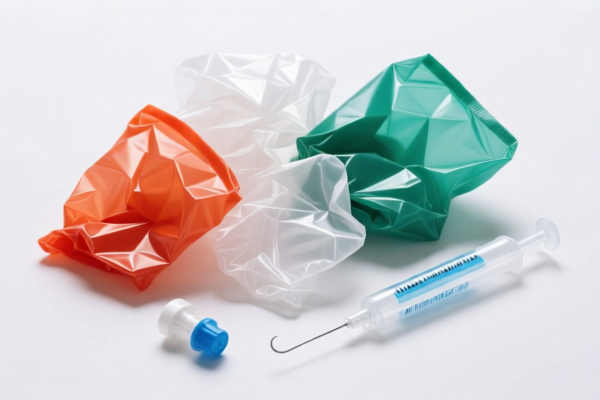

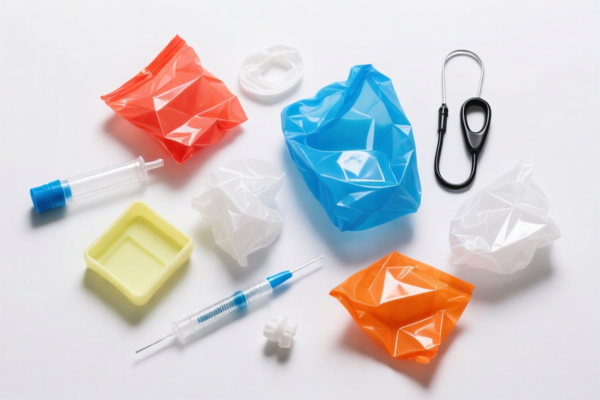
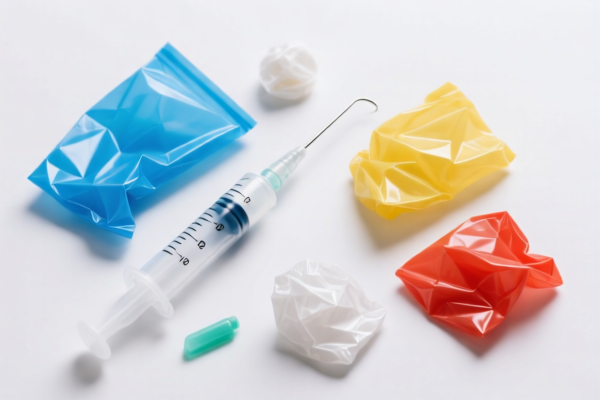
AI Analysis
🩺 Medical Waste (Non-Hazardous)
🌐 HS Code Reference & Customs Clearance Guide | 2026 Updated Tariff Analysis | Professional Import Strategy
📌 One, Product Definition & Classification: Do You Really Understand "Medical Waste"?
Medical waste refers to any waste generated during medical diagnosis, treatment, vaccination, or research activities. In international trade, non-hazardous medical waste is defined as waste that does not meet the criteria for hazardous materials under the United Nations Recommendations on the Transport of Dangerous Goods (UN RTCG) or national environmental regulations.
⚠️ Key Distinction:
- If the waste contains no infectious agents, toxic chemicals, radioactive substances, or sharp objects, it is classified as non-hazardous.
- Even if it originates from a hospital or clinic, non-hazardous medical waste may be reclassified under general industrial waste or scrap for customs purposes.
📦 Two, HS Code Classification Details (2026 Updated Tariff Authority)
| HS Code | Product Description | Applicable Scenarios | Material/Composition Clue |
|---|---|---|---|
3825.30.00.00 |
Non-hazardous medical waste, used for clinical waste, no material or form conflict | General hospital waste: used gauze, gloves, packaging, non-contaminated plastics | No hazardous content; non-infectious, non-toxic |
3825.90.01.00 |
Non-hazardous medical waste, classified under "other waste" or residue | Non-infectious waste from labs, clinics, or pharmaceutical facilities | Falls under "other waste" due to lack of specific classification |
7112.99.01.00 |
Non-hazardous medical waste, possibly containing metal components, grouped under general category | Waste with metal parts (e.g., syringe needles, surgical tools, metal casings) | Metal content triggers classification under precious metal waste subheadings |
7112.30.01.00 |
Non-hazardous medical waste containing precious metals or compounds, non-radioactive | Waste from medical devices with gold/silver coatings, dental alloys, or electronic components | Contains recoverable precious metals (e.g., gold-plated connectors) |
🔍 Critical Note:
- Even if the waste is labeled as "medical", if it is non-hazardous and non-infectious, it cannot be classified under hazardous waste codes. - The actual composition (e.g., metal, plastic, organic material) determines the final HS code.
💰 Three, 2026 Updated Tariff Breakdown (Including Additional Taxes & Policy Add-ons)
✅ Applicable Country: United States (US)
✅ Origin: China (CN)
✅ Effective Date: November 10, 2025 (including subsequent imports)
🎯 1. 3825.30.00.00 — Non-Hazardous Medical Waste (Clinical Use)
| Item | Detail |
|---|---|
| Base Duty Rate | 0% (ad valorem) |
| USITC Additional Duty | +7.5% (under Section 301, USITC Footnote 9903.88.01) |
| Section 122 Clause Duty | +10% (IEEPA-based, targeting China/HK products) |
| Total Duty Rate | 17.5% |
| Tax Calculation | CIF Value × 17.5% |
| De Minimis Exemption | ❌ Not applicable (denied) |
| Legal Basis Path | IEEPA:9903.01.25 → USITC:3825.30.00.00 → FOOTNOTE:9903.88.01 |
📌 Explanation:
- 7.5% USITC comes from the Section 301 trade remedy against China.
- 10% Section 122 (IEEPA) is imposed under the International Emergency Economic Powers Act.
- Total: 17.5% — relatively low compared to other medical waste codes, but still significant.
🎯 2. 3825.90.01.00 — Non-Hazardous Medical Waste (Other Waste Category)
| Item | Detail |
|---|---|
| Base Duty Rate | 0% |
| USITC Additional Duty | +25.0% |
| Section 122 Clause Duty | +10% |
| Total Duty Rate | 35.0% |
| Tax Calculation | CIF × 35% |
| De Minimis Exemption | ❌ Not available |
| Legal Basis Path | IEEPA:9901.25 → USITC:3825.90.01.00 → FOOTNOTE:9903.88.01 |
📌 Why So High?
- This code is used for waste not specifically covered by other subheadings.
- The 25% USITC duty is the highest tier under Section 301.
- Total 35% — one of the highest tariffs in the medical waste category.
🎯 3. 7112.99.01.00 — Non-Hazardous Medical Waste (Metal Content)
| Item | Detail |
|---|---|
| Base Duty Rate | 0% |
| USITC Additional Duty | +25.0% |
| Section 122 Clause Duty | +10% |
| Total Duty Rate | 35.0% |
| Tax Calculation | CIF × 35% |
| De Minimis Exemption | ❌ Not applicable |
| Legal Basis Path | IEEPA:9901.25 → USITC:7112.99.01.00 → FOOTNOTE:9903.88.01 |
📌 Why This Code?
- If the waste contains metal parts (e.g., needles, surgical tools, metal casings), it falls under "other waste containing precious metals".
- This is a "catch-all" category for mixed or non-specific waste with metallic content.
🎯 4. 7112.30.01.00 — Non-Hazardous Medical Waste (Precious Metals/Compounds)
| Item | Detail |
|---|---|
| Base Duty Rate | 0% |
| USITC Additional Duty | +25.0% |
| Section 122 Clause Duty | +10% |
| Total Duty Rate | 35.0% |
| Tax Calculation | CIF × 35% |
| De Minimis Exemption | ❌ Not available |
| Legal Basis Path | IEEPA:9901.25 → USITC:7112.30.01.00 → FOOTNOTE:9903.88.01 |
📌 Critical Insight:
- This code applies only if the waste contains recoverable precious metals (e.g., gold, silver, platinum) or metal compounds (e.g., in dental alloys, electronic components).
- Even if the waste is non-hazardous, metal content triggers the highest tariff.
🛠️ Four, Customs Clearance Practical Tips (Pro Tips to Avoid Pitfalls)
✅ 1. Required Documentation (Must-Have Checklist)
| Document | Required? | Notes |
|---|---|---|
| ✅ Product Specification Sheet | ✔️ | Include material composition, origin, and source (e.g., hospital, lab) |
| ✅ Material Test Report | ✔️ | Confirm absence of hazardous substances (e.g., mercury, lead, pathogens) |
| ✅ Waste Characterization Report | ✔️ | Prove non-hazardous status (e.g., no infectious agents, no radioactivity) |
| ✅ Commercial Invoice | ✔️ | Clearly state “Non-Hazardous Medical Waste” and HS Code |
| ✅ Bill of Lading / Packing List | ✔️ | Show weight, volume, and packaging details |
| ✅ Certificate of Origin (CO) | ✔️ | Required for tariff eligibility (e.g., China vs. Vietnam) |
| ✅ Third-Party Certification (e.g., ISO 14001, WEEE) | ✔️ | Enhances credibility in customs review |
✅ 2.申报技巧 (Key Rules to Remember)
🔥 “Material Matters, Code Matches, No Hazard, No High Tax!”
| Scenario | Correct HS Code | Wrong Approach |
|---|---|---|
| Non-infectious waste: gauze, gloves, packaging | 3825.30.00.00 |
Misclassified as 3825.90.01.00 → 35% vs 17.5% |
| Waste with metal parts (e.g., needles) | 7112.99.01.00 |
Misclassified as 3825.90.01.00 → 35% vs 35% (same, but wrong logic) |
| Waste with gold/silver components | 7112.30.01.00 |
Misclassified as general waste → 35% but incorrect classification |
| Non-hazardous waste from labs, clinics | 3825.90.01.00 |
Misclassified as 3825.30.00.00 → 35% vs 17.5% |
✅ 3. Special Case Handling
| Situation | Recommended Action |
|---|---|
| Waste contains both metal and organic material | Use 7112.99.01.00 if metal content is significant; otherwise, use 3825.90.01.00 |
| Waste is recycled or intended for recovery | Declare under "recyclable scrap" category with supporting documentation |
| Waste originates from a non-China country (e.g., Vietnam, Mexico) | Apply for IEEPA exemption — total duty may drop to 0%–5% |
| Waste is for research or non-commercial use | Apply for non-commercial exemption — requires prior approval |
🌍 Five, Global Market Customs Comparison (2026)
| Country/Region | Recommended HS Code | Tariff | Certification | Notes |
|---|---|---|---|---|
| 🇺🇸 USA | 3825.30.00.00 (17.5%) |
17.5%–35% | None (if non-hazardous) | High risk if misclassified |
| 🇨🇳 China | 3825.30.00.00 |
5% | CCC, RoHS | No additional tariffs |
| 🇪🇺 EU | 3825.30.00.00 |
0% (if CE compliant) | CE, WEEE | No IEEPA/Section 122 |
| 🇦🇺 Australia | 3825.30.00.00 |
5% | RCM | No extra duties |
| 🇯🇵 Japan | 3825.30.00.00 |
0% | PSE | No additional taxes |
📌 Conclusion:
- The U.S. is the only market imposing high附加 tariffs on non-hazardous medical waste.
- China-origin waste faces the highest risk due to Section 301 and IEEPA.
- Vietnam/Mexico origin may qualify for tariff relief.
📌 Six, Common Mistakes & Avoidance Tips (Real-World Lessons)
❌ Mistake 1: Classifying all medical waste as 3825.90.01.00
👉 Result: 35% tariff instead of 17.5% — extra $10,000+ per container
❌ Mistake 2: Not proving non-hazardous status
👉 Result: Customs may treat it as hazardous → delay, rejection, or destruction
❌ Mistake 3: Ignoring metal content
👉 Result: Misclassification → 35% tariff even if non-infectious
❌ Mistake 4: Using generic terms like "medical scrap" in invoice
👉 Result: Customs may apply worst-case tariff — no room for appeal
✅ Correct Practice:
“Non-Hazardous Medical Waste – Used Gauze, Gloves, Packaging – No Infectious Agents, No Metal – HS Code: 3825.30.00.00 – Origin: China – Certificate of Non-Hazardous Status Attached”
🎯 Seven, Final Verdict: Accurate Classification = Cost Savings!
🎯 Remember the Rule:
🔹 “If it’s not hazardous, use the right code — not the default one!”
🔹 “Metal content? → 35%. No metal? → 17.5%.”
🔹 “China origin? → Watch for 35% tax. Vietnam/Mexico? → Possible 0%.”
📌 Pro Tip:
✅ Apply for Advance Ruling (Pre-Approval) before shipment — especially for high-value or complex waste streams.
✅ Use a customs broker with experience in waste and recycling — they know the nuances.
📣 Take Action Now:
📞 Contact a licensed customs broker + Submit product photos + Request HS Code pre-ruling
🚀 Avoid penalties, delays, and surprise tariffs — get your medical waste cleared smoothly!
✨ Smart Classification, Smart Savings — Your Waste Shouldn’t Pay More Than It Should!
💼 Every dollar saved starts with the right HS Code.
Customer Reviews
About HS Code Classification
The Harmonized System (HS) is an internationally standardized nomenclature developed by the World Customs Organization (WCO) to classify traded products. Over 200 countries use the HS system as the basis for customs tariffs, trade statistics, and import/export regulations.
Each HS code follows a hierarchical structure:
- Chapter (2 digits) — Broad category of goods (e.g., Chapter 84: Machinery and Mechanical Appliances)
- Heading (4 digits) — More specific grouping within the chapter
- Subheading (6 digits) — Internationally standardized breakdown, used by all WCO member countries
- National subdivisions (8-10 digits) — Country-specific extensions for further classification, such as US HTSUS 10-digit codes
Correct HS code classification is essential for smooth customs clearance, accurate duty payment, and compliance with trade regulations. Misclassification can lead to customs delays, overpayment of duties, or penalties.
When importing from CN to US, the applicable tariff rates may include:
- Most-Favored-Nation (MFN) rate — The standard duty rate applied to WTO members
- General rate — Applied to countries without trade agreements
- Trade remedy duties — Additional tariffs such as Section 301 (anti-dumping), Section 232 (national security), or countervailing duties
The information provided on this page is for reference purposes only. For official classification, please consult with your local customs authority or a licensed customs broker.