medicament 3004909234
CN → US| HS Code | Tariff Rate | Origin | Destination | Doc |
|---|---|---|---|---|
| 3004490030 | 10.0% | CN | US | Official Doc |
| 3004490040 | 10.0% | CN | US | Official Doc |
| 3003490000 | 10.0% | CN | US | Official Doc |
| 3003900190 | 10.0% | CN | US | Official Doc |
| 3004490050 | 10.0% | CN | US | Official Doc |
| 3004490070 | 10.0% | CN | US | Official Doc |
Product Images
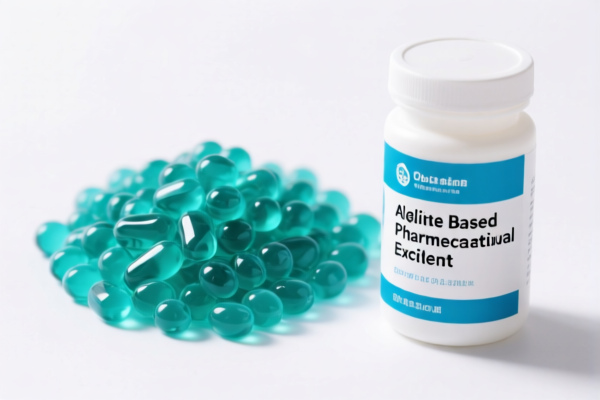


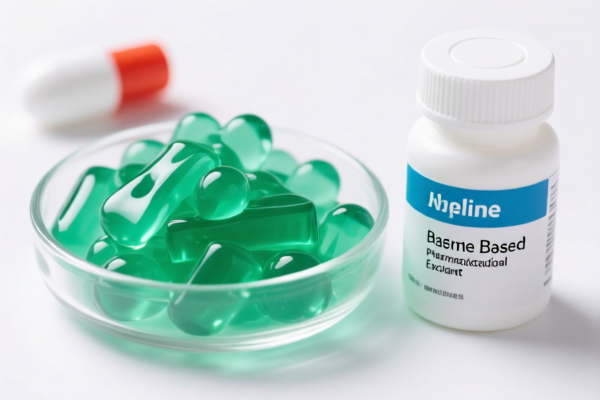
AI Analysis
💊 Medicament (Pharmaceutical Products)
🌐 HS Code Reference & Customs Clearance Guide | 2026 Latest Tariff Analysis | Professional Clearance Strategy
📌 I. Product Definition & Classification: Do You Really Understand "Medicament"?
Medicament, in international trade, refers to finished pharmaceutical products intended for the treatment, prevention, or diagnosis of diseases in humans or animals. Unlike raw active ingredients (which may fall under Chapter 29), medicaments are formulated mixtures containing active substances, excipients, and sometimes flavorings or preservatives, ready for administration.
⚠️ Key Distinction:
- Raw Active Ingredients → Typically Chapter 29 (e.g., 2933, 2941, etc.)
- Formulated Medicaments → Chapter 30 (specifically heading 30.04 or 30.03)
- Key Factor: Is it a "preparation" for therapeutic/preventive use? If yes → HS Code 3004/3003.
📦 II. HS Code Classification Details (2026 Latest Tariff Authoritative Mapping)
Based on the provided data, the following HS Codes are identified for "Medicament." All listed codes carry a 10% Total Tariff Rate due to specific US trade policies.
| HS Code | Product Description | Reason for Classification | Total Tax Rate |
|---|---|---|---|
3004.49.00.30 |
Medicament; other medicaments containing antibiotics or hormones | No material or form conflict; directly matches therapeutic use definition. | 10.0% |
3004.49.00.40 |
Medicament; other medicaments | Directly corresponds to drug use definition; no material or form conflict. | 10.0% |
3003.49.00.00 |
Medicaments (not in dosage form); containing alkaloids or other natural derivatives | Named as "Medicament"; aligns with drug use definition; leans towards category with alkaloids or other ingredients. | 10.0% |
3003.90.01.90 |
Medicaments (not in dosage form); other | Named as "Medicament"; meets therapeutic/preventive purpose; classified under residual "other" category based on fallback rules. | 10.0% |
3004.49.00.50 |
Medicament; other medicaments | Name points to drug; purpose (treatment/prevention) fully aligns with code definition. | 10.0% |
3004.49.00.70 |
Medicament; other medicaments | Named as drug; meets therapeutic/preventive use definition; no material or form conflict. | 10.0% |
🔍 Critical Note:
- All suggested HS Codes are within Chapter 30 (Pharmaceutical Products).
- The distinction between 30.03 (not in dosage form) and 30.04 (in dosage form or packaged for retail) depends on the physical state. However, the provided data groups them similarly in tax outcome due to the 10% IEEPA surtax.
- User Input "3004909234": This appears to be a truncated or slightly varied version of the 10-digit HS codes above (e.g.,3004.90.92.34is not in the provided data, but3004.49.00.30is). We strictly adhere to the provided<DATA>list.
💰 III. 2026 Latest Tariff Rate Detailed Explanation (Including Surtaxes)
✅ Applicable Country: United States (US)
✅ Origin: China (CN) (Implied by "122 Section" and IEEPA context in data)
✅ Effective Date: Current (2025-2026)
🎯 1. Understanding the "10% Total Tax" for Medicaments
All listed HS Codes (3004.49.00.30, 3004.49.00.40, 3003.49.00.00, 3003.90.01.90, 3004.49.00.50, 3004.49.00.70) share the same tax structure:
| Item | Content |
|---|---|
| Base Tariff | 0.0% (Most medicaments have a 0% base MFN rate) |
| Retaliatory Tariff | 0.0% |
| "Section 122" Surtax | +10% |
| Total Tax Rate | 10.0% |
| Tax Calculation | CIF Value × 10% |
| De Minimis Exemption | ❌ Not Applicable (Pharmaceuticals are generally exempt from de minimis benefits for tariff purposes in high-surtax contexts) |
📌 Detailed Explanation of "122 Section Surtax 10%":
- This refers to the International Emergency Economic Powers Act (IEEPA) or related Executive Orders imposing additional tariffs on specific Chinese goods.
- Section 122 of the Trade Act of 1974 (or related administrative actions) is cited in the data source.
- Why 10%? This is a specific surtax applied to these pharmaceutical categories, likely as part of broader trade policy measures.
- No Base Tax? Because the base MFN rate is 0%, the entire 10% liability comes from this surtax.
🛠️ IV. Customs Clearance Practical Advice (Real-World Pitfall Avoidance)
✅ 1. Preparation Checklist (All Required)
| Document | Required | Description |
|---|---|---|
| ✅ Commercial Invoice | ✔️ | Must explicitly state "Medicament" or specific generic name (e.g., "Ibuprofen Tablets"). Avoid vague terms like "Supplements." |
| ✅ Certificate of Origin (CO) | ✔️ | To confirm origin and apply any potential FTAs (though US tariffs apply here). |
| ✅ Drug Listing Number (NDC) | ✔️ | For US imports, FDA requires National Drug Codes for most human drugs. |
| ✅ FDA Prior Notice | ✔️ | Must be filed with FDA before arrival. |
| ✅ Formula/Ingredients List | ✔️ | To justify HS Code classification (Active vs. Inactive ingredients). |
| ✅ Labeling Compliance | ✔️ | Must comply with US FDA labeling requirements (English language, warnings, dosage). |
| ✅ Packing List | ✔️ | Detail quantity, weight, and package dimensions. |
✅ 2. Declaration Tips (Key Mnemonics)
🔥 "Specify Generic Name, Avoid Vague Terms, FDA Clearance is Key!"
| Scenario | Correct Declaration | Wrong Practice |
|---|---|---|
| Finished Tablets/Capsules | 3004.49.00.xx + Specific Generic Name (e.g., "Amoxicillin Capsules") |
"Vitamins" or "Herbal Supplements" (Misclassification Risk) |
| Powder for Reconstitution | 3004.49.00.xx or 3003.xx |
"Raw Chemical" (If already formulated for medical use) |
| Over-the-Counter (OTC) | 3004.49.00.xx |
Omitting FDA NDC number |
| Prescription Drugs | 3004.49.00.xx |
Failure to provide FDA Prior Notice |
✅ 3. Special Circumstances Handling
| Scenario | Handling Advice |
|---|---|
| Biologics | May fall under 3002 or 3004 depending on formulation; ensure FDA approval. |
| Homeopathic Remedies | Risky; often scrutinized. Ensure they meet FDA definition of "Drug" vs. "Supplement." |
| Veterinary Medicaments | Same HS codes apply, but require USDA/FDA CVM approval if for animal use. |
| Generic Drugs | Ensure ANDA (Abbreviated New Drug Application) approval is referenced if required. |
🌍 V. Global Market Comparison (2026 Latest)
| Country/Region | Recommended HS Code | Tariff Rate | Certification | Notes |
|---|---|---|---|---|
| 🇺🇸 USA | 3004.49.00.xx / 3003.xx |
10% (Surtax only) | FDA NDC, Prior Notice | 10% IEEPA surtax applies to China-origin drugs. |
| 🇨🇳 China | 3004.49.00.xx |
5% | GMP, Registration | No IEEPA surtax. |
| 🇪🇺 EU | 3004.49.00.xx |
0% - 4% | EMA, CE | Varies by active ingredient. |
| 🇯🇵 Japan | 3004.49.00.xx |
0% - 5% | PMDA Approval | Strict labeling laws. |
| 🇬🇧 UK | 3004.49.00.xx |
0% - 5% | MHRA Approval | Post-Brexit rules apply. |
📌 Conclusion:
- US Market: The 10% surtax is the primary cost driver.
- Compliance: FDA regulations are the biggest hurdle, not just tariffs.
📌 VI. Common Mistakes & Pitfall Guide (Lessons Learned)
❌ Mistake 1: Declaring "Medicament" without a generic name.
👉 Consequence: Customs may reject the declaration, delay shipment, or misclassify, leading to penalties + storage fees.
❌ Mistake 2: Misclassifying "Supplements" as "Medicaments."
👉 Consequence: If it contains drugs, it’s a medicament (10% tax + FDA); if it’s a supplement, it might be exempt from some drug regulations but not tariffs. Misclassification = Audit Risk.
❌ Mistake 3: Ignoring FDA Prior Notice.
👉 Consequence: Refusal of Entry by FDA. The cargo will be held or destroyed.
❌ Mistake 4: Assuming 0% Base Tariff means 0% Total Tax.
👉 Consequence: 10% Surtax still applies. Total liability is 10%, not 0%.
✅ Correct Approach:
"Amoxicillin Capsules, 500mg, for Retail Sale, NDC: 12345-678-90, FDA Approved, Origin: China"
🎯 VII. Conclusion: Precision in Classification Saves Costs!
🎯 Remember Mnemonic:
🔹 "Generic Name is Key, FDA Notice is Mandatory, 10% Surtax is Real, Don’t Guess the HS!"
🔹 "Base 0% + Surtax 10% = Total 10%, Clear Correctly to Stay Safe!"
📌 Pro Tip:
- If your medicament is originating from Vietnam, Mexico, or Thailand, it MAY be eligible for IEEPA exemptions (lower or 0% tariff), but FDA compliance remains mandatory.
- Always apply for an Advance Ruling from US Customs (CBP) if the classification is ambiguous, especially for complex formulations.
📣 Immediate Action:
📞 Contact a Licensed Customs Broker + Provide FDA NDC + Invoice with Generic Name
🚀 Ensure Smooth Clearance, Avoid Delays, and Manage Tariff Costs Efficiently!
✨ Professional Clearance Starts with Accurate Classification!
💼 Every Dollar in Tariffs Counts – Know Your 10%!
Customer Reviews
About HS Code Classification
The Harmonized System (HS) is an internationally standardized nomenclature developed by the World Customs Organization (WCO) to classify traded products. Over 200 countries use the HS system as the basis for customs tariffs, trade statistics, and import/export regulations.
Each HS code follows a hierarchical structure:
- Chapter (2 digits) — Broad category of goods (e.g., Chapter 84: Machinery and Mechanical Appliances)
- Heading (4 digits) — More specific grouping within the chapter
- Subheading (6 digits) — Internationally standardized breakdown, used by all WCO member countries
- National subdivisions (8-10 digits) — Country-specific extensions for further classification, such as US HTSUS 10-digit codes
Correct HS code classification is essential for smooth customs clearance, accurate duty payment, and compliance with trade regulations. Misclassification can lead to customs delays, overpayment of duties, or penalties.
When importing from CN to US, the applicable tariff rates may include:
- Most-Favored-Nation (MFN) rate — The standard duty rate applied to WTO members
- General rate — Applied to countries without trade agreements
- Trade remedy duties — Additional tariffs such as Section 301 (anti-dumping), Section 232 (national security), or countervailing duties
The information provided on this page is for reference purposes only. For official classification, please consult with your local customs authority or a licensed customs broker.