medium polyethylene bags
CN → US| HS Code | Tariff Rate | Origin | Destination | Doc |
|---|---|---|---|---|
| 3923210030 | 38.0% | CN | US | Official Doc |
| 3923210080 | 38.0% | CN | US | Official Doc |
Product Images

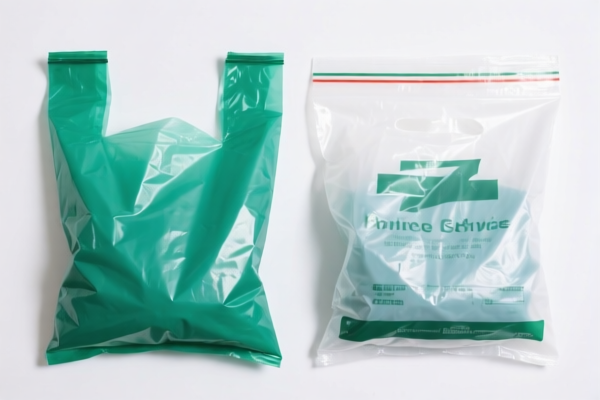

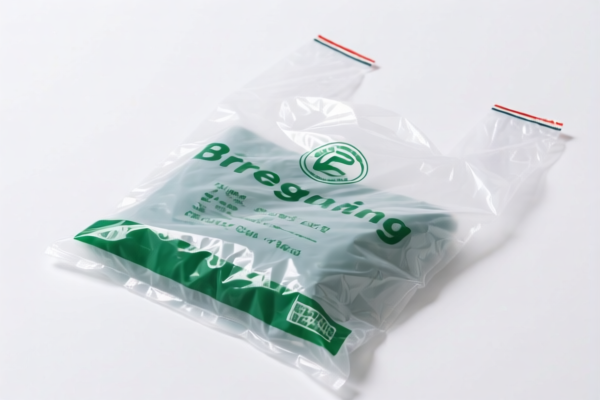
AI Analysis
📦 Medium Polyethylene Bags (Reclosable & Standard)
🌐 HS Code Reference & Customs Clearance Guide | 2026 Latest Tariff Analysis | Professional Clearance Strategy
📌 I. Product Definition & Classification: What Are "Medium Polyethylene Bags"?
"Medium Polyethylene Bags" refer to plastic packaging articles primarily made of polymers of ethylene (Polyethylene/PE). In international trade, these are categorized under Heading 3923, specifically as sacks and bags for the conveyance or packing of goods.
The classification depends heavily on two key technical features: 1. Closure Type: Whether they are reclosable (with an integral extruded closure) or non-reclosable (simple open-top or heat-sealed). 2. Dimensions: Specifically, if any single side exceeds 75 mm in length.
⚠️ Critical Distinction:
- Reclosable Bags: Feature a zip-lock or extruded seal allowing repeated opening/closing. These are more specialized and often face higher scrutiny for specific material composition.
- Standard Bags: Simple sacks or bags without a reclosable mechanism. These are further split by size (≤75mm vs >75mm).
📋 II. HS Code Classification Details (Based on Provided Data)
| HS Code | Product Description | Applicable Scenario | Key Feature |
|---|---|---|---|
3923.21.00.30 |
Reclosable sacks and bags of ethylene polymers, Other | Zip-lock bags, self-adhesive plastic bags, premium retail packaging | ✅ Reclosable (Integral extruded closure) |
3923.21.00.80 |
Other sacks and bags of ethylene polymers: With no single side exceeding 75 mm | Small produce bags, small industrial liners, narrow sacks | ❌ Non-Reclosable AND Small Size (≤75mm) |
🔍 Important Clarification:
- The provided data only lists two specific sub-categories.
- If your "Medium" bags are Reclosable, they fall under3923.21.00.30(assuming they don't fit other specific excluded categories).
- If your "Medium" bags are Non-Reclosable but small (no side >75mm), they fall under3923.21.00.80.
- ⚠️ Note on "Medium" Size: Typically, "Medium" bags (e.g., 10x12 inches or larger) may exceed the 75mm side limit. If a non-reclosable bag has a side >75mm, it usually falls under3923.21.00.10(not listed in your data). Ensure you verify the exact dimensions. If it is >75mm and non-reclosable, it is not covered by3923.21.00.80in the provided data.
💰 III. 2026 Tariff Rate Breakdown (Detailed Tax Terms)
✅ Applicable Country: United States (US)
✅ Origin: China (CN) (Implied by the 25% Additional Tariff, typical for Section 301 goods)
✅ Effective Time: Current rates apply (as per provided data)
🎯 1. HS Code 3923.21.00.30 — Reclosable Polyethylene Bags
| Item | Detail |
|---|---|
| Base Tariff | 3.0% |
| Additional Tariff | 25.0% (Section 301) |
| Total Tax Rate | 28.0% |
| Tax Calculation | CIF Value × 28% |
| Tax Detail | 基础关税: 3.0%, 加征关税: 25.0% |
📌 Explanation:
- The 3.0% is the standard Most Favored Nation (MFN) duty for plastic articles.
- The 25.0% is the additional tariff imposed under U.S. Trade Law Section 301 against Chinese goods.
- Total Effective Rate: 28%. This is a significant cost factor for packaging imports.
🎯 2. HS Code 3923.21.00.80 — Other Polyethylene Bags (≤75mm)
| Item | Detail |
|---|---|
| Base Tariff | 3.0% |
| Additional Tariff | 25.0% (Section 301) |
| Total Tax Rate | 28.0% |
| Tax Calculation | CIF Value × 28% |
| Tax Detail | 基础关税: 3.0%, 加征关税: 25.0% |
📌 Explanation:
- Despite being a different physical specification (non-reclosable, smaller size), the tax rate is identical to the reclosable version in this dataset.
- Both categories attract the 28% total duty when originating from China.
🛠️ IV. Customs Clearance Practical Advice (Avoid Pitfalls)
✅ 1. Preparation Checklist (Must-Have Documents)
| Document | Mandatory? | Purpose |
|---|---|---|
| ✅ Product Specification Sheet | ✔️ | Must state material: 100% Polyethylene (PE) or blend %. Avoid vague terms like "plastic". |
| ✅ Commercial Invoice | ✔️ | Must explicitly state: "Plastic Sacks and Bags, of Polymers of Ethylene, Reclosable/Non-Reclosable". |
| ✅ Packing List | ✔️ | List quantity and weight. Ensure units match the invoice (e.g., bags per roll, rolls per carton). |
| ✅ Product Photos | ✔️ | Show the closure mechanism. If reclosable, show the zip-lock/extruded seal. If not, show the open end. |
| ✅ Size Diagram | ✔️ | Critical for 3923.21.00.80. Prove that NO single side exceeds 75 mm if claiming this code. |
📌 Tip: If the bag is Reclosable, use Code
3923.21.00.30. Do not try to force it into80if it has a zip-lock.
✅ 2. Declaration Tips (Key Mnemonics)
🔥 "Material is PE, Size Matters, Closure Defines Code!"
| Scenario | Correct Code | Risk of Error |
|---|---|---|
| Reclosable (Zip-lock) | 3923.21.00.30 |
Misdeclaring as non-reclosable may lead to re-classification by customs. |
| Non-Reclosable, Size ≤75mm | 3923.21.00.80 |
If any side is 80mm, this code is INVALID. Must check for other codes (e.g., .10 or .90). |
| Non-Reclosable, Size >75mm | Not Listed in Data | The provided data does not include large non-reclosable bags. Do not use .80. |
⚠️ Warning:
- Do not use3923.21.00.80for bags larger than 75mm on any side.
- If your "Medium" bag is, for example, 200mm x 150mm, it exceeds 75mm. It cannot be classified as.80. You must verify if it falls under3923.21.00.10(which is not in the provided data) or if it is considered "Other" under a different subheading. Re-evaluate your HS Code if size >75mm.
✅ 3. Special Considerations
| Situation | Advice |
|---|---|
| Material Composition | If the bag contains >95% Polyethylene, it is correctly classified under 3923.21. If it contains significant PVC or PP, it may fall under a different heading (e.g., 3923.29). Declare material accurately. |
| Reclosable Definition | "Reclosable" means it can be opened and closed again. Adhesive strips count if they allow re-closure. Simple "tear-open" bags are NOT reclosable. |
| Packaging Unit | Declare as "Bags". Do not declare as "Plastic Rolls" unless they are not yet cut into bags. |
🌍 V. Global Market Comparison (2026)
| Country/Region | Recommended HS Code | Tariff (China Origin) | Notes |
|---|---|---|---|
| 🇺🇸 United States | 3923.21.00.30 or .80 |
28% (3% Base + 25% Addl.) | High Duty. Plan cost accordingly. |
| 🇨🇳 China | 3923.21.00 | 0% - 5% | Low import duty for domestic use. |
| 🇪🇺 EU | 3923.29.97 | ~6.5% | No Section 301-style additional tariffs. |
| 🇯🇵 Japan | 3923.29.00 | ~5-10% | Varies by specific plastic type. |
📌 Conclusion:
- The United States is the most expensive market for these goods due to the 25% Additional Tariff.
- Total Cost Impact: A $10,000 shipment incurs $2,800 in duties.
- Ensure your pricing model includes this 28% cost for US-bound shipments.
📌 VI. Common Mistakes & Pitfalls (Lessons Learned)
❌ Mistake 1: Declaring a Reclosable bag as Non-Reclosable (3923.21.00.80).
👉 Consequence: Customs may reclassify it, leading to delays and potential penalties. Use 3923.21.00.30 instead.
❌ Mistake 2: Using 3923.21.00.80 for bags with a side >75mm.
👉 Consequence: Wrong HS Code. The data explicitly limits .80 to "no single side exceeding 75 mm". If your medium bag is 10 inches (254mm) long, this code is illegal for that item. You must find the correct code for large non-reclosable bags (often 3923.21.00.10 or similar, depending on the specific tariff schedule).
❌ Mistake 3: Vague Description ("Plastic Bags").
👉 Consequence: Customs will ask for clarification. Always specify: "Polyethylene Sacks and Bags, Reclosable/Non-Reclosable, Size: ___".
✅ Correct Declaration Example:
"Plastic Sacks and Bags, of Polymers of Ethylene, Reclosable, Model ABC, CIF Value $5,000. HS Code: 3923.21.00.30."
🎯 VII. Conclusion: Precise Declaration, Smooth Clearance
🎯 Remember the Rules:
🔹 Reclosable →
3923.21.00.30
🔹 Non-Reclosable + Small (≤75mm) →3923.21.00.80
🔹 Non-Reclosable + Large (>75mm) → Check Other Codes (Not in Provided Data)
🔹 Total Duty (China to US) → 28%
📌 Pro Tip:
If your bags are large (most "Medium" commercial bags are >75mm), do not use
3923.21.00.80. It is a common mistake that leads to customs seizures or amendments. Verify the correct HS Code for large non-reclosable PE bags in your specific tariff book.
📣 Immediate Action:
📏 Measure Your Bags! Check if any side is >75mm.
🔍 Check Closure! Is it zip-lock or simple open?
📝 Apply Correct HS Code from the table above.
🚀 Ensure Smooth Customs Clearance with Accurate Documentation!
✨ Professional Customs Clearance Starts with Accurate Classification!
💼 Every 1% of Tariff Matters, But Every Wrong Code Costs More!
Customer Reviews
About HS Code Classification
The Harmonized System (HS) is an internationally standardized nomenclature developed by the World Customs Organization (WCO) to classify traded products. Over 200 countries use the HS system as the basis for customs tariffs, trade statistics, and import/export regulations.
Each HS code follows a hierarchical structure:
- Chapter (2 digits) — Broad category of goods (e.g., Chapter 84: Machinery and Mechanical Appliances)
- Heading (4 digits) — More specific grouping within the chapter
- Subheading (6 digits) — Internationally standardized breakdown, used by all WCO member countries
- National subdivisions (8-10 digits) — Country-specific extensions for further classification, such as US HTSUS 10-digit codes
Correct HS code classification is essential for smooth customs clearance, accurate duty payment, and compliance with trade regulations. Misclassification can lead to customs delays, overpayment of duties, or penalties.
When importing from CN to US, the applicable tariff rates may include:
- Most-Favored-Nation (MFN) rate — The standard duty rate applied to WTO members
- General rate — Applied to countries without trade agreements
- Trade remedy duties — Additional tariffs such as Section 301 (anti-dumping), Section 232 (national security), or countervailing duties
The information provided on this page is for reference purposes only. For official classification, please consult with your local customs authority or a licensed customs broker.