memory card
CN → US| HS Code | Tariff Rate | Origin | Destination | Doc |
|---|---|---|---|---|
| 8523590000 | 35.0% | CN | US | Official Doc |
| 8523510000 | 17.5% | CN | US | Official Doc |
| 8471706000 | 35.0% | CN | US | Official Doc |
| 8471709000 | 35.0% | CN | US | Official Doc |
Product Images
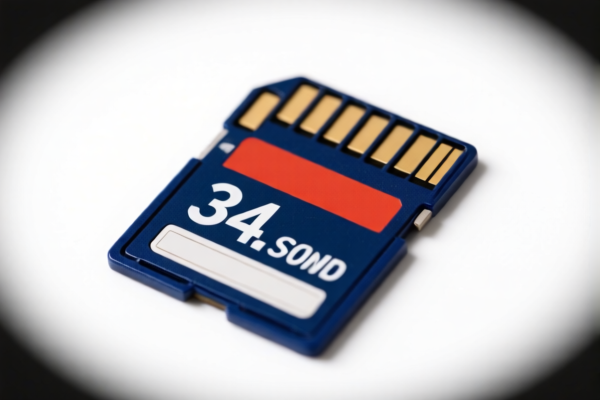
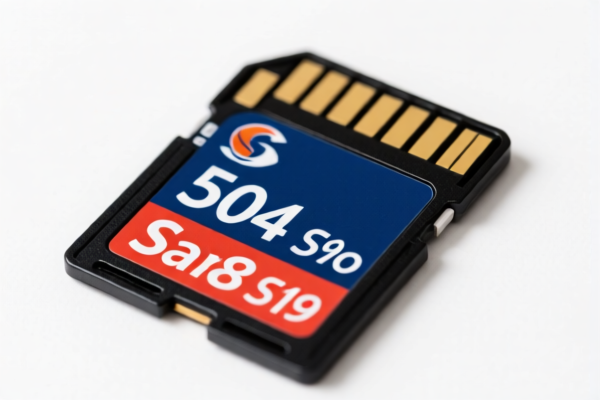
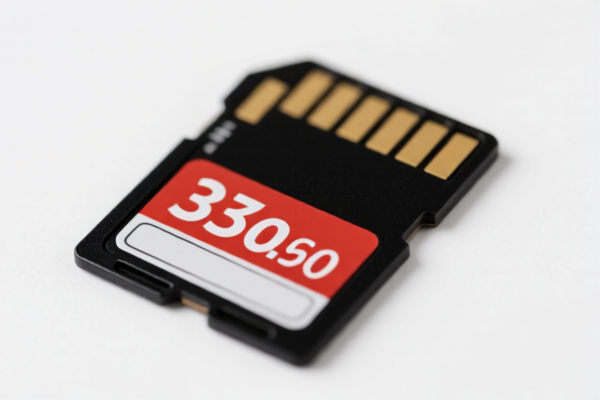
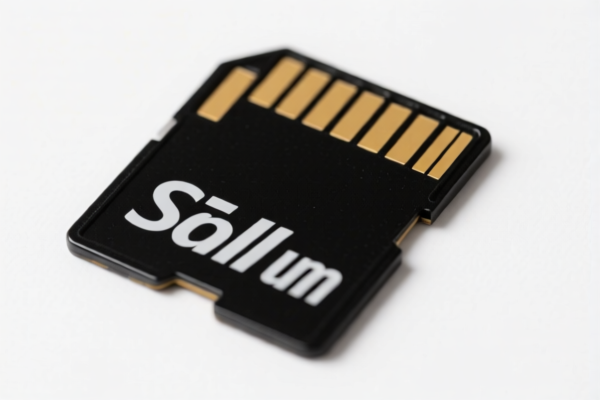
AI Analysis
💾 Memory Cards (Storage Cards for Data Processing)
🌐 HS Code Reference & Customs Clearance Guide | 2026 Latest Tariff Analysis | Professional Clearance Strategy
📌 I. Product Definition and Classification: What Exactly is a "Memory Card"?
In the global trade of consumer electronics, Memory Cards are primarily classified based on their internal storage medium and physical form factor. They are broadly divided into two categories:
Solid-State Non-Volatile Storage (NAND Flash):
Most modern memory cards (SD, microSD, CFexpress, etc.) use NAND flash memory chips. They have no moving parts, are non-volatile (retain data without power), and fit the definition of "Solid State" storage devices.
Other Storage Media (e.g., Magnetic/Optical - Rare in this context):
While older cards existed, the vast majority of current imports fall under solid-state semiconductor storage. The key distinction for customs is whether the item is a semiconductor-based solid-state device (Chapter 85) or a general-purpose storage unit for computers (Chapter 84).
⚠️ Key Distinction Point:
- If the card contains NAND flash/semiconductor chips → It is a Solid-State Storage Device → Generally falls under 8523 or 8471.70.
- Material Conflict? No. Semiconductor cards do not conflict with material definitions in Chapter 85 or 84.
📦 II. HS Code Classification Details (2026 Latest Tariff Authority Comparison)
Based on the provided data, three primary HS Codes are considered for Memory Cards. The choice depends on the specific functional description and physical configuration.
| HS Code | Product Description | Applicability | Key Classification Logic |
|---|---|---|---|
8523.51.00.00 |
Solid-State Non-Volatile Storage | Standard SD, microSD, USB Flash Drives | Recognized as solid-state, non-volatile media. Fits the specific subheading for solid-state storage devices. |
8523.59.00.00 |
Other Storage Media (Semiconductor) | Specialized/Proprietary Flash Cards | Used when the card is clearly semiconductor-based but may not fit the strict "solid-state" definition of 8523.51, or for other non-magnetic/non-optical semiconductor storage. |
8471.70.60.00 |
Storage Units, Not Mounted in Cabinets | Standalone Storage Drives/Enclosures | Classified as a storage device for automatic data processing machines. Specifically for units not assembled in cabinets. |
8471.70.90.00 |
Other Storage Units | General Purpose Storage Devices | Classified as other storage devices consistent with general data processing equipment. Covers storage media not specified elsewhere. |
🔍 Critical Reminder:
- 8523 Series: Focuses on the medium itself (the "disk" or "chip"). Ideal for raw SD/microSD cards sold as media.
- 8471 Series: Focuses on the function as a peripheral to a computer (ADC). Ideal if marketed explicitly as "external storage for computers" and not just "flash memory media."
- No Material Conflict: All these codes are compatible with semiconductor/plastic construction.
💰 III. 2026 Latest Tariff Rate Breakdown (Including Surtaxes & Policy Add-ons)
✅ Applicable Country: United States (US)
✅ Origin: China (CN)
✅ Effective Date: From November 10, 2025 (including subsequent imports)
🎯 1. 8523.51.00.00 — Solid-State Non-Volatile Storage Media
| Item | Content |
|---|---|
| Base Duty Rate | 0.0% |
| Section 301 Surcharge | +7.5% |
| Section 122 Tariff | +10.0% |
| Total Effective Rate | 17.5% |
| Tax Calculation | CIF Value × 17.5% |
| De Minimis Exemption? | ❌ No (Denied under current trade restrictions) |
| Legal Path | Base: 0% → Section 301: 7.5% → Section 122: 10% |
📌 Interpretation:
- This is the most favorable classification among the options provided.
- Section 301 (7.5%): Applies to specific solid-state storage media under USITC rules.
- Section 122 (10%): A specific surcharge applied to Chinese-origin goods under recent trade enforcement.
- Total: 17.5% is significantly lower than other potential classifications.
🎯 2. 8523.59.00.00 — Other Semiconductor Storage Media
| Item | Content |
|---|---|
| Base Duty Rate | 0.0% |
| Section 301 Surcharge | +25.0% |
| Section 122 Tariff | +10.0% |
| Total Effective Rate | 35.0% |
| Tax Calculation | CIF Value × 35.0% |
| De Minimis Exemption? | ❌ No |
| Legal Path | Base: 0% → Section 301: 25.0% → Section 122: 10% |
📌 Interpretation:
- Used for semiconductor storage that doesn't fit the specific "solid-state" definition of 8523.51, or "other" semiconductor media.
- Section 301 (25%): Higher surcharge rate applied to this subheading.
- Total: 35.0% is double the rate of 8523.51.00.00. Precision in classification is crucial to avoid overpaying.
🎯 3. 8471.70.60.00 & 8471.70.90.00 — Storage Units for ADCs
| Item | Content |
|---|---|
| Base Duty Rate | 0.0% |
| Section 301 Surcharge | +25.0% |
| Section 122 Tariff | +10.0% |
| Total Effective Rate | 35.0% |
| Tax Calculation | CIF Value × 35.0% |
| De Minimis Exemption? | ❌ No |
| Legal Path | Base: 0% → Section 301: 25.0% → Section 122: 10% |
📌 Interpretation:
- 8471.70.60.00: For storage devices not mounted in cabinets (e.g., standalone USB drives, SD cards marketed as PC peripherals).
- 8471.70.90.00: For other storage devices not specified elsewhere.
- Total: 35.0% for both.
- Why so high? These are treated as general "storage units" for computers, attracting the maximum standard Section 301 rate. Use only if 8523 classifications are technically incorrect for your specific product form.
🛠️ IV. Customs Clearance Operational Advice (Practical Pitfall Avoidance)
✅ 1. Essential Documentation Checklist (No Exceptions)
| Document | Required? | Notes |
|---|---|---|
| ✅ Product Specification Sheet | ✔️ | Must clearly state: "Non-Volatile," "Solid State," "Flash Memory," "No Moving Parts." |
| ✅ Circuit Diagram/Block Diagram | ✔️ | Proves the presence of NAND chips and controller, supporting Chapter 85 classification. |
| ✅ Product Photos (Including Label) | ✔️ | Must show model number, capacity, and "Made in China" (if applicable). |
| ✅ Commercial Invoice | ✔️ | Description must be precise: e.g., "SD Card, 64GB, NAND Flash, Solid State, Non-Volatile." Avoid vague terms like "Computer Part." |
| ✅ Packing List | ✔️ | Clearly itemize units. Do not mix with accessories unless declared separately. |
| ✅ Certificate of Origin (CO) | ✔️ | Required for verifying China origin and applying surcharges correctly. |
✅ 2. Declaration Tips (Critical Keywords)
🔥 "Solid State, Non-Volatile, Semiconductor = Chapter 85 (Cheaper!)"
| Scenario | Correct HS Code | Error Consequence |
|---|---|---|
| Standard SD/microSD Card | 8523.51.00.00 |
Misclassifying as 8471 → Pays 35% instead of 17.5% |
| Proprietary Flash Media | 8523.59.00.00 |
Misclassifying as 8471 → Pays 35% instead of 35% (Same, but 8523 is more accurate for media) |
| USB Drive / External SSD | 8471.70.60.00 or 8471.70.90.00 |
Correct if marketed as a "PC Peripheral Storage Unit" |
| Magnetic Card (Rare) | Other Chapter | Not covered in current data; ensure it's not magnetic |
📌 Key Advice:
- Prefer 8523.51.00.00 if your product is a standard flash memory card (SD, microSD, CompactFlash). The 17.5% rate is significantly more cost-effective.
- Avoid describing these items purely as "Computer Accessories" if they are fundamentally "Storage Media."
✅ 3. Special Cases Handling
| Scenario | Handling Advice |
|---|---|
| OEM Custom Cards | Provide design specifications proving NAND flash composition to support 8523 classification. |
| Mixed Containers | Clearly separate storage cards from cables/adapters. Misdeclaration can lead to penalties. |
| Low-Value Shipments (De Minimis) | ❌ No Exemption: Remember, these items do not qualify for de minimis exemption under current Section 122/301 rules. Duties apply regardless of value. |
🌍 V. Global Market Comparison (2026 Latest)
| Country/Region | Recommended HS Code | Duty Rate (China Origin) | Key Certification | Notes |
|---|---|---|---|---|
| 🇺🇸 USA | 8523.51.00.00 |
17.5% (Optimal) | FCC (if wireless), RoHS | Highest risk area due to surcharges. Precision is key. |
| 🇺🇸 USA | 8471.70.x0.00 |
35.0% | FCC | Higher cost unless specifically a PC peripheral. |
| 🇨🇳 China | 8523.51.00.00 |
0-5% (Import Duty) | CCC (if applicable) | Low duty, no Section 301/122. |
| 🇪🇺 EU | 8523.51.00.00 |
0% (Most cases) | CE, RoHS | No major surcharges like US. |
| 🇬🇧 UK | 8523.51.00.00 |
0-5% | UKCA | Post-Brexit rules apply, generally favorable. |
📌 Conclusion:
- The US market is the most critical for tariff optimization.
- Using8523.51.00.00saves you 17.5% compared to alternative classifications.
- Do not ignore Section 122 and 301; they are additive and non-negotiable for Chinese origin.
📌 VI. Common Errors & Pitfall Guide (Blood & Tears Lessons)
❌ Mistake 1: Classifying SD Cards as "Computer Peripherals" (8471)
👉 Consequence: You pay 35% instead of 17.5%. That’s a 100% increase in duty cost!
✅ Fix: Emphasize "Solid State Non-Volatile Storage Media" in your description.
❌ Mistake 2: Claiming De Minimis Exemption
👉 Consequence: Seizure or Heavy Penalties. These goods are explicitly denied de minimis status under current trade enforcement.
✅ Fix: Budget for duties even on small shipments.
❌ Mistake 3: Vague Descriptions ("Memory," "Storage")
👉 Consequence: Customs may choose the worst-case classification (35%) or hold the shipment for inspection.
✅ Fix: Use precise terms: "NAND Flash Memory Card, Solid State, Non-Volatile."
🎯 VII. Conclusion: Precision Saves Money!
🎯 Remember the Golden Rule:
🔹 "Flash Memory = 8523.51 (17.5%)"
🔹 "Generic Storage Unit = 8471 (35%)"
🔹 "One Step Wrong, Cost Doubles!"
📌 Pro Tip:
If your memory cards are shipped from Vietnam, Mexico, or Malaysia, you may qualify for IEEPA Exemptions or lower tariffs. However, if Made in China, prepare for 17.5% - 35% depending on precise classification.
📣 Immediate Action Required:
📞 Contact your Customs Broker to confirm HS Code pre-ruling.
📝 Update your Invoice Descriptions to reflect "Solid State Non-Volatile Storage."
🚀 Optimize your supply chain to avoid the 35% pitfall.
✨ Professional Clearance Starts with Accurate Classification!
💼 Your Profit Margin Depends on That 17.5% vs. 35% Difference!
Customer Reviews
About HS Code Classification
The Harmonized System (HS) is an internationally standardized nomenclature developed by the World Customs Organization (WCO) to classify traded products. Over 200 countries use the HS system as the basis for customs tariffs, trade statistics, and import/export regulations.
Each HS code follows a hierarchical structure:
- Chapter (2 digits) — Broad category of goods (e.g., Chapter 84: Machinery and Mechanical Appliances)
- Heading (4 digits) — More specific grouping within the chapter
- Subheading (6 digits) — Internationally standardized breakdown, used by all WCO member countries
- National subdivisions (8-10 digits) — Country-specific extensions for further classification, such as US HTSUS 10-digit codes
Correct HS code classification is essential for smooth customs clearance, accurate duty payment, and compliance with trade regulations. Misclassification can lead to customs delays, overpayment of duties, or penalties.
When importing from CN to US, the applicable tariff rates may include:
- Most-Favored-Nation (MFN) rate — The standard duty rate applied to WTO members
- General rate — Applied to countries without trade agreements
- Trade remedy duties — Additional tariffs such as Section 301 (anti-dumping), Section 232 (national security), or countervailing duties
The information provided on this page is for reference purposes only. For official classification, please consult with your local customs authority or a licensed customs broker.