mens hoodie
CN → US| HS Code | Tariff Rate | Origin | Destination | Doc |
|---|---|---|---|---|
| 6110202041 | 34.0% | CN | US | Official Doc |
| 6110303041 | 49.5% | CN | US | Official Doc |
| 6110202046 | 34.0% | CN | US | Official Doc |
| 6110202041 | 34.0% | CN | US | Official Doc |
Product Images

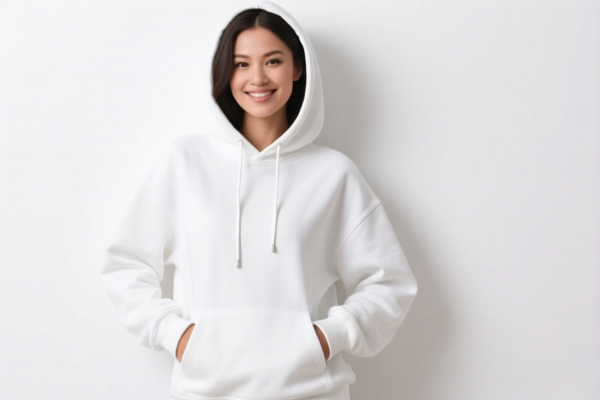


AI Analysis
👕 Men’s Hoodies (Knitted/Crocheted Sweaters)
🌐 HS Code Reference & Customs Clearance Guide | 2026 Latest Tariff Analysis | Professional Clearance Strategy
📌 I. Product Definition & Classification: Do You Really Understand "Men’s Hoodie"?
A men’s hoodie is a casual top, typically featuring a hood and a front pouch pocket. In international trade, it falls under the category of "Sweaters, Pullovers, Cardigans..." (Chapter 61: Articles of Appare and Clothing Accessories, Knitted or Crocheted).
The classification depends heavily on material composition and gender specificity. Based on the provided data, there are two primary material categories for men's hoodies:
1. Cotton-Based:归入 6110.20 series.
2. Man-Made Fibers/Cotton Blends:归入 6110.30 series.
⚠️ Key Distinction:
- If the hoodie is 100% Cotton or primarily cotton-based knitwear → Classify under 6110.20.
- If the hoodie contains Man-Made Fibers (Synthetic) or is a blended fabric (e.g., Polyester-Cotton) categorized as "Artificial Fiber" in specific tariff lines → Classify under 6110.30.
📦 II. HS Code Classification Details (2026 Latest Tariff Authority Comparison)
Based strictly on the provided <DATA>, here are the specific HS Codes and their corresponding tax structures for Men's Hoodies:
| HS Code | Product Description | Total Tax Rate | Tax Breakdown Details |
|---|---|---|---|
6110.20.20.41 |
Men's Hoodie, Cotton Knitted Sweatshirt | 34.0% | Base: 16.5% Additional: 7.5% Section 122: 10% |
6110.30.30.41 |
Men's Hoodie, Man-Made Fiber or Cotton Knitted Sweatshirt | 49.5% | Base: 32.0% Additional: 7.5% Section 122: 10% |
6110.20.20.46 |
Hoodie, Cotton Knitted Sweatshirt (General) | 34.0% | Base: 16.5% Additional: 7.5% Section 122: 10% |
6110.20.20.41 |
Hoodie, Knitted Cotton Sweatshirt (General) | 34.0% | Base: 16.5% Additional: 7.5% Section 122: 10% |
🔍 Key Observation:
- The Base Tariff for Cotton Hoodies (6110.20) is 16.5%.
- The Base Tariff for Man-Made Fiber/Cotton Blend Hoodies (6110.30) is significantly higher at 32.0%.
- Both categories incur the same additional taxes: 7.5% (Additional) + 10% (Section 122).
💰 III. 2026 Latest Tariff Rate Breakdown (Including Surcharges & Policy Add-ons)
✅ Applicable Country: United States (US)
✅ Origin: Likely China (based on "Section 122" reference, which typically applies to China-origin goods under specific trade remedies)
✅ Effective Time: Current applicable rates per provided data
🎯 1. 6110.20.20.41 & 6110.20.20.46 —— Cotton Men’s Hoodies
| Item | Content |
|---|---|
| Base Tariff | 16.5% (Ad Valorem) |
| Additional Tariff | +7.5% |
| Section 122 Tariff | +10% |
| Total Effective Rate | 34.0% |
| Tax Calculation | CIF Value × 34.0% |
| Legal Basis Path | HS:6110.20.20.xx → Section 122: 10% → Additional: 7.5% |
📌 Explanation:
- Base Tariff (16.5%): The standard Most Favored Nation (MFN) or normal trade rate for cotton sweaters.
- Additional Tariff (7.5%): Likely related to recent trade policy adjustments or specific agricultural/consumer good surcharges.
- Section 122 Tariff (10%): A specific penalty or countermeasure tariff applied to certain goods from specific origins (commonly China).
- Total: 34.0% is a high but manageable rate for cotton apparel.
🎯 2. 6110.30.30.41 —— Man-Made Fiber / Cotton Blend Men’s Hoodies
| Item | Content |
|---|---|
| Base Tariff | 32.0% (Ad Valorem) |
| Additional Tariff | +7.5% |
| Section 122 Tariff | +10% |
| Total Effective Rate | 49.5% |
| Tax Calculation | CIF Value × 49.5% |
| Legal Basis Path | HS:6110.30.30.xx → Section 122: 10% → Additional: 7.5% |
📌 Explanation:
- Base Tariff (32.0%): Significantly higher than cotton, reflecting protective measures for domestic textile industries or different material valuations.
- Additional & Section 122: Same as above (+17.5% combined).
- Total: 49.5% is a prohibitive tariff level. Importers must carefully consider cost structures or material sourcing to avoid this rate.
🛠️ IV. Customs Clearance Practical Advice (实战避坑指南)
✅ 1. Documentation Checklist (Must-Haves)
| Document | Required? | Notes |
|---|---|---|
| ✅ Product Specification Sheet | ✔️ | Must clearly state Material Composition (e.g., "100% Cotton" vs. "60% Cotton/40% Polyester"). This is the #1 factor for HS Code selection. |
| ✅ Fabric Composition Tag | ✔️ | Photo of the care label showing fiber content. |
| ✅ Commercial Invoice | ✔️ | Clearly describe as "Men's Knitted Cotton Hoodie" or "Men's Knitted Synthetic Blend Hoodie". |
| ✅ Packing List | ✔️ | Include quantity, weight, and HS Code. |
| ✅ Certificate of Origin (CO) | ✔️ | If claiming any preferential rates (though data shows high tariffs, CO is still standard). |
✅ 2. Declaration Tips (Key Mnemonics)
🔥 "Material is King, Code is Life! Don't Mix Cotton and Synthetic!"
| Scenario | Correct Declaration | Consequence of Error |
|---|---|---|
| 100% Cotton Hoodie | 6110.20.20.41 (34.0%) |
If misdeclared as synthetic → May face higher base duty (32%) + penalties. |
| Polyester-Cotton Blend | 6110.30.30.41 (49.5%) |
If misdeclared as cotton → Under-declaration of duty → Seizure, fines, and back taxes! |
| Unisex/Adult Hoodie | Use Men’s Code (6110) |
Using Women’s code (6110.30 may differ by gender in other contexts, but data focuses on Men’s). Ensure gender is specified if required. |
✅ 3. Special Considerations
| Situation | Advice |
|---|---|
| Material Blends | If the hoodie is a blend (e.g., 50% Cotton/50% Polyester), check the "Essential Character" rule. If categorized under 6110.30 (Man-Made Fiber) in the provided data, it likely means synthetic dominates or specific trade rules apply. Always confirm with your broker. |
| Section 122 Impact | The 10% Section 122 tariff is non-negotiable for eligible goods from certain countries. Factor this into your landed cost calculation immediately. |
| Cost Optimization | For imports from China, the 49.5% rate on synthetics is very high. Consider if sourcing from countries not subject to these surcharges (if applicable) or negotiating price adjustments with suppliers. |
🌍 V. Global Market Comparison (2026 Latest)
| Country/Region | Recommended HS Code | Tariff (Est.) | Notes |
|---|---|---|---|
| 🇺🇸 USA | 6110.20.20.41 / 6110.30.30.41 |
34.0% / 49.5% | Includes Section 122 & Additional Surcharges. High cost. |
| 🇨🇳 China | 6110.20 / 6110.30 |
~10-12% | Lower import duties. No Section 122. |
| 🇪🇺 EU | 6110.20 / 6110.30 |
12% | Standard MFN rate. No Section 122. |
| 🇬🇧 UK | 6110.20 / 6110.30 |
12% | Post-Brexit, similar to EU. |
| 🇨🇦 Canada | 6110.20 / 6110.30 |
15-18% | No Section 122. |
📌 Conclusion:
- The US market imposes a significant tax burden on Chinese-origin apparel due to Section 122 and additional tariffs.
- Cotton Hoodies (34%) are cheaper to import than Synthetic/Blend Hoodies (49.5%).
- For US importers, material composition accuracy is critical to avoid surprise costs.
📌 VI. Common Mistakes & Pitfalls (Blood & Tears Lessons)
❌ Mistake 1: Declaring a Polyester-Cotton Blend as 100% Cotton
👉 Result: Misclassification. If caught, you pay the difference (49.5% - 34.0% = 15.5% penalty) + fines.
✅ Fix: Accurately declare the dominant fiber or the specific blend category defined in HS notes.
❌ Mistake 2: Ignoring Section 122 in cost calculations
👉 Result: Profit margins wiped out by unexpected 10% surcharge.
✅ Fix: Always include Section 122 (10%) and Additional Tariff (7.5%) in your landed cost model for US-bound goods from affected origins.
❌ Mistake 3: Using vague descriptions like "Sweatshirt" without specifying Knitted vs. Woven
👉 Result: HS Code 6110 is for Knitted/Crocheted. Woven hoodies fall under 6110's counterpart 6203 (Woven Trousers/Suits... wait, 6203 is for men's suits, 6211 for women's, 6203 also has woven shirts). Woven hoodies would likely be 6203.33 or 6211.43.
✅ Fix: Confirm manufacturing process. If Knitted, use 6110. If Woven, use 6203/6211 series (not covered in provided data).
🎯 VII. Conclusion: Professional Declaration, Time-Saving, Cost-Effective!
🎯 Remember the Mnemonic:
🔹 "Cotton is King, 34% is the Rate! Synthetics Bite, 49.5% Hits Right! Section 122 is 10%, Don't Miss It in Sight!"
🔹 "HS Code Defines Your Cost, 15% Gap Can Hurt Your Budget!"
📌 Pro Tip:
- If your hoodie is 100% Cotton, stick to 6110.20.20.41 for the lower 34% rate.
- If it contains Man-Made Fibers, expect 6110.30.30.41 at 49.5%.
- Always provide detailed fabric composition reports to your customs broker to ensure correct classification.
📣 Immediate Action:
📞 Consult your customs broker with fabric composition tags.
📊 Calculate landed cost using 34% (Cotton) or 49.5% (Synthetic).
🚀 Clear customs smoothly, maximize profits!
✨ Professional Customs Clearance Starts with Accurate Classification!
💼 Every cent of tax should be precisely calculated!
Customer Reviews
About HS Code Classification
The Harmonized System (HS) is an internationally standardized nomenclature developed by the World Customs Organization (WCO) to classify traded products. Over 200 countries use the HS system as the basis for customs tariffs, trade statistics, and import/export regulations.
Each HS code follows a hierarchical structure:
- Chapter (2 digits) — Broad category of goods (e.g., Chapter 84: Machinery and Mechanical Appliances)
- Heading (4 digits) — More specific grouping within the chapter
- Subheading (6 digits) — Internationally standardized breakdown, used by all WCO member countries
- National subdivisions (8-10 digits) — Country-specific extensions for further classification, such as US HTSUS 10-digit codes
Correct HS code classification is essential for smooth customs clearance, accurate duty payment, and compliance with trade regulations. Misclassification can lead to customs delays, overpayment of duties, or penalties.
When importing from CN to US, the applicable tariff rates may include:
- Most-Favored-Nation (MFN) rate — The standard duty rate applied to WTO members
- General rate — Applied to countries without trade agreements
- Trade remedy duties — Additional tariffs such as Section 301 (anti-dumping), Section 232 (national security), or countervailing duties
The information provided on this page is for reference purposes only. For official classification, please consult with your local customs authority or a licensed customs broker.