mens knitted pants
CN → US| HS Code | Tariff Rate | Origin | Destination | Doc |
|---|---|---|---|---|
| 6103230040 | 0.0% | CN | US | Official Doc |
| 6103431520 | 45.7% | CN | US | Official Doc |
| 6103230040 | 0.0% | CN | US | Official Doc |
| 6103431520 | 45.7% | CN | US | Official Doc |
| 6114200055 | 28.3% | CN | US | Official Doc |
Product Images
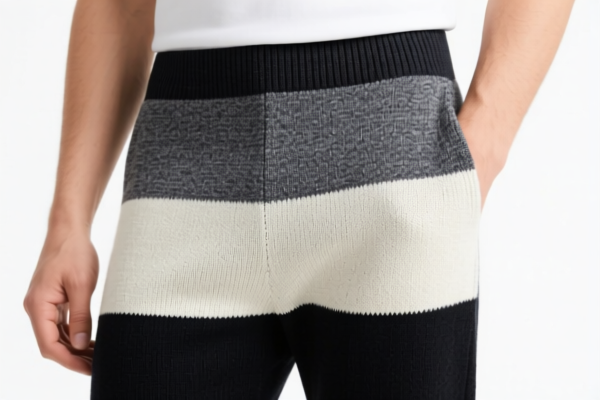
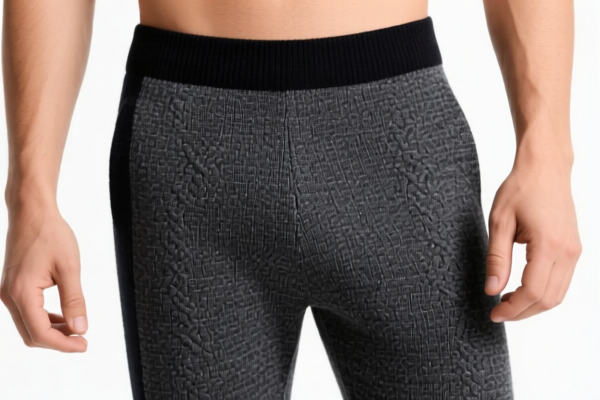
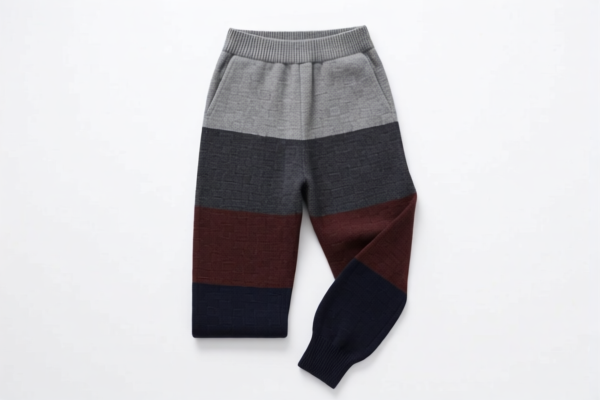
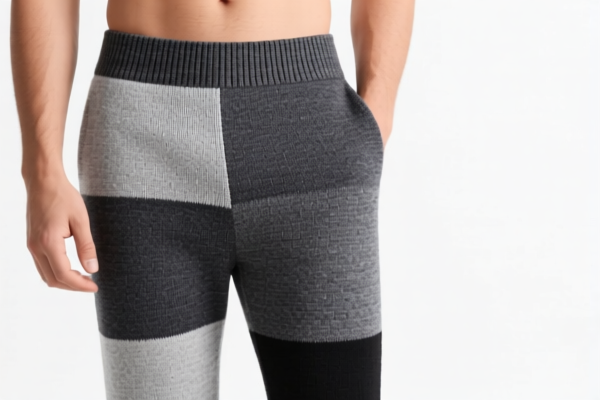
AI Analysis
🧵 Mens Knitted Pants (针织男裤) – HS Code Classification & Tariff Deep Dive
🌐 HS Code Reference & Customs Clearance Guide | 2026 Latest Tariff Analysis | Strategic Entry Strategy
📌 I. Product Definition: What Are "Mens Knitted Pants"?
Men's knitted pants are a versatile category of lower-body garments characterized by their knitted fabric structure (as opposed to woven) and intended for male wearers. In international trade, they are primarily classified under Chapter 61 (Articles of Apparel and Clothing Accessories, Knitted or Crocheted).
The classification hinges on two main factors: 1. Form: Pants, trousers, bib and brace overalls, breeches, and shorts (excluding swimming wear). 2. Material: The specific fiber content (e.g., Synthetic Fibers like Polyester/Nylon vs. Cotton vs. Wool) determines the precise 10-digit HS Code.
⚠️ Key Distinction:
- Knitted (Chapter 61): Fabric made by interlooping yarns (stretchy, soft). → HS 6103.xxxx
- Woven (Chapter 62): Fabric made by interlacing yarns at right angles (structured, less stretch). → HS 6203.xxxx
Note: The data provided strictly covers Knitted items.
📦 II. HS Code Classification Details (Based on Provided Data)
The provided data identifies two primary HS Codes for men's knitted pants, differentiated by material inference (likely Synthetic Fiber vs. Cotton/Wool blend, though the summary implies synthetic/cotton overlap).
| HS Code | Product Description | Material Inference | Key Characteristics |
|---|---|---|---|
| 6103.23.00.40 | Men's Knitted Trousers/Pants | Synthetic Fibers (e.g., Polyester, Nylon) or Non-Wool | Focus on "Knitted Form" + "Male Use". Summary suggests rate applicability if separated in an ensemble. |
| 6103.43.15.20 | Men's Knitted Trousers/Pants | Synthetic Fibers or Cotton | Focus on "Knitted Form" + "Male Use". Specific subheading for synthetic fibers. |
| 6114.20.00.55 | Men's Knitted Underwear/Panties | Cotton or Fibers | Distinct Category: Specifically for underwear (briefs, boxers), not outer pants. |
🔍 Critical Note on Data Discrepancy:
- Codes6103.23.00.40and6103.43.15.20both refer to outer pants/trousers. - Code6114.20.00.55refers to underwear. Do not mix these. Outer pants and underwear have different duties.
💰 III. 2026 Latest Tariff Rate Breakdown (Detailed)
✅ Applicable Country: USA (US)
✅ Origin: China (CN)
✅ Context: Includes Base Tariff + Section 301 (7.5%) + Section 122 (10%)
🎯 1. 6103.23.00.40 – Men's Knitted Trousers (Synthetic/Non-Wool)
| Item | Content |
|---|---|
| Base Tariff | Variable: "The rate applicable to each garment in the ensemble if separately classified" (Usually 7-17% for synthetics). Note: The data shows a placeholder or variable rate here. |
| Additional Tariff (Section 301) | +7.5% |
| Additional Tariff (Section 122) | +10% |
| Total Effective Rate | Variable + 17.5% (e.g., if base is 10%, total is 27.5%). Data explicitly states "The rate... + 17.5%". |
| Tax Detail Breakdown | Base: Variable + Add-on: 7.5% + Sec 122: 10% |
| Legal Basis | 6103.23.00.40 + USITC:301:7.5% + USITC:122:10% |
📌 Explanation:
- This code is used when the pants are made of synthetic fibers (not cotton/wool) and may be part of an ensemble (e.g., jacket + pants). The tariff applies as if the pants were imported separately. - Total Surcharge: Fixed at 17.5% on top of the base rate.
🎯 2. 6103.43.15.20 – Men's Knitted Trousers (Synthetic/Cotton)
| Item | Content |
|---|---|
| Base Tariff | 28.2% (Standard US MFN rate for this specific subheading) |
| Additional Tariff (Section 301) | +7.5% |
| Additional Tariff (Section 122) | +10% |
| Total Rate | 45.7% |
| Tax Detail Breakdown | Base: 28.2% + Add-on: 7.5% + Sec 122: 10% |
| Legal Basis | 6103.43.15.20 + USITC:301:7.5% + USITC:122:10% |
📌 Explanation:
- This is a high-tariff code. The base rate of 28.2% is significantly higher than typical synthetic trousers (which are often ~14-17%). This may reflect specific cotton/synthetic blends or older tariff lines. - Total Rate is Fixed at 45.7%. This is a very high barrier to entry.
🎯 3. 6114.20.00.55 – Men's Knitted Underwear (Briefs/Boxers)
| Item | Content |
|---|---|
| Base Tariff | 10.8% |
| Additional Tariff (Section 301) | +7.5% |
| Additional Tariff (Section 122) | +10% |
| Total Rate | 28.3% |
| Tax Detail Breakdown | Base: 10.8% + Add-on: 7.5% + Sec 122: 10% |
| Legal Basis | 6114.20.00.55 + USITC:301:7.5% + USITC:122:10% |
📌 Explanation:
- Do not use this code for outer pants. This is strictly for underwear. - If you declare outer pants under this code, customs will flag it for misclassification, leading to penalties and delays. - Lower base rate (10.8%) makes it more attractive, but only if the product is truly underwear.
🛠️ IV. Customs Clearance Practical Advice (Real-World Pitfalls)
✅ 1. Material Verification is Critical
| Scenario | Correct HS Code | Risk if Incorrect |
|---|---|---|
| Synthetic Fabric (Polyester/Nylon) | 6103.23.00.40 or 6103.43.15.20 |
Misclassification → 45.7% vs. ~27.5% → Cost Increase |
| Cotton Fabric (Knitted) | Check for 6103.43.xxxx or 6103.49.xxxx |
Ensure not misdeclared as synthetic |
| Underwear (Boxers/Briefs) | 6114.20.00.55 |
Using outer pant code (6103) → Overpayment or Underpayment if base rates differ |
🔥 Key Tip:
- Ask suppliers for the exact fabric composition. "Knitted pants" is too vague.
- Is it 100% Polyester? → Likely6103.23.00.40.
- Is it a Cotton/Poly Blend? → Could be6103.43.15.20(if classified as synthetic-dominant) or another subheading.
- Section 122 Tariff: Applies to textiles and apparel from China. It is mandatory for these goods.
✅ 2. Ensemble vs. Separate Shipment
- If pants are sold with a matching jacket: The tariff for the pants is calculated as if they were imported separately.
- Declaration Tip: Clearly state "Men's Knitted Trousers, Synthetic Fiber, Knitted" on the commercial invoice. Avoid vague terms like "Clothing Set" without itemization.
✅ 3. Common Errors & Consequences
❌ Error 1: Declaring Outer Pants under 6114.20.00.55 (Underwear code)
👉 Consequence: Customs rejects the entry. Penalties for fraud/misdeclaration. High risk of seizure.
❌ Error 2: Using 6103.23.00.40 for Cotton Pants
👉 Consequence: If cotton has a different base rate, you may underpay tax. Customs will assess the correct rate + penalties.
❌ Error 3: Ignoring Section 122 Tariff
👉 Consequence: Underpayment of 10%. Customs will demand back payment + interest.
🌍 V. Global Market Comparison (2026)
| Market | Recommended HS Code (Outer Pants) | Est. Total Tariff (China Origin) | Notes |
|---|---|---|---|
| 🇺🇸 USA | 6103.23.00.40 or 6103.43.15.20 |
27.5% - 45.7% | High due to Sec 301 (7.5%) + Sec 122 (10%). |
| 🇨🇳 China | 6103.23.00.40 or 6103.43.15.20 |
Low (10-15%) | No additional US tariffs. VAT 13% applies. |
| 🇪🇺 EU | 6103.43.00 |
12% - 17% | No Section 122/301 equivalent. CBI may apply if from beneficiary country. |
| 🇬🇧 UK | 6103.43.00 |
12% - 17% | Post-Brexit tariffs similar to EU. |
📌 Conclusion:
- The USA market is the most expensive due to multiple layers of additional tariffs.
- Cost Optimization: Consider sourcing from non-China countries (e.g., Vietnam, Bangladesh) if targeting the US to avoid Section 301 and 122 tariffs.
📌 VI. Final Recommendations for Importers
- Confirm Fabric Content: Get a lab test report or supplier declaration on fiber content.
- Choose the Right HS Code:
- If Synthetic: Target
6103.23.00.40(if rate is lower) or6103.43.15.20(if base is lower). - If Underwear: Use
6114.20.00.55exclusively.
- If Synthetic: Target
- Calculate Total Landed Cost: Include Base Tariff + 7.5% (Sec 301) + 10% (Sec 122).
- Example for
6103.43.15.20: 45.7% is nearly half the product value!
- Example for
- Documentation: Ensure the Commercial Invoice lists:
- "Men's Knitted Trousers"
- "Material: [e.g., 100% Polyester]"
- "Country of Origin: China"
- Consider Pre-Ruling: For high-volume shipments, apply for an HS Code Pre-Ruling from CBP to avoid disputes.
🎯 Final Word:
"Knitted Pants" are not a single product.
- Outer Pants = High Tax (27.5% - 45.7%).
- Underwear = Lower Tax (28.3%).
- Material Matters: Synthetic vs. Cotton changes the base rate.
- Always declare accurately to avoid customs delays and penalties.
📞 Need Help?
Consult a licensed customs broker to verify your specific product's HS Code before shipping!
Customer Reviews
About HS Code Classification
The Harmonized System (HS) is an internationally standardized nomenclature developed by the World Customs Organization (WCO) to classify traded products. Over 200 countries use the HS system as the basis for customs tariffs, trade statistics, and import/export regulations.
Each HS code follows a hierarchical structure:
- Chapter (2 digits) — Broad category of goods (e.g., Chapter 84: Machinery and Mechanical Appliances)
- Heading (4 digits) — More specific grouping within the chapter
- Subheading (6 digits) — Internationally standardized breakdown, used by all WCO member countries
- National subdivisions (8-10 digits) — Country-specific extensions for further classification, such as US HTSUS 10-digit codes
Correct HS code classification is essential for smooth customs clearance, accurate duty payment, and compliance with trade regulations. Misclassification can lead to customs delays, overpayment of duties, or penalties.
When importing from CN to US, the applicable tariff rates may include:
- Most-Favored-Nation (MFN) rate — The standard duty rate applied to WTO members
- General rate — Applied to countries without trade agreements
- Trade remedy duties — Additional tariffs such as Section 301 (anti-dumping), Section 232 (national security), or countervailing duties
The information provided on this page is for reference purposes only. For official classification, please consult with your local customs authority or a licensed customs broker.