mesh cloth
CN → US| HS Code | Tariff Rate | Origin | Destination | Doc |
|---|---|---|---|---|
| 6305900000 | 23.7% | CN | US | Official Doc |
| 4202929700 | 52.6% | CN | US | Official Doc |
| 5603110070 | 35.0% | CN | US | Official Doc |
| 6305390000 | 25.9% | CN | US | Official Doc |
| 4202920809 | 42.0% | CN | US | Official Doc |
| 5603120070 | 35.0% | CN | US | Official Doc |
Product Images
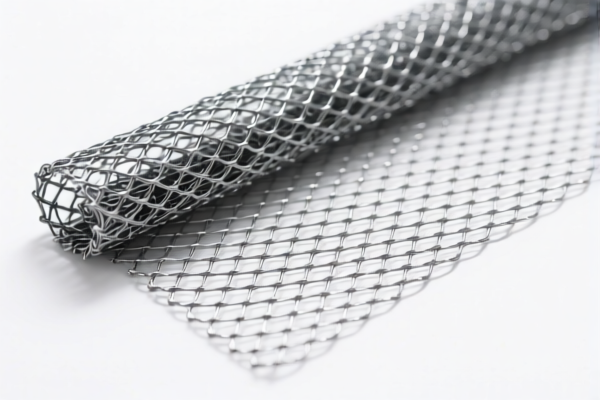
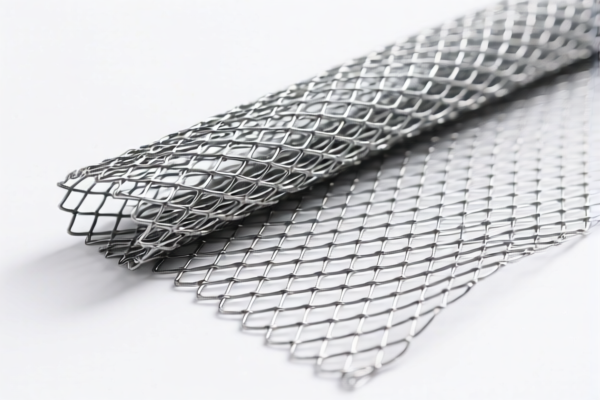
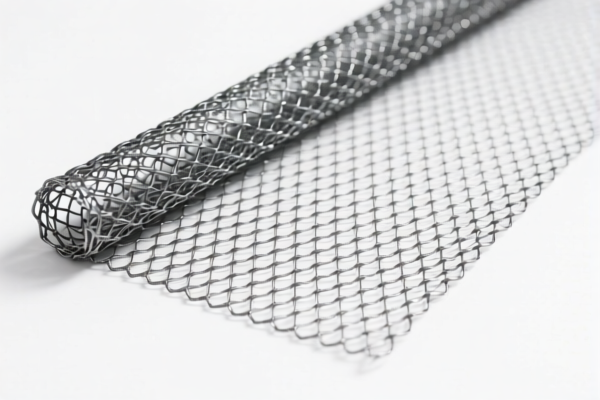
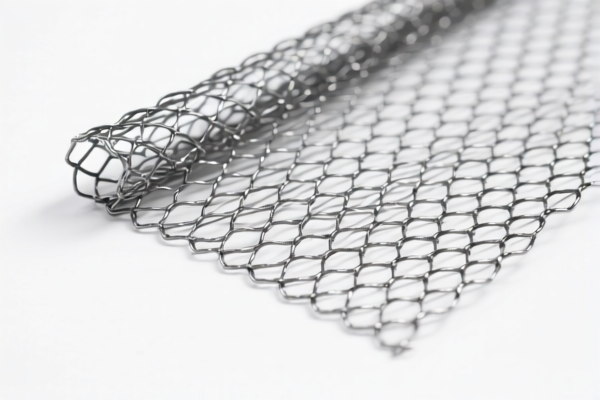
AI Analysis
🧺 Mesh Cloth Bags (Textile Packaging & Containers)
🌐 HS Code Reference & Customs Clearance Guide | 2024 Latest Tariff Analysis | Strategic Compliance Strategy
📌 I. Product Definition & Classification: Do You Truly Understand "Mesh Cloth Bags"?
Mesh cloth bags, in international trade, are versatile packaging and carrying items made from woven, knitted, or non-woven textile materials. They are primarily categorized by their intended use (packaging vs. personal storage) and material composition (synthetic vs. natural). The key distinction lies in whether the item is classified as a "sack or bag" for commercial packaging or a "container/accessory" for personal/general use.
⚠️ Key Distinction Point:
- If the bag is primarily for packaging goods (industrial/commercial use) → Likely falls under Chapter 63.
- If the bag is primarily for carrying personal items (retail/lifestyle use) → Likely falls under Chapter 42.
- If the mesh is non-woven fabric (like stiff felt or industrial filter material) → Likely falls under Chapter 56.
📦 II. HS Code Classification Details (2024 Latest Tariff Authoritative Comparison)
| HS Code | Product Description | Application Scenario | Key Material/Feature |
|---|---|---|---|
6305.90.00.00 |
Sacks and bags, for packaging, of textile materials other than woven or of textile textile materials | General textile mesh bags for packaging (not plastic, not jute) | Textile material, non-plastic packaging |
4202.92.97.00 |
Articles of apparel and clothing accessories, not elsewhere specified or included: other goods: of plastic sheeting or of textile materials: other | Mesh bags used as fashion accessories, cosmetic pouches, or general containers | Outer surface of textile materials |
5603.11.00.70 |
Gathers, felt and nonwoven fabrics, whether or not impregnated, coated, covered or laminated: other: weighing per m² not exceeding 25 g | Inferred as synthetic fiber non-woven mesh fabrics | Synthetic fiber, non-woven, lightweight |
6305.39.00.00 |
Sacks and bags, for packaging, of synthetic fibers or of artificial textile materials | Mesh bags made of synthetic fabrics for commercial packaging | Synthetic/artificial textile, packaging use |
4202.92.08.09 |
Thermal insulating food or beverage bags, of plastic sheeting or of textile materials | Insulated mesh bags for food/beverage transport | Textile surface, thermal insulation feature |
5603.12.00.70 |
Gathers, felt and nonwoven fabrics, whether or not impregnated, coated, covered or laminated: other: weighing per m² exceeding 25 g but not exceeding 70 g | Inferred as synthetic/cotton non-woven fabrics, medium weight | Synthetic/cotton, non-woven, heavier |
🔍 Key Reminder:
- "Packaging Bags" (6305): These are for bulk goods, agricultural produce, or industrial packaging. They are not for personal carrying. - "Containers/Accessories" (4202): These are for retail, personal use, or specialized functions (like insulation). - "Non-woven Fabrics" (5603): These classify the material itself rather than the finished bag, often used if the bag is made of stiff, non-woven mesh sheets.
💰 III. 2024 Latest Tariff Rate Detail (Including Surtax, Policy Surtax)
✅ Applicable Country: United States (US)
✅ Origin: China (CN)
✅ Effective Time: Current rates (including Section 301 & 122 provisions)
🎯 1. 6305.90.00.00 —— Textile Packaging Bags (Other than Woven/Plastic)
| Item | Content |
|---|---|
| Base Tariff | 6.2% (ad valorem) |
| Section 301 Surcharge | +7.5% (List 4A / Subcategory 6305) |
| Section 122 Surcharge | +10% (Specific to certain textile/apparel articles from China) |
| Total Tariff Rate | 23.7% |
| Calculation Method | CIF Value × 23.7% |
| De Minimis Eligibility | ❌ No (Deny de minimis for these specific HS codes) |
| Legal Basis Path | USITC:6305.90.00.00 → FOOTNOTE:301.03 → EXEC_ORDER:122 |
📌 Explanation:
- "Base 6.2%" is the standard MFN rate for other textile sacks/bags. - "Section 301 7.5%" is the additional tariff on specific Chinese textile goods. - "Section 122 10%" applies if the goods fall under specific executive orders targeting textile imports from China. - Total 23.7% is a significant cost factor for bulk packaging imports.
🎯 2. 4202.92.97.00 —— Other Containers/Accessories (Textile Surface)
| Item | Content |
|---|---|
| Base Tariff | 17.6% (ad valorem) |
| Section 301 Surcharge | +25.0% (List 3 / Subcategory 4202) |
| Section 122 Surcharge | +10% |
| Total Tariff Rate | 52.6% |
| Calculation Method | CIF Value × 52.6% |
| De Minimis Eligibility | ❌ No |
| Legal Basis Path | USITC:4202.92.97.00 → FOOTNOTE:301.03 → EXEC_ORDER:122 |
📌 Warning:
- This is the highest tariff rate in the dataset. - Classifying a mesh bag as a "container/accessory" (4202) instead of a "packaging bag" (6305) dramatically increases costs due to higher base duties and Section 301 rates. - Ensure the primary use is not personal retail to avoid this classification.
🎯 3. 5603.11.00.70 & 5603.12.00.70 —— Non-Woven Fabric Materials
| Item | Content |
|---|---|
| Base Tariff | 0.0% (ad valorem) |
| Section 301 Surcharge | +25.0% |
| Section 122 Surcharge | +10% |
| Total Tariff Rate | 35.0% |
| Calculation Method | CIF Value × 35.0% |
| De Minimis Eligibility | ❌ No |
| Legal Basis Path | USITC:5603.xx.xx.xx → FOOTNOTE:301.03 → EXEC_ORDER:122 |
📌 Note:
- Although the base duty is 0%, the Section 301 surcharge of 25% is high. - This classification is rare for finished bags; it applies if you are importing fabric rolls or stiff non-woven sheets that are later made into bags. If importing finished bags, this classification is likely incorrect.
🎯 4. 6305.39.00.00 —— Synthetic Fiber Packaging Bags
| Item | Content |
|---|---|
| Base Tariff | 8.4% (ad valorem) |
| Section 301 Surcharge | +7.5% |
| Section 122 Surcharge | +10% |
| Total Tariff Rate | 25.9% |
| Calculation Method | CIF Value × 25.9% |
| De Minimis Eligibility | ❌ No |
| Legal Basis Path | USITC:6305.39.00.00 → FOOTNOTE:301.03 → EXEC_ORDER:122 |
📌 Analysis:
- Slightly higher than6305.90.00.00due to the base duty difference (8.4% vs 6.2%). - Use this if the mesh is explicitly made of synthetic fibers (e.g., polyester, nylon).
🎯 5. 4202.92.08.09 —— Insulated Food/Beverage Bags
| Item | Content |
|---|---|
| Base Tariff | 7.0% (ad valorem) |
| Section 301 Surcharge | +25.0% |
| Section 122 Surcharge | +10% |
| Total Tariff Rate | 42.0% |
| Calculation Method | CIF Value × 42.0% |
| De Minimis Eligibility | ❌ No |
| Legal Basis Path | USITC:4202.92.08.09 → FOOTNOTE:301.03 → EXEC_ORDER:122 |
📌 Caution:
- Only apply if the bag has thermal insulation properties (e.g., foil lining, foam core). - Standard mesh bags do not qualify. Misclassification here leads to severe penalties.
🛠️ IV. Customs Clearance Practical Advice (Real-World Pitfall Avoidance Guide)
✅ 1. Essential Documentation Checklist (Non-negotiable)
| Document | Required | Notes |
|---|---|---|
| ✅ Product Specification Sheet | ✔️ | Must specify material (woven/non-woven), weight per m², intended use (packaging vs. personal). |
| ✅ Material Composition Statement | ✔️ | Explicitly state fiber content (e.g., "100% Polyester Non-Woven"). |
| ✅ Product Photos (Clear) | ✔️ | Show texture, stitching, and any labels. Must distinguish between "bag" and "fabric roll". |
| ✅ Commercial Invoice | ✔️ | Describe as "Mesh Packing Bag" (if 6305) or "Mesh Storage Container" (if 4202). |
| ✅ Packing List | ✔️ | Detail quantity, weight, and dimensions. |
| ✅ Origin Certificate (CO) | ✔️ | Mandatory for US imports to prove origin. |
✅ 2. Declaration Strategies (Key Mnemonics)
🔥 "Packaging = 6305 (Lower Tax), Personal = 4202 (High Tax), Non-Woven = 5603 (Material Only)"
| Scenario | Correct HS Code | Common Mistake | Consequence |
|---|---|---|---|
| Bulk produce bag (onion/potato) | 6305.90.00.00 or 6305.39.00.00 |
Declaring as 4202 |
Overpaying ~29-30% in taxes! |
| Cosmetic Pouch | 4202.92.97.00 |
Declaring as 6305 |
Underpayment → Penalty + Back Taxes |
| Non-woven fabric rolls | 5603.11.00.70 |
Declaring as finished bag | Wrong Classification → Customs Hold |
| Insulated Lunch Bag | 4202.92.08.09 |
Declaring as standard mesh | Audit Risk if no insulation proof |
✅ 3. Special Case Handling
| Situation | Advice |
|---|---|
| Mixed Materials (e.g., Mesh + Plastic Handles) | If plastic >5% by weight, might shift to 3926 (Plastic Articles). Check weight ratio! |
| Custom Printing | Printing logos does not change HS Code, but must be declared to avoid "Undisclosed Value" issues. |
| Sample Imports | Still subject to De Minimis exemption denial. Pay taxes even for samples. |
| Section 122 Eligibility | Confirm if the specific mesh type falls under the 10% surcharge. Most textile bags do. |
🌍 V. Global Market Customs Comparison (2024 Latest)
| Country/Region | Recommended HS Code | Tariff (China Origin) | Certification | Notes |
|---|---|---|---|---|
| 🇺🇸 USA | 6305.90.00.00 / 4202.92.97.00 |
23.7% ~ 52.6% | None specific | High Section 301/122 surcharges |
| 🇨🇳 China | 6305.90.00.00 |
~6-12% | None | Standard MFN rates |
| 🇪🇺 EU | 6305.90.00.00 |
0-4% | CE (if safety) | No Section 301 equivalent |
| 🇬🇧 UK | 6305.90.00.00 |
0-5% | UKCA | Post-Brexit rules apply |
| 🇦🇺 Australia | 6305.90.00.00 |
5% | None | Low baseline tariffs |
📌 Conclusion:
- The US market is the most expensive for mesh bags due to cumulative surcharges. - Accurate classification between "Packaging" (6305) and "Container" (4202) is critical to save up to 29% in taxes. - Non-US markets offer significantly lower duty burdens.
📌 VI. Common Errors & Pitfall Guide (Lessons Learned)
❌ Mistake 1: Declaring all mesh bags as 4202 (Accessories)
👉 Consequence: Paying 52.6% instead of 23.7%. Loss of 28.9% profit margin!
❌ Mistake 2: Declaring non-woven fabric rolls as finished bags
👉 Consequence: Customs rejects declaration because the item is not a "bag" yet. Delay + Storage Fees.
❌ Mistake 3: Ignoring Section 122 Surcharge
👉 Consequence: Underpayment by 10%. Back taxes + Interest + Penalties.
❌ Mistake 4: Vague Description ("Mesh Bag")
👉 Consequence: Customs issues a Request for Information (RFI), holding goods for 2-4 weeks.
✅ Correct Practice:
"Woven Polyester Mesh Bag, For Packaging Agricultural Produce, 50x70cm, No Thermal Insulation"
🎯 VII. Conclusion: Precision Classification, Cost Control, Efficiency!
🎯 Remember the Golden Rules:
🔹 "Packaging = 6305 (Save Money), Personal = 4202 (Pay More)"
🔹 "Non-Woven = 5603 (Raw Material), Not a Bag"
🔹 "Section 122 is Always 10% – Add it to Your Cost Model!"
📌 Pro Tip:
If you are exporting to the US, always request a Pre-Ruling (Binding Ruling) from CBP if your product is borderline between 6305 and 4202. This provides legal certainty and avoids surprise audits.
📣 Take Action Now:
📞 Consult your freight forwarder
📸 Provide clear product images & material specs
📄 Declare precisely: "Mesh Packaging Bag" or "Mesh Cosmetic Pouch"
🚀 Clear customs smoothly, minimize costs, maximize profit!
✨ Professional Classification, Starts with Accuracy!
💼 Every Percent of Duty Saved is Pure Profit!
Customer Reviews
About HS Code Classification
The Harmonized System (HS) is an internationally standardized nomenclature developed by the World Customs Organization (WCO) to classify traded products. Over 200 countries use the HS system as the basis for customs tariffs, trade statistics, and import/export regulations.
Each HS code follows a hierarchical structure:
- Chapter (2 digits) — Broad category of goods (e.g., Chapter 84: Machinery and Mechanical Appliances)
- Heading (4 digits) — More specific grouping within the chapter
- Subheading (6 digits) — Internationally standardized breakdown, used by all WCO member countries
- National subdivisions (8-10 digits) — Country-specific extensions for further classification, such as US HTSUS 10-digit codes
Correct HS code classification is essential for smooth customs clearance, accurate duty payment, and compliance with trade regulations. Misclassification can lead to customs delays, overpayment of duties, or penalties.
When importing from CN to US, the applicable tariff rates may include:
- Most-Favored-Nation (MFN) rate — The standard duty rate applied to WTO members
- General rate — Applied to countries without trade agreements
- Trade remedy duties — Additional tariffs such as Section 301 (anti-dumping), Section 232 (national security), or countervailing duties
The information provided on this page is for reference purposes only. For official classification, please consult with your local customs authority or a licensed customs broker.