metal bread box
CN → US| HS Code | Tariff Rate | Origin | Destination | Doc |
|---|---|---|---|---|
| 7616995170 | 37.5% | CN | US | Official Doc |
| 7419801500 | 88.0% | CN | US | Official Doc |
| 7419805050 | 85.0% | CN | US | Official Doc |
| 7326903500 | 92.8% | CN | US | Official Doc |
| 7326908688 | 87.9% | CN | US | Official Doc |
Product Images
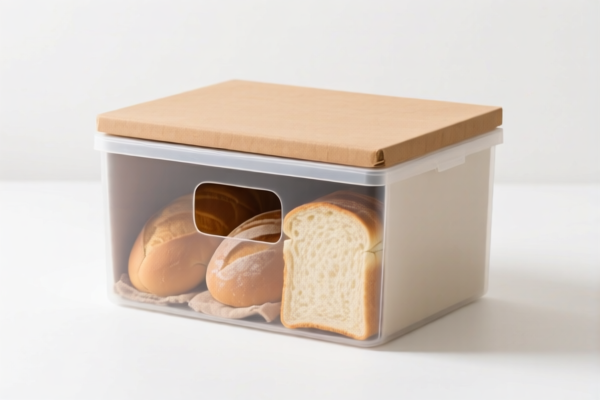
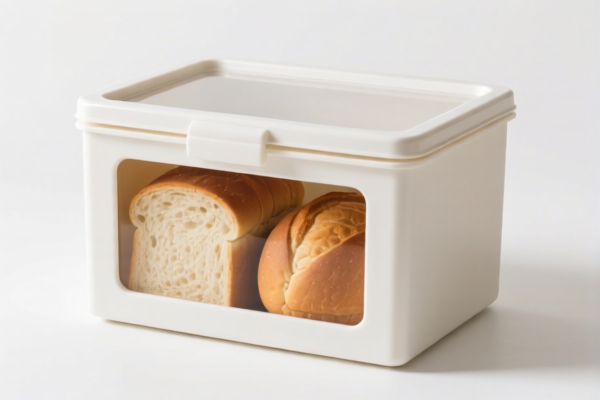
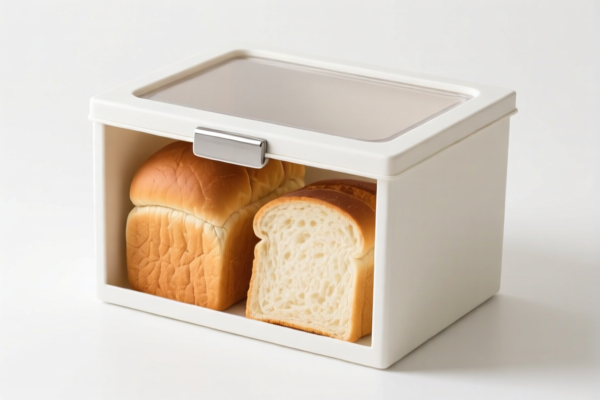
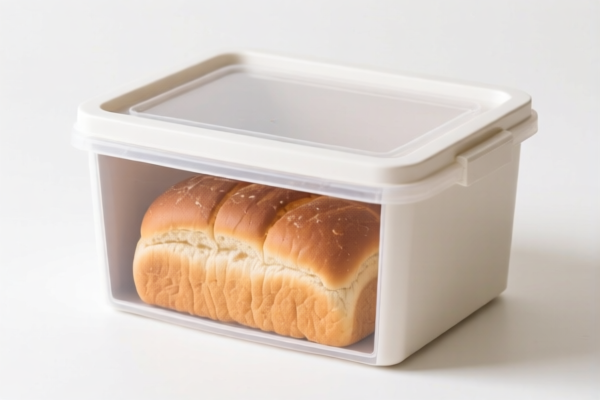
AI Analysis
🍞 Metal Bread Box (Metal Containers for Carrying on the Person or Handbag)
🌐 HS Code Reference & Customs Clearance Guide | 2026 Latest Tariff Analysis | Professional Customs Strategy
📌 I. Product Definition & Classification: Do You Really Understand "Metal Bread Box"?
A Metal Bread Box is a storage container, typically made of aluminum, steel, or copper, used to preserve the freshness of bread. In international trade, especially when shipped to the US, its classification depends heavily on the material and its potential use as a portable container.
While it may seem like a simple kitchenware item, under US Customs regulations, containers capable of being carried on the person or in a handbag (which includes many rigid metal bread boxes) are subject to specific tariff categories under Chapter 73 (Iron/Steel) and Chapter 74 (Copper).
⚠️ Key Distinction Point:
- If made of Aluminum → It falls under "Other Articles of Aluminum" → HS 7616.99.51.70
- If made of Copper → It is treated as a "Container for carrying on the person" → HS 7419.80.15.00 / 7419.80.50.50
- If made of Steel/Iron → It is treated as a "Container for carrying on the person" → HS 7326.90.35.00 / 7326.90.86.88
📦 II. HS Code Classification Details (2026 Latest Tariff Authority Comparison)
| HS Code | Product Description | Material | Applicable Scenario | Total Tax Rate |
|---|---|---|---|---|
7616.99.51.70 |
Other articles of aluminum, not elsewhere specified, e.g., metal containers/cases | Aluminum | Aluminum bread boxes, metal cases for personal items | 37.5% |
7419.80.15.00 |
Containers of copper, capable of being carried on the person or in handbags | Copper | Copper bread boxes, copper portable cases | 88.0% |
7419.80.50.50 |
Other copper articles, not specific accessories or finished goods | Copper | Non-specific copper metal boxes, including bread boxes | 85.0% |
7326.90.35.00 |
Articles of iron or steel, capable of being carried on the person or in handbags | Steel/Iron | Steel bread boxes, metal lunch boxes | 92.8% |
7326.90.86.88 |
Other articles of iron or steel, not in excluded lists | Steel/Iron | Other steel containers not fitting specific portable categories | 87.9% |
🔍 Key Reminder:
- For Copper and Steel items, if they are rigid boxes (like a bread box) that can be carried in a bag, US Customs often classifies them as "Containers for carrying on the person or handbag", not just general kitchenware. This leads to significantly higher tariffs due to Section 301 and IEEPA additional duties.
- Aluminum items are generally classified under general "Other articles of aluminum," which results in a lower total tax burden compared to steel and copper counterparts.
💰 III. 2026 Latest Tariff Rate Breakdown (Including Additional Duties)
✅ Applicable Country: United States (US)
✅ Origin: China (CN)
✅ Effective Date: 2025 November 10 onwards (including subsequent imports)
🎯 1. 7616.99.51.70 —— Aluminum Articles (e.g., Aluminum Bread Box)
| Item | Content |
|---|---|
| Base Duty Rate | 2.5% |
| Section 301 Additional Duty | +25.0% |
| 122 Clause Duty (IEEPA) | +10.0% |
| Steel/Aluminum/Copper Additional Duty | None (Only applies to specific steel/aluminum products under certain codes; here it is excluded or lower) |
| Total Tax Rate | 37.5% |
| Tax Calculation | CIF Value × 37.5% |
| De Minimis Exemption Eligible? | ❌ No (deny_de_minimis) |
| Legal Basis Path | Section 301 → IEEPA 122 Clause → USITC:7616.99.51.70 |
📌 Explanation:
- Aluminum bread boxes face a 37.5% total tariff.
- While still high, this is the lowest among the metal options provided in the data.
- The "122 Clause" adds an extra 10% on top of the base and Section 301 rates.
🎯 2. 7419.80.15.00 —— Copper Containers for Carrying on Person
| Item | Content |
|---|---|
| Base Duty Rate | 3.0% |
| Section 301 Additional Duty | +25.0% |
| 122 Clause Duty (IEEPA) | +10.0% |
| Steel/Aluminum/Copper Additional Duty | +50.0% (Specific surcharge for copper articles under this classification) |
| Total Tax Rate | 88.0% |
| Tax Calculation | CIF Value × 88.0% |
| De Minimis Exemption Eligible? | ❌ No (deny_de_minimis) |
| Legal Basis Path | Section 301 → IEEPA 122 Clause → USITC:7419.80.15.00 → Footnote: Copper Additional Duty |
📌 Warning:
- Copper bread boxes are subject to a staggering 88% tariff.
- The +50% additional duty for copper products under this code is the primary driver of this high cost.
- Recommendation: Avoid shipping copper bread boxes to the US unless the margin can absorb this cost.
🎯 3. 7419.80.50.50 —— Other Copper Articles
| Item | Content |
|---|---|
| Base Duty Rate | 0.0% |
| Section 301 Additional Duty | +25.0% |
| 122 Clause Duty (IEEPA) | +10.0% |
| Steel/Aluminum/Copper Additional Duty | +50.0% (Specific surcharge for copper articles) |
| Total Tax Rate | 85.0% |
| Tax Calculation | CIF Value × 85.0% |
| De Minimis Exemption Eligible? | ❌ No (deny_de_minimis) |
| Legal Basis Path | Section 301 → IEEPA 122 Clause → USITC:7419.80.50.50 → Footnote: Copper Additional Duty |
📌 Note:
- Slightly lower than7419.80.15.00due to a 0% base rate, but the +50% copper surcharge still makes it prohibitively expensive.
🎯 4. 7326.90.35.00 —— Steel/Iron Containers for Carrying on Person
| Item | Content |
|---|---|
| Base Duty Rate | 7.8% |
| Section 301 Additional Duty | +25.0% |
| 122 Clause Duty (IEEPA) | +10.0% |
| Steel/Aluminum/Copper Additional Duty | +50.0% (Specific surcharge for steel articles) |
| Total Tax Rate | 92.8% |
| Tax Calculation | CIF Value × 92.8% |
| De Minimis Exemption Eligible? | ❌ No (deny_de_minimis) |
| Legal Basis Path | Section 301 → IEEPA 122 Clause → USITC:7326.90.35.00 → Footnote: Steel Additional Duty |
📌 Warning:
- This is the highest tariff in the dataset.
- Steel bread boxes classified as "portable containers" face a 92.8% total duty.
- The +50% steel surcharge combined with the 7.8% base rate and Section 301 duties creates an extreme cost barrier.
🎯 5. 7326.90.86.88 —— Other Steel/Iron Articles (Not Specific Portable)
| Item | Content |
|---|---|
| Base Duty Rate | 2.9% |
| Section 301 Additional Duty | +25.0% |
| 122 Clause Duty (IEEPA) | +10.0% |
| Steel/Aluminum/Copper Additional Duty | +50.0% (Specific surcharge for steel articles) |
| Total Tax Rate | 87.9% |
| Tax Calculation | CIF Value × 87.9% |
| De Minimis Exemption Eligible? | ❌ No (deny_de_minimis) |
| Legal Basis Path | Section 301 → IEEPA 122 Clause → USITC:7326.90.86.88 → Footnote: Steel Additional Duty |
📌 Note:
- If the steel bread box is not classified as a "portable container" but as a general "other article," the base rate is lower (2.9%), but the +50% steel surcharge still applies, resulting in 87.9%.
🛠️ IV. Customs Clearance Practical Advice (Avoiding Pitfalls)
✅ 1. Material Selection Strategy (Cost Optimization)
| Material | HS Code Example | Total Tax | Recommendation |
|---|---|---|---|
| Aluminum | 7616.99.51.70 |
37.5% | ✅ Best Choice: Lowest tariff, no +50% surcharge. |
| Copper | 7419.80.15.00 |
88.0% | ❌ Avoid: Extremely high cost due to +50% copper surcharge. |
| Steel/Iron | 7326.90.35.00 |
92.8% | ❌ Avoid: Highest cost due to +50% steel surcharge. |
📌 Key Insight:
- Switching from Steel/Copper to Aluminum can save you 50-55% in tariffs.
- Aluminum is not subject to the same aggressive +50% "Steel/Aluminum/Copper" additional duty under these specific codes.
✅ 2. Documentation Requirements (Must-Haves)
| Document | Required? | Notes |
|---|---|---|
| ✅ Product Specification Sheet | ✔️ | Must clearly state material (Aluminum vs. Steel vs. Copper). |
| ✅ Material Composition Certificate | ✔️ | To prove aluminum content and exclude steel/copper surcharges. |
| ✅ Product Photos | ✔️ | Show the box’s structure, lid, and any portable features. |
| ✅ Commercial Invoice | ✔️ | Describe as "Aluminum Bread Box" or "Metal Container." |
| ✅ Packing List | ✔️ | Standard packing list. |
✅ 3. Classification Strategy Tips
🔥 "Aluminum is King, Steel is King of Costs!"
| Scenario | Correct Declaration | Incorrect Declaration | Result |
|---|---|---|---|
| Aluminum Bread Box | 7616.99.51.70 |
7326.90.86.88 (Steel) |
Save ~50% tax |
| Steel Bread Box | 7326.90.35.00 |
7326.90.86.88 |
Risk of +5.8% penalty |
| Copper Bread Box | 7419.80.15.00 |
N/A | High cost unavoidable |
📌 Warning:
- If you declare a Steel bread box as Aluminum without proof, Customs will inspect and reclassify, leading to back taxes, fines, and delays.
- Ensure your Commercial Invoice and Product Description accurately reflect the material.
🌍 V. Global Market Comparison (2026 Latest)
| Country/Region | Recommended HS Code | Tariff (China Origin) | Notes |
|---|---|---|---|
| 🇺🇸 USA | 7616.99.51.70 (Al) |
37.5% | High additional duties. |
| 🇪🇺 EU | 7326.90.90 (Steel) |
1.7% | No Section 301 or IEEPA. |
| 🇨🇳 China | 7326.90.90 (Steel) |
1.0% | Low import tariff. |
| 🇬🇧 UK | 7326.90.90 (Steel) |
2.5% | Post-Brexit standard rate. |
📌 Conclusion:
- The US market is exceptionally harsh on metal containers due to Section 301 and IEEPA duties.
- European and Asian markets are significantly more favorable.
- Consider transshipment or supply chain diversification if targeting the US with Steel/Copper products.
📌 VI. Common Mistakes & Pitfalls (Lessons Learned)
❌ Mistake 1: Declaring a Steel bread box as "Aluminum" without proof.
👉 Consequence: Customs inspection reveals steel → Reclassification to 92.8% + Fines.
❌ Mistake 2: Ignoring the +50% Steel/Copper Surcharge.
👉 Consequence: Budgeting for 25% tax only, but facing 87-92% actual cost → Huge Profit Loss.
❌ Mistake 3: Using "Kitchenware" as a generic description.
👉 Consequence: Customs may assign a different code with higher duties if the "portable container" classification is triggered.
✅ Correct Practice:
"Aluminum Bread Box, 10-inch, with Hinged Lid, Model XYZ, Material: 100% Aluminum."
🎯 VII. Conclusion: Professional Declaration, Save Money, Reduce Risk!
🎯 Remember the Mantra:
🔹 "Aluminum: 37.5%, Steel: 92.8%, Copper: 88%."
🔹 "Material Matters: Choose Aluminum to Survive US Customs."
📌 Pro Tip:
- If your product is made of Steel, consider adding value (e.g., branded packaging, integrated features) to justify a higher price point, or switch to Aluminum.
- Apply for Advance Rulings if you are unsure about the classification of your specific metal container.
📣 Act Now:
📞 Contact your customs broker + Provide material certificate + Optimize for Aluminum.
🚀 Let your Metal Bread Box clear customs smoothly and boost your profits!
✨ Professional Customs Clearance Starts with Accurate Classification!
💼 Every Dollar of Cost Deserves Precise Calculation!
Customer Reviews
About HS Code Classification
The Harmonized System (HS) is an internationally standardized nomenclature developed by the World Customs Organization (WCO) to classify traded products. Over 200 countries use the HS system as the basis for customs tariffs, trade statistics, and import/export regulations.
Each HS code follows a hierarchical structure:
- Chapter (2 digits) — Broad category of goods (e.g., Chapter 84: Machinery and Mechanical Appliances)
- Heading (4 digits) — More specific grouping within the chapter
- Subheading (6 digits) — Internationally standardized breakdown, used by all WCO member countries
- National subdivisions (8-10 digits) — Country-specific extensions for further classification, such as US HTSUS 10-digit codes
Correct HS code classification is essential for smooth customs clearance, accurate duty payment, and compliance with trade regulations. Misclassification can lead to customs delays, overpayment of duties, or penalties.
When importing from CN to US, the applicable tariff rates may include:
- Most-Favored-Nation (MFN) rate — The standard duty rate applied to WTO members
- General rate — Applied to countries without trade agreements
- Trade remedy duties — Additional tariffs such as Section 301 (anti-dumping), Section 232 (national security), or countervailing duties
The information provided on this page is for reference purposes only. For official classification, please consult with your local customs authority or a licensed customs broker.