metallic plastic handbag
CN → US| HS Code | Tariff Rate | Origin | Destination | Doc |
|---|---|---|---|---|
| 4202219000 | 44.0% | CN | US | Official Doc |
| 4202216000 | 45.0% | CN | US | Official Doc |
| 4114207000 | 36.6% | CN | US | Official Doc |
| 4114204000 | 38.6% | CN | US | Official Doc |
Product Images



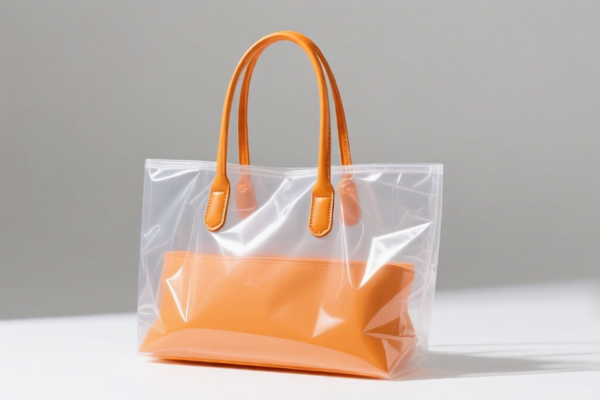
AI Analysis
🎒 Metallic Plastic Handbag (Metalized Leather/Plastic)
🌐 HS Code Reference & Customs Clearance Guide | 2026 Latest Tariff Analysis | Expert Clearance Strategy
📌 I. Product Definition & Classification: Do You Really Understand "Metallic Plastic Handbag"?
A "Metallic Plastic Handbag" (often described as metalized leather or plastic-coated leather) is a fashion accessory where the surface is treated with a metallic finish, either via lamination, coating, or metallization of synthetic or natural leather.
In international trade, the classification hinges on the core material attribute and surface treatment:
1. "Metalized Leather" (Classified under Heading 4114):
- The core material is leather or synthetic leather that has been metalized (coated with metal or metallic appearance).
- Key Feature: The metallic finish is integral to the leather material itself.
2. "Leather/Synthetic Leather Handbag" (Classified under Heading 4202):
- The handbag's outer surface is leather or synthetic leather, which may be metalized or not, but the primary classification focuses on the bag structure made of these materials.
- Key Distinction: If the metallic layer is merely a surface decoration on a standard leather/synthetic bag, it may fall under 4202.
⚠️ Critical Classification Logic:
- If the core material is defined as "metalized leather" (a specific processed material class) → 4114.
- If the handbag is defined by its composition (outer surface is leather/synthetic) but not specifically "metalized leather" as a material category → 4202.
- Surface vs. Core: Is the metallic finish a material property (4114) or just a decorative finish on a leather bag (4202)?
📦 II. HS Code Classification Details (2026 Latest Tariff Reference)
Based on the specific product attributes, here is the authoritative breakdown for "Metallic Plastic Handbag":
| HS Code | Product Description | Material Attribute | Tax Rate |
|---|---|---|---|
| 4202.21.90.00 | Metallic Leather Handbag, outer surface material meets leather requirements | Outer surface: Leather/Synthetic (General) | 44.0% |
| 4202.21.60.00 | Metallic Leather Handbag, outer surface is leather or synthetic leather | Outer surface: Leather/Synthetic (Specific) | 45.0% |
| 4114.20.70.00 | Metallic Leather Handbag, core material attribute meets "metalized leather" requirements | Core: Metalized Leather (Specific) | 36.6% |
| 4114.20.40.00 | Metallic Leather Handbag, material fully meets "metalized leather" requirements | Core: Metalized Leather (Full Compliance) | 38.6% |
🔍 Key Insight:
- 4114 Series (36.6% - 38.6%): If your product is legally classified as "Metalized Leather" (a specific material class where the leather is metallized), you pay a lower base tariff (1.6% - 3.6%), but still face significant add-ons.
- 4202 Series (44.0% - 45.0%): If classified simply as a "Handbag made of leather/synthetic leather" (even if metalized), the base tariff is higher (9.0% - 10.0%), resulting in a higher total tax burden.
💰 III. 2026 Latest Tariff Rate Breakdown (Including Add-on Taxes & Policy Surcharges)
✅ Target Market: United States (US)
✅ Origin: China (CN)
✅ Effective Date: 2025/2026 (Current Trade Policy)
🎯 A. 4114.20.70.00 & 4114.20.40.00 (Metalized Leather Handbags)
| Item | Content |
|---|---|
| Base Tariff | 1.6% (for 4114.20.70.00) or 3.6% (for 4114.20.40.00) |
| Section 301 Additional Tariff | +25.0% (USITC Footnote 9903.88.01 / 301 List) |
| Section 122 Tariff (IEEPA) | +10.0% (China-specific additional tariff) |
| Total Tax Rate | 36.6% (70.00) or 38.6% (40.00) |
| Calculation | CIF Value × Total Rate |
| De Minimis Exemption | ❌ No (Denied for these HS Codes) |
📌 Explanation:
- Base Tariff: Low (1.6% - 3.6%) because "metalized leather" is a specialized material with preferential base rates.
- Section 301 (+25%): Mandatory surcharge on Chinese goods under Section 301 Trade Act.
- Section 122 (+10%): Specific surcharge under IEEPA (International Emergency Economic Powers Act) targeting China.
- Total: The "savings" in base tariff are partially offset by the fixed 35% add-ons.
🎯 B. 4202.21.90.00 & 4202.21.60.00 (Leather/Synthetic Leather Handbags)
| Item | Content |
|---|---|
| Base Tariff | 9.0% (for .90.00) or 10.0% (for .60.00) |
| Section 301 Additional Tariff | +25.0% |
| Section 122 Tariff (IEEPA) | +10.0% |
| Total Tax Rate | 44.0% (.90.00) or 45.0% (.60.00) |
| Calculation | CIF Value × Total Rate |
| De Minimis Exemption | ❌ No |
📌 Explanation:
- Base Tariff: Higher (9.0% - 10.0%) because "Handbags" generally have higher base rates than "Metalized Leather" material.
- Total Burden: Even with the same 35% add-ons, the higher base rate pushes the total to 44-45%, making this classification more expensive for importers.
🛠️ IV. Customs Clearance Practical Advice (Avoid Pitfalls)
✅ 1. Material Documentation (Crucial)
To qualify for the lower 4114 rates (36.6% - 38.6%), you MUST prove the material is "Metalized Leather" and not just a "Leather Handbag with Metallic Finish".
| Document | Requirement | Purpose |
|---|---|---|
| Material Certificate | Must explicitly state "Metalized Leather" (Coated with metal layer) | Prove core material is 4114, not 4202 |
| Technical Spec Sheet | Detail the metallization process (e.g., sputtering, plating, coating thickness) | Differentiate from "Metallic Paint" on leather |
| Product Photos | Close-ups of the metallic surface texture | Visual evidence of material structure |
| Supplier Declaration | Confirm origin and material composition | Avoid misclassification disputes |
⚠️ Risk: If you declare "Metalized Leather Handbag" but the customs officer sees a standard leather bag with a shiny coating, they will reclassify it to 4202 → Tax jumps from 36.6% to 44.0%+!
✅ 2. Declaration Strategy
| Scenario | Correct Declaration | Error to Avoid |
|---|---|---|
| Material is Metalized Leather | HS: 4114.20.70.00 or 4114.20.40.00 |
Don't use 4202 → 44% tax |
| Standard Leather + Metallic Finish | HS: 4202.21.90.00 |
Don't claim "Metalized Leather" → 44% tax |
| Synthetic Leather (PU/PVC) | HS: 4202.21.60.00 (if synthetic) |
Don't use 4114 (Leather only) |
| Plastic/Non-Leather Metallic Bag | HS: 4202.92 (if plastic) |
Don't force 4114 (Leather only) |
🔥 Golden Rule:
"If it's not metalized leather, it's 4202! If it IS metalized leather, it's 4114. Don't guess!"
✅ 3. Special Case Handling
| Situation | Advice |
|---|---|
| OEM Custom Bags | Provide design specs showing the metallization process is integral to the material. |
| "Plastic" Handbag with Metal Finish | If the core is plastic (PU/PVC), it may fall under 4202.92 (other plastic bags), not 4114. |
| Mixed Materials | If the bag has a metalized leather body but plastic straps, classify by dominant material (usually the body). |
| Sample Bags | Samples are often duty-exempt, but commercial batches must be declared correctly. |
🌍 V. Global Market Comparison (2026)
| Country/Region | Recommended HS Code | Total Tax | Notes |
|---|---|---|---|
| 🇺🇸 USA | 4114.20.70.00 / 4114.20.40.00 |
36.6% - 38.6% | Lowest possible rate for metalized leather. |
| 🇨🇳 China | 4114.20.70.00 |
Low Base | No Section 301/122; import duty ~1-3%. |
| 🇪🇺 EU | 4202.21.90.00 |
0% - 12% | No Section 301; standard EU tariff. |
| 🇯🇵 Japan | 4202.21.90.00 |
8% - 10% | Standard rate for leather bags. |
| 🇦🇺 Australia | 4202.21.90.00 |
5% | No add-ons for China origin. |
📌 Conclusion:
- USA is the most complex market due to Section 301 and 122 surcharges.
- Classification matters:4114saves ~8% compared to4202in the US.
- China/EU/Japan: No Section 301/122, so the tax gap is smaller, but still important for compliance.
📌 VI. Common Mistakes & Pitfalls (Learn from Errors)
❌ Mistake 1: Declaring a "Metalized Leather Handbag" as 4202.21.90.00 to avoid "Material" scrutiny.
👉 Consequence: Tax rate jumps from 36.6% to 44.0% → $7.40 extra tax per $100 value!
❌ Mistake 2: Claiming "Plastic Handbag" as 4114 (Leather).
👉 Consequence: Customs rejects declaration → Delayed shipment + Penalties.
❌ Mistake 3: Using "Metallic Finish" as a synonym for "Metalized Leather".
👉 Consequence: Customs inspects, finds it's just painted leather → Reclassifies to 4202.
✅ Correct Approach:
"Metalized Leather Handbag, Core Material: Metalized Leather, Outer Surface: Metalized Leather, Model XYZ, US Importer, China Origin."
🎯 VII. Conclusion: Precision Classification = Cost Savings!
🎯 Remember the Formula:
🔹 "Metalized Leather = 4114 (36.6% - 38.6%)"
🔹 "Leather Bag with Finish = 4202 (44% - 45%)"
🔹 "Plastic Bag = 4202.92 (Different Rate)"🔹 Tax Difference: ~8% (huge for high-value bags!).
🔹 Declaration: Be specific about material composition, not just appearance.
📌 Pro Tip:
If your product is not "Metalized Leather" but just a Plastic/PU Bag with Metallic Coating, check 4202.92 (Plastic Bags) – it may have a lower base rate than 4202.21!
🚀 Action Plan:
1. Verify Material: Is it truly "Metalized Leather"?
2. Check HS Code: Use4114if yes,4202if no.
3. Declare Clearly: Use precise terminology in the Commercial Invoice.
4. Consult Expert: Get a Pre-Ruling from US Customs if unsure.
✨ Professional Classification Starts with Accuracy!
💼 Your Every Dollar Matters – Calculate Precisely!
Customer Reviews
About HS Code Classification
The Harmonized System (HS) is an internationally standardized nomenclature developed by the World Customs Organization (WCO) to classify traded products. Over 200 countries use the HS system as the basis for customs tariffs, trade statistics, and import/export regulations.
Each HS code follows a hierarchical structure:
- Chapter (2 digits) — Broad category of goods (e.g., Chapter 84: Machinery and Mechanical Appliances)
- Heading (4 digits) — More specific grouping within the chapter
- Subheading (6 digits) — Internationally standardized breakdown, used by all WCO member countries
- National subdivisions (8-10 digits) — Country-specific extensions for further classification, such as US HTSUS 10-digit codes
Correct HS code classification is essential for smooth customs clearance, accurate duty payment, and compliance with trade regulations. Misclassification can lead to customs delays, overpayment of duties, or penalties.
When importing from CN to US, the applicable tariff rates may include:
- Most-Favored-Nation (MFN) rate — The standard duty rate applied to WTO members
- General rate — Applied to countries without trade agreements
- Trade remedy duties — Additional tariffs such as Section 301 (anti-dumping), Section 232 (national security), or countervailing duties
The information provided on this page is for reference purposes only. For official classification, please consult with your local customs authority or a licensed customs broker.