micro motor
CN → US| HS Code | Tariff Rate | Origin | Destination | Doc |
|---|---|---|---|---|
| 8501104020 | 39.4% | CN | US | Official Doc |
| 8501104040 | 39.4% | CN | US | Official Doc |
| 8501106080 | 37.8% | CN | US | Official Doc |
| 8501322000 | 37.9% | CN | US | Official Doc |
Product Images
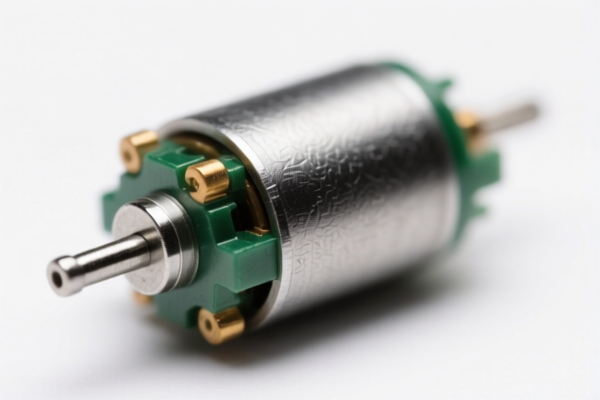
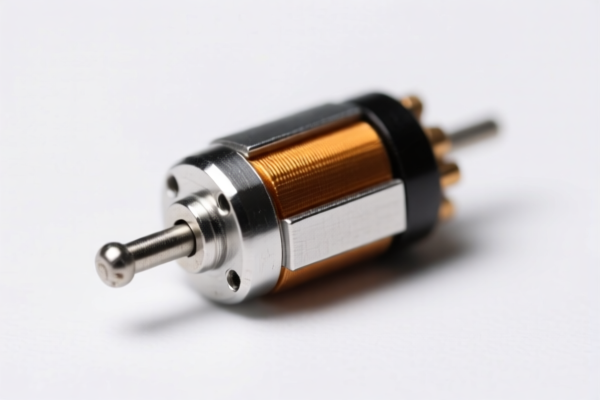
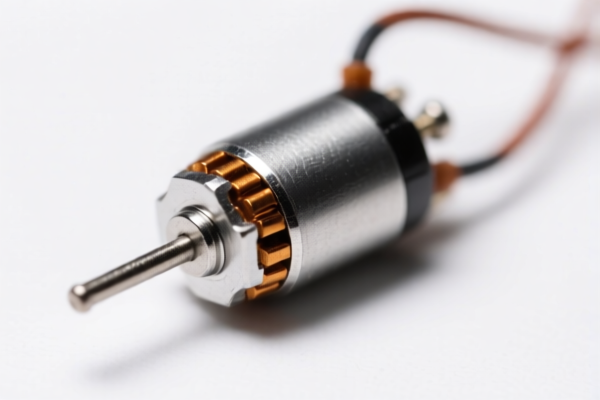
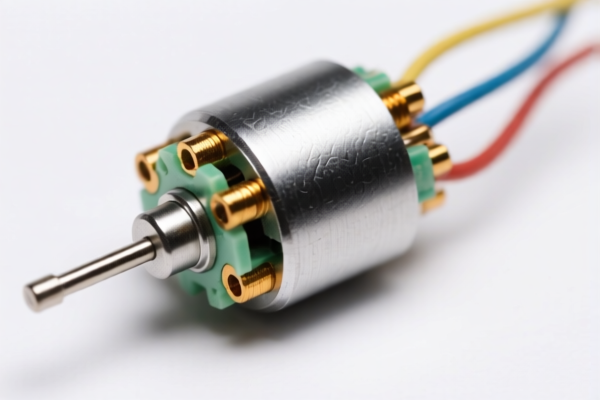
AI Analysis
⚡ Micro Motors (微型电机) – US Customs Classification & Tariff Breakdown
🌐 HS Code Reference & Clearance Guide | 2026 Latest Tariff Analysis | Professional Customs Strategy
📌 1. Product Definition & Classification: Do You Really Understand "Micro Motors"?
Micro motors are compact electromechanical devices that convert electrical energy into mechanical energy, typically used in precision applications such as consumer electronics, medical devices, robotics, automotive components, and industrial automation. In international trade, they are classified based on output power, type (brushed vs. brushless), and application.
⚠️ Key Classification Points:
- Output Power Thresholds: Crucial for distinguishing between subcategories under HS 8501.10.
- Brushed vs. Brushless DC Motors: Influences the specific subheading.
- End Use: General-purpose vs. specialized applications (though most micro motors fall under general motor categories unless explicitly excluded).
📦 2. HS Code Classification Details (2026 Latest Tariff Reference)
| HS Code | Product Description | Key Characteristics | Applicable Power Range |
|---|---|---|---|
8501.10.40.20 |
Micro Motors, output ≤ 18.65W | General-purpose micro motors | ≤ 18.65W |
8501.10.40.40 |
Micro Motors, output ≤ 37.5W, preferably brushless DC | Brushless DC micro motors | ≤ 37.5W |
8501.10.60.80 |
Other Motors (Catch-all Category) | General motors not covered above | Variable (兜底) |
8501.32.20.00 |
Electric Motors (General Category) | No power/material conflict | Variable |
🔍 Important Notes:
-8501.10.40.20applies to micro motors with output power up to 18.65W.
-8501.10.40.40is specifically for micro motors with output up to 37.5W, with a preference for brushless DC motors.
-8501.10.60.80is a catch-all category for motors that do not fit into the specific power ranges above.
-8501.32.20.00is a general electric motor category where there are no power or material conflicts.
💰 3. 2026 Latest Tariff Rate Details (Including Additional Taxes)
✅ Applicable Country: United States (US)
✅ Country of Origin: China (CN)
✅ Effective Date: From November 10, 2025 (including subsequent imports)
🎯 1. 8501.10.40.20 – Micro Motors, Output ≤ 18.65W
| Item | Detail |
|---|---|
| Base Tariff | 4.4% |
| Section 301 Additional Tariff | +25.0% |
| Section 122 Tariff | +10.0% |
| Total Tariff | 39.4% |
| Tax Calculation | CIF Value × 39.4% |
| De Minimis Exemption Available? | ❌ No (deny_de_minimis) |
| Legal Basis Path | Section 301 + Section 122 → HS 8501.10.40.20 |
📌 Explanation:
- The 25% Section 301 tariff is imposed under the U.S. Trade Act of 1974, Section 301, targeting Chinese imports.
- The 10% Section 122 tariff is a national security-based additional duty under the Trade Expansion Act of 1962.
- Total: 39.4% – A very high tariff that must be factored into cost calculations.
🎯 2. 8501.10.40.40 – Micro Motors, Output ≤ 37.5W (Preferably Brushless DC)
| Item | Detail |
|---|---|
| Base Tariff | 4.4% |
| Section 301 Additional Tariff | +25.0% |
| Section 122 Tariff | +10.0% |
| Total Tariff | 39.4% |
| Tax Calculation | CIF Value × 39.4% |
| De Minimis Exemption Available? | ❌ No (deny_de_minimis) |
| Legal Basis Path | Section 301 + Section 122 → HS 8501.10.40.40 |
📌 Note:
- This category specifically targets brushless DC micro motors with output up to 37.5W.
- The tariff structure is identical to8501.10.40.20.
- Even if the motor is labeled as "brushed," if it falls within the power range and is imported from China, it may still be subject to this classification.
🎯 3. 8501.10.60.80 – Other Motors (Catch-all Category)
| Item | Detail |
|---|---|
| Base Tariff | 2.8% |
| Section 301 Additional Tariff | +25.0% |
| Section 122 Tariff | +10.0% |
| Total Tariff | 37.8% |
| Tax Calculation | CIF Value × 37.8% |
| De Minimis Exemption Available? | ❌ No (deny_de_minimis) |
| Legal Basis Path | Section 301 + Section 122 → HS 8501.10.60.80 |
📌 Explanation:
- This is a catch-all category for motors that do not meet the specific power thresholds of8501.10.40.20or8501.10.40.40.
- It applies to general-purpose motors where the exact power output is not specified or falls outside the defined ranges.
🎯 4. 8501.32.20.00 – Electric Motors (General Category)
| Item | Detail |
|---|---|
| Base Tariff | 2.9% |
| Section 301 Additional Tariff | +25.0% |
| Section 122 Tariff | +10.0% |
| Total Tariff | 37.9% |
| Tax Calculation | CIF Value × 37.9% |
| De Minimis Exemption Available? | ❌ No (deny_de_minimis) |
| Legal Basis Path | Section 301 + Section 122 → HS 8501.32.20.00 |
📌 Note:
- This category is used when there are no power or material conflicts.
- It is a broader classification for electric motors that do not fit into the micro motor subcategories.
🛠️ 4. Customs Clearance Practical Advice (Avoid Common Pitfalls)
✅ 1. Required Documentation Checklist (All Are Mandatory)
| Document | Required | Notes |
|---|---|---|
| ✅ Product Specification Sheet | ✔️ | Must include power output (Watts), voltage, current, RPM, and type (brushed/brushless) |
| ✅ Electrical Diagrams | ✔️ | To verify motor type and power rating |
| ✅ Product Photos (With Nameplate) | ✔️ | Clear view of model number, brand, and technical specifications |
| ✅ Third-Party Test Reports | ✔️ | FCC, CE, RoHS, UL (if applicable) |
| ✅ Commercial Invoice | ✔️ | Must clearly state "Micro Motor" with correct HS Code |
| ✅ Certificate of Origin (CO) | ✔️ | If not Chinese origin, may qualify for reduced tariffs |
| ✅ Packing List | ✔️ | Detail contents to avoid misclassification |
✅ 2. Declaration Tips (Key Mnemonics)
🔥 "Power Defines, Type Clarifies, Name Accurate, Tariff Fair!"
| Scenario | Correct Declaration | Incorrect Approach |
|---|---|---|
| Micro motor, ≤ 18.65W | 8501.10.40.20 |
Misclassifying as general motor → Higher tax |
| Brushless DC motor, ≤ 37.5W | 8501.10.40.40 |
Misclassifying as brushed → Risk of penalty |
| Motor with unspecified power | 8501.10.60.80 |
Assuming lower rate without proof |
| General electric motor | 8501.32.20.00 |
Over-specifying power without evidence |
✅ 3. Special Cases Handling
| Case | Recommendation |
|---|---|
| OEM Custom Motors | Provide customer order + design drawings to avoid "non-standard" classification |
| Motors with Touchscreen Integration | Still classified under motor codes, not 9013 |
| Motors for Medical Devices | If specialized, provide end-use documentation for potential exemptions |
| Motors for Military/Aerospace | May qualify for special classification; consult customs broker early |
🌍 5. Global Market Comparison (2026 Latest)
| Country/Region | Recommended HS Code | Tariff | Certification | Notes |
|---|---|---|---|---|
| 🇺🇸 USA | 8501.10.40.20 / 8501.10.40.40 |
39.4% / 39.4% | FCC + RoHS | High tariffs due to Section 301 & 122 |
| 🇨🇳 China | 8501.10.40.20 / 8501.10.40.40 |
5% | CCC + RoHS | No additional tariffs |
| 🇪🇺 EU | 8501.10.40.20 / 8501.10.40.40 |
0% (if CE compliant) | CE + ErP | No additional tariffs |
| 🇦🇺 Australia | 8501.10.40.20 / 8501.10.40.40 |
5% | RCM | No additional tariffs |
| 🇯🇵 Japan | 8501.10.40.20 / 8501.10.40.40 |
0% | PSE | No additional tariffs |
📌 Conclusion:
- The USA imposes significantly higher tariffs on Chinese micro motors due to Section 301 and Section 122.
- Other major markets have minimal or no additional tariffs.
- Consider supply chain diversification if exporting to the US.
📌 6. Common Errors & Pitfalls (Lessons Learned)
❌ Error 1: Declaring motors under incorrect power categories
👉 Consequence: Under-declaration → Penalties + Back Taxes
❌ Error 2: Omitting motor type (brushed/brushless)
👉 Consequence: Customs may assign higher tariff category
❌ Error 3: Failing to provide test reports
👉 Consequence: Delayed clearance or rejection
❌ Error 4: Using vague descriptions like "Electric Motor" without power specs
👉 Consequence: Risk of misclassification → Higher taxes
✅ Best Practice:
"Micro Brushless DC Motor, 12V, 5W, Model XYZ, FCC & RoHS Certified, Output Power: 5W"
🎯 7. Conclusion: Precision Classification Saves Money!
🎯 Remember These Rules:
🔹 "Power Determines Category, Type Confirms Classification"
🔹 "39.4% US Tariff, 5% China Rate, Declare Accurately"
📌 Pro Tip:
If your micro motors are originally produced in Vietnam, Mexico, Thailand, or Malaysia, you may qualify for IEEPA exemptions, reducing tariffs to 0%–5%.
Consider applying for an Advance Ruling to confirm classification before shipment.
📣 Take Action Now:
📞 Contact a licensed customs broker + Provide product specs + Apply for HS Code Advance Ruling
🚀 Ensure smooth customs clearance, reduce costs, and maximize profits!
✨ Professional Customs Clearance Starts with Accurate Classification!
💼 Every dollar saved is a dollar earned!
Customer Reviews
About HS Code Classification
The Harmonized System (HS) is an internationally standardized nomenclature developed by the World Customs Organization (WCO) to classify traded products. Over 200 countries use the HS system as the basis for customs tariffs, trade statistics, and import/export regulations.
Each HS code follows a hierarchical structure:
- Chapter (2 digits) — Broad category of goods (e.g., Chapter 84: Machinery and Mechanical Appliances)
- Heading (4 digits) — More specific grouping within the chapter
- Subheading (6 digits) — Internationally standardized breakdown, used by all WCO member countries
- National subdivisions (8-10 digits) — Country-specific extensions for further classification, such as US HTSUS 10-digit codes
Correct HS code classification is essential for smooth customs clearance, accurate duty payment, and compliance with trade regulations. Misclassification can lead to customs delays, overpayment of duties, or penalties.
When importing from CN to US, the applicable tariff rates may include:
- Most-Favored-Nation (MFN) rate — The standard duty rate applied to WTO members
- General rate — Applied to countries without trade agreements
- Trade remedy duties — Additional tariffs such as Section 301 (anti-dumping), Section 232 (national security), or countervailing duties
The information provided on this page is for reference purposes only. For official classification, please consult with your local customs authority or a licensed customs broker.