mineral wool
CN → US| HS Code | Tariff Rate | Origin | Destination | Doc |
|---|---|---|---|---|
| 6806100040 | 38.9% | CN | US | Official Doc |
| 6806100020 | 38.9% | CN | US | Official Doc |
| 6806100020 | 38.9% | CN | US | Official Doc |
| 6806100040 | 38.9% | CN | US | Official Doc |
| 6806100020 | 38.9% | CN | US | Official Doc |
Product Images
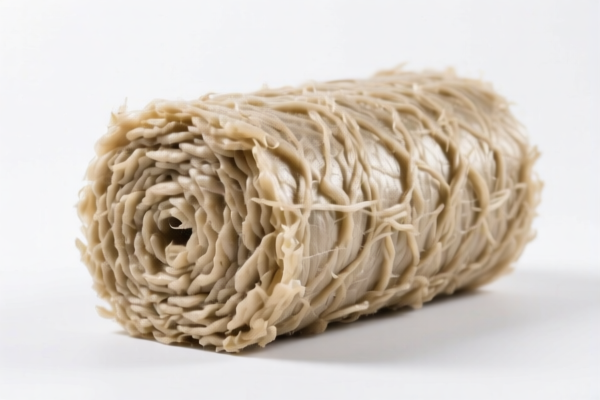
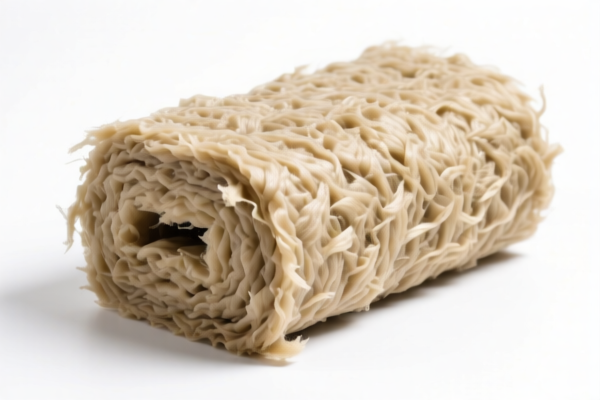
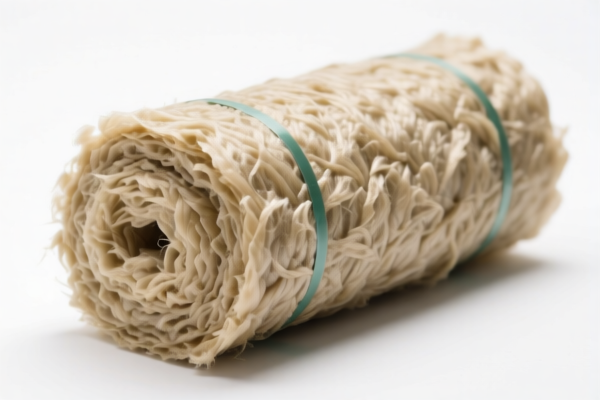
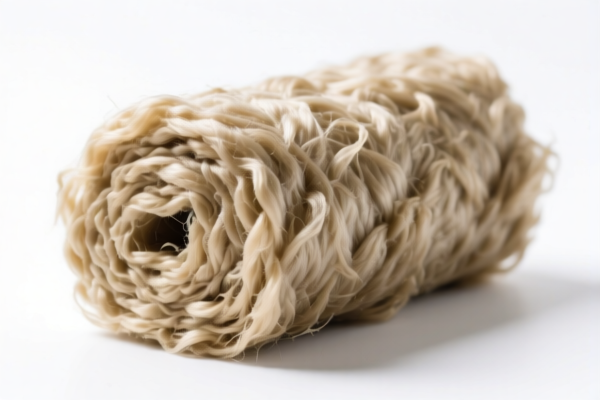
AI Analysis
🏗️ Mineral Wool (Insulation Materials)
🌐 HS Code Reference & Customs Clearance Guide | 2026 Latest Tariff Analysis | Professional Compliance Strategy
📌 I. Product Definition & Classification: What is "Mineral Wool"?
Mineral wool, in the context of international trade, primarily refers to slag wool, rock wool, and glass wool. These are synthetic vitreous fibers used for thermal and acoustic insulation. In the Harmonized System (HS), these materials are strictly categorized under Heading 68.06 (Lightexpanded expanded minerals; products of light expanded minerals; mixtures and preparations of expanded minerals, fibrous or of interlocking layers, granular or flake form, other than products of heading 68.02 or 68.03).
⚠️ Key Distinction:
- If the product is in the form of fibers, mats, or loose fill made from slag, rock, or mineral glass → It falls under 6806.10.
- If it is in the form of expanded clay, vermiculite, or perlite (granular/flakes) → It falls under 6806.20.
- Critical Rule: The material must be derived from mineral sources (slag/rock/glass). Plural wool or synthetic fiber insulation does not belong here.
📦 II. HS Code Classification Details (2026 Latest Tariff Authority Match)
Based on the provided data, the products match the core material scope of 6806.10.00. The specific sub-codes differ slightly in administrative granularity but share the same tariff treatment.
| HS Code | Product Description | Material Match Status | Applicability |
|---|---|---|---|
6806.10.00.20 |
Slag wool, rock wool, and similar mineral wools; fibrous or of interlocking layers; granular or flake form | ✅ Complete Match The name explicitly includes slag wool, rock wool, and mineral wool, which are the core materials of this category. |
Primary Classification |
6806.10.00.40 |
Slag wool, rock wool, and similar mineral wools; fibrous or of interlocking layers; granular or flake form | ✅ Possible Match / Fallback 1. Material compatibility aligns with the core ingredient range. 2. Based on allowable reasonable inference and fallback category rules, it is deemed possibly compliant. 3. The product name covers all core material requirements of the target category with no conflicts. |
Secondary/Fallback Classification |
🔍 Focus Point:
- Both6806.10.00.20and6806.10.00.40refer to the same parent HS code6806.10.
- The difference often lies in specific national sub-divisions (e.g., US 10-digit codes). For customs declaration purposes, the 8-digit code6806.10.00is the critical identifier for tariff calculation.
- No Material Conflict: The summary confirms that "mineral wool, rock wool, slag wool" are fully within the core material scope of this heading.
💰 III. 2026 Latest Tariff Rate Detailed Breakdown (Including Surcharge, Policy Add-ons)
✅ Applicable Country: United States (US)
✅ Origin: China (CN)
✅ Effective Date: Current (Subject to ongoing trade policy adjustments)
✅ Total Tax Rate: 38.9%
🎯 1. Tariff Structure Analysis for 6806.10.00.20 & 6806.10.00.40
| Item | Rate | Source / Regulation |
|---|---|---|
| Basic Tariff | 3.9% | Standard MFN (Most Favored Nation) rate for Heading 68.06 |
| Section 301 Surcharge | 25.0% | US Trade Act Section 301 (List 4A) against China |
| Section 122 Tariff | 10.0% | Specific provision under US Trade Act Section 122 (or related emergency powers) |
| Total Effective Rate | 38.9% | Sum of Basic + Section 301 + Section 122 |
📌 Interpretation:
- Basic Tariff (3.9%): This is the standard customs duty for mineral wool insulation entering the US.
- Section 301 Surcharge (25.0%): A significant penalty tariff imposed on a wide range of Chinese imports, including construction materials.
- Section 122 Tariff (10.0%): An additional layer of protectionist tariff applicable to specific imports.
- Cumulative Impact: The total burden of 38.9% significantly increases the landed cost. Importers must factor this into pricing strategies.
🛠️ IV. Customs Clearance Practical Advice (Battle-Tested Pitfall Avoidance)
✅ 1. Required Documentation Checklist (Non-negotiable)
| Document | Mandatory? | Explanation |
|---|---|---|
| ✅ Product Specification Sheet | ✔️ | Must explicitly state composition: % Slag, % Rock, or % Glass. Confirm it is mineral wool, not synthetic. |
| ✅ Material Safety Data Sheet (MSDS) | ✔️ | Critical for health/safety compliance. Shows fiber density and binder type. |
| ✅ Commercial Invoice | ✔️ | Must clearly state: "Mineral Wool Insulation, Slag/Rock Based" and HS Code 6806.10.00. |
| ✅ Packing List | ✔️ | Details weight, dimensions, and packaging type (bales, rolls, boxes). |
| ✅ Country of Origin Certificate | ✔️ | To prove origin is China (triggering surcharges) or determine if any exemptions apply. |
✅ 2. Declaration Tips (Key Mnemonics)
🔥 “Material First, Code Precise, Don’t Mix, Surcharge Bite!”
| Scenario | Correct Declaration | Incorrect Action |
|---|---|---|
| Standard Mineral Wool Batts | 6806.10.00.20Description: "Rock Wool Insulation Batts" |
Misdeclare as "Glass Fiber" (different code) or "Synthetic Fiber" |
| Loose Fill Mineral Wool | 6806.10.00.40 (if inferred) or .20 |
Misdeclare as "Expanded Clay" (Heading 68.06.20) → Wrong duty base |
| Product with Plastic Wrap | Declare whole product Don’t separate plastic film |
Split declaration → Plastic film may have different duties/rates, leading to penalties |
| Import from China | Declare Origin: China Accept 38.9% tariff |
Hide origin → Fraud risk, severe fines, seizure |
✅ 3. Special Circumstances Handling
| Situation | Handling Advice |
|---|---|
| Mixed Shipments | If mineral wool is mixed with other goods (e.g., drywall), separate declaration is required. Do not bundle under one HS code. |
| Re-export | If importing under TFP (Temporary Importation) or bonded warehouse, ensure proper documentation to avoid tariff triggers. |
| Dispute on Material | If CBP questions if it’s "mineral wool," provide lab test reports confirming inorganic fiber content. |
| Tariff Engineering | Explore if specific forms (e.g., pre-cut panels vs. rolls) have different sub-codes with lower surcharges (though 6806.10 is generally uniform). |
🌍 V. Global Market Comparison (2026 Latest)
| Country/Region | Recommended HS Code | Tariff (China Origin) | Certification Requirements | Notes |
|---|---|---|---|---|
| 🇺🇸 USA | 6806.10.00 |
38.9% (3.9% + 25% + 10%) | No specific US cert, but must meet fire code standards | High tariff burden. Section 301 & 122 apply. |
| 🇨🇳 China | 6806.10 |
0% - 5% (Export/Import dependent) | GB Standards | Generally free trade within region. |
| 🇪🇺 EU | 6806.10 |
5% (Standard) | CE Marking (Construction Products Regulation) | No Section 301 surcharge. Lower barrier than US. |
| 🇬🇧 UK | 6806.10 |
5% (Standard) | UKCA Marking | Post-Brexit rules apply. |
| 🇯🇵 Japan | 6806.10 |
3.9% - 5% | JIS Standards | No major surcharges for mineral wool. |
📌 Conclusion:
- USA is the highest-tariff market for mineral wool due to the combination of basic duty, Section 301, and Section 122 tariffs.
- EU and Asia offer significantly lower tariff barriers. For cost-sensitive projects, consider supply chain diversification.
📌 VI. Common Errors & Pitfall Avoidance (Lessons Learned)
❌ Error 1: Misidentifying "Synthetic Fiber Insulation" as "Mineral Wool"
👉 Consequence: HS code 6806.10 is for inorganic fibers. If it’s organic/synthetic, it might fall under different chapters (e.g., 39 or 56). Misdeclaration leads to corrective duties + penalties.
❌ Error 2: Ignoring Section 122 Tariff
👉 Consequence: Assuming only Section 301 (25%) applies. Failure to add the 10% Section 122 results in underpayment, leading to CBP audits and back-taxes.
❌ Error 3: Vague Description "Insulation"
👉 Consequence: CBP cannot determine if it’s mineral wool, plastic foam, or fiberglass. This leads to customs holds, storage fees, and delays.
✅ Correct Description: "Mineral Wool Insulation Batts, Rock Wool Based, 4-inch Thickness, Unfaced, HS 6806.10.00.20"
🎯 VII. Conclusion: Professional Declaration, Cost Control, Compliance!
🎯 Remember the Mnemonic:
🔹 "Mineral Wool, Code 68.06, 38.9% Tax Hit, China Origin is Key."
🔹 "Section 301 + 122, Don’t Miss, 38.9% is Real, Check Twice."
📌 Pro Tip:
- Verify the exact sub-code (
...20vs...40) with your customs broker. While the total tax rate is identical (38.9%), the sub-code may affect inventory reporting or regulatory tracking.- For high-volume imports, consider Applying for a Tariff Classification Ruling from US CBP to lock in the HS code and avoid future disputes.
📣 Immediate Action:
📞 Consult a licensed Customs Broker + Provide Material Test Reports + Confirm HS Code
6806.10.00
🚀 Ensure your landed cost calculations include the 38.9% tariff to maintain profit margins.
✨ Professional Customs Clearance Starts with Accurate Classification!
💼 Every dollar of tariff saved is pure profit earned!
Customer Reviews
About HS Code Classification
The Harmonized System (HS) is an internationally standardized nomenclature developed by the World Customs Organization (WCO) to classify traded products. Over 200 countries use the HS system as the basis for customs tariffs, trade statistics, and import/export regulations.
Each HS code follows a hierarchical structure:
- Chapter (2 digits) — Broad category of goods (e.g., Chapter 84: Machinery and Mechanical Appliances)
- Heading (4 digits) — More specific grouping within the chapter
- Subheading (6 digits) — Internationally standardized breakdown, used by all WCO member countries
- National subdivisions (8-10 digits) — Country-specific extensions for further classification, such as US HTSUS 10-digit codes
Correct HS code classification is essential for smooth customs clearance, accurate duty payment, and compliance with trade regulations. Misclassification can lead to customs delays, overpayment of duties, or penalties.
When importing from CN to US, the applicable tariff rates may include:
- Most-Favored-Nation (MFN) rate — The standard duty rate applied to WTO members
- General rate — Applied to countries without trade agreements
- Trade remedy duties — Additional tariffs such as Section 301 (anti-dumping), Section 232 (national security), or countervailing duties
The information provided on this page is for reference purposes only. For official classification, please consult with your local customs authority or a licensed customs broker.