mink fur for clothing
CN → US| HS Code | Tariff Rate | Origin | Destination | Doc |
|---|---|---|---|---|
| 4301100010 | 17.5% | CN | US | Official Doc |
| 4302110020 | 37.1% | CN | US | Official Doc |
| 4301100020 | 17.5% | CN | US | Official Doc |
| 4303100030 | 39.0% | CN | US | Official Doc |
| 4302110010 | 37.1% | CN | US | Official Doc |
Product Images
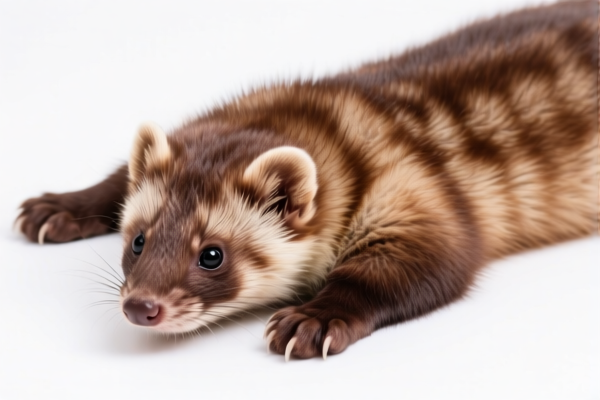
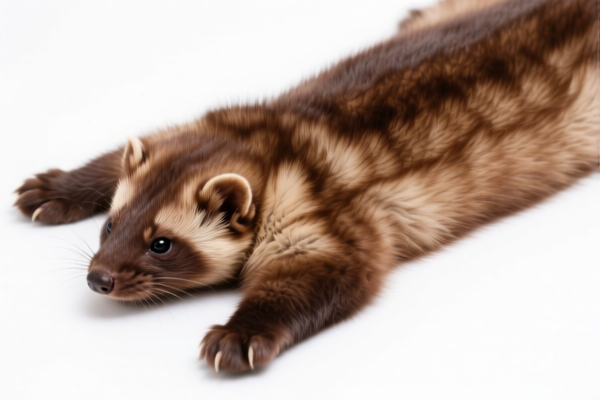
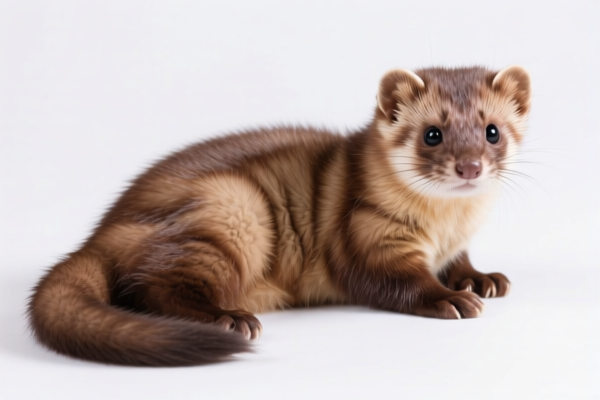
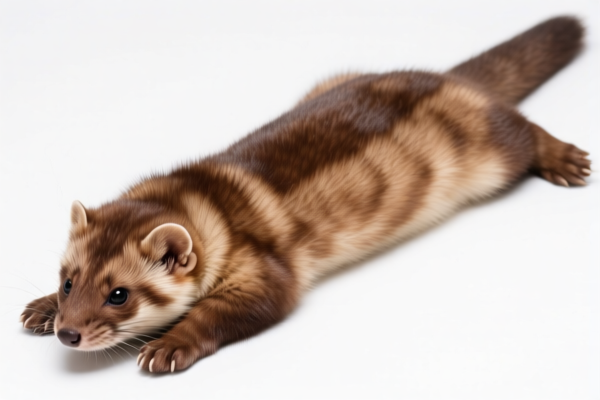
AI Analysis
🦝 Mink Fur for Clothing (Mink Pelts, Skins, and Articles)
🌐 HS Code Reference & Customs Clearance Guide | 2026 Latest Tariff Analysis | Professional Clearance Strategy
📌 I. Product Definition & Classification: Understanding "Mink Fur"
Mink fur is a luxury material primarily used in high-end apparel. In international trade, its classification depends strictly on its state of processing and intended use. It is not a single commodity but varies significantly from raw skins to finished garments.
In the context of U.S. customs and the provided data, "Mink fur for clothing" falls into three distinct categories based on processing: 1. Raw/Unworked Skins: The pelt immediately after removal, salted or preserved, but not tanned. 2. Tanned/Dressed Skins: The pelt has been chemically treated (tanned) to preserve it, but not yet cut or sewn into a garment. 3. Finished Articles: Cut pieces or fully assembled garments made from mink fur.
⚠️ Key Distinction:
- If the fur is raw/unworked → Classify under 4301 (Raw Furskins).
- If the fur is tanned/dressed (but not assembled) → Classify under 4302 (Prepared Furskins).
- If the fur is assembled/cut for manufacturing → Classify under 4303 (Articles of Fur).
📦 II. HS Code Classification Details (2026 Latest Tariff Authority)
| HS Code | Product Description | State of Goods | Application | Tax Category |
|---|---|---|---|---|
4301.10.00.10 |
Mink skins, unworked, salted or preserved | Raw Skin | Raw material for tanning | Low Base Duty |
4301.10.00.20 |
Mink pelts, unworked | Raw Pelt | Raw material for tanning | Low Base Duty |
4302.11.00.20 |
Mink skins, tanned/dressed, not assembled | Prepared Skin | Ready for cutting/sewing | High Base Duty |
4302.11.00.10 |
Other mink furskins, prepared | Processed Fur | Semi-finished goods | High Base Duty |
4303.10.00.30 |
Articles of mink fur | Finished Article | Garments, collars, etc. | Highest Base Duty |
🔍 Critical Reminder:
- Do not confuse Raw vs. Prepared: Raw skins (4301) are significantly cheaper in base duty than prepared skins (4302).
- Finished Goods Penalty: Once the fur is cut or sewn into an article (4303), the base duty increases, and it is treated as a manufactured good.
- All categories listed above are subject to additional U.S. Section 301 and IEEPA tariffs.
💰 III. 2026 Latest Tariff Rate Breakdown (Including Surtaxes & Policy Add-ons)
✅ Applicable Country: United States (US)
✅ Origin: China (CN) (Based on provided tax details)
✅ Effective Time: Current trade policies (Section 301 + IEEPA)
🎯 1. 4301.10.00.10 & 4301.10.00.20 —— Raw Mink Skins (Unworked)
| Item | Details |
|---|---|
| Base Duty | 0.0% (Ad Valorem) |
| Section 301 Surcharge | +7.5% (From USITC Footnote 9903.88.01) |
| IEEPA Surcharge | +10% (Targeting China/HK products, effective Nov 10, 2025) |
| Total Tax Rate | 17.5% |
| Calculation | CIF Value × 17.5% |
| De Minimis Eligibility | ❌ No (Denied for Section 301 goods) |
| Legal Basis Path | IEEPA:9903.01.25 → IEEPA:9903.01.24 → USITC:4301.10.00.10 |
📌 Explanation:
- The 0% base duty makes raw skins attractive for importers who will tan them domestically.
- However, the 17.5% total burden (7.5% Section 301 + 10% IEEPA) is significant.
- Crucial: These goods cannot use the de minimis (Section 321) exemption due to the "122 Clause" tariffs.
🎯 2. 4302.11.00.20 & 4302.11.00.10 —— Tanned/Prepared Mink Skins
| Item | Details |
|---|---|
| Base Duty | 2.1% (Ad Valorem) |
| Section 301 Surcharge | +25.0% (From USITC Footnote 9903.88.01) |
| IEEPA Surcharge | +10% (Targeting China/HK products) |
| Total Tax Rate | 37.1% |
| Calculation | CIF Value × 37.1% |
| De Minimis Eligibility | ❌ No (Denied) |
| Legal Basis Path | IEEPA:9903.01.25 → IEEPA:9903.01.24 → USITC:4302.11.00.20 |
📌 Note:
- Tanned skins incur a higher base duty (2.1%) compared to raw skins.
- The 25% Section 301 tariff is applied here, leading to a 37.1% total tax.
- This is a high-cost category. Importers must calculate if it's cheaper to import raw skins (17.5% tax) and tan them domestically, or import pre-tanned skins from non-China origins.
🎯 3. 4303.10.00.30 —— Finished Mink Fur Articles (Garments)
| Item | Details |
|---|---|
| Base Duty | 4.0% (Ad Valorem) |
| Section 301 Surcharge | +25.0% (From USITC Footnote 9903.88.01) |
| IEEPA Surcharge | +10% (Targeting China/HK products) |
| Total Tax Rate | 39.0% |
| Calculation | CIF Value × 39.0% |
| De Minimis Eligibility | ❌ No (Denied) |
| Legal Basis Path | IEEPA:9903.01.25 → IEEPA:9903.01.24 → USITC:4303.10.00.30 |
📌 Warning:
- Finished garments face the highest base duty (4.0%).
- Combined with the 25% Section 301 and 10% IEEPA, the total tax is 39.0%.
- This is the most expensive classification. Avoid importing finished goods from China if possible due to margin erosion.
🛠️ IV. Customs Clearance Practical Advice (Pitfall Avoidance Guide)
✅ 1. Required Documentation Checklist
| Document | Must Provide | Notes |
|---|---|---|
| ✅ Commercial Invoice | ✔️ | Must clearly state "Mink Fur," HS Code, and Country of Origin (China). |
| ✅ Packing List | ✔️ | Detail whether items are "Raw," "Tanned," or "Finished." |
| ✅ Certificate of Origin | ✔️ | Essential for verifying Section 301 applicability. |
| ✅ Customs Entry Summary | ✔️ | Pre-filed with correct HS codes. |
| ✅ Animal Product Declaration | ✔️ | Required by USDA/FWS for endangered species compliance (if applicable). |
| ✅ Photos of Goods | ✔️ | To prove state of processing (e.g., raw vs. tanned). |
✅ 2. Declaration Tips (Critical Keywords)
🔥 "Be Precise: Raw is 17.5%, Tanned is 37.1%, Finished is 39.0%!"
| Scenario | Correct Declaration | Wrong Declaration |
|---|---|---|
| Raw mink pelts | "Mink Skins, Unworked, Salted" → 4301.10.00.10 |
"Mink Fur" → Ambiguous, may trigger higher duty |
| Tanned mink skins | "Mink Skins, Tanned, Not Assembled" → 4302.11.00.20 |
"Mink Leather" → May be misclassified |
| Mink coat/jacket | "Mink Fur Garment, Article" → 4303.10.00.30 |
"Mink Skin" → Severe misclassification penalty |
| Cut mink panels | "Mink Fur, Cut for Apparel" → 4303.10.00.30 |
"Mink Skin" → Risk of audit and back taxes |
✅ 3. Special Circumstances Handling
| Situation | Handling Advice |
|---|---|
| CITES Compliance | Mink is not typically CITES-listed, but verify species. If wild mink, ensure no wildlife permits are needed. |
| Transshipment | If goods transit through Vietnam/Mexico, ensure no substantial transformation occurs, or they remain "China Origin" for tariff purposes. |
| Returns/Defects | Document all defects to claim duty drawbacks if goods are re-exported. |
| Audits | Maintain samples of raw vs. tanned vs. finished goods for海关 inspection if challenged. |
🌍 V. Global Market Comparison (2026 Latest)
| Country/Region | Recommended HS Code | Base Duty | Additional Tariffs (China) | Total Approx. | Notes |
|---|---|---|---|---|---|
| 🇺🇸 USA | 4301 / 4302 / 4303 |
0% - 4% | 7.5% - 25% + 10% IEEPA | 17.5% - 39.0% | Highest tax burden. Strict enforcement. |
| 🇨🇳 China | 4301 / 4302 / 4303 |
5% - 10% | None | ~5-15% | No Section 301 or IEEPA. |
| 🇪🇺 EU | 4301 / 4302 / 4303 |
0% - 6% | None (WTO MFN) | ~0-6% | No US-style surcharges. |
| 🇬🇧 UK | 4301 / 4302 / 4303 |
0% - 6% | None (Post-Brexit MFN) | ~0-6% | No US-style surcharges. |
📌 Conclusion:
- USA is the most expensive market for Chinese-origin mink fur due to Section 301 and IEEPA tariffs.
- EU and UK offer significantly lower tariffs (0-6%) for Chinese mink products, assuming no local sanctions.
- Strategy: Consider sourcing from non-China origins (e.g., Denmark, Canada) if targeting the US market to avoid the 37-39% tax wedge.
📌 VI. Common Errors & Pitfall Guide (Lessons Learned)
❌ Error 1: Declaring "Mink Fur" without specifying state (Raw/Prepared/Finished)
👉 Consequence: Customs may default to the highest duty (4303.10.00.30) → 39.0% tax + fines!
❌ Error 2: Mixing raw skins with finished garments in one declaration
👉 Consequence: Incorrect valuation and duty calculation → Audit risk and delays.
❌ Error 3: Ignoring the "122 Clause" / IEEPA 10% surcharge
👉 Consequence: Underpayment of duties → Back taxes + interest + penalties.
❌ Error 4: Assuming "De Minimis" applies
👉 Consequence: Section 301 and IEEPA goods cannot use the $800 de minimis exemption → Goods held at border.
✅ Correct Practice:
"Mink Skins, Tanned, Not Assembled, Origin: China, HS: 4302.11.00.20, Value: $XXX, Section 301 Applicable"
🎯 VII. Conclusion: Professional Clearance for High-Tariff Goods
🎯 Remember the Golden Rules:
🔹 "Raw is 17.5%, Tanned is 37.1%, Finished is 39.0%!"
🔹 "No De Minimis for China Mink!"
🔹 "Pre-cut fur is finished goods!"
📌 Pro Tip:
- If importing raw skins, consider domestic tanning in the US to potentially qualify for different treatment, though Section 301 may still apply to the raw import.
- For finished garments, evaluate if sourcing from Canada or Denmark is more cost-effective despite higher raw material costs, as the US duty will be 0% (MFN) vs. 39% (China).
📣 Immediate Action:
📞 Consult a Customs Broker to pre-classify your specific mink product.
📄 Request a Binding Ruling from CBP if the state of processing is ambiguous.
📊 Calculate Landed Cost including 37-39% tariffs before ordering from China.
✨ Professional Customs Clearance Starts with Accurate Classification!
💼 Every Percentage Point Matters in Luxury Trade!
Customer Reviews
About HS Code Classification
The Harmonized System (HS) is an internationally standardized nomenclature developed by the World Customs Organization (WCO) to classify traded products. Over 200 countries use the HS system as the basis for customs tariffs, trade statistics, and import/export regulations.
Each HS code follows a hierarchical structure:
- Chapter (2 digits) — Broad category of goods (e.g., Chapter 84: Machinery and Mechanical Appliances)
- Heading (4 digits) — More specific grouping within the chapter
- Subheading (6 digits) — Internationally standardized breakdown, used by all WCO member countries
- National subdivisions (8-10 digits) — Country-specific extensions for further classification, such as US HTSUS 10-digit codes
Correct HS code classification is essential for smooth customs clearance, accurate duty payment, and compliance with trade regulations. Misclassification can lead to customs delays, overpayment of duties, or penalties.
When importing from CN to US, the applicable tariff rates may include:
- Most-Favored-Nation (MFN) rate — The standard duty rate applied to WTO members
- General rate — Applied to countries without trade agreements
- Trade remedy duties — Additional tariffs such as Section 301 (anti-dumping), Section 232 (national security), or countervailing duties
The information provided on this page is for reference purposes only. For official classification, please consult with your local customs authority or a licensed customs broker.