mink fur material unassembled
CN → US| HS Code | Tariff Rate | Origin | Destination | Doc |
|---|---|---|---|---|
| 4301100010 | 17.5% | CN | US | Official Doc |
| 4301100020 | 17.5% | CN | US | Official Doc |
| 4303100030 | 39.0% | CN | US | Official Doc |
| 4303900000 | 35.0% | CN | US | Official Doc |
Product Images
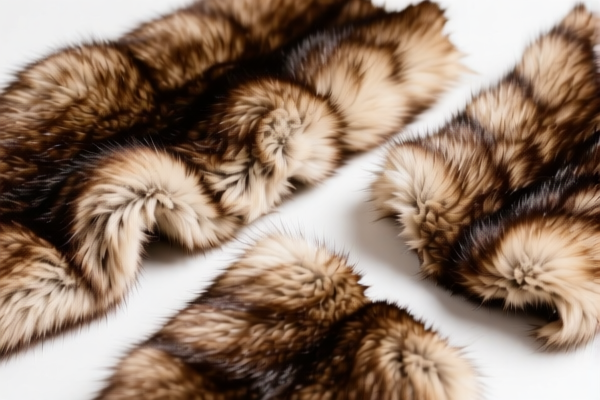
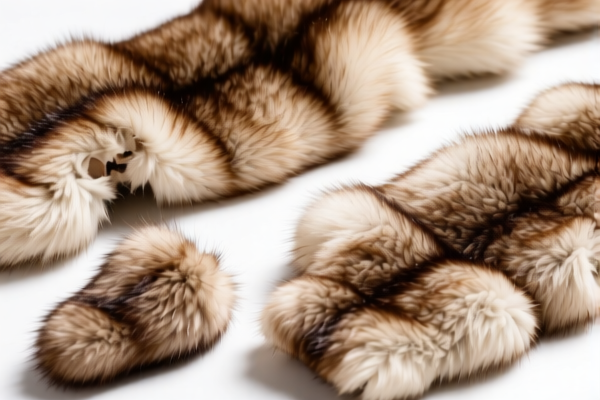
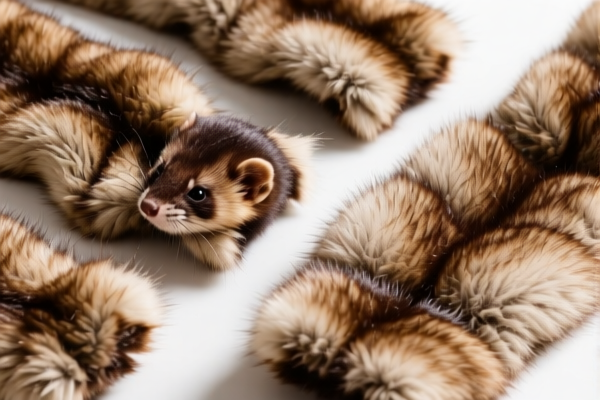
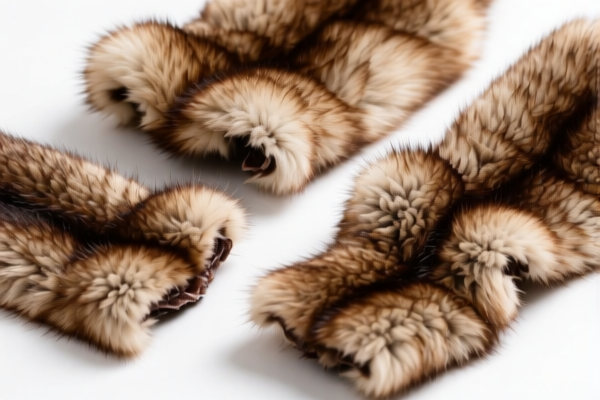
AI Analysis
🧥 Mink Fur Material (Unassembled) | 🇺🇸 US Customs Tariff Guide & Clearance Strategy
🌐 HS Code Reference & Clearance Guide | 2026 Current Tariff Analysis | Professional Entry Strategies
📌 I. Product Definition & Classification: What exactly is "Mink Fur Material"?
Mink fur material (unassembled) refers to raw or prepared furskins of minks that have not yet been cut, sewn, or assembled into final apparel or accessories. In international trade, this is distinct from finished fur garments. It is classified under Chapter 43 (Furskins and artificial fur).
Key Distinction: * Raw/Prepared Furskins (Heading 4301): Whole skins, with or without head, tail, or paws, suitable for furriers. This is the correct category for "unassembled" materials. * Articles of Apparel (Heading 4303): Finished coats, vests, collars, etc. (Do not use this for unassembled skins).
⚠️ Critical Classification Point:
- If the item is a whole skin (even if tanned/prepared) → Go to 4301.10
- If the item is cut pieces, heads, tails, or paws specifically for furriers → Still generally 4301 (if suitable for furriers' use) or 4303.90 (if considered "other" articles, but typically raw material falls under 4301).
- Do NOT classify as "Apparel" (4303.10) unless it is already a manufactured garment.
📦 II. HS Code Classification Details (2026 Current Tariff Authority)
Based on the provided , the relevant HS Codes for Mink Fur Material (Unassembled) are:
| HS Code | Product Description | Applicable Scenario | Assembly Status |
|---|---|---|---|
4301.10.00.10 |
Raw furskins of mink, whole, with or without head, tail or paws | Wild Mink Skins (Whole) | ❌ Unassembled (Raw) |
4301.10.00.20 |
Raw furskins of mink, whole, with or without head, tail or paws | Farmed/Other Mink Skins (Whole) | ❌ Unassembled (Raw) |
4303.90.00.00 |
Other articles of furskin | Cut pieces, trimmings, or non-apparel fur items | ⚠️ Partially Processed |
4303.10.00.30 |
Articles of apparel, clothing accessories of mink | Finished Mink Garments | ✅ Assembled (Finished) |
🔍 重点提醒 (Key Reminder):
- For "Mink fur material unassembled", you are primarily looking at 4301.10.00.10 or 4301.10.00.20.
- 4303.10.00.30 is for finished apparel (e.g., a mink coat). If you ship unassembled skins, classifying them here is incorrect and may lead to penalties.
- 4303.90.00.00 is for "Other" fur articles. While some cut pieces might fall here, whole raw skins should strictly go to 4301.
💰 III. 2026 Latest Tariff Rate Breakdown (Detailed)
✅ Applicable Country: United States (US)
✅ Origin: China (CN)
✅ Effective Date: Current rates apply as per
🎯 1. 4301.10.00.10 & 4301.10.00.20 —— Mink Furskins (Raw/Unassembled)
| Item | Details |
|---|---|
| Base Tariff Rate | 0.0% (Ad valorem) |
| Additional Tariff (Section 301 / Retaliatory) | +7.5% |
| Total Tax Rate | 7.5% |
| Tax Calculation | CIF Value × 7.5% |
| De Minimis Eligibility | ❌ Not Applicable (Furskins are generally subject to stricter inspection and duties; de minimis usually applies to lower-risk goods, but check specific CBP rulings for value thresholds. However, the 7.5% is a direct addition.) |
| Legal Basis | Section 301 Tariff List + Base Tariff |
📌 Explanation:
- The base tariff is 0%, which is favorable for raw materials.
- However, there is a mandatory additional tariff of 7.5%.
- Total Cost Impact: You pay 7.5% of the customs value.
- Note: This is significantly lower than finished apparel (which can have 29% total tax). Classification as raw skin (4301) saves you substantial duty compared to apparel (4303).
🎯 2. 4303.90.00.00 —— Other Fur Articles (If misclassified or partial cuts)
| Item | Details |
|---|---|
| Base Tariff Rate | 0.0% |
| Additional Tariff (Section 301) | +25.0% |
| Total Tax Rate | 25.0% |
| Tax Calculation | CIF Value × 25.0% |
📌 Warning:
- If you incorrectly classify unassembled skins as "Other Fur Articles" (4303.90), the tariff jumps to 25%.
- If you classify them as Apparel (4303.10.00.30), the tariff is even higher: Base 4.0% + Additional 25.0% = 29.0%.
🛠️ IV. Clearance Practical Advice (Real-World Pitfall Avoidance)
✅ 1. Required Documentation Checklist (Non-Negotiable)
| Document | Mandatory? | Purpose |
|---|---|---|
| ✅ Commercial Invoice | ✔️ | Must clearly state "Mink Furskins, Unassembled" and specify if Wild or Farmed. |
| ✅ CITES Permit (if applicable) | ✔️ | Critical! Minks are regulated in many regions. Check if your specific mink breed/subspecies requires CITES export/import permits. |
| ✅ Phytosanitary/Veterinary Certificate | ✔️ | Proves the skins are free from disease and treated for preservation. |
| ✅ Product Photos | ✔️ | Show whole skins, tanning process, and packaging. Must prove they are not assembled. |
| ✅ Packing List | ✔️ | Detail count, weight, and dimensions. |
✅ 2. Declaration Tips (Key Mantra)
🔥 “Raw vs. Ready: Declare as Skin, Not Garment!”
| Scenario | Correct HS Code | Wrong Action | Consequence |
|---|---|---|---|
| Whole, tanned mink skins | 4301.10.00.10/20 |
Calling them "Mink Fabric" or "Ready-to-sew" | May be reclassified as 4303 → 25-29% duty |
| Mink collars (finished) | 4303.10.00.30 |
Declaring as "raw skin" | Fraud/Penalty |
| Mink trim/cuts | 4303.90.00.00 (or 4301 if raw) |
Misdeclaring origin | 25-29% duty + Audit Risk |
✅ 3. Special Handling for "Unassembled" Status
- Do Not Sew: Ensure no stitching is present. Even decorative stitching can trigger classification as "Apparel."
- Packaging: Ship in breathable bags, not plastic (which can cause mold). Label clearly as "RAW FURSKINS – NOT APPAREL."
- Wild vs. Farmed:
4301.10.00.10is for Wild mink.4301.10.00.20is for Farmed/Other mink.- Most commercial mink fur is farmed. Using the "Wild" code for farmed fur is incorrect. Double-check your supply chain origin!
🌍 V. Global Market Comparison (2026)
| Market | Recommended HS Code | Duty Rate | Key Requirement |
|---|---|---|---|
| 🇺🇸 USA | 4301.10.00.20 |
7.5% | CITES Permit, Vet Certificate |
| 🇨🇳 China | 4301.10.00.20 |
Varies | Import License, CITES |
| 🇪🇺 EU | 4301.10 |
~0-5% | CITES, EU Fur Ban Compliance |
| 🇬🇧 UK | 4301.10 |
~0-5% | Post-Brexit Rules |
📌 Conclusion:
- The US offers a low 7.5% duty for raw mink skins, BUT only if correctly classified as 4301.
- Mistake Alert: If you classify raw skins as apparel (4303), you pay 25-29%. That’s a 3x–4x cost increase!
📌 VI. Common Mistakes & Pitfalls (Lessons Learned)
❌ Mistake 1: Declaring "Mink Fur Material" as "Mink Coat" to avoid inspection.
👉 Result: Customs inspects, finds raw skins, reclassifies to 4303.10.00.30 → 29% Duty + Penalties.
❌ Mistake 2: Using the "Wild" (4301.10.00.10) code for farmed mink.
👉 Result: Data mismatch. Customs may reject entry or impose fines for inaccurate documentation.
❌ Mistake 3: Ignoring CITES.
👉 Result: Seizure of goods. Mink is a regulated species in many contexts. Even if duty is low, no permit = no entry.
✅ Correct Action:
Description: "Mink Furskins, Tanned, Whole, Farmed (Not Assembled), Model: MK-100, Qty: 50"
HS Code:4301.10.00.20
Duty: 7.5%
🎯 VII. Conclusion: Precision Saves Money!
🎯 Remember the Mantra:
🔹 "Raw Skins = 7.5% (4301)"
🔹 "Finished Apparel = 29% (4303)"
🔹 "One Stitch = Change of Category!"
📌 Pro Tip:
If your mink fur is partially assembled (e.g., cut panels but not sewn), consult a customs broker. It may still be considered "raw" or "semi-manufactured," potentially keeping it in 4301. But if it’s a finished vest, it’s 4303. When in doubt, provide photos and specs to your clearing agent.
📣 Immediate Action:
📞 Verify Origin: Is it Wild or Farmed?
📄 Check CITES: Do you have the permit?
🏷️ Label Clearly: "UNASSEMBLED FURSKINS – NOT APPAREL"
🚀 Clearance Speed: High accuracy = Fast release!
✨ Professional Clearance Starts with Accurate Classification!
💼 Your 7.5% vs. 29% Savings Depends on This Single Decision!
Customer Reviews
About HS Code Classification
The Harmonized System (HS) is an internationally standardized nomenclature developed by the World Customs Organization (WCO) to classify traded products. Over 200 countries use the HS system as the basis for customs tariffs, trade statistics, and import/export regulations.
Each HS code follows a hierarchical structure:
- Chapter (2 digits) — Broad category of goods (e.g., Chapter 84: Machinery and Mechanical Appliances)
- Heading (4 digits) — More specific grouping within the chapter
- Subheading (6 digits) — Internationally standardized breakdown, used by all WCO member countries
- National subdivisions (8-10 digits) — Country-specific extensions for further classification, such as US HTSUS 10-digit codes
Correct HS code classification is essential for smooth customs clearance, accurate duty payment, and compliance with trade regulations. Misclassification can lead to customs delays, overpayment of duties, or penalties.
When importing from CN to US, the applicable tariff rates may include:
- Most-Favored-Nation (MFN) rate — The standard duty rate applied to WTO members
- General rate — Applied to countries without trade agreements
- Trade remedy duties — Additional tariffs such as Section 301 (anti-dumping), Section 232 (national security), or countervailing duties
The information provided on this page is for reference purposes only. For official classification, please consult with your local customs authority or a licensed customs broker.