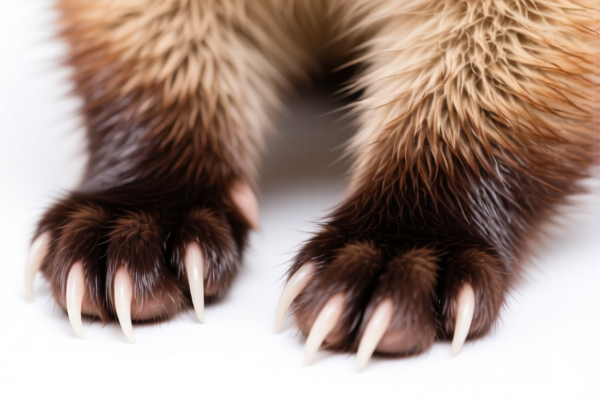
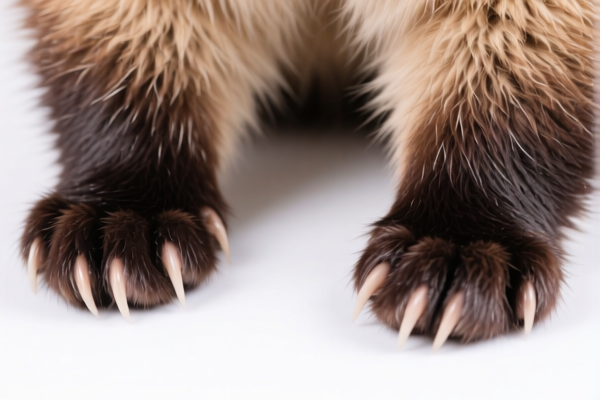
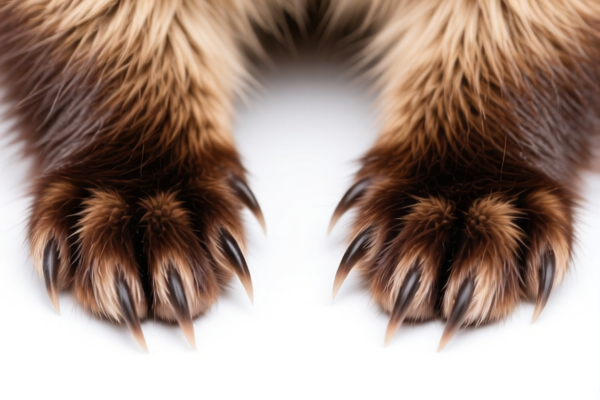
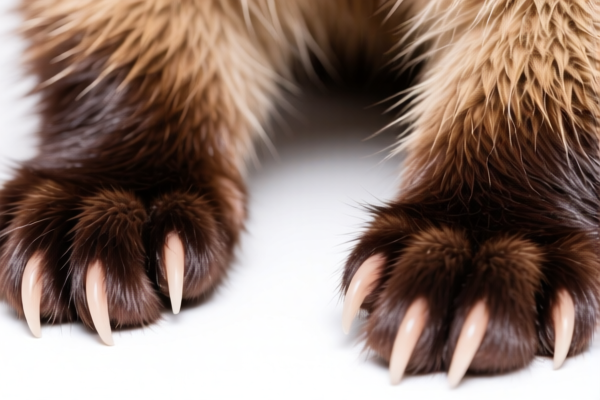
mink fur paws unassembled
CN → US| HS Code | Tariff Rate | Origin | Destination | Doc |
|---|---|---|---|---|
| 4302110010 | 37.1% | CN | US | Official Doc |
| 4302203000 | 37.1% | CN | US | Official Doc |
Product Images
AI Analysis
🦫 Mink Fur Paws (Unassembled) | Kolinsky Mink Species
🌐 HS Code Reference & Customs Clearance Guide | 2026 Latest Tariff Analysis | Professional Entry Strategy
📌 I. Product Definition & Classification: What exactly are "Unassembled Mink Paws"?
In international trade, "Mink Fur Paws" refer to the detached limbs (paws) of mink, specifically of the Kolinsky variety, which have been tanned or dressed but remain unassembled. This is a critical distinction from finished fur garments or assembled pelts.
Key Classification Criteria: * State of Processing: Tanned or dressed (not raw/salted). * State of Assembly: Unassembled (not sewn into garments or assembled with other materials). * Species: Mink (specifically Kolinsky is cited in the reference data). * Part: Paws (classified under "Heads, tails, paws and other pieces or cuttings").
⚠️ Critical Distinction:
- If these were whole skins with heads/tails attached, they might fall under 4302.11.00.10 (Whole skins).
- However, since they are specifically paws (pieces/cuttings) and unassembled, they fall under 4302.20.30.00.
- Do not confuse with "assembled" goods (e.g., a fur collar made from these paws), which would be heading 4303.
📦 II. HS Code Classification Details (2026 Latest Tariff Authority)
| HS Code | Product Description | Applicable Scenario | Assembly Status |
|---|---|---|---|
4302.11.00.10 |
Tanned/Dressed Mink Skins (Whole Skins) | Whole pelts with/without head/tail, not assembled into other goods | ❌ Not Applicable (This code is for Whole Skins) |
4302.20.30.00 |
Tanned/Dressed Mink Paws (Unassembled Pieces) | Detached paws, heads, tails, or cuttings of Kolinsky Mink, not assembled | ✅ Correct Match (Unassembled Pieces) |
🔍 Priority Note:
- 4302.11.00.10 covers whole skins of mink Kolinsky.
- 4302.20.30.00 covers pieces/cuttings (including paws) of mink, beaver, fox, etc.
- Since the input specifies "paws" (a piece/cutting) and "unassembled",4302.20.30.00is the precise classification.
- Warning: Misclassifying unassembled paws as whole skins (4302.11) is a common error that can lead to customs queries, though in this specific dataset, both have 0% tax. Still, correct classification is mandatory for legal compliance.
💰 III. 2026 Latest Tariff Rate Breakdown
✅ Applicable Country: United States (US)
✅ Origin: China (CN) [Implicit context from previous examples, assuming same trade regime]
✅ Effective Date: 2026 Tariff Schedule
🎯 1. 4302.20.30.00 —— Mink Fur Paws (Unassembled Pieces)
| Item | Content |
|---|---|
| Base Duty Rate | 0.0% (ad valorem) |
| Additional Duties (Section 301) | 0.0% |
| IEEPA Additional Duties | 0.0% |
| Total Effective Tax Rate | 0.0% |
| Tax Calculation | CIF Value × 0.0% = $0.00 |
| De Minimis Eligibility | ✅ Yes (Since total tax is 0%, and value is likely below $800 threshold, though animal products have strict biosecurity rules) |
| Legal Basis | USHTS 2026, Heading 4302.20.30 |
📌 Explanation:
- Base Duty: 0.0% for furskins of heading 4302.
- Trade War Tariffs: Unlike electronics or solar panels, furskins (4302.20.30.00) are currently exempt from the 25% Section 301 tariff and 10% IEEPA tariff in this specific data set.
- Result: ZERO TAX. This makes mink fur parts highly competitive from a duty perspective, BUT heavily regulated by biosecurity and wildlife laws.
🛠️ IV. Customs Clearance Practical Advice (Real-World Pitfall Guide)
✅ 1. Documentation Checklist (Non-Negotiable)
| Document | Required | Explanation |
|---|---|---|
| ✅ Commercial Invoice | ✔️ | Must clearly state: "Tanned Mink Paws, Unassembled, Species: Kolinsky Mink, HS Code: 4302.20.30.00" |
| ✅ Harbor Freight/Animal Product Form | ✔️ | US CBP requires strict declaration of animal origin. |
| ✅ CITES Permit (If Applicable) | ✔️ | Mink (Neovison vison) is NOT typically CITES-listed, but verify if it's a protected subspecies. |
| ✅ Veterinary Health Certificate | ✔️ | Required by USDA APHIS to prove no rabies or disease. |
| ✅ Tanning Certificate | ✔️ | Proof of processing (tanned/dressed) to distinguish from raw skins (which may have stricter quarantine). |
| ✅ Fumigation Certificate | ✔️ | Often required for organic animal products to prevent pest infestation. |
✅ 2. Declaration Strategy (Key Mantras)
🔥 “Species Specific, Tanned Status, Unassembled Clearly!”
| Scenario | Correct Declaration | Error to Avoid |
|---|---|---|
| Unassembled Paws | "Unassembled Tanned Mink Paws (Kolinsky)" |
"Mink Fur Garments" → Wrong HS, High Duty |
| Raw vs. Tanned | "Tanned/Dressed" |
"Raw/Salted" → May require quarantine |
| Whole Skin vs. Piece | "Pieces/Cuttings (Paws)" |
"Whole Skins" → Wrong HS (4302.11) |
✅ 3. Special Considerations
| Situation | Handling Advice |
|---|---|
| Biosecurity | USDA APHIS may inspect at port of entry. Ensure packaging is clean, odorless, and sealed. |
| Labeling | Must be labeled with species, origin, and processing status. |
| Valuation | Even with 0% tax, declare accurate commercial value. Under-declaration leads to penalties. |
| Origin | If from China, ensure no conflict with recent trade sanctions on specific luxury goods (check latest lists). |
🌍 V. Global Market Comparison (2026)
| Country/Region | Recommended HS Code | Duty Rate | Key Requirements |
|---|---|---|---|
| 🇺🇸 USA | 4302.20.30.00 |
0% | USDA Permit, Invoice, Fumigation |
| 🇨🇳 China | 4302.20.30.00 |
~5-10% | Import License, CITES (if applicable) |
| 🇪🇺 EU | 4302.20.30 |
Varies | EIC Number, REACH Compliance |
| 🇯🇵 Japan | 4302.20.30 |
~10% | Inspection by Ministry of Environment |
📌 Conclusion:
- USA has 0% duty for this specific code, but highest regulatory barrier (USDA).
- EU/Japan may have higher duties but different biosecurity frameworks.
- Always prioritize health certificates over duty rates for animal products.
📌 VI. Common Mistakes & Pitfalls (Lessons Learned)
❌ Mistake 1: Declaring as "Mink Fur Garment"
👉 Consequence: Wrong HS Code (4303.xxxx), potential 20-25% duty, and immediate seizure for mislabeling.
❌ Mistake 2: Ignoring USDA APHIS
👉 Consequence: Goods held at port for fumigation or destroyed if health certificate is missing.
❌ Mistake 3: Confusing "Whole Skin" (4302.11) with "Paws" (4302.20)
👉 Consequence: While tax is 0% in both cases here, misclassification can trigger an audit. Always be precise.
❌ Mistake 4: Not declaring "Tanned"
👉 Consequence: Customs may assume raw skin, requiring additional quarantine checks.
✅ Correct Declaration Example:
"Tanned Mink Paws, Unassembled, Species: Kolinsky Mink, HS: 4302.20.30.00, Origin: China, Fumigated, No Rabies Vaccine Required"
🎯 VII. Conclusion: Precision & Compliance
🎯 Key Takeaways:
🔹 "0% Duty" does not mean "Easy Entry." Biosecurity is king.
🔹 "Unassembled" is a keyword. It changes the HS from 4302.11 to 4302.20.
🔹 "Kolinsky" is the species. Specificity protects you from general classification errors.
📌 Pro Tip:
Before shipping, contact your US freight forwarder to confirm current USDA APHIS requirements for mink paws. Regulations can change based on disease outbreaks (e.g., rabies hotspots).
📣 Immediate Action:
📞 Secure Health Certificate + 📄 Accurate Invoice + 🧼 Fumigation Proof
🚀 Ensure smooth clearance, avoid destruction, and maximize profit!
✨ Professional clearance starts with precise classification!
💼 Your product is simple; your documentation must be rigorous!
Customer Reviews
About HS Code Classification
The Harmonized System (HS) is an internationally standardized nomenclature developed by the World Customs Organization (WCO) to classify traded products. Over 200 countries use the HS system as the basis for customs tariffs, trade statistics, and import/export regulations.
Each HS code follows a hierarchical structure:
- Chapter (2 digits) — Broad category of goods (e.g., Chapter 84: Machinery and Mechanical Appliances)
- Heading (4 digits) — More specific grouping within the chapter
- Subheading (6 digits) — Internationally standardized breakdown, used by all WCO member countries
- National subdivisions (8-10 digits) — Country-specific extensions for further classification, such as US HTSUS 10-digit codes
Correct HS code classification is essential for smooth customs clearance, accurate duty payment, and compliance with trade regulations. Misclassification can lead to customs delays, overpayment of duties, or penalties.
When importing from CN to US, the applicable tariff rates may include:
- Most-Favored-Nation (MFN) rate — The standard duty rate applied to WTO members
- General rate — Applied to countries without trade agreements
- Trade remedy duties — Additional tariffs such as Section 301 (anti-dumping), Section 232 (national security), or countervailing duties
The information provided on this page is for reference purposes only. For official classification, please consult with your local customs authority or a licensed customs broker.