mink pelts
CN → US| HS Code | Tariff Rate | Origin | Destination | Doc |
|---|---|---|---|---|
| 4302110020 | 37.1% | CN | US | Official Doc |
| 4301100020 | 17.5% | CN | US | Official Doc |
| 4302110010 | 37.1% | CN | US | Official Doc |
| 4301100010 | 17.5% | CN | US | Official Doc |
| 4303100030 | 39.0% | CN | US | Official Doc |
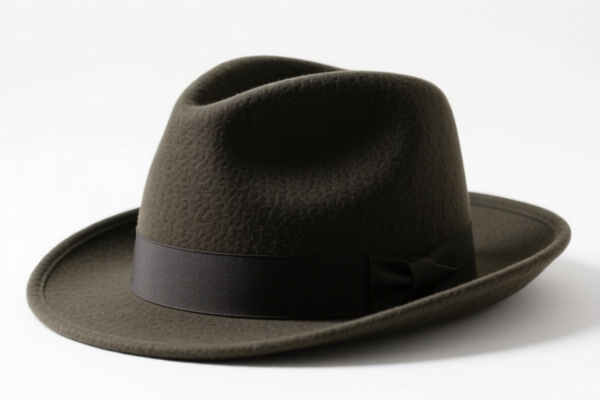
Product Images



AI Analysis
🧥 Mink Pelts (优质水貂皮)
🌐 HS Code Reference & Customs Clearance Guide | 2026 Latest Tariff Analysis | Professional Clearance Strategy
📌 1. Product Definition & Classification: Do You Understand "Mink Pelts"?
Mink pelts are high-value raw materials in the global fur industry, classified based on their processing stage and physical form. In international trade, they are strictly divided into:
Raw/Unprocessed Pelts (原皮/毛皮): Raw skins with hair, not yet tanned or assembled. These are the basic agricultural product form.
Processed/Assembled Pelts (鞣制/加工过的皮毛及整张皮): Tanned, dried, or assembled into strips/panels, ready for garment manufacturing.
⚠️ Key Distinction Point:
- If the pelt is raw, unprocessed, and in its original natural state → Classified under 4301.10.x0.xx
- If the pelt is tanned, processed, or assembled (even if not yet sewn into a garment) → Classified under 4302.11.xx.xx or 4303.10.xx.xx
📦 2. HS Code Classification Details (2026 Latest Tariff Authority Comparison)
| HS Code | Product Description | Application Scenario | Tax Rate |
|---|---|---|---|
4301.10.00.10 |
Raw Mink Pelts (Original form) | Raw fur trading, basic material export | 17.5% |
4301.10.00.20 |
High-Quality Raw Mink Pelts | Premium raw material, specific quality grade | 17.5% |
4302.11.00.10 |
Tanned/Processed Mink Pelts (Single skins) | Ready for cutting/sewing, industrial use | 37.1% |
4302.11.00.20 |
High-Quality Tanned Mink Pelts (Unassembled) | Premium processed pelts, strip-form or panel-form | 37.1% |
4303.10.00.30 |
Mink Pelts (Core Material Compliant) | Core material requirements met, specific industrial standard | 39.0% |
🔍 Key Reminder:
- Raw vs. Processed: The single biggest factor determining tax is whether the pelt has been tanned or processed. Raw pelts (4301) enjoy lower base duties, while processed pelts (4302/4303) face higher base duties.
- Quality Grading: "High-quality" variants often fall under the same HS structure but may be distinguished by customs for inspection purposes. The tax rate remains consistent within the base code family for raw vs. processed.
💰 3. 2026 Latest Tariff Rate Details (Including Additional Taxes & Policy Surcharges)
✅ Applicable Country: United States (US)
✅ Origin: China (CN)
✅ Effective Time: From November 10, 2025 (including subsequent imports)
🎯 1. 4301.10.00.10 & 4301.10.00.20 —— Raw Mink Pelts (Unprocessed)
| Item | Content |
|---|---|
| Base Duty Rate | 0% (Ad Valorem) |
| Additional Duty (Section 301) | +7.5% (Due to trade tensions) |
| Section 122 Duty | +10% (Specific additional tariff) |
| Total Tax Rate | 17.5% |
| Tax Calculation | CIF Value × 17.5% |
| De Minimis Eligibility | ❌ No (Denied under current trade rules) |
| Legal Basis Path | Base: 0% → Add. Tax: 7.5% → Sec. 122: 10% → Total: 17.5% |
📌 Explanation:
- Base 0%: Raw animal skins often have low base import duties.
- 7.5% Additional Duty: Reflects current trade policy surcharges on Chinese goods.
- 10% Section 122 Duty: A specific statutory surcharge applying to this category.
- Total 17.5%: This is the effective landed cost multiplier for raw mink pelts.
🎯 2. 4302.11.00.10 & 4302.11.00.20 —— Tanned/Processed Mink Pelts
| Item | Content |
|---|---|
| Base Duty Rate | 2.1% |
| Additional Duty (Section 301) | +25.0% |
| Section 122 Duty | +10% |
| Total Tax Rate | 37.1% |
| Tax Calculation | CIF Value × 37.1% |
| De Minimis Eligibility | ❌ No |
| Legal Basis Path | Base: 2.1% → Add. Tax: 25.0% → Sec. 122: 10% → Total: 37.1% |
📌 Explanation:
- Base 2.1%: Processed fur goods carry a higher base duty due to manufacturing value addition.
- 25.0% Additional Duty: The highest tier of trade policy surcharge, reflecting stricter limits on processed Chinese imports.
- 10% Section 122 Duty: Same statutory surcharge as raw pelts.
- Total 37.1%: A significant cost increase compared to raw pelts. Proper classification is critical to avoid misdeclaration.
🎯 3. 4303.10.00.30 —— Mink Pelts (Core Material Compliant)
| Item | Content |
|---|---|
| Base Duty Rate | 4.0% |
| Additional Duty (Section 301) | +25.0% |
| Section 122 Duty | +10% |
| Total Tax Rate | 39.0% |
| Tax Calculation | CIF Value × 39.0% |
| De Minimis Eligibility | ❌ No |
| Legal Basis Path | Base: 4.0% → Add. Tax: 25.0% → Sec. 122: 10% → Total: 39.0% |
📌 Explanation:
- This code applies to mink pelts that meet specific "core material" requirements, often associated with higher-value or specialized industrial standards.
- Base 4.0%: Highest base duty among the listed codes.
- 25.0% + 10%: Same additional taxes as other processed pelts.
- Total 39.0%: The highest tax burden in this dataset. Ensure compliance with "core material" definitions to avoid penalties.
🛠️ 4. Customs Clearance Practical Advice (Real-World Pitfall Avoidance)
✅ 1. Documentation Checklist (All Are Mandatory)
| Document | Required | Notes |
|---|---|---|
| ✅ Product Specifications | ✔️ | Detail processing level: Raw, Tanned, or Assembled |
| ✅ Processing Certificate | ✔️ | Proof of tanning or assembly process for 4302/4303 codes |
| ✅ Photos (Including Label) | ✔️ | Clear image of pelt state, hair direction, and any tags |
| ✅ Commercial Invoice | ✔️ | Must specify "Mink Pelts" and processing stage clearly |
| ✅ Packing List | ✔️ | Detail weight, count, and packaging method |
| ✅ Certificate of Origin (CO) | ✔️ | Essential for trade policy verification |
✅ 2. Declaration Tips (Key Mnemonic)
🔥 "Raw is 17.5%, Processed is 37-39%, Mislabeling = Penalty!"
| Scenario | Correct Declaration | Wrong Action |
|---|---|---|
| Raw Mink Pelts | 4301.10.xx.xx |
Declare as processed → 37.1% vs 17.5% |
| Tanned Mink Pelts | 4302.11.xx.xx |
Declare as raw → Underpayment Risk |
| Assembled Strips/Panels | 4302.11.xx.xx |
Declare as raw → Severe Penalty |
| Core Material Compliant | 4303.10.00.30 |
Declare as generic processed → 39.0% vs 37.1% |
✅ 3. Special Situation Handling
| Situation | Handling Advice |
|---|---|
| Mixed Shipments | Separate raw and processed pelts in documentation. Mixed declarations may trigger full audit. |
| OEM Custom Orders | Provide design specs and processing proofs. Ensure "core material" claims are substantiated. |
| High-Value Premium Pelts | Consider Advance Ruling to confirm HS code and tax rate before shipment. |
| Trade War Impact | Factor in 25-37% additional taxes in pricing models. Consider alternative origins if feasible. |
🌍 5. Global Market Clearance Comparison (2026 Latest)
| Country/Region | Recommended HS Code | Tariff | Certification Requirements | Notes |
|---|---|---|---|---|
| 🇺🇸 US | 4301.10.xx.xx / 4302.11.xx.xx |
17.5% - 39.0% | None specific (Trade Policy Applies) | High tariffs due to Section 301 & 122 |
| 🇨🇳 China | 4301.10.xx.xx / 4302.11.xx.xx |
5% - 10% | None | Lower base duties |
| 🇪🇺 EU | 4301.10.xx.xx / 4302.11.xx.xx |
0% - 4% | CITES Documentation Required | Strict wildlife trade regulations |
| 🇬🇧 UK | 4301.10.xx.xx / 4302.11.xx.xx |
0% - 4% | CITES + UK Wildlife Licenses | Post-Brexit regulations apply |
| 🇯🇵 Japan | 4301.10.xx.xx / 4302.11.xx.xx |
0% - 2% | None | Lowest tariff among major markets |
📌 Conclusion:
- The US imposes the highest effective tariffs (17.5% - 39.0%) due to multiple layers of additional duties.
- Raw pelts are significantly cheaper to import into the US than processed pelts.
- CITES regulations are critical for EU/UK/Japan, but Section 301/122 duties are unique to the US.
📌 6. Common Errors & Pitfall Avoidance (Lessons Learned)
❌ Error 1: Declaring Tanned Pelts as Raw Pelts
👉 Consequence: Tax underpayment → Penalties + Back Taxes + Possible Cargo Detention
❌ Error 2: Declaring Raw Pelts as Processed Pelts
👉 Consequence: Overpayment → Loss of profit margin (e.g., paying 37.1% instead of 17.5%)
❌ Error 3: Missing CITES Documentation for EU/UK Shipments
👉 Consequence: Cargo Rejection or Seizure → Complete loss of shipment value
❌ Error 4: Using Vague Descriptions like "Fur Material"
👉 Consequence: Customs Audit Delay → Unclear classification leads to conservative (higher) tax assessment
✅ Correct Approach:
"Mink Pelts, Tanned, Unassembled, Strips, 50cm Length, High Quality, Origin: China"
🎯 7. Conclusion: Professional Declaration, Cost Optimization
🎯 Key Takeaway:
🔹 "Raw = 17.5%, Processed = 37-39%, Classification is King!"
🔹 "Underpaying Raw/Process leads to fines, Overpaying leads to lost profit!"
📌 Pro Tip:
- If your mink pelts are raw, ensure documentation explicitly states "Raw, Unprocessed, Original Form" to secure the 17.5% rate.
- If tanned/processed, provide processing certificates to justify the 37.1% rate and avoid reclassification to 39.0%.
- For high-volume shipments, consider Advance Ruling from US Customs to lock in the HS code and tax rate.
📣 Immediate Action:
📞 Contact a Professional Customs Broker
📄 Provide Detailed Processing Documentation
🚀 Clear Customs Smoothly, Maximize Profit, Minimize Risk!
✨ Professional Clearance Starts with Accurate Classification!
💼 Every Percent of Tax Savings Counts!
Customer Reviews
About HS Code Classification
The Harmonized System (HS) is an internationally standardized nomenclature developed by the World Customs Organization (WCO) to classify traded products. Over 200 countries use the HS system as the basis for customs tariffs, trade statistics, and import/export regulations.
Each HS code follows a hierarchical structure:
- Chapter (2 digits) — Broad category of goods (e.g., Chapter 84: Machinery and Mechanical Appliances)
- Heading (4 digits) — More specific grouping within the chapter
- Subheading (6 digits) — Internationally standardized breakdown, used by all WCO member countries
- National subdivisions (8-10 digits) — Country-specific extensions for further classification, such as US HTSUS 10-digit codes
Correct HS code classification is essential for smooth customs clearance, accurate duty payment, and compliance with trade regulations. Misclassification can lead to customs delays, overpayment of duties, or penalties.
When importing from CN to US, the applicable tariff rates may include:
- Most-Favored-Nation (MFN) rate — The standard duty rate applied to WTO members
- General rate — Applied to countries without trade agreements
- Trade remedy duties — Additional tariffs such as Section 301 (anti-dumping), Section 232 (national security), or countervailing duties
The information provided on this page is for reference purposes only. For official classification, please consult with your local customs authority or a licensed customs broker.