mite killer anti wash agent
CN → US| HS Code | Tariff Rate | Origin | Destination | Doc |
|---|---|---|---|---|
| 3809910000 | 41.0% | CN | US | Official Doc |
| 3808990800 | 41.5% | CN | US | Official Doc |
| 3808922800 | 38.7% | CN | US | Official Doc |
| 3809921000 | 41.5% | CN | US | Official Doc |
Product Images
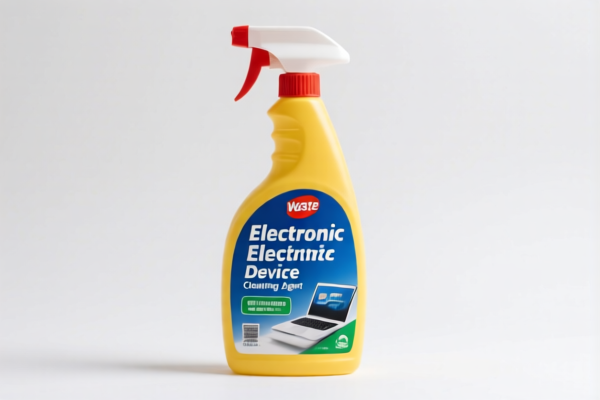
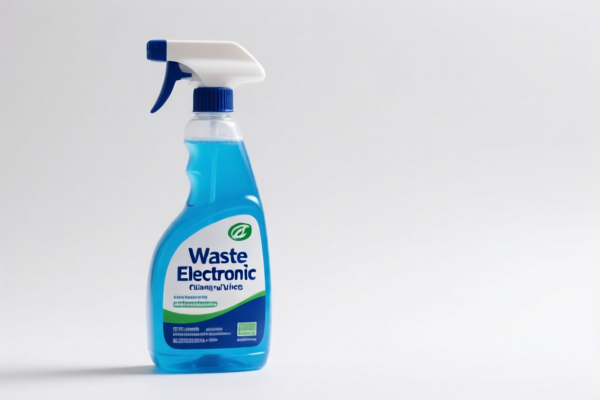
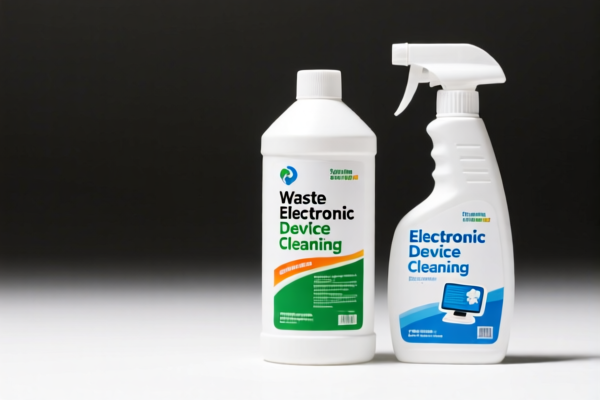
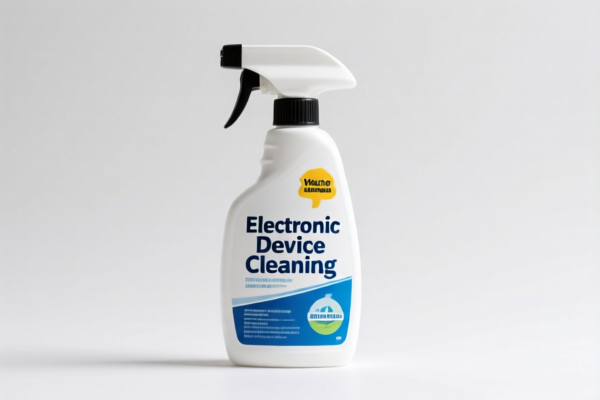
AI Analysis
🧪 Mite Killer & Anti-Wash Agent (Chemical Textile/Pesticide Formulations)
🌐 HS Code Reference & Customs Clearance Guide | 2026 Tariff Analysis | Professional Entry Strategy
📌 I. Product Definition & Classification: What Are "Mite Killers" and "Anti-Wash Agents"?
In the global chemical trade, these products fall under the umbrella of specialized chemical preparations used in two distinct but related fields:
- Mite Killers (杀螨剂): Classified as insecticides/pesticides. They are chemical agents designed to eradicate mites (acaricides), often used in agriculture, household hygiene, or industrial sanitation.
- Anti-Wash Agents (抗冲刷剂): Classified as textile/paper finishing agents. These are chemical auxiliaries applied to fabrics or paper to enhance performance (e.g., improving dye fixation, preventing color fading, or enhancing durability against washing).
⚠️ Key Classification Logic: - If the product's primary function is killing pests (mites), it falls under Chapter 38 (Other Chemical Products) as a pesticide/insecticide preparation. - If the product's primary function is textile finishing (anti-wash/performance improvement), it falls under Chapter 38 as a chemical preparation for the textile industry. - Note: In this dataset, both are treated as chemical preparations under Section VI, Chapter 38, subject to specific "Add-on" tariffs.
📦 II. HS Code Classification Details (Based on Provided Data)
The following HS Codes are extracted directly from your data, representing the specific tax profiles for these chemical agents.
| HS Code | Product Description | Functional Category | Primary Tax Profile |
|---|---|---|---|
| 3809.91.00.00 | Textile Finishing Agent (Anti-wash agent for performance enhancement) |
Textile Industry Chemicals | 41.0% Total Tax |
| 3808.99.08.00 | Mite Killer (Pesticide) (Insecticide/Acaricide category) |
Pesticide/Disinfectant | 41.5% Total Tax |
| 3808.92.28.00 | Mite Killer (Retail/Prep) (Similar to disinfectant/chemical agent) |
Pesticide/Disinfectant (Retail Form) | 38.7% Total Tax |
| 3809.92.10.00 | Industrial Chemical Agent (Anti-wash for Paper/Textile Industry) |
Industrial Chemical Preparations | 41.5% Total Tax |
| 3808.99.08.00 | Duplicate Entry (Re-classification of Mite Killer) |
Pesticide/Disinfectant | 41.5% Total Tax |
🔍 Critical Distinction: - 3808 Series: Used for Pesticides/Mite Killers. The tax rate varies slightly based on whether the product is in retail packaging or a specific formulation (38.7% vs 41.5%). - 3809 Series: Used for Textile/Paper Finishing Agents. These are "auxiliary chemicals" used to improve the physical properties of the fabric or paper, not to kill organisms.
💰 III. 2026 Tariff Rate Breakdown (Detailed Tax Clauses)
✅ Applicable Jurisdiction: United States (US)
✅ Origin: China (CN)
✅ Effective Date: Current Trade Framework (2026 Context)
🎯 1. 3808.99.08.00 & 3808.99.08.00 (Mite Killer / Pesticide)
Most common classification for "Mite Killers" as insecticides.
| Tax Component | Rate | Legal Basis / Clause |
|---|---|---|
| Base Duty (MFN) | 6.5% | Standard Most Favored Nation Tariff for chemical preparations. |
| Section 301 (Additional) | 25.0% | "China Trade War" Additional Tariff (Added on top of base). |
| Section 122 Tariff | 10.0% | Specific "China-Specific" Tariff (Often related to anti-dumping or specific retaliatory measures). |
| TOTAL TAX RATE | 41.5% | 6.5% + 25.0% + 10.0% |
📌 Explanation: - This is the highest risk category for Mite Killers. - The 25% Section 301 is standard for most Chinese chemical goods. - The 10% Section 122 is an additional layer specific to certain chemical classifications, pushing the total to 41.5%.
🎯 2. 3809.91.00.00 (Textile Anti-Wash Agent)
Classification for chemical agents improving fabric performance.
| Tax Component | Rate | Legal Basis / Clause |
|---|---|---|
| Base Duty (MFN) | 6.0% | Lower base duty for textile auxiliary chemicals. |
| Section 301 (Additional) | 25.0% | Standard Section 301 Additional Tariff. |
| Section 122 Tariff | 10.0% | Specific Section 122 Tariff applicable to this subheading. |
| TOTAL TAX RATE | 41.0% | 6.0% + 25.0% + 10.0% |
📌 Explanation: - Slightly lower than the pesticide category due to a 6.0% base rate vs 6.5%. - Still carries the heavy 25% + 10% burden.
🎯 3. 3808.92.28.00 (Mite Killer - Retail/Prepared Form)
Specific classification for retail-packaged or specific chemical preparations.
| Tax Component | Rate | Legal Basis / Clause |
|---|---|---|
| Base Duty (MFN) | 3.7% | Lowest base duty in this dataset. |
| Section 301 (Additional) | 25.0% | Standard Section 301 Additional Tariff. |
| Section 122 Tariff | 10.0% | Specific Section 122 Tariff applicable. |
| TOTAL TAX RATE | 38.7% | 3.7% + 25.0% + 10.0% |
📌 Explanation: - This offers a 2.8% savings compared to the standard 3808.99.08.00 classification, IF the product qualifies as "retail packaging" or specific preparation form. - Warning: Misclassification here (claiming 3.7% base when it should be 6.5%) carries high audit risk.
🎯 4. 3809.92.10.00 (Industrial Anti-Wash / Paper Agent)
Classification for paper or specific industrial finishing agents.
| Tax Component | Rate | Legal Basis / Clause |
|---|---|---|
| Base Duty (MFN) | 6.5% | Standard base duty for industrial chemical preparations. |
| Section 301 (Additional) | 25.0% | Standard Section 301 Additional Tariff. |
| Section 122 Tariff | 10.0% | Specific Section 122 Tariff applicable. |
| TOTAL TAX RATE | 41.5% | 6.5% + 25.0% + 10.0% |
📌 Explanation: - Same tax burden as the pesticide category (41.5%). - Used for paper industry or specialized industrial textile applications.
🛠️ IV. Customs Clearance Practical Advice (Risk Avoidance)
✅ 1. Preparation Checklist (Must-Have Documents)
| Document | Requirement | Why It Matters |
|---|---|---|
| ✅ MSDS / Safety Data Sheet | Mandatory | Proves chemical composition;海关 determines if it's a "Mite Killer" (3808) or "Finisher" (3809). |
| ✅ Product Function Proof | Mandatory | Lab report showing: Does it kill (Pesticide) or fix dye (Textile)? |
| ✅ Packing List | Detailed | Must specify "Retail Pack" vs "Bulk Industrial". This affects whether 38.7% or 41.5% applies. |
| ✅ Commercial Invoice | Precise | Description must match HS Code description (e.g., "Insecticidal Acaricide" vs "Textile Auxiliaries"). |
| ✅ Registration Certificate | High Priority | EPA Registration (if pesticide) or Textile Industry certification. No EPA = No Entry for Pesticides. |
✅ 2. Declaration Strategy (Golden Rules)
🔥 "Function Defines Tax, Form Defines Base!"
| Scenario | Correct Declaration | Risk of Error |
|---|---|---|
| Product kills mites | HS: 3808.99.08.00 (Mite Killer) |
If declared as 3809 (Textile) → Penalty + 25% Fine |
| Product prevents dye wash-out | HS: 3809.91.00.00 (Textile Finisher) |
If declared as 3808 (Pesticide) → Wrong Class + Delay |
| Product is retail bottle | Check 3808.92.28.00 | Claiming 38.7% without proof of retail form → Audit Risk |
| Product is bulk industrial | Use 3808.99.08.00 or 3809.92.10.00 | Cannot claim retail discount. |
✅ 3. Special Handling & Compliance
| Issue | Solution |
|---|---|
| EPA Registration | Critical for 3808 (Pesticides): Must have an active EPA registration number on the label. Without it, US Customs will seize the shipment. |
| Section 122 Tariff | Be aware that the 10% add-on is non-negotiable for Chinese origin. It applies regardless of "de minimis" exemptions (unless specific exclusions apply). |
| Chemical Composition | Ensure the "Active Ingredient" matches the HS Code definition. E.g., Pyrethroids might be classified differently than synthetic organic compounds. |
| Labeling | Labels must clearly state "Mite Killer" (for 3808) or "Textile Finishing Agent" (for 3809). Misleading labels lead to severe penalties. |
📌 V. Summary of Tax Burden (Quick Reference)
| Product Type | Recommended HS Code | Base Duty | Sec 301 | Sec 122 | TOTAL |
|---|---|---|---|---|---|
| Mite Killer (Standard) | 3808.99.08.00 |
6.5% | 25.0% | 10.0% | 41.5% |
| Mite Killer (Retail) | 3808.92.28.00 |
3.7% | 25.0% | 10.0% | 38.7% |
| Textile Anti-Wash | 3809.91.00.00 |
6.0% | 25.0% | 10.0% | 41.0% |
| Industrial Paper/Textile | 3809.92.10.00 |
6.5% | 25.0% | 10.0% | 41.5% |
🚨 Final Warning: - The Section 122 (10%) tariff is the "silent killer" in this dataset. It applies to ALL listed items. - Do not attempt to declare these as general "chemicals" (38xx.xx) without justification, as the 25% + 10% penalty stack is inevitable for Chinese-origin goods in these categories. - Pre-shipment Consultation with a Customs Broker is highly recommended to confirm the "Active Ingredient" classification before shipping.
🎯 VI. Conclusion: Professional Strategy for Success
Remember the Strategy:
🔹 "Identify Function First" (Pesticide vs. Finisher). 🔹 "Verify Retail vs. Bulk" (38.7% vs 41.5% potential savings). 🔹 "Prepare EPA Docs" (Non-negotiable for Mite Killers). 🔹 "Budget for 41%" (Expect the worst-case tax rate to avoid cash flow issues).
🚀 Action Plan: 1. Confirm Product Use: Is it for killing or finishing? 2. Check EPA Status: Essential for 3808 codes. 3. Calculate Landed Cost: Add ~41% to your FOB/CIF cost immediately. 4. Engage Broker: Submit a Prior Ruling Request to US Customs (CBP) if the classification is ambiguous.
✨ Precision Classification = Cost Control = Competitive Advantage!
💼 Don't let a 10% tariff surprise wipe out your margins!
Customer Reviews
About HS Code Classification
The Harmonized System (HS) is an internationally standardized nomenclature developed by the World Customs Organization (WCO) to classify traded products. Over 200 countries use the HS system as the basis for customs tariffs, trade statistics, and import/export regulations.
Each HS code follows a hierarchical structure:
- Chapter (2 digits) — Broad category of goods (e.g., Chapter 84: Machinery and Mechanical Appliances)
- Heading (4 digits) — More specific grouping within the chapter
- Subheading (6 digits) — Internationally standardized breakdown, used by all WCO member countries
- National subdivisions (8-10 digits) — Country-specific extensions for further classification, such as US HTSUS 10-digit codes
Correct HS code classification is essential for smooth customs clearance, accurate duty payment, and compliance with trade regulations. Misclassification can lead to customs delays, overpayment of duties, or penalties.
When importing from CN to US, the applicable tariff rates may include:
- Most-Favored-Nation (MFN) rate — The standard duty rate applied to WTO members
- General rate — Applied to countries without trade agreements
- Trade remedy duties — Additional tariffs such as Section 301 (anti-dumping), Section 232 (national security), or countervailing duties
The information provided on this page is for reference purposes only. For official classification, please consult with your local customs authority or a licensed customs broker.