mixing knife
CN → US| HS Code | Tariff Rate | Origin | Destination | Doc |
|---|---|---|---|---|
| 8203300000 | 35.0% | CN | US | Official Doc |
| 8213006000 | 0.0% | CN | US | Official Doc |
| 8213003000 | 0.0% | CN | US | Official Doc |
| 8214909000 | 0.0% | CN | US | Official Doc |
| 8203206060 | 0.0% | CN | US | Official Doc |
Product Images
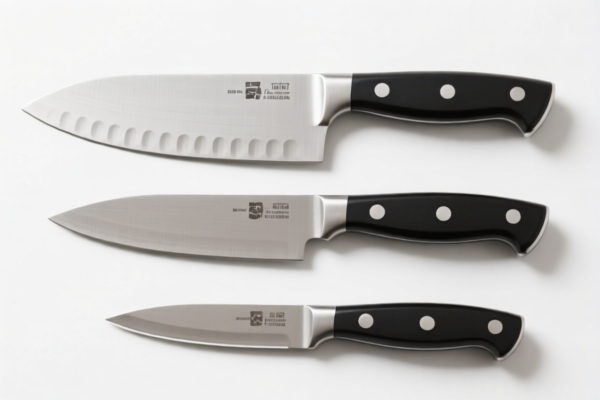
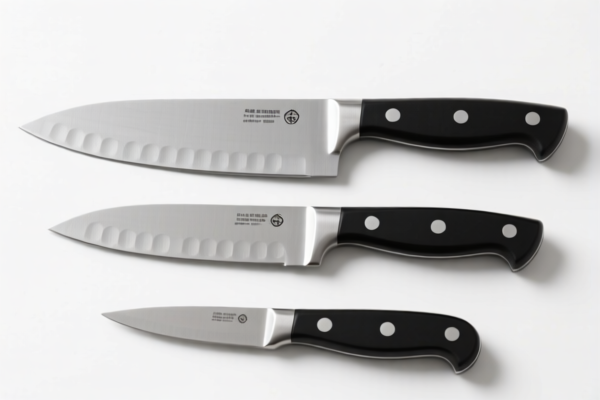
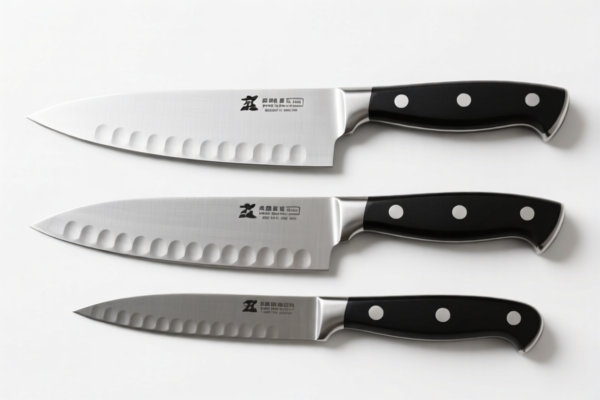
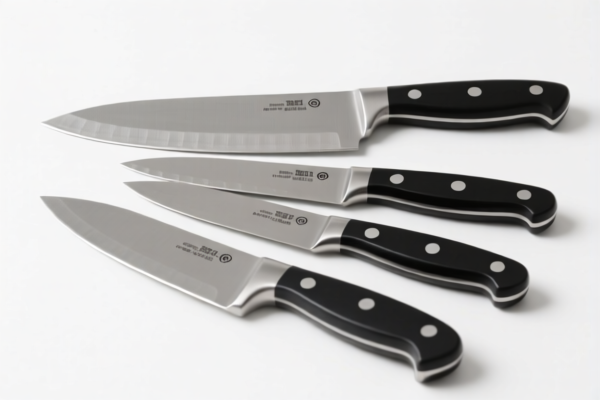
AI Analysis
🍴 Mixing Knife (Kitchen/Industrial Tools)
🌐 HS Code Reference & Customs Clearance Guide | 2026 Latest Tariff Analysis | Professional Clearance Strategy
📌 I. Product Definition & Classification: What Exactly is a "Mixing Knife"?
A "Mixing Knife" is generally a manual tool used for blending, stirring, or cutting soft materials in kitchen, bakery, or industrial settings. In international trade, its classification depends heavily on its material, structure, and specific function.
Under the Harmonized System (HS), manual scissors and shears are typically classified under Chapter 82 (Tools, implements, cutlery, spoons and forks, of base metal). Specifically, "Mixing Knives" are often categorized based on whether they resemble standard scissors/shears or fall under broader "blade" categories.
⚠️ Key Distinction Points:
- If the tool consists of two blades pivoted together (like standard scissors) → Look at 8203.30.00.00 or 8213.00.xx.00.
- If the tool is a single blade or a non-scissor cutting tool used for mixing/cutting → Look at 8214.90.90.00.
- Crucial Note: For US imports from China, the choice between subheadings dramatically affects the Additional 301 Tariff rate (25% vs. 0%).
📦 II. HS Code Classification Details (2026 Latest Tariff Authority Mapping)
| HS Code | Product Description | Applicable Scenario | Is it a Scissor/Shear? |
|---|---|---|---|
8203.30.00.00 |
Scissors and similar tools (base metal) | General purpose metal mixing scissors, bakery shears | ✅ Yes (General Class) |
8213.00.60.00 |
Scissors, dressmakers’ scissors, and similar | Tailor’s scissors, hairdressing shears, precision mixing shears | ✅ Yes (Specific Type) |
8213.00.30.00 |
Scissors, dressmakers’, and similar (other) | Less specialized cutting/mixing tools not covered in 60.00 | ✅ Yes (Other Type) |
8214.90.90.00 |
Other articles of cutlery; other utensils | Single-blade mixers, non-scissor spreading knives, specialized mixing blades | ❌ No (Other Cutlery/Tool) |
8203.20.60.60 |
Pincers, pliers, tongs and similar hand tools; angle switches and the like | Heavy-duty metal cutting shears, industrial mixing cutters | ✅ Yes (Heavy Duty) |
🔍 Critical Reminder:
- 8203.30.00.00 is the "General Basket" for scissors. If your "mixing knife" looks like standard scissors, this is the likely code, but it carries a 25% Additional Tariff from China. - 8214.90.90.00 is for "Other" cutlery tools. If the item is a spatula-like knife or a single-blade tool, this code may apply, with 0% Additional Tariff (but subject to IEEPA 10%). - 8213.00.xx.00 codes are for specific types of scissors (e.g., dressmakers'). If your product is marketed as "Dressmaker's Scissors" or "Shears," use these codes.
💰 III. 2026 Latest Tariff Rate Breakdown (Including Surtaxes & Policy Add-ons)
✅ Applicable Country: United States (US)
✅ Country of Origin: China (CN)
✅ Effective Date: 2025 November 10 onwards (and subsequent imports)
🎯 1. 8203.30.00.00 —— Scissors and Similar Tools (General)
| Item | Detail |
|---|---|
| Base Duty Rate | 0% (Ad Valorem) |
| Section 301 Additional Tariff | +25% (From USITC Footnote 9903.88.01) |
| IEEPA Additional Tariff | +10% (Targeting China/HK products, effective 2025-11-10) |
| Total Effective Rate | 35% |
| Tax Calculation | CIF Value × 35% |
| De Minimis Eligibility | ❌ Denied (deny_de_minimis) |
| Legal Basis Path | IEEPA:9903.01.25 → IEEPA:9903.01.24 → USITC:8203.30.00.00 → FOOTNOTE:9903.88.01 |
📌 Explanation:
- The 25% is the Section 301 tariff for "Scissors and similar tools." - The 10% is the new IEEPA tariff on Chinese goods. - Total 35% is extremely high. This code is high-risk for profit margins.
🎯 2. 8213.00.60.00 —— Dressmakers’ Scissors & Similar (Specific)
| Item | Detail |
|---|---|
| Base Duty Rate | 8¢ each + 8% (Specific + Ad Valorem) |
| Section 301 Additional Tariff | 0% (Not subject to 301 surcharge for this specific subheading) |
| IEEPA Additional Tariff | +10% (General IEEPA surcharge on China) |
| Total Effective Rate | ~8¢ each + 18% (Variable based on quantity/value) |
| Tax Calculation | (8¢ × Quantity) + (CIF Value × 18%) |
| De Minimis Eligibility | ❌ Denied (deny_de_minimis) |
| Legal Basis Path | IEEPA:9901.25 → IEEPA:9903.01.24 → USITC:8213.00.60.00 |
📌 Note:
- This code has a 0% Section 301 surcharge, which is a significant advantage over8203.30.00.00. - However, it is restricted to specific types of scissors (e.g., dressmakers'). If your "mixing knife" doesn't fit this specific description, using this code risks classification error penalties.
🎯 3. 8213.00.30.00 —— Other Scissors (Non-Specific)
| Item | Detail |
|---|---|
| Base Duty Rate | 1.7¢ each + 4.3% |
| Section 301 Additional Tariff | 0% |
| IEEPA Additional Tariff | +10% |
| Total Effective Rate | ~1.7¢ each + 14.3% |
| Tax Calculation | (1.7¢ × Quantity) + (CIF Value × 14.3%) |
| De Minimis Eligibility | ❌ Denied (deny_de_minimis) |
| Legal Basis Path | IEEPA:9903.01.24 → USITC:8213.00.30.00 |
📌 Note:
- Lower base duty than8213.00.60.00but also restricted to "scissors." - Total rate is lower than the general8203.30.00.00(35% vs ~14-18%).
🎯 4. 8214.90.90.00 —— Other Cutlery/Utensils
| Item | Detail |
|---|---|
| Base Duty Rate | 1.4¢ each + 3.2% |
| Section 301 Additional Tariff | 0% |
| IEEPA Additional Tariff | +10% |
| Total Effective Rate | ~1.4¢ each + 13.2% |
| Tax Calculation | (1.4¢ × Quantity) + (CIF Value × 13.2%) |
| De Minimis Eligibility | ❌ Denied (deny_de_minimis) |
| Legal Basis Path | IEEPA:9903.01.24 → USITC:8214.90.90.00 |
📌 Strategic Advantage:
- This code has 0% Section 301 surcharge. - If your "mixing knife" is not a scissor-like tool (e.g., a spatula, spreader, or single-blade mixer), this is the most cost-effective code. - Risk: Must ensure the product does NOT resemble scissors. If it has two blades pivoted, customs will reclassify to 8203/8213.
🎯 5. 8203.20.60.60 —— Pincers, Pliers, Tongs, Similar Hand Tools
| Item | Detail |
|---|---|
| Base Duty Rate | 12¢/doz. + 5.5% |
| Section 301 Additional Tariff | +25% |
| IEEPA Additional Tariff | +10% |
| Total Effective Rate | 12¢/doz. + 40.5% |
| Tax Calculation | (12¢ / 12) + (CIF Value × 40.5%) |
| De Minimis Eligibility | ❌ Denied (deny_de_minimis) |
| Legal Basis Path | IEEPA:9903.01.25 → IEEPA:9903.01.24 → USITC:8203.20.60.60 → FOOTNOTE:9903.88.01 |
📌 Warning:
- This code applies to pliers, tongs, and heavy-duty shears. - If your mixing tool is used for cutting hard materials or is structurally like pliers, use this. - Total rate of ~40.5% is the highest among all options. Avoid unless structurally required.
🛠️ IV. Customs Clearance Practical Advice (Battle-Tested Pitfall Guide)
✅ 1. Preparation Checklist (Must-Haves)
| Document | Required | Explanation |
|---|---|---|
| ✅ Product Specification Sheet | ✔️ | Clearly define dimensions, material (Stainless Steel? Carbon Steel?), and function. |
| ✅ Product Photos (Clear) | ✔️ | Show the tool from multiple angles. Crucial: Show if it has one blade or two pivoted blades. |
| ✅ Commercial Invoice | ✔️ | Describe as "Kitchen Mixing Tool" or "Non-Scissor Spreading Knife" if using 8214. Avoid "Scissors" if using 8214. |
| ✅ Packing List | ✔️ | Detail unit count and packaging type. |
| ✅ Declaration of Non-Scissor Nature | ✔️ | If using 8214.90.90.00, provide a written explanation that the tool is NOT a scissor/shear. |
✅ 2. Declaration Strategy (Key Rules)
🔥 "Scissor Structure = 35% Tax; Non-Scissor Structure = 13% Tax"
| Scenario | Correct HS Code | Wrong Code | Consequence |
|---|---|---|---|
| Two blades, pivoted, cuts via scissor motion | 8203.30.00.00 or 8213.00.xx.00 |
8214.90.90.00 |
Reclassification + 25% Penalty + Back Taxes |
| Single blade, spreads/mixes, no pivot | 8214.90.90.00 |
8203.30.00.00 |
Overpaying ~22% in taxes unnecessarily |
| Heavy-duty pliers-like cutting tool | 8203.20.60.60 |
8203.30.00.00 |
May be correct, but high tax. Check if 8214 applies. |
| Dressmaker’s precision scissors | 8213.00.60.00 |
8203.30.00.00 |
Saves 25% additional tariff if correctly classified. |
✅ 3. Special Handling Cases
| Situation | Recommendation |
|---|---|
| OEM Custom Mixing Knives | Provide design drawings. If the design is unique (e.g., curved single blade), argue for 8214.90.90.00. |
| Mixed Shipments | Do NOT mix "Scissors" and "Non-Scissor Knives" in one BL without clear separation. Customs may audit the whole shipment. |
| "Kitchen Shears" for Food | If marketed as "Kitchen Shears," use 8203.30.00.00 or 8213.00.60.00. Do NOT try to force 8214 if it has two blades. |
| Industrial Mixing Blades | If it’s a single large blade for industrial mixers, consider if it fits 8214.90.90.00 (Other utensils) or machinery parts. |
🌍 V. Global Market Comparison (2026 Latest)
| Country/Region | Recommended HS Code | Tariff Rate | Certification | Notes |
|---|---|---|---|---|
| 🇺🇸 USA | 8214.90.90.00 (if non-scissor) |
~13.2% (Lowest Risk) | FDA (Food Contact) | Avoid 8203.30.00.00 if possible due to 35% tax. |
| 🇺🇸 USA | 8203.30.00.00 (if scissor) |
35% (High Risk) | FDA (Food Contact) | Highest tax burden. |
| 🇨🇳 China | 8214.90.90.00 |
0-6% | CCC (if applicable) | No 301/IEEPA tariffs. |
| 🇪🇺 EU | 8214.90.90.00 |
0-3.5% | LFGB (Food Safety) | Generally low tariffs. |
| 🇬🇧 UK | 8214.90.90.00 |
0-3.5% | UKCA | Post-Brexit rules apply. |
📌 Conclusion:
- USA is the most challenging market due to 301 + IEEPA tariffs. - Strategy: If your "Mixing Knife" can be legally classified as Non-Scissor Cutlery (8214.90.90.00), you save ~22-25% in additional duties. - Caution: Misclassification as8214when it is actually a scissor can lead to severe penalties (fraud allegations).
📌 VI. Common Errors & Pitfall Guide (Lessons Learned)
❌ Error 1: Calling "Kitchen Shears" a "Mixing Knife" to get 8214 rates.
👉 Consequence: Customs sees two blades, reclassifies to 8203.30.00.00, charges 35%, plus penalties.
👉 Solution: Be honest about structure. If it has two blades, use the scissor codes.
❌ Error 2: Using 8203.30.00.00 for dressmaker’s precision scissors.
👉 Consequence: You pay 25% extra unnecessarily. 8213.00.60.00 has 0% 301 tariff.
👉 Solution: Classify precision shears under 8213.00.60.00 if they fit the description.
❌ Error 3: Ignoring IEEPA 10% on all Chinese goods.
👉 Consequence: Underestimating landed cost.
👉 Solution: Add 10% to ALL Chinese-origin goods regardless of HS Code.
🎯 VII. Conclusion: Professional Declaration, Cost Optimization!
🎯 Remember the Mantra:
🔹 "One Blade = 8214 (Low Tax); Two Blades = 8203/8213 (High Tax); Be Honest or Pay Fine!"
🔹 "Don't call scissors 'knives' to save tax – it’s customs fraud."
🔹 "Structure dictates HS Code, not Marketing Name."
📌 Pro Tip:
If your product is a hybrid (e.g., a spatula with a scissor attachment), declare the primary function. If it’s mainly for mixing/spreading, 8214.90.90.00 may still be viable, but provide detailed photos.
📣 Immediate Action:
📞 Contact your customs broker with clear photos of the mixing knife.
📄 Request an Advance Ruling if the product structure is ambiguous.
🚀 Optimize your supply chain to minimize the 35% tax burden on Chinese-origin scissors.
✨ Professional Clearance Starts with Accurate Classification!
💼 Your Bottom Line Depends on the First Letter of Your HS Code!
Customer Reviews
About HS Code Classification
The Harmonized System (HS) is an internationally standardized nomenclature developed by the World Customs Organization (WCO) to classify traded products. Over 200 countries use the HS system as the basis for customs tariffs, trade statistics, and import/export regulations.
Each HS code follows a hierarchical structure:
- Chapter (2 digits) — Broad category of goods (e.g., Chapter 84: Machinery and Mechanical Appliances)
- Heading (4 digits) — More specific grouping within the chapter
- Subheading (6 digits) — Internationally standardized breakdown, used by all WCO member countries
- National subdivisions (8-10 digits) — Country-specific extensions for further classification, such as US HTSUS 10-digit codes
Correct HS code classification is essential for smooth customs clearance, accurate duty payment, and compliance with trade regulations. Misclassification can lead to customs delays, overpayment of duties, or penalties.
When importing from CN to US, the applicable tariff rates may include:
- Most-Favored-Nation (MFN) rate — The standard duty rate applied to WTO members
- General rate — Applied to countries without trade agreements
- Trade remedy duties — Additional tariffs such as Section 301 (anti-dumping), Section 232 (national security), or countervailing duties
The information provided on this page is for reference purposes only. For official classification, please consult with your local customs authority or a licensed customs broker.