mobile phone cleaning brush
CN → US| HS Code | Tariff Rate | Origin | Destination | Doc |
|---|---|---|---|---|
| 4417006000 | 35.0% | CN | US | Official Doc |
| 9603109000 | 27.5% | CN | US | Official Doc |
| 9603908050 | 70.3% | CN | US | Official Doc |
Product Images
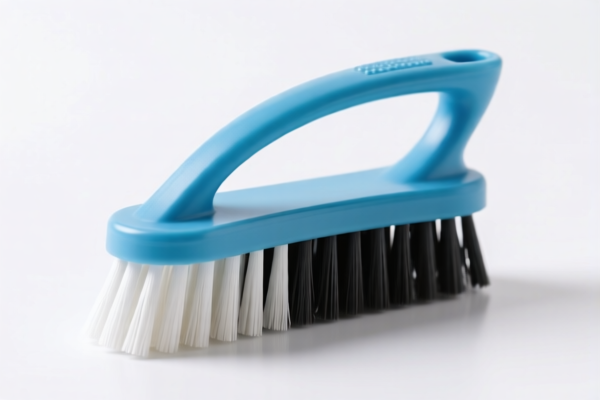


AI Analysis
🧼 Mobile Phone Cleaning Brush | HS Code Master Guide & US Customs Strategy (2026)
🌐 HS Code Reference & Clearance Guide | 2026 Latest Tariff Analysis | Professional Clearance Strategy
📌 One, Product Definition & Classification: Do You Really Understand "Cleaning Brushes"?
The Mobile Phone Cleaning Brush is a specialized tool designed for removing dust, debris, and smudges from electronic devices (phones, tablets, laptops, and cameras). In international trade, the classification depends heavily on function, material, and specificity.
It generally falls under two main trade families: 1. Wooden/Bamboo Tools: Often classified under wood products if the primary material is wood. 2. General Brushes & Brooms: Classified under "Miscellaneous Articles" (Chapter 96) for general cleaning functions.
⚠️ Key Classification Logic:
- If the brush has a wooden handle and is a simple cleaning tool → Can fall under 4417.00.60.00 (Wooden tools).
- If the brush is a general-purpose item (plastic, mixed, or no specific material dominance) → Often falls under 9603 (Brushes, brooms).
- If the brush has metal components (steel/aluminum/copper bristles or handles) → Triggers the 50% Steel/Aluminum surcharge → 9603.90.80.50.
📦 Two, Detailed HS Code Breakdown (2026 Latest Tariff Authority)
Based on the provided data for Mobile Phone Cleaning Brushes, here are the three most relevant classifications:
| HS Code | Product Description | Logic for Classification | Material Trigger |
|---|---|---|---|
4417.00.60.00 |
Wooden Cleaning Tools | Inferred from "Cleaning Brush" + Common sense: Many phone brushes have wooden handles. Fits "Brush back/body" function. | Wood (Primary) |
9603.10.90.00 |
Other Brooms & Brushes | General "Cleaning Brush" category. Fits "Other" fallback classification (Dumpling/兜底). No material conflict. | General/Plastic/Mixed |
9603.90.80.50 |
Other Brushes (Metal Variant) | Matches "Brush" usage and morphology. CRITICAL: Includes steel, aluminum, or copper. | Steel/Aluminum/Copper |
🔍 Critical Reminder:
-9603.90.80.50is the riskiest code. If your brush has any metal parts (even a tiny metal ferrule or conductive bristle), the 50% steel/aluminum surcharge applies, skyrocketing the total tax to 70.3%.
-4417.00.60.00is the most favorable if the product is purely wood, but requires strict material proof.
-9603.10.90.00is the standard fallback for non-wood, non-metal-heavy brushes, but carries a moderate surcharge.
💰 Three, 2026 Tariff Rate Deep Dive (Including Surcharges & Policy Add-ons)
✅ Applicable Country: United States (US)
✅ Country of Origin: China (CN)
✅ Effective Time: Current (2026 Policy Framework)
🎯 1. 4417.00.60.00 —— Wooden Cleaning Tools (Best Case Scenario)
| Item | Content |
|---|---|
| Base Tariff | 0.0% |
| Section 301 Surcharge (Section 122) | +25.0% (From "Section 301" List) |
| Section 122 Clause | +10.0% (Specific China surcharge) |
| Total Tax Rate | 35.0% |
| Calculation | CIF Value × 35% |
| De Minimis Exemption | ❌ No (High value products usually excluded) |
| Legal Path | Section 301 → 122 Clause |
📌 Explanation:
- The 25% is the standard Section 301 tariff on Chinese goods.
- The 10% is a specific "Section 122" clause often applied to specific categories.
- Total 35% is manageable compared to others, IF you can prove the item is >95% wood.
🎯 2. 9603.10.90.00 —— Other Brooms & Brushes (Standard Scenario)
| Item | Content |
|---|---|
| Base Tariff | 10.0% |
| Section 301 Surcharge (Section 122) | +7.5% |
| Section 122 Clause | +10.0% |
| Total Tax Rate | 27.5% |
| Calculation | CIF Value × 27.5% |
| De Minimis Exemption | ❌ No |
| Legal Path | Section 122 Clause |
📌 Explanation:
- This is the "Safe Middle Ground". If the material is plastic or mixed, and you don't want to claim it's wood, this is the safest general classification.
- Total 27.5% is actually lower than the wooden option! (Because the base tariff is higher, but surcharges are lower).
- Strategy: Verify if9603.10.90.00is a better fit than4417based on total cost.
🎯 3. 9603.90.80.50 —— Other Brushes (Metal Risk) ⚠️ HIGH ALERT
| Item | Content |
|---|---|
| Base Tariff | 2.8% |
| Section 301 Surcharge (Section 122) | +7.5% |
| Section 122 Clause | +10.0% |
| Steel/Aluminum/Copper Surcharge | +50.0% (Critical!) |
| Total Tax Rate | 70.3% |
| Calculation | CIF Value × 70.3% |
| De Minimis Exemption | ❌ No |
| Legal Path | Section 122 + Steel/Aluminum Tariff |
📌 Explanation:
- DANGER ZONE: If the brush has any steel, aluminum, or copper (e.g., metal bristles, metal ferrule, metal core), this code applies.
- The 50% metal surcharge is the killer here. Even with a low base tariff (2.8%), the total hits 70.3%.
- Impact: This makes exporting metal-bristled phone brushes to the US economically unviable unless priced very high.
🛠️ Four, Practical Clearance Advice (Avoid Pitfalls)
✅ 1. Documentation Checklist (Must Have)
| Document | Requirement | Why? |
|---|---|---|
| Material Composition Sheet | ✔️ Critical | Must explicitly state: "95% Wood" (for 4417) or "100% Plastic" (for 9603). Must prove NO metal. |
| Product Photos | ✔️ | Close-up of bristles, handle, and ferrule (if any). |
| Commercial Invoice | ✔️ | Must clearly state "Mobile Phone Cleaning Brush" and HS Code. |
| Bill of Materials (BOM) | ✔️ | For customs to audit if "Steel" is present. |
| Origin Certificate | ✔️ | Essential for proving "Made in China" to apply correct surcharges. |
✅ 2. Classification Strategy & "Golden Rules"
🔥 Rule #1: "Material is King"
- Is it Wood? → Try4417.00.60.00(Total 35%) BUT verify if9603.10.90.00(Total 27.5%) is cheaper due to lower surcharges on plastic/mixed. Do the math!
- Is it Plastic/Mixed? → Go with9603.10.90.00(27.5%). Do NOT try to force4417or you face penalties.
- Is there ANY Metal? → Avoid9603.90.80.50(70.3%). Redesign product to use all-plastic or all-wood to escape the 50% metal tax.🔥 Rule #2: "Name it Right"
- Correct: "Plastic Cleaning Brush for Mobile Phones"
- Incorrect: "Electronic Tool" (Too vague, leads to audits).
- Incorrect: "Wooden Brush" (If it has a plastic ferrule → Classify as Plastic).
✅ 3. Special Scenarios & Solutions
| Scenario | Recommended Action |
|---|---|
| Brush has a tiny metal core | DO NOT use 9603.90.80.50. Redesign to use plastic core or claim 9603.10.90.00 if metal is <5% (requires deep legal review). |
| Brush is 100% Wood | Use 4417.00.60.00, but calculate if 9603.10.90.00 (27.5%) is actually cheaper. 27.5% < 35%, so the "Wood" classification might be more expensive! |
| Bundle with cleaning cloth | Declare as a set. If the cloth is the main value, tax logic changes. If brush is main value, stick to brush classification. |
🌍 Five, Global Market Comparison (2026 Update)
| Market | Recommended HS Code | Total Tax Rate (CN Origin) | Risk Level |
|---|---|---|---|
| 🇺🇸 USA | 9603.10.90.00 |
27.5% | ✅ Medium |
| 🇪🇺 EU | 9603.10.00 |
0%~6% (VAT only) | ✅ Low |
| 🇨🇳 China | 9603.10.00 |
0%~10% | ✅ Low |
| 🇯🇵 Japan | 9603.10.00 |
8% | ✅ Low |
| 🇦🇺 Australia | 9603.10.00 |
0%~5% | ✅ Low |
📌 Conclusion:
- USA is the ONLY market with heavy surcharges (25% + 10% + 50%).
- Best Strategy for US: Use9603.10.90.00(27.5%) as it's cheaper than the wood option (35%) and avoids the 50% metal trap.
- Avoid Metal: If you can remove all metal parts, you save 42.8% in taxes (70.3% → 27.5%).
📌 Six, Common Mistakes & "Blood Tears" Lessons
❌ Mistake 1: "It's a wooden brush, so I'll use 4417."
👉 Consequence: Tax = 35%. If you used 9603.10.90.00, tax would be 27.5%. You overpaid 7.5%!
❌ Mistake 2: "The ferrule is tiny, does it count as metal?"
👉 Consequence: If classified as 9603.90.80.50, tax = 70.3%. Profit killed!
❌ Mistake 3: Declaring "General Brush" without specifying "Mobile Phone".
👉 Consequence: Customs may delay to verify "Function". Delay = Storage Fees.
✅ Correct Move:
"Mobile Phone Cleaning Brush, 100% Plastic, No Metal Parts, Model XYZ."
Declare as:9603.10.90.00(Total 27.5%).
🎯 Seven, Final Verdict & Action Plan
🎯 The Strategy:
1. Check Material: Does it have ANY steel, aluminum, or copper?
- YES → REDIRECT DESIGN. Eliminate metal to avoid70.3%tax.
- NO → Proceed to Step 2.
2. Calculate Tax:
- Is it Wood? Compare4417.00.60.00(35%) vs9603.10.90.00(27.5%). Winner: 9603.10.90.00 (Cheaper).
- Is it Plastic/Mixed? Use9603.10.90.00(27.5%).
3. Declare: Use9603.10.90.00for almost all mobile phone brushes to minimize tax and avoid metal surcharges.
📌 Pro Tip:
"For US imports,
9603.10.90.00is the Golden Code for cleaning brushes.
- 27.5% is the sweet spot.
- Avoid4417(35%) unless you have a specific reason.
- Avoid9603.90.80.50(70.3%) at all costs!
📣 Call to Action:
📞 Contact Customs Broker: "Verify metal content < 5%".
🚀 Redesign Product: Remove metal parts.
💰 Save Money: Switch from 70.3% to 27.5% tax.
✨ Professional Clearance Starts with Precision!
💼 Your profit margin depends on your HS Code choice!
Customer Reviews
About HS Code Classification
The Harmonized System (HS) is an internationally standardized nomenclature developed by the World Customs Organization (WCO) to classify traded products. Over 200 countries use the HS system as the basis for customs tariffs, trade statistics, and import/export regulations.
Each HS code follows a hierarchical structure:
- Chapter (2 digits) — Broad category of goods (e.g., Chapter 84: Machinery and Mechanical Appliances)
- Heading (4 digits) — More specific grouping within the chapter
- Subheading (6 digits) — Internationally standardized breakdown, used by all WCO member countries
- National subdivisions (8-10 digits) — Country-specific extensions for further classification, such as US HTSUS 10-digit codes
Correct HS code classification is essential for smooth customs clearance, accurate duty payment, and compliance with trade regulations. Misclassification can lead to customs delays, overpayment of duties, or penalties.
When importing from CN to US, the applicable tariff rates may include:
- Most-Favored-Nation (MFN) rate — The standard duty rate applied to WTO members
- General rate — Applied to countries without trade agreements
- Trade remedy duties — Additional tariffs such as Section 301 (anti-dumping), Section 232 (national security), or countervailing duties
The information provided on this page is for reference purposes only. For official classification, please consult with your local customs authority or a licensed customs broker.