model aircraft
CN → US| HS Code | Tariff Rate | Origin | Destination | Doc |
|---|---|---|---|---|
| 3926400090 | 15.3% | CN | US | Official Doc |
| 3926400010 | 15.3% | CN | US | Official Doc |
| 9503000090 | 10.0% | CN | US | Official Doc |
Product Images
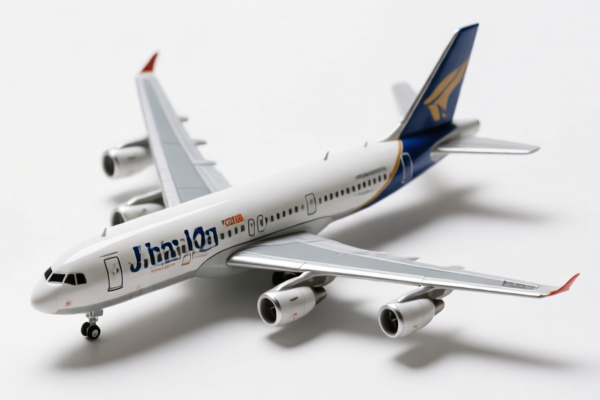
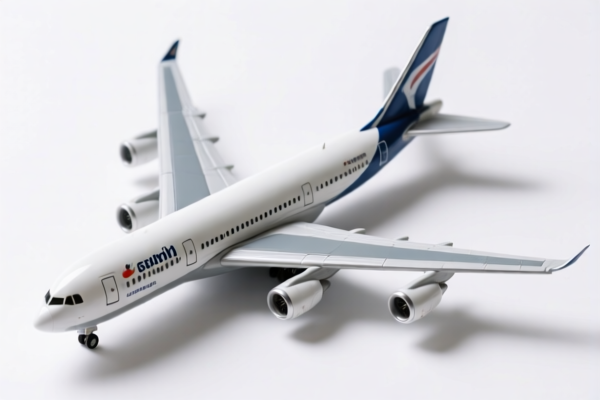
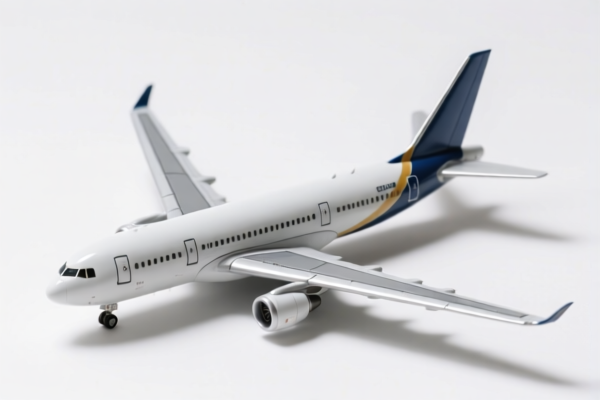
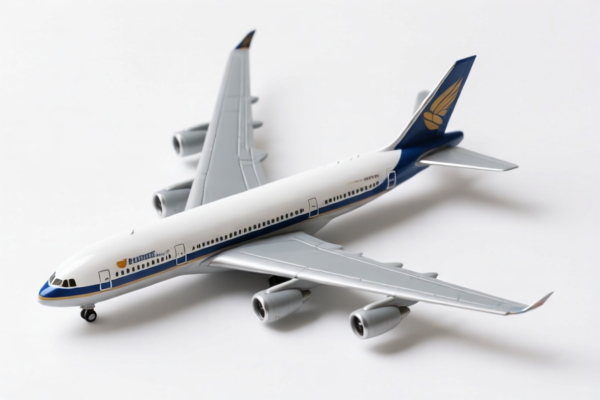
AI Analysis
✈️ Model Aircraft (Model Planes & Toys)
🌐 HS Code Reference & Customs Clearance Guide | 2026 Latest Tariff Analysis | Professional Clearance Strategy
📌 I. Product Definition & Classification: Do You Really Understand "Model Aircraft"?
Model Aircraft generally fall into two main categories in international trade:
1. Decorative/Collectible Models: Finished goods primarily used for display or decoration, often made of plastic, resin, or metal, not intended for flying. 2. Toy Model Aircraft: Toys that resemble aircraft, often included in the "other toys" category if they do not meet specific functional toy definitions.
⚠️ Key Distinction: - If the item is a static display piece (decoration/collectible) → It likely falls under Chapter 39 (Plastics/Articles) or Chapter 95 (Toys) depending on material and specific design. - If it is a functional toy or scaled replica classified as a toy → It falls under Chapter 95 (Toys).
📦 II. HS Code Classification Details (2026 Latest Tariff Authority Comparison)
Based on the provided data, here are the three most likely HS Codes for "Model Aircraft," along with their tax implications:
| HS Code | Product Description | Application Scenario | Material Inference | Total Tax Rate |
|---|---|---|---|---|
| 3926.40.00.90 | Decorative articles, other (Catch-all for decorations) | Static plastic/resin models used as decor | Plastic or Resin | 15.3% |
| 3926.40.00.10 | Decorative articles, other (Gift packaging/Decor) | Decorative items, gift-grade models | Plastic or Composite | 15.3% |
| 9503.00.00.90 | Other toys, put-up in sets or for retail (Models) | Scaled models fitting the "toy/model" definition | Plastic/Composite | 10.0% |
🔍 Key Insight: - 3926.40.00.x: Focuses on the material (plastic/resin) and function (decoration). If the model is purely for display and made of plastic, this is a strong candidate. - 9503.00.00.90: Focuses on the nature of the item as a toy/model. If the item is marketed as a "model kit" or "toy aircraft," this code often applies, offering a lower tax rate (10% vs 15.3%).
💰 III. 2026 Latest Tariff Rate Breakdown (Including Surtaxes & Policy Surcharges)
✅ Applicable Country: United States (US)
✅ Origin: China (CN)
✅ Effective Date: Post-2025 policies (Includes subsequent imports)
🎯 1. 3926.40.00.90 & 3926.40.00.10 —— Decorative Plastic/Resin Models
| Item | Detail |
|---|---|
| Basic Duty | 5.3% |
| Section 301 Surcharge | 0.0% |
| Section 122 Tariff | 10.0% |
| Total Tax Rate | 15.3% |
| Tax Calculation | CIF Value × 15.3% |
| De Minimis Eligibility | ❌ No (Denied under current enforcement) |
| Legal Basis | Section 122 Tariff: 10% + Basic Duty: 5.3% |
📌 Explanation: - These codes classify the item as a decorative article made of plastic/resin. - The 10% Section 122 tariff is applied on top of the 5.3% basic duty. - Note: Section 301 surcharges are listed as 0.0% for these specific subcodes in this dataset, but Section 122 applies.
🎯 2. 9503.00.00.90 —— Other Toys/Models (Plastic/Composite)
| Item | Detail |
|---|---|
| Basic Duty | 0.0% |
| Section 301 Surcharge | 0.0% |
| Section 122 Tariff | 10.0% |
| Total Tax Rate | 10.0% |
| Tax Calculation | CIF Value × 10.0% |
| De Minimis Eligibility | ❌ No (Denied under current enforcement) |
| Legal Basis | Section 122 Tariff: 10% + Basic Duty: 0.0% |
📌 Explanation: - This code classifies the item as a toy/model. - The basic duty is 0%, but the 10% Section 122 tariff still applies. - Result: This code offers a 5.3% lower total tax compared to the 3926 codes, making it more cost-effective if the product qualifies.
🛠️ IV. Customs Clearance Practical Advice (实战避坑指南)
✅ 1. Documentation Checklist (Essential)
| Document | Required | Description |
|---|---|---|
| ✅ Product Photos | ✔️ | Clear images showing scale, details, and markings. |
| ✅ Product Description | ✔️ | Must specify: "Model Aircraft," "Not for flight," "Scale," "Material." |
| ✅ Material Declaration | ✔️ | Confirm if plastic, resin, metal, or composite. |
| ✅ Commercial Invoice | ✔️ | Must clearly state "Model Aircraft" or "Decorative Model." |
| ✅ Packing List | ✔️ | Detail contents to avoid misclassification. |
✅ 2. Declaration Tips (Key Strategy)
🔥 "Declare Function & Material Clearly!"
| Scenario | Correct Declaration | Risk if Incorrect |
|---|---|---|
| Static Decorative Model | "Plastic Decorative Model Aircraft, HS 3926.40.00.90" | May be misclassified as toy, risking audit. |
| Toy/Scaled Model | "Model Aircraft Toy, HS 9503.00.00.90" | If deemed decorative, may face higher tax (15.3% vs 10%). |
| Mixed Materials | "Resin Model Aircraft, HS 3926.40.00.90" | Ensure material is primarily plastic/resin. |
✅ 3. Special Considerations
| Situation | Handling Advice |
|---|---|
| OEM Custom Models | Provide design specs to prove it's a "model" and not a "toy" or "decoration." |
| Scale Models (e.g., 1:100) | Emphasize "Scale Model" to support HS 9503.00.00.90 for lower tax. |
| Flight-Ready RC Models | Not covered in this dataset. RC models may fall under different HS codes (e.g., 8517.62) with different duties. |
🌍 V. Global Market Comparison (2026 Latest)
| Country/Region | Recommended HS Code | Tax Rate | Notes |
|---|---|---|---|
| 🇺🇸 USA | 9503.00.00.90 |
10.0% | Best for models/toys. 3926 = 15.3% |
| 🇨🇳 China | 9503.00.00.90 |
5%~10% | Check specific import tariffs. |
| 🇪🇺 EU | 9503.00.00.00 |
0%~6% | Depends on origin and trade agreements. |
| 🇬🇧 UK | 9503.00.00.00 |
0%~6% | Post-Brexit tariffs may vary. |
📌 Conclusion: - USA applies significant Section 122 tariffs (10%) to both categories. - HS 9503.00.00.90 is the most cost-effective option for model aircraft if the product qualifies as a toy/model. - HS 3926.40.00.x is used for purely decorative plastic/resin items.
📌 VI. Common Errors & Pitfalls (Lessons Learned)
❌ Error 1: Declaring a "Plastic Model" as a "Toy" without proof.
👉 Consequence: Customs may reclassify as decorative (3926), leading to 5.3% extra tax.
❌ Error 2: Not specifying "Model Aircraft" in the description.
👉 Consequence: Customs may classify under generic "Plastic Articles," causing delays and potential penalties.
❌ Error 3: Ignoring Section 122 Tariffs.
👉 Consequence: Underpaying duty by 10% → Back taxes + fines.
✅ Correct Practice:
"Scale Model Aircraft, Plastic, 1:100, Decorative, HS 9503.00.00.90"
OR
"Resin Decorative Model Aircraft, HS 3926.40.00.90"
🎯 VII. Conclusion: Precision Classification, Cost Savings!
🎯 Remember:
🔹 "Model = 10%, Decoration = 15.3%. Choose wisely!"
🔹 "Section 122 applies to both. Don't ignore the 10% surcharge."
🔹 "Clear description = Smooth clearance."
📌 Tip: If your model aircraft is flight-ready (RC), it may fall under different HS codes with different duties. Consult a customs broker for RC models.
📣 Immediate Action:
📞 Contact a licensed customs broker + Provide product photos + Apply for Advance Ruling
🚀 Ensure your Model Aircraft clears customs efficiently, legally, and cost-effectively!
✨ Professional clearance starts with precise classification!
💼 Every penny saved counts!
Customer Reviews
About HS Code Classification
The Harmonized System (HS) is an internationally standardized nomenclature developed by the World Customs Organization (WCO) to classify traded products. Over 200 countries use the HS system as the basis for customs tariffs, trade statistics, and import/export regulations.
Each HS code follows a hierarchical structure:
- Chapter (2 digits) — Broad category of goods (e.g., Chapter 84: Machinery and Mechanical Appliances)
- Heading (4 digits) — More specific grouping within the chapter
- Subheading (6 digits) — Internationally standardized breakdown, used by all WCO member countries
- National subdivisions (8-10 digits) — Country-specific extensions for further classification, such as US HTSUS 10-digit codes
Correct HS code classification is essential for smooth customs clearance, accurate duty payment, and compliance with trade regulations. Misclassification can lead to customs delays, overpayment of duties, or penalties.
When importing from CN to US, the applicable tariff rates may include:
- Most-Favored-Nation (MFN) rate — The standard duty rate applied to WTO members
- General rate — Applied to countries without trade agreements
- Trade remedy duties — Additional tariffs such as Section 301 (anti-dumping), Section 232 (national security), or countervailing duties
The information provided on this page is for reference purposes only. For official classification, please consult with your local customs authority or a licensed customs broker.