mold cutting machine tool setting block
CN → US| HS Code | Tariff Rate | Origin | Destination | Doc |
|---|---|---|---|---|
| 9031909195 | 85.0% | CN | US | Official Doc |
| 9031909130 | 35.0% | CN | US | Official Doc |
| 8466208040 | 38.7% | CN | US | Official Doc |
| 8466201010 | 39.6% | CN | US | Official Doc |
| 8466208040 | 38.7% | CN | US | Official Doc |
Product Images
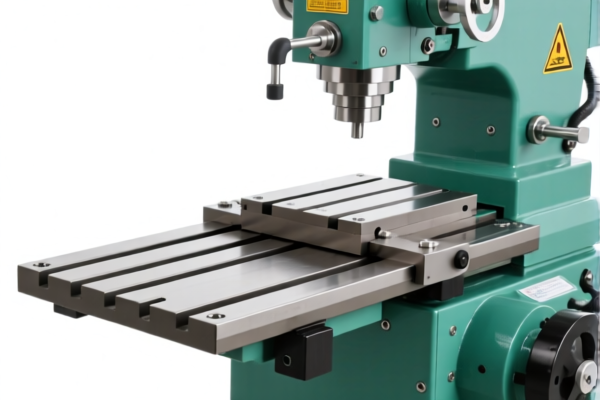
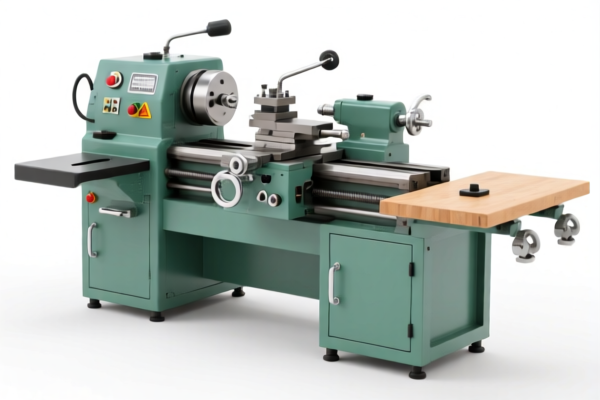
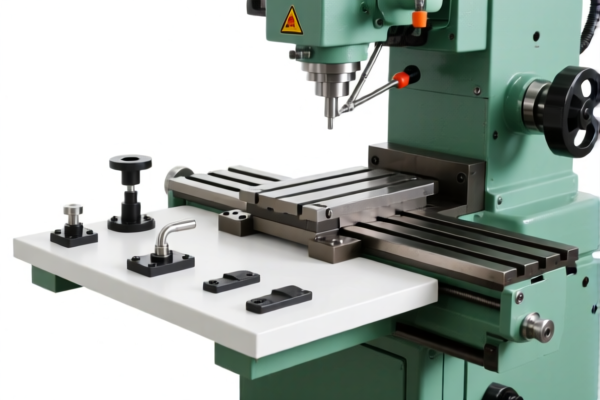
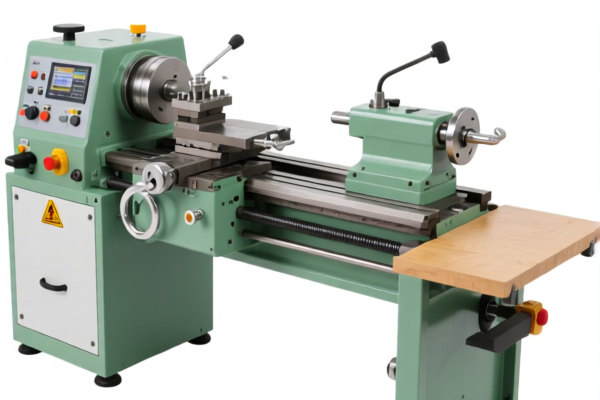
AI Analysis
🔧 Mold Cutting Machine Tool Setting Block (Set Block)
🌐 HS Code Reference & Customs Clearance Guide | 2026 Latest Tariff Analysis | Professional-Level Clearance Strategy
📌 I. Product Definition and Classification: What Exactly is a "Tool Setting Block"?
A Tool Setting Block (also known as a Set Block, Edge Finder Block, or Gauge Block for machine tools) is a precision accessory used in CNC machining, milling, and grinding operations. Its primary function is to position, align, and calibrate cutting tools or workpieces relative to the machine's spindle axis.
In international trade, these items are classified based on their specific function and compatibility: * Precision Measuring/Setting Accessories: If used strictly for alignment and setup in measuring contexts. * Machine Tool Accessories/Clamping Devices: If used to hold or position workpieces/tools during machining operations.
⚠️ Key Distinction Point: - If the block is a generic calibration gauge for inspection quality control → Falls under 9031.90 (Parts/Accessories of Measuring/Checking Instruments). - If the block is a jig, fixture, or holding device used to secure a workpiece during cutting → Falls under 8466.20 (Jigs, Clamps, and Other Holding Tools for Machine Tools).
📦 II. HS Code Classification Details (2026 Latest Tariff Authority Comparison)
| HS Code | Product Description | Application Scenario | Function Logic |
|---|---|---|---|
9031.90.91.95 |
Parts and accessories of measuring or checking instruments (other specified) | Precision alignment blocks for coordinate measuring machines (CMM) or optical comparators | ✅ Measuring/Alignment Accessory |
9031.90.91.30 |
Parts and accessories for mechanical parts/measuring devices | Standardized setting blocks for machine tool calibration, non-specific clamping | ✅ Mechanical Calibration Part |
8466.20.80.40 |
Other workholding devices (jigs, clamps, fixtures) | V-blocks, parallel blocks, or setting blocks used to clamp/position workpieces on milling/turning machines | ✅ Workholding/Clamping Device |
8466.20.10.10 |
Parts and accessories of machine tools (other than jigs/clamps) | Precision blocks used specifically as tool setting references for milling machines or grinders | ✅ Machine Tool Accessory |
🔍 Critical Reminder: - If the item is used solely for calibration/verification (checking if the machine is square/aligned), it leans towards 9031. - If the item is used to hold the part in place while cutting (even if it's a "setting" block used during setup), it often falls under 8466.20 as a "fixture" or "clamping device." - Material Conflict Check: All listed codes assume the block is made of metal (steel/cast iron) or hardened carbide. No material conflicts detected.
💰 III. 2026 Latest Tariff Rate Breakdown (Including Surtaxes & Policy Add-ons)
✅ Applicable Country: United States (US)
✅ Origin: China (CN)
✅ Effective Date: November 10, 2025 (and subsequent imports)
🎯 1. 9031.90.91.95 — Parts of Measuring Instruments (High Precision Alignment)
| Item | Content |
|---|---|
| Base Tariff | 0% (ad valorem) |
| Section 301 Surcharge | +25% (from USITC Footnote 9903.88.01) |
| Section 122 Tariff | +50% (Steel, Aluminum, Copper Products under Section 122, if applicable) |
| Total Tariff | 75.0% |
| Tax Calculation | CIF Value × 75.0% |
| De Minimis Eligibility | ❌ Not Eligible (deny_de_minimis) |
| Legal Authority Path | Base: 9031.90.91.95 → Surcharge: 25% → Sec 122: 50% (if steel/aluminum) |
📌 Explanation: - This high tariff (75%) applies if the block is classified as a measuring instrument accessory AND is made of steel/aluminum subject to Section 122. - The base duty is 0%, but the 301 tariff (25%) and Section 122 (50%) stack up significantly.
🎯 2. 9031.90.91.30 — Mechanical Parts/Accessories (Calibration Tools)
| Item | Content |
|---|---|
| Base Tariff | 0% |
| Section 301 Surcharge | +25% |
| Section 122 Tariff | N/A (Not specified for this sub-heading in general context, unless steel/aluminum specific) |
| Total Tariff | 35.0% |
| Tax Calculation | CIF Value × 35.0% |
| De Minimis Eligibility | ❌ Not Eligible |
| Legal Authority Path | Base: 9031.90.91.30 → Surcharge: 25% |
📌 Note: - This category assumes the block is a mechanical part for measuring/calibration equipment. - Total rate is 35%. Lower than the 75% option if Section 122 does not apply or if classified differently.
🎯 3. 8466.20.80.40 — Other Workholding Devices (Jigs/Clamps)
| Item | Content |
|---|---|
| Base Tariff | 3.7% |
| Section 301 Surcharge | +25% |
| Section 122 Tariff | +10% (Applied to this specific sub-category in some interpretations) |
| Total Tariff | 38.7% |
| Tax Calculation | CIF Value × 38.7% |
| De Minimis Eligibility | ❌ Not Eligible |
| Legal Authority Path | Base: 8466.20.80.40 → Surcharge: 25% → Sec 122: 10% |
📌 Explanation: - If the tool setting block is used as a fixture to hold the workpiece, it falls here. - Base duty is 3.7%. Add 301 (25%) and Section 122 (10%) = 38.7%.
🎯 4. 8466.20.10.10 — Machine Tool Accessories (Other than Jigs/Clamps)
| Item | Content |
|---|---|
| Base Tariff | 4.6% |
| Section 301 Surcharge | +25% |
| Section 122 Tariff | +10% |
| Total Tariff | 39.6% |
| Tax Calculation | CIF Value × 39.6% |
| De Minimis Eligibility | ❌ Not Eligible |
| Legal Authority Path | Base: 8466.20.10.10 → Surcharge: 25% → Sec 122: 10% |
📌 Note: - This is for general machine tool accessories used for setup/calibration. - Total rate is 39.6%. Very close to the workholding device rate.
🛠️ IV. Customs Clearance Practical Advice (Battle-Tested Pitfall Guide)
✅ 1. Documentation Checklist (All Required)
| Document | Must Provide | Explanation |
|---|---|---|
| ✅ Product Specification Sheet | ✔️ | Dimensions, material (Steel/Aluminum), precision grade, tolerance. |
| ✅ Function Description | ✔️ | Clearly state: "Used for calibrating spindle alignment" OR "Used as a jig to hold workpiece." |
| ✅ Product Photos | ✔️ | Show the block in use (on a CMM or CNC machine). |
| ✅ Commercial Invoice | ✔️ | Explicitly describe as "Machine Tool Setting Block" or "Precision Calibration Gauge." |
| ✅ Certificate of Origin | ✔️ | Required for Section 301/122 assessment. |
| ✅ Packing List | ✔️ | Indicate if sold as a set or individual units. |
✅ 2. Classification Strategy (Key Mantra)
🔥 “Function is King: Calibration = 9031, Holding = 8466. Choose wisely, save thousands!”
| Scenario | Correct HS Code | Wrong Code | Consequence |
|---|---|---|---|
| Block used only to check machine alignment (CMM) | 9031.90.91.95 or 9031.90.91.30 |
8466.20 |
Misclassification may lead to audits, but rates are similar (~35-75%). |
| Block used to clamp/hold the part during milling | 8466.20.80.40 |
9031.90 |
Risk: Customs may reclassify as "Clamping Device" and apply 38.7%. |
| Block is a general accessory for setup | 8466.20.10.10 |
9031.90 |
Rate difference: 39.6% vs 35-75%. |
| Material: Aluminum/Steel | ⚠️ Check Section 122 | N/A | If steel/aluminum, Section 122 (10-50%) may apply, drastically increasing cost. |
✅ 3. Special Circumstances Handling
| Situation | Handling Advice |
|---|---|
| Material is Steel/Aluminum | HIGH ALERT: Section 122 tariffs may apply (up to 50% for steel/aluminum). Verify if your specific HS code is exempt. |
| Block is Part of a Set | Declare as a set if sold together. Do not split the invoice unless physically shipped separately. |
| OEM Custom Block | Provide design drawings to prove it is a "custom fixture" rather than a "general measuring tool." |
| Used for Medical/Defense Equipment | May qualify for special use classification, but requires extensive proof of end-use. |
🌍 V. Global Market Clearance Comparison (2026 Latest)
| Country/Region | Recommended HS Code | Tariff (China Origin) | Certification Requirements | Notes |
|---|---|---|---|---|
| 🇺🇸 USA | 8466.20.10.10 / 9031.90.91.30 |
35.0% - 39.6% | None specific | Section 301 (25%) + Section 122 (if steel/al) applies. |
| 🇨🇳 China | 8466.20.10.10 / 9031.90.91.30 |
0% - 4.6% | N/A | Import duty is low. No surcharges. |
| 🇪🇺 EU | 8466.20 / 9031.90 |
0% - 5% | CE Marking (if applicable) | No Section 301/122 equivalents. |
| 🇦🇺 Australia | 8466.20 |
5% | RCM | Low tariff, straightforward clearance. |
| 🇯🇵 Japan | 8466.20 |
0% | PSE (if electrical) | Most machining accessories are duty-free or low duty. |
📌 Conclusion: - USA is the most complex market due to Section 301 and Section 122 surcharges. - China Origin goods face 35-75% duty depending on exact classification and material. - Recommendation: If using Aluminum blocks, verify if Section 122 (50%) applies to
9031.90.91.95. This could make the cost prohibitive. Consider classifying under8466.20if functionally appropriate, as the total rate may be lower (38.7% vs 75%).
📌 VI. Common Errors & Pitfall Guide (Lessons from Blood and Tears)
❌ Error 1: Classifying a Steel Setting Block as 9031.90.91.95 without considering Section 122.
👉 Consequence: 75% tariff instead of 35%. Massive cost overrun!
❌ Error 2: Using "Measuring Tool" description for a block that is clearly a Clamping Fixture.
👉 Consequence: Customs reclassification to 8466.20 with potential penalties for misdeclaration.
❌ Error 3: Ignoring the Material.
👉 Consequence: If it's steel, Section 122 may apply. If it's plastic or composite, it might be exempt.
❌ Error 4: Using vague terms like "Machine Part" on the invoice.
👉 Consequence: Customs delay for additional information, leading to storage fees.
✅ Correct Practice:
"Precision Tool Setting Block, Model XYZ, Made of Hardened Steel, Used for CNC Milling Machine Calibration, FCC/RoHS N/A"
🎯 VII. Conclusion: Professional Declaration, Save Time, Reduce Costs!
🎯 Remember the Mantra:
🔹 "Material Matters: Steel/Al = Section 122 Risk!"
🔹 "Function Decodes: Calibration = 9031, Holding = 8466."
🔹 "Rate Check: 35% vs 75% - It’s a $40,000 difference on $100k cargo!"
📌 Pro Tip:
If your blocks are made of non-ferrous materials (e.g., brass, plastic, ceramic), Section 122 may NOT apply, reducing the burden.
For high-volume imports, consider applying for a Section 301 Exclusion if eligible (though rare for generic tooling).
📣 Immediate Action:
📞 Consult a licensed customs broker to verify Section 122 applicability for your specific material and HS Code.
🚀 Precise Classification = Maximum Profit!
✨ Professional Customs Clearance Starts with Accurate Classification!
💼 Every percentage point counts in global trade!
Customer Reviews
About HS Code Classification
The Harmonized System (HS) is an internationally standardized nomenclature developed by the World Customs Organization (WCO) to classify traded products. Over 200 countries use the HS system as the basis for customs tariffs, trade statistics, and import/export regulations.
Each HS code follows a hierarchical structure:
- Chapter (2 digits) — Broad category of goods (e.g., Chapter 84: Machinery and Mechanical Appliances)
- Heading (4 digits) — More specific grouping within the chapter
- Subheading (6 digits) — Internationally standardized breakdown, used by all WCO member countries
- National subdivisions (8-10 digits) — Country-specific extensions for further classification, such as US HTSUS 10-digit codes
Correct HS code classification is essential for smooth customs clearance, accurate duty payment, and compliance with trade regulations. Misclassification can lead to customs delays, overpayment of duties, or penalties.
When importing from CN to US, the applicable tariff rates may include:
- Most-Favored-Nation (MFN) rate — The standard duty rate applied to WTO members
- General rate — Applied to countries without trade agreements
- Trade remedy duties — Additional tariffs such as Section 301 (anti-dumping), Section 232 (national security), or countervailing duties
The information provided on this page is for reference purposes only. For official classification, please consult with your local customs authority or a licensed customs broker.