mops
CN → US| HS Code | Tariff Rate | Origin | Destination | Doc |
|---|---|---|---|---|
| 3926904800 | 13.4% | CN | US | Official Doc |
| 3926901000 | 20.9% | CN | US | Official Doc |
| 9603908050 | 70.3% | CN | US | Official Doc |
| 9603109000 | 27.5% | CN | US | Official Doc |
| 4417002000 | 17.5% | CN | US | Official Doc |
| 4417008090 | 40.1% | CN | US | Official Doc |
Product Images
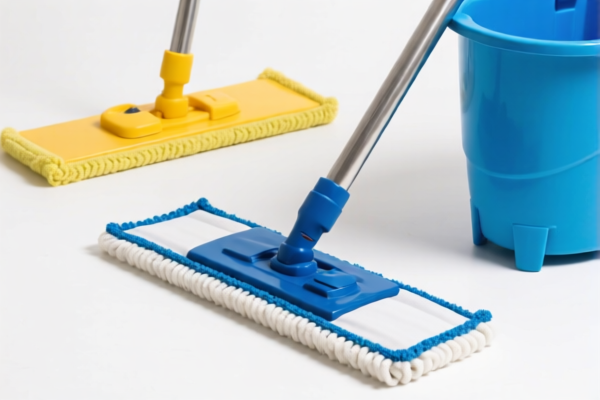
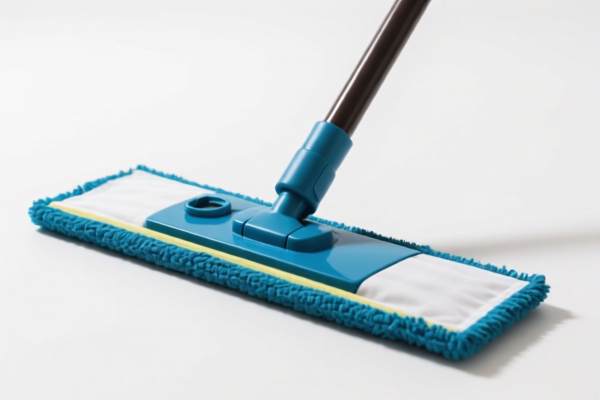
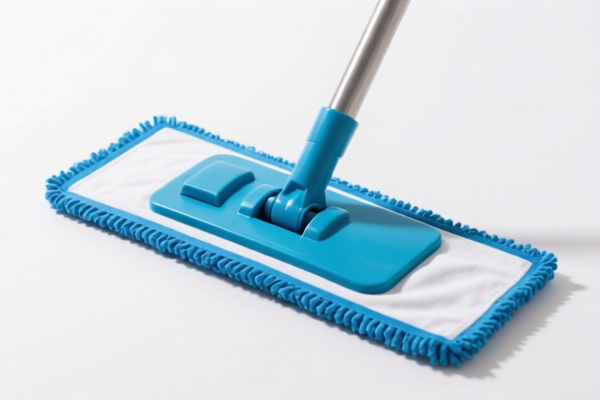

AI Analysis
🧹 Mops & Broom Handles (Cleaning Tools of Wood & Plastics)
🌐 HS Code Reference & Customs Clearance Guide | 2026 Latest Tariff Analysis | Professional Clearance Strategy
📌 Part 1: Product Definition and Classification: Do You Really Understand "Mops"?
Mops, broom handles, and related cleaning tools are ubiquitous in household and industrial cleaning. However, in international trade, their classification depends strictly on material, dimensions, and specific function. They are generally divided into three categories:
- Wooden Mop/Broom Handles: Specifically defined by strict dimensional requirements (Diameter ≥ 1.9 cm; Length ≥ 97 cm).
- Plastic Cleaning Containers: Buckets and pails used in conjunction with mops.
- Cleaning Tools (Brooms, Brushes, Mops): The actual cleaning head, which can be made of plastics, vegetable materials, or other materials.
⚠️ Key Distinction:
- If the item is a wooden handle meeting specific size criteria → 4417.00.20.00 (Tax-Free!)
- If the item is a wooden handle that fails the size criteria → 4417.00.80.90 (High Tax!)
- If the item is a plastic bucket → 3926.90.10.00 (Tax-Free)
- If the item is a synthetic/other material mop head → 9603.90.80.50 (High Tax!)
📦 Part 2: HS Code Classification Details (2026 Latest Tariff Authority Comparison)
| HS Code | Product Description | Applicable Scenario | Tax Rate (Total) |
|---|---|---|---|
4417.00.20.00 |
Wooden Broom/Mop Handles (≥ 1.9cm dia, ≥ 97cm length) | Standard long wooden handles for mops/brooms | 0.0% |
4417.00.80.90 |
Other Wooden Tools/Handles (Not meeting size specs) | Short wooden handles, irregular shapes, other wooden tool bodies | 30.1% |
3926.90.10.00 |
Plastic Buckets and Pails | Plastic containers for mop water, laundry, cleaning | 0.0% |
3926.90.48.00 |
Other Plastic Articles (Not specified elsewhere) | Plastic parts of mops/brooms not classified as buckets | 0.0% |
9603.90.80.50 |
Other Brooms, Brushes, Mops (Non-vegetable, Non-motorized) | Synthetic fiber mop heads, sponge mops, plastic-bristle brushes | 60.3% |
9603.10.90.00 |
Brooms/Brushes of Twigs/Vegetable Materials | Traditional straw brooms, twig brushes | 0.0% |
🔍 Critical Reminder:
- Wooden Handles: Must measure ≥ 97 cm in length and ≥ 1.9 cm in diameter to qualify for 0% tax. Any deviation triggers the 30.1% rate.
- Mop Heads: If made of synthetic materials (microfiber, sponge, plastic bristles), they fall under 9603.90.80.50, attracting a massive 60.3% total tax.
- Plastic Buckets: Always 0% tax, regardless of design.
💰 Part 3: 2026 Latest Tariff Rate Details (Including Surtaxes)
✅ Applicable Country: United States (US)
✅ Country of Origin: China (CN)
✅ Effective Date: Current rates apply as per the provided data
🎯 1. 4417.00.20.00 —— Wooden Broom/Mop Handles (Qualified Dimensions)
| Item | Details |
|---|---|
| Base Tariff | 0.0% |
| Additional Surtax | 7.5% |
| Total Tax Rate | 7.5% |
| Tax Calculation | CIF Value × 7.5% |
| De Minimis Exemption | ❌ No (Subject to standard duties) |
📌 Explanation:
- This is the only wooden handle category with a low tax rate.
- Crucial: If the handle is shorter than 97cm or thinner than 1.9cm, it moves to4417.00.80.90(30.1%).
🎯 2. 4417.00.80.90 —— Other Wooden Tools/Handles (Unqualified)
| Item | Details |
|---|---|
| Base Tariff | 5.1% |
| Additional Surtax | 25.0% |
| Total Tax Rate | 30.1% |
| Tax Calculation | CIF Value × 30.1% |
| De Minimis Exemption | ❌ No |
📌 Warning:
- Many "one-size-fits-all" wooden handles fail the strict dimension test.
- Result: Tax jumps from 7.5% to 30.1% overnight.
🎯 3. 3926.90.10.00 & 3926.90.48.00 —— Plastic Articles
| Item | Details |
|---|---|
| Base Tariff | 0.0% |
| Additional Surtax | 0.0% |
| Total Tax Rate | 0.0% |
| Tax Calculation | $0 |
📌 Advantage:
- Plastic buckets (3926.90.10.00) are 100% tax-free.
- Other plastic articles (3926.90.48.00) are also 100% tax-free.
- Strategy: Use plastic components where possible to minimize costs.
🎯 4. 9603.90.80.50 —— Synthetic Mop Heads/Brooms
| Item | Details |
|---|---|
| Base Tariff | 2.8% |
| Additional Surtax | 7.5% (Standard) + 50% (Steel/Aluminum/Copper components if any) |
| Total Tax Rate | 60.3% |
| Tax Calculation | CIF Value × 60.3% |
📌 Critical Warning:
- This is the highest tax bracket in the provided data.
- Applies to all non-vegetal material mops (microfiber, sponge, plastic bristles).
- If the mop contains any steel, aluminum, or copper parts (e.g., metal clip), the surtax may increase further (as noted: "Steel, aluminum, copper products surtax: 50%").
- Action: Avoid declaring synthetic mop heads if possible, or ensure accurate material composition.
🎯 5. 9603.10.90.00 —— Traditional Straw/Twig Brooms
| Item | Details |
|---|---|
| Base Tariff | 0.0% |
| Additional Surtax | 0.0% |
| Total Tax Rate | 0.0% |
📌 Note:
- Only applies if the cleaning head is made entirely of twigs or vegetable materials bound together.
- If mixed with plastic or synthetic fibers, it loses this exemption.
🛠️ Part 4: Practical Clearance Advice (Avoiding Pitfalls)
✅ 1. Documentation Checklist (Non-Negotiable)
| Document | Required? | Notes |
|---|---|---|
| ✅ Product Photos | ✔️ | Must show full length/diameter for wooden handles to prove compliance with 4417.00.20.00. |
| ✅ Specification Sheet | ✔️ | Detail material composition (e.g., "100% Synthetic Fiber" vs. "Natural Palm Fiber"). |
| ✅ Commercial Invoice | ✔️ | Clearly state "Wooden Mop Handle" or "Plastic Bucket," NOT generic "Cleaning Tools." |
| ✅ Packing List | ✔️ | Separate wooden handles from plastic buckets in packaging if possible for clear declaration. |
✅ 2. Declaration Tips (Key Rules)
🔥 “Measure Twice, Declare Once. Dimensions Decide the Tax!”
| Scenario | Correct HS Code | Error Risk |
|---|---|---|
| Wooden Handle: 100cm long, 2.0cm thick | 4417.00.20.00 (7.5%) |
Misdeclaring as 4417.00.80.90 → 30.1% |
| Wooden Handle: 90cm long, 1.5cm thick | 4417.00.80.90 (30.1%) |
Claiming it qualifies for 7.5% → Audited/Back Taxes |
| Mop Head (Microfiber/Sponge) | 9603.90.80.50 (60.3%) |
Declaring as "Broom" (0%) → Fraud/Seizure |
| Plastic Bucket | 3926.90.10.00 (0%) |
N/A |
| Straw Broom | 9603.10.90.00 (0%) |
If it contains plastic bristles → 60.3% |
✅ 3. Special Case Handling
| Situation | Recommendation |
|---|---|
| Mixed Kits (Handle + Mop Head) | Split the Declaration! 1. Declare Wooden Handle separately (if qualified: 7.5%). 2. Declare Mop Head separately (60.3%). Do not bundle them into one generic line item, or the entire kit may be assessed at the highest rate (60.3%). |
| Handles Just Below 97cm | Consider if a 2cm extension can be added. Even a 2cm increase drops the tax from 30.1% to 7.5%. |
| Plastic Parts on Mops | Ensure plastic connectors are declared under 3926.90.48.00 (0%) if separable. |
📌 Part 5: Common Errors & Pitfalls (Lessons Learned)
❌ Error 1: Claiming a 95cm wooden handle qualifies for the 7.5% rate.
👉 Consequence: Customs will measure it, find it non-compliant, and reassess at 30.1%.
👉 Fix: Ensure all wooden handles are ≥ 97cm and ≥ 1.9cm in diameter.
❌ Error 2: Declaring a Microfiber Mop as a "Vegetable Fiber Broom."
👉 Consequence: 60.3% tax applies, not 0%. Misdeclaration leads to penalties.
👉 Fix: Accurately describe material. "Microfiber" ≠ "Vegetable Material."
❌ Error 3: Bundling Plastic Buckets with High-Tax Mop Heads.
👉 Consequence: If declared as a single "Cleaning Set," the entire value may be taxed at the highest component's rate.
👉 Fix: Separate Declaration for 3926.90.10.00 (0%) and 9603.90.80.50 (60.3%).
🎯 Part 6: Conclusion: Precision Saves Money!
🎯 Key Takeaway:
🔹 Wooden Handles: If ≥ 97cm and ≥ 1.9cm → 7.5% (Best Case). Otherwise 30.1%.
🔹 Mop Heads: Synthetic → 60.3%. Vegetable → 0%.
🔹 Plastic Buckets: Always 0%.🔹 "Split Declarations Save Taxes! Measure Dimensions Precisely!"
🔹 "Don't Let a 2cm Handle Cost You 22% in Tariffs!"
📌 Pro Tip:
If you are exporting wooden handles, ensure your manufacturing process strictly controls length and diameter to hit the 4417.00.20.00 quota. For mop heads, consider if natural material alternatives (straw, palm) are viable to access the 0% rate, though market demand may favor synthetics. Always separate high-tax and low-tax items in your commercial invoice.
📣 Immediate Action:
📞 Verify Dimensions: Measure every wooden handle sample.
📞 Split Invoices: Declare handles, buckets, and mop heads separately.
📞 Material Verification: Confirm if mop heads contain any steel/plastic mix to avoid the 60.3% trap.
✨ Professional Customs Clearance Starts with Accurate Classification!
💼 Your Profit Margin Depends on These Decimal Points!
Customer Reviews
About HS Code Classification
The Harmonized System (HS) is an internationally standardized nomenclature developed by the World Customs Organization (WCO) to classify traded products. Over 200 countries use the HS system as the basis for customs tariffs, trade statistics, and import/export regulations.
Each HS code follows a hierarchical structure:
- Chapter (2 digits) — Broad category of goods (e.g., Chapter 84: Machinery and Mechanical Appliances)
- Heading (4 digits) — More specific grouping within the chapter
- Subheading (6 digits) — Internationally standardized breakdown, used by all WCO member countries
- National subdivisions (8-10 digits) — Country-specific extensions for further classification, such as US HTSUS 10-digit codes
Correct HS code classification is essential for smooth customs clearance, accurate duty payment, and compliance with trade regulations. Misclassification can lead to customs delays, overpayment of duties, or penalties.
When importing from CN to US, the applicable tariff rates may include:
- Most-Favored-Nation (MFN) rate — The standard duty rate applied to WTO members
- General rate — Applied to countries without trade agreements
- Trade remedy duties — Additional tariffs such as Section 301 (anti-dumping), Section 232 (national security), or countervailing duties
The information provided on this page is for reference purposes only. For official classification, please consult with your local customs authority or a licensed customs broker.