motor accessories: stator
CN → US| HS Code | Tariff Rate | Origin | Destination | Doc |
|---|---|---|---|---|
| 8503003500 | 41.5% | CN | US | Official Doc |
| 8503007500 | 41.5% | CN | US | Official Doc |
Product Images
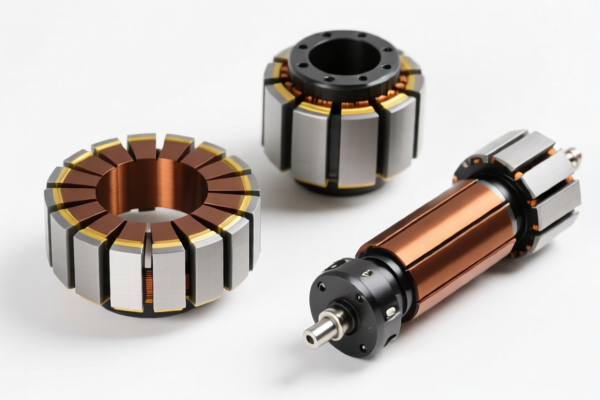
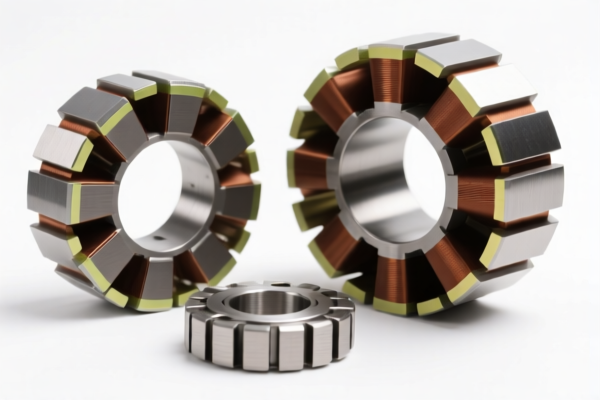
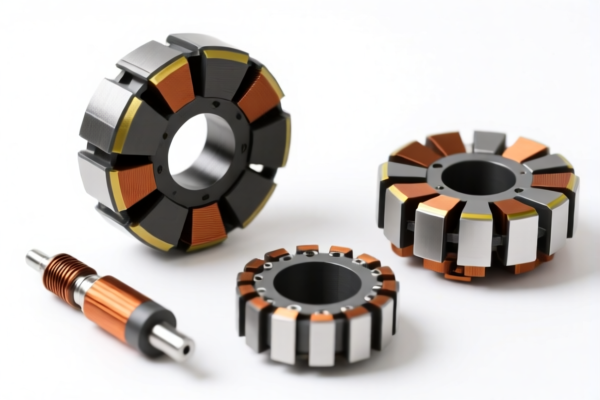
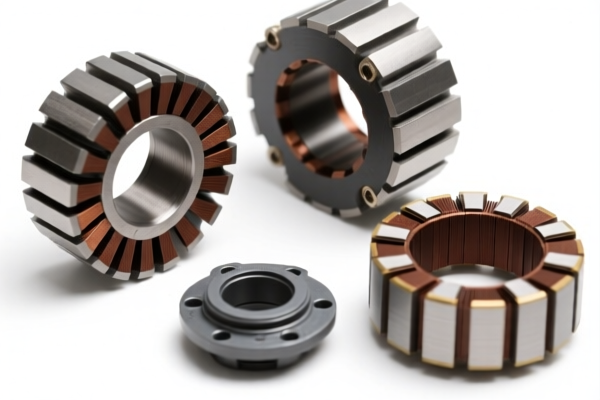
AI Analysis
⚡ Motor Stators & Rotors (Specifically for Motors < 18.65 W)
🌐 HS Code Reference & Customs Clearance Guide | 2026 Latest Tariff Analysis | Professional Clearance Strategy
📌 Part 1: Product Definition & Classification: What Exactly is a "Stator" in This Context?
Stators are the stationary part of an electric motor, essential for generating magnetic fields that drive the rotor. In international trade, parts intended solely or principally for use with machinery under Headings 8501 (Electric Motors and Generators) or 8502 (Generators and Rotating Electrical Machines) fall under Heading 8503.
However, classification depends heavily on the power rating of the motor these parts serve. For this specific inquiry ("motor accessories: stator"), we focus on parts designed for motors under 18.65 Watts. These are typically found in small appliances, toys, miniature robotics, or low-power consumer electronics.
⚠️ Critical Distinction:
- If the stator is part of a complete motor → Declare as Motor Parts (8503).
- If the stator is specifically for motors < 18.65 W → It splits into two sub-categories based on manufacturing type (Rotor/Stator vs. Other).
- Do not confuse with general motor parts (which may apply to larger motors and have different tax rates).
📦 Part 2: HS Code Classification Details (2026 Latest Tariff Authority)
| HS Code | Product Description | Application Scenario | Key Feature |
|---|---|---|---|
8503.00.35.00 |
Parts: Stators and rotors for goods of heading 8501 | Stators/Rotors specifically for motors < 18.65 W | ✅ Specific Component |
8503.00.75.00 |
Parts: Other for goods of heading 8501 | Other parts (non-stator/rotor or different spec) for motors < 18.65 W | ✅ General Part |
🔍 Key Reminder:
- The primary classification for stators for small motors (< 18.65 W) is8503.00.35.00.
- However, customs may sometimes classify incomplete or miscellaneous parts under8503.00.75.00if they do not strictly meet the "stator/rotor" definition or if documentation is unclear.
- Always confirm with the manufacturer if the item is strictly a stator/rotor to aim for the lower-tax category if possible, but be aware of the significant tax disparity.
💰 Part 3: 2026 Latest Tariff Rate Breakdown (Including Additional Duties & Policies)
✅ Applicable Country: United States (US)
✅ Country of Origin: China (CN)
✅ Effective Date: November 10, 2025 (and subsequent imports)
🎯 1. 8503.00.35.00 —— Stators/Rotors for Motors < 18.65 W
| Item | Content |
|---|---|
| Base Tariff Rate | 0% (ad valorem) |
| Additional Tariff (Section 301/China) | 0% |
| Total Tax Rate | 0.0% |
| Tax Calculation | CIF Value × 0% = $0 |
| De Minimis Eligibility | N/A (Since tax is $0, de minimis rules don't create extra cost, but shipment value still matters for compliance) |
| Legal Basis Path | USITC:8503.00.35.00 |
📌 Explanation:
- Base Tariff: 0% for motor parts.
- Additional Tariffs: Currently, this specific sub-category (stators/rotors for < 18.65 W) enjoys 0% additional tariffs from the USITC and IEEPA packages.
- Advantage: This is a zero-duty classification, making it highly attractive for importers of small motor components.
🎯 2. 8503.00.75.00 —— Other Parts for Motors < 18.65 W
| Item | Content |
|---|---|
| Base Tariff Rate | 6.5% (ad valorem) |
| Additional Tariff (Section 301/China) | 25.0% |
| Total Tax Rate | 31.5% |
| Tax Calculation | CIF Value × 31.5% |
| De Minimis Eligibility | ❌ Not applicable for duty calculation (duty is high regardless of value) |
| Legal Basis Path | USITC:8503.00.75.00 → USITC Footnote 9903.88.01 (if applicable) |
📌 Warning:
- High Tax Burden: If your stator is misclassified as "Other Parts" (due to vague description or customs discretion), the tax jumps from 0% to 31.5%.
- Why the Difference?: The US tariff schedule distinguishes between core electromagnetic components (stators/rotors) and other mechanical parts. Stators/rotors are often seen as more specialized, hence the lower base/additional duty in this specific small-motor bracket.
- Risk: Misclassification risk is high if the product is not clearly defined as a "stator" or "rotor" in commercial invoices.
🛠️ Part 4: Customs Clearance Practical Advice (Avoid Pitfalls in Real Operations)
✅ 1. Required Documentation List (Non-Negotiable)
| Document | Must Provide | Description |
|---|---|---|
| ✅ Product Specification Sheet | ✔️ | Must clearly state: "Stator for Electric Motor," Motor Power (< 18.65 W), Winding Type, Voltage. |
| ✅ Circuit/Winding Diagram | ✔️ | Proves it is an electromagnetic component (stator/rotor), not a housing or shaft. |
| ✅ Product Photos | ✔️ | Clear images showing coils, laminations, and no housing/shaft (if sold separately). |
| ✅ Commercial Invoice | ✔️ | Description must match HS Code: e.g., "STATOR FOR MOTOR, < 18.65W, MODEL XYZ." |
| ✅ Bill of Lading/Air Waybill | ✔️ | Standard shipping docs. |
| ✅ Origin Certificate | ✔️ | Required to verify CN origin for additional tariffs. |
✅ 2. Declaration Tips (Critical Mnemonic)
🔥 "Stator/Rotor is 0%, Other is 31.5%! Be Precise!"
| Scenario | Correct Declaration | Wrong Action |
|---|---|---|
| Pure Stator/Rotor for < 18.65 W Motor | 8503.00.35.00 (0% Tax) |
Mislabeling as "Motor Part" generally → 31.5% |
| Stator + Housing (Assembled) | Declared as Motor Part? Check assembly status. If not functional, still 0%? Consult broker. | Splitting into wrong parts |
| Other Parts (Shaft, Bearing, End Bell) | 8503.00.75.00 (31.5% Tax) |
Claiming as Stator → Fraud/penalty |
| Motors > 18.65 W | Different HS Code (not in this data) | Using this HS Code → Misdeclaration |
📌 Strategy:
- Ensure the commercial invoice explicitly states "STATOR" or "ROTORS".
- Include "FOR MOTORS UNDER 18.65 W" in the description.
- If unsure, provide technical drawings to customs broker to prove it is a stator/rotor.
✅ 3. Special Case Handling
| Situation | Handling Advice |
|---|---|
| Stator with Leads/Wires Attached | Still classified as stator if no control board. Ensure wires are part of the winding, not a control circuit. |
| Kit: Stator + Rotor | Declare both under 8503.00.35.00 if both are < 18.65 W components. |
| OEM/Custom Stators | Provide customer design specs to prove specificity. |
| Mixed Shipment | If shipment contains both stators (0%) and other parts (31.5%), separate line items must be declared. Do not average them. |
🌍 Part 5: Global Market Comparison (2026 Latest)
| Country/Region | Recommended HS Code | Tariff Rate (China Origin) | Certification Requirement | Notes |
|---|---|---|---|---|
| 🇺🇸 USA | 8503.00.35.00 |
0.0% | No specific US certification for parts | Best for Low Cost |
| 🇺🇸 USA | 8503.00.75.00 |
31.5% | No specific US certification | Avoid if possible |
| 🇪🇺 EU | 8503.00.00 |
Varies (often 0-2.7%) | CE (if final product), RoHS | EU HS codes are less granular; check local rules |
| 🇨🇳 China | 8503.00.00 |
Varies | N/A (Import) | N/A |
| 🇯🇵 Japan | 8503.00.00 |
0% | N/A |
📌 Conclusion:
- USA offers 0% duty for correctly classified stators/rotors for small motors.
- Misclassification cost: 31.5% tax is massive. Always aim for8503.00.35.00with proper documentation.
📌 Part 6: Common Errors & Pitfalls (Lessons Learned)
❌ Error 1: Declaring "Motor Parts" generically without specifying "Stator/Rotor"
👉 Consequence: Customs may default to 8503.00.75.00 → 31.5% Tax!
❌ Error 2: Including control boards with the stator
👉 Consequence: May no longer be "solely/principally" a motor part under 8503; could shift to electronic component categories with different taxes.
❌ Error 3: Ignoring the 18.65 W threshold
👉 Consequence: If motor is > 18.65 W, different HS codes apply (not in this dataset). Misdeclaring power rating leads to penalties.
✅ Correct Practice:
"STATOR, MODEL XYZ, FOR DC MOTOR, POWER < 18.65W, NO HOUSING, WIRING COILED, ORIGIN: CHINA"
🎯 Part 7: Conclusion: Precision Saves Money!
🎯 Remember the Rule:
🔹 "Stator/Rotor = 0% | Other Parts = 31.5%"
🔹 "Describe Exactly, Draw Clearly, Pay Less!"
📌 Pro Tip:
- For shipments under $800 (de minimis), duties are generally exempt in the US, but compliance still matters.
- For commercial shipments, always use 8503.00.35.00 if the item is truly a stator/rotor for < 18.65 W motors.
- Pre-shipment Inspection: Verify with your supplier that the item is strictly a stator/rotor and not an assembled sub-assembly.
📣 Immediate Action:
📞 Contact your customs broker with product drawings.
🚀 Declare accurately to save 31.5% in duties.
✨ Professional Customs Clearance Starts with Accurate Classification!
💼 Every cent counts in international trade!
Customer Reviews
About HS Code Classification
The Harmonized System (HS) is an internationally standardized nomenclature developed by the World Customs Organization (WCO) to classify traded products. Over 200 countries use the HS system as the basis for customs tariffs, trade statistics, and import/export regulations.
Each HS code follows a hierarchical structure:
- Chapter (2 digits) — Broad category of goods (e.g., Chapter 84: Machinery and Mechanical Appliances)
- Heading (4 digits) — More specific grouping within the chapter
- Subheading (6 digits) — Internationally standardized breakdown, used by all WCO member countries
- National subdivisions (8-10 digits) — Country-specific extensions for further classification, such as US HTSUS 10-digit codes
Correct HS code classification is essential for smooth customs clearance, accurate duty payment, and compliance with trade regulations. Misclassification can lead to customs delays, overpayment of duties, or penalties.
When importing from CN to US, the applicable tariff rates may include:
- Most-Favored-Nation (MFN) rate — The standard duty rate applied to WTO members
- General rate — Applied to countries without trade agreements
- Trade remedy duties — Additional tariffs such as Section 301 (anti-dumping), Section 232 (national security), or countervailing duties
The information provided on this page is for reference purposes only. For official classification, please consult with your local customs authority or a licensed customs broker.