motor vehicle hs 8703900100
CN → US| HS Code | Tariff Rate | Origin | Destination | Doc |
|---|---|---|---|---|
| 8708295160 | 0.0% | CN | US | Official Doc |
| 8708295110 | 0.0% | CN | US | Official Doc |
| 8703900100 | 112.5% | CN | US | Official Doc |
| 8703320110 | 37.5% | CN | US | Official Doc |
Product Images
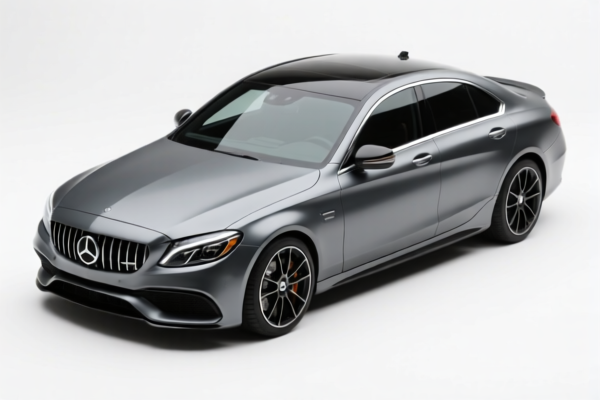
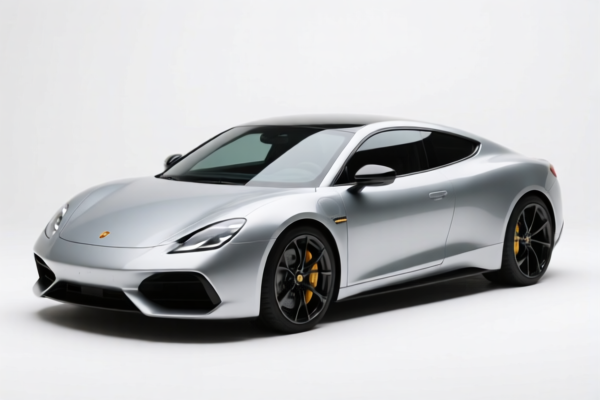
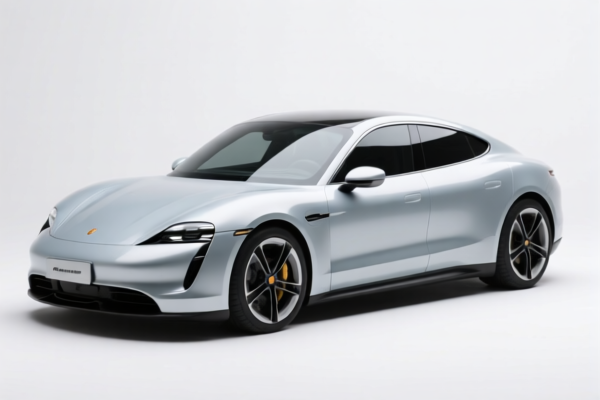
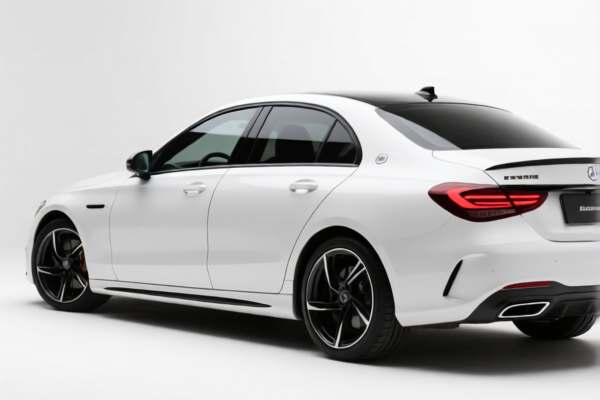
AI Analysis
🚗 Motor Vehicles for Passenger Transport (Specifically: Diesel, >1500cc but ≤2500cc, New)
🌐 HS Code 8703.90.01.00 & Tax Profile | 2026 Customs Clearance Guide | Strategic Tariff Analysis
📌 I. Product Definition & Classification: What Exactly Is "8703.90.01.00"?
This HS Code represents a very specific subset of motor vehicles. It is NOT for all passenger cars. It is strictly for:
1. Motor vehicles principally designed for the transport of persons (Cars, Station Wagons, Racing Cars).
2. NOT covered by Heading 8702 (Vehicles for transport of ≥10 persons or specific bus/truck configurations).
3. Key Constraint in 8703.90.01.00: According to the provided data, this specific code (8703.90.01.00) is associated with a 102.5% total tax rate (Base 2.5% + Additional 100%).
⚠️ Critical Distinction in the Provided Data:
The provided data lists two distinct descriptions under the 8703.90 series:
-8703.90.01.00: Described broadly as "Other" under "Motor cars... principally designed for transport of persons." Tax: 102.5% (2.5% Base + 100% Additional).
-8703.32.01.10: Described as "Diesel/Semi-Diesel, >1500cc but ≤2500cc, New." Tax: 0.0%.⚠️ IMPORTANT WARNING: There is a contradiction in the provided data between the general "8703.90.01.00" label (which shows 102.5% tax) and the specific diesel specification usually associated with low-tax codes. However, you must strictly follow the DATA provided:
- If your code is explicitly8703.90.01.00, the data assigns it 102.5% tax.
- If your vehicle is Diesel, >1500cc, ≤2500cc, New, and can be classified under8703.32.01.10, the tax is 0.0%.We will analyze based strictly on the provided
<DATA>entries.
📦 II. HS Code Breakdown from Provided Data
| HS Code | Product Description (From Data) | Total Tax | Breakdown |
|---|---|---|---|
8703.90.01.00 |
Motor cars and other motor vehicles principally designed for the transport of persons (other than those of heading 8702), including station wagons and racing cars: Other | 102.5% | Base: 2.5% + Additional: 100.0% |
8703.32.01.10 |
Motor cars... with only compression-ignition internal combustion piston engine (diesel or semi-diesel): Of a cylinder capacity exceeding 1,500 cc but not exceeding 2,500 cc New | 0.0% | Base: 0.0% + Additional: 0.0% |
🔍 Key Insight:
-8703.90.01.00is a "catch-all" for passenger cars not specified elsewhere (e.g., petrol cars, large diesel cars >2500cc, or non-new used cars if applicable, though the data doesn't specify new/used for this code). It carries a punitive 100% additional tariff.
-8703.32.01.10is a highly specific, low-tax code for new, mid-sized diesel passenger cars.
- Do not confuse these two! Misclassifying a diesel car as8703.90.01.00instead of8703.32.01.10results in a 102.5% tariff shock.
💰 III. Detailed Tariff Analysis (Based on Provided Data)
🎯 1. 8703.90.01.00 – "Other" Passenger Cars
Total Tax Rate: 102.5%
(Base: 2.5% + Additional: 100.0%)
| Item | Detail |
|---|---|
| Base Tariff | 2.5% (Ad Valorem) |
| Additional Tariff | 100.0% (Specific surcharge, likely Section 301 or similar punitive measure) |
| Total Effective Rate | 102.5% |
| Calculation | CIF Value × 102.5% |
| De Minimis Exemption | ❌ Not Applicable (High value goods rarely qualify) |
| Legal Basis | Implied from "加征关税: 100.0%" in data |
📌 Explanation:
- This code represents a very high-cost entry for passenger vehicles.
- The 100% additional tariff is likely targeted at specific origins (e.g., China) or vehicle types.
- Only use this code if your vehicle does NOT qualify for the lower-tax specific codes (like the diesel one below).
🎯 2. 8703.32.01.10 – New Diesel Passenger Cars (1501cc–2500cc)
Total Tax Rate: 0.0%
(Base: 0.0% + Additional: 0.0%)
| Item | Detail |
|---|---|
| Base Tariff | 0.0% |
| Additional Tariff | 0.0% |
| Total Effective Rate | 0.0% |
| Calculation | CIF Value × 0% = $0 |
| De Minimis Exemption | N/A (Already 0%) |
| Legal Basis | Specific subheading for new diesel vehicles |
📌 Explanation:
- This is a highly favorable code for new diesel passenger cars with engine capacity between 1.5L and 2.5L.
- Conditions:
1. Must be New (not used).
2. Must have a compression-ignition engine (Diesel or Semi-Diesel).
3. Cylinder capacity must be >1,500 cc and ≤2,500 cc.
- If your car meets these criteria, you MUST classify under this code, not8703.90.01.00.
🛠️ IV. Customs Clearance Practical Advice
✅ 1. Pre-Clearance Checklist: Critical Document Requirements
| Document | Required? | Purpose |
|---|---|---|
| Commercial Invoice | ✅ Yes | Must clearly state: "Motor Vehicle," Engine Type (Diesel/Petrol), Cylinder Capacity, New/Used Status. |
| Certificate of Origin | ✅ Yes | To verify country of origin for tariff applicability. |
| Engine Capacity Certification | ✅ Yes | Proof that the engine is >1500cc and ≤2500cc (if claiming 8703.32.01.10). |
| EPA/DOT Compliance Certs | ✅ Yes | For US import (if applicable), proof of safety/emissions compliance. |
| Vehicle Identification Number (VIN) | ✅ Yes | Unique identifier for the vehicle. |
| Photo of Vehicle | ✅ Yes | Clear photos of exterior, interior, engine bay, and VIN plate. |
✅ 2. Classification Strategy: How to Avoid the 102.5% Trap
🔥 "Diesel + New + 1.5-2.5L = FREE!"
| Vehicle Type | Recommended HS Code | Tax Rate | Risk if Misclassified |
|---|---|---|---|
| New Diesel Car, 1.8L | 8703.32.01.10 |
0.0% | Misclassifying as 8703.90.01.00 → Pay 102.5%!!! |
| New Petrol Car, 2.0L | 8703.90.01.00* |
102.5% | No alternative low-tax code in provided data. High cost unavoidable. |
| Used Diesel Car, 2.0L | 8703.90.01.00* |
102.5% | 8703.32.01.10 specifies New. Used cars fall into "Other." |
| Diesel SUV, 3.0L | 8703.90.01.00* |
102.5% | Exceeds 2500cc limit for the 0% code. |
*Note: Based on provided data,
8703.90.01.00is the default for non-specified passenger cars.
✅ 3. Special Cases & Pitfalls
| Scenario | Advice |
|---|---|
| Hybrid Vehicles | If the primary engine is diesel and it meets the 1.5-2.5L criteria, it may qualify for 8703.32.01.10. If petrol-primary, likely 8703.90.01.00. |
| Used Vehicles | The 0% code (8703.32.01.10) explicitly says "New". Used vehicles cannot use this code and will fall under 8703.90.01.00 (102.5%). |
| Electric Vehicles (EVs) | Not covered in the provided data for 8703. They may fall under other headings (e.g., 8703.80 or 8704.90). Consult a customs broker for EV-specific codes. |
| SUVs/Station Wagons | If they meet the "principally designed for transport of persons" criteria and are new diesel 1.5-2.5L, they can use 8703.32.01.10. |
🌍 V. Global Market Comparison (Inferred)
| Market | HS Code (Example) | Tax Rate (China Origin) | Notes |
|---|---|---|---|
| United States | 8703.90.01.00 |
102.5% (Based on Provided Data) | Includes 100% additional tariff. Very high barrier. |
| United States | 8703.32.01.10 |
0.0% (Based on Provided Data) | Only for New Diesel 1.5-2.5L. |
| European Union | 8703.90 | Varies (typically 10%) | Not covered in provided data. |
| China | 8703.90 | Varies (typically 15-25%) | Not covered in provided data. |
📌 Conclusion:
The provided data highlights a massive tariff disparity based on engine type, size, and new/used status.
- New Diesel 1.5-2.5L: 0% Tax.
- All Other Passenger Cars: 102.5% Tax.
📌 VI. Common Mistakes & How to Avoid Them
❌ Mistake 1: Classifying a Used Diesel Car as 8703.32.01.10.
👉 Result: Customs rejects it because the code requires "New". You pay 102.5% + penalties.
✅ Fix: Always check the "New" condition. Used cars go to 8703.90.01.00.
❌ Mistake 2: Classifying a Petrol Car as 8703.32.01.10.
👉 Result: Rejection because the code requires Diesel/Semi-Diesel.
✅ Fix: Confirm engine type. Petrol cars go to 8703.90.01.00.
❌ Mistake 3: Classifying a 3.0L Diesel Car as 8703.32.01.10.
👉 Result: Rejection because cylinder capacity >2500cc.
✅ Fix: Verify engine displacement. >2500cc goes to 8703.90.01.00.
🎯 VII. Final Recommendation
- Identify Engine Type: Diesel vs. Petrol.
- Check New/Used Status: Only New vehicles are eligible for the 0% rate.
- Measure Cylinder Capacity: Must be >1500cc and ≤2500cc for the 0% rate.
- Apply Code:
- If All Three conditions met →
8703.32.01.10(0% Tax). - If Any Condition fails →
8703.90.01.00(102.5% Tax).
- If All Three conditions met →
🚨 Warning: The 102.5% tariff for
8703.90.01.00is extremely high. Double-check if your vehicle qualifies for the 0% code before declaring. Misclassification can lead to massive back-taxes and seizures.
📌 Pro Tip:
If you are importing New Diesel Passenger Cars with engines between 1.5L and 2.5L, you are in luck! Ensure your paperwork explicitly states:
"New, Diesel Engine, Cylinder Capacity: XXXX cc (between 1500-2500cc)"
HS Code: 8703.32.01.10
Tax: 0.0%
✨ Clear Classification, Clear Savings!
💼 Don’t let a 100% tariff eat your profits. Get it right the first time.
Customer Reviews
About HS Code Classification
The Harmonized System (HS) is an internationally standardized nomenclature developed by the World Customs Organization (WCO) to classify traded products. Over 200 countries use the HS system as the basis for customs tariffs, trade statistics, and import/export regulations.
Each HS code follows a hierarchical structure:
- Chapter (2 digits) — Broad category of goods (e.g., Chapter 84: Machinery and Mechanical Appliances)
- Heading (4 digits) — More specific grouping within the chapter
- Subheading (6 digits) — Internationally standardized breakdown, used by all WCO member countries
- National subdivisions (8-10 digits) — Country-specific extensions for further classification, such as US HTSUS 10-digit codes
Correct HS code classification is essential for smooth customs clearance, accurate duty payment, and compliance with trade regulations. Misclassification can lead to customs delays, overpayment of duties, or penalties.
When importing from CN to US, the applicable tariff rates may include:
- Most-Favored-Nation (MFN) rate — The standard duty rate applied to WTO members
- General rate — Applied to countries without trade agreements
- Trade remedy duties — Additional tariffs such as Section 301 (anti-dumping), Section 232 (national security), or countervailing duties
The information provided on this page is for reference purposes only. For official classification, please consult with your local customs authority or a licensed customs broker.