mug
CN → US| HS Code | Tariff Rate | Origin | Destination | Doc |
|---|---|---|---|---|
| 6911104500 | 24.0% | CN | US | Official Doc |
| 6911103710 | 25.5% | CN | US | Official Doc |
| 7013492090 | 32.5% | CN | US | Official Doc |
| 7013492010 | 40.0% | CN | US | Official Doc |
| 6912004400 | 20.0% | CN | US | Official Doc |
| 6912003510 | 19.8% | CN | US | Official Doc |
Product Images
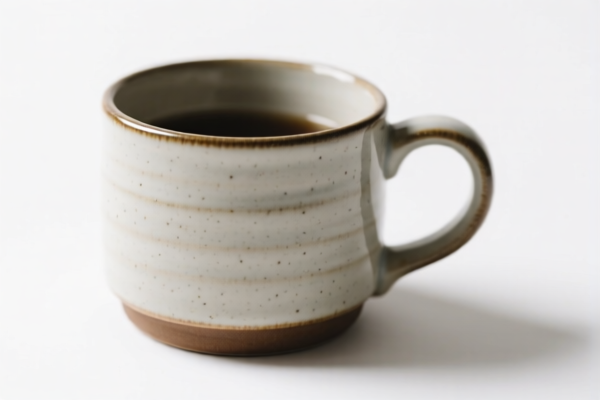
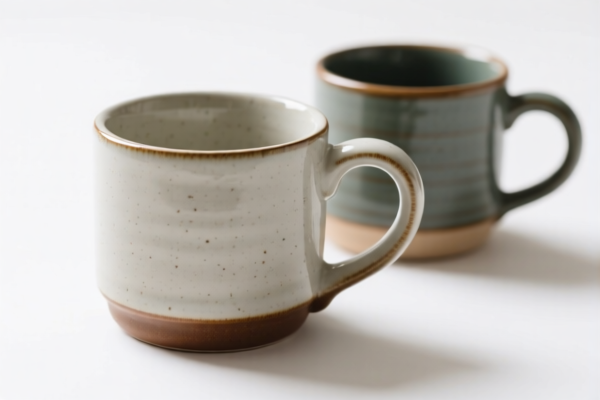
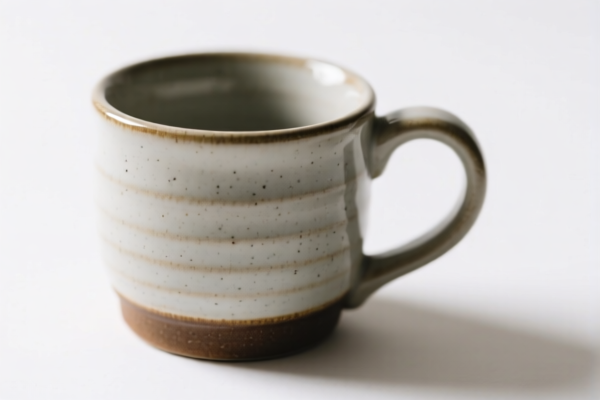
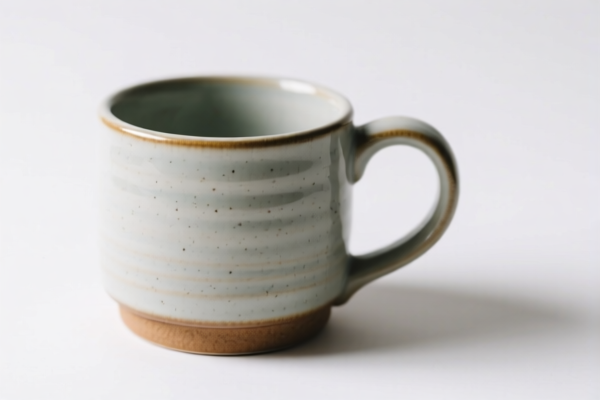
AI Analysis
☕ Mugs & Tableware (Ceramic & Glass)
🌐 HS Code Reference & Customs Clearance Guide | 2026 Latest Tariff Analysis | Strategic Entry Strategy
📌 I. Product Definition & Classification: Understanding "Mugs"
Mugs are essential household items used for drinking hot or cold beverages. In international trade, they are primarily classified by material (Ceramic vs. Porcelain/China vs. Glass) and set composition. The classification is critical because the tariff rates vary significantly based on whether the item is loose, part of a set, and its specific material value.
⚠️ Key Distinction Points:
- Ceramic (Non-Porcelain): Includes stoneware, earthenware, and general "ceramic" mugs. Generally higher base duties.
- Porcelain/China: Fine ceramic ware. Often has different duty structures, especially if part of a high-value set.
- Glass: Subject to strict valuation thresholds (e.g., "$3 or less per piece").
📦 II. HS Code Classification Details (2026 Latest Tariff Authority Comparison)
| HS Code | Product Description | Application Scenario | Tax Rate |
|---|---|---|---|
6912.00.44.00 |
Ceramic tableware: Mugs and other steins (Non-porcelain) | Loose ceramic/stoneware mugs, non-porcelain | 10.0% |
6912.00.35.10 |
Ceramic Tableware Set: Mugs included (Aggregate Value ≤ $38) | Ceramic sets where the total value of listed articles (plates, cups, mugs) is not over $38 | 9.8% |
6911.10.45.00 |
Porcelain/China Tableware: Mugs and other steins | Loose porcelain/china mugs | 14.0% |
6911.10.37.10 |
Porcelain/China Tableware Set: Mugs included (Aggregate Value > $56 & ≤ $200) | Porcelain sets with aggregate value over $56 but not over $200 | 0.0% |
7013.49.20.90 |
Glassware (Non-lead/crystalline): Valued ≤ $3 each | Loose glass mugs/cups valued at $3 or less per piece | 30.0% |
7013.49.20.10 |
Glassware (Crystalline/Lead): Valued ≤ $3 each | Glass mugs/cups valued at $3 or less per piece (Crystalline) | 30.0% |
🔍 Important Note:
- Sets Matter: For both Ceramic (6912) and Porcelain (6911), the classification heavily depends on whether the mugs are sold in specified sets and the aggregate value of the entire set.
- Glass Valuation: Glass mugs are strictly tied to the unit value (≤ $3). If the value exceeds $3, different codes may apply (not listed in current data).
💰 III. 2026 Latest Tariff Rate Breakdown (Including Additional Duties)
✅ Applicable Country: USA
✅ Origin: China (CN)
✅ Effective Date: Current tariffs as per 2026 data provided
🎯 1. 6912.00.44.00 —— Ceramic Mugs (Non-Porcelain, Loose)
| Item | Content |
|---|---|
| Base Duty | 10.0% |
| Additional Duty | 0.0% |
| Total Rate | 10.0% |
| Calculation | CIF Value × 10.0% |
| De Minimis Eligibility | ✅ Yes (typically) |
📌 Explanation:
- This is the standard rate for loose ceramic mugs (not porcelain).
- No additional trade tariffs are applied in this specific data set.
🎯 2. 6912.00.35.10 —— Ceramic Tableware Sets (Value ≤ $38)
| Item | Content |
|---|---|
| Base Duty | 9.8% |
| Additional Duty | 0.0% |
| Total Rate | 9.8% |
| Calculation | CIF Value × 9.8% |
| De Minimis Eligibility | ✅ Yes |
📌 Explanation:
- Applies to ceramic sets containing mugs, plates, etc., where the aggregate value is ≤ $38.
- Slightly lower base rate than loose mugs (6912.00.44.00).
🎯 3. 6911.10.45.00 —— Porcelain/China Mugs (Loose)
| Item | Content |
|---|---|
| Base Duty | 14.0% |
| Additional Duty | 0.0% |
| Total Rate | 14.0% |
| Calculation | CIF Value × 14.0% |
| De Minimis Eligibility | ✅ Yes |
📌 Explanation:
- Highest base duty among ceramic/porcelain items listed.
- Applies to loose porcelain/china mugs. Avoid this code if your product can be classified as a set under specific value thresholds.
🎯 4. 6911.10.37.10 —— Porcelain/China Tableware Sets (Value $56–$200)
| Item | Content |
|---|---|
| Base Duty | 0.0% |
| Additional Duty | 0.0% |
| Total Rate | 0.0% |
| Calculation | $0 |
| De Minimis Eligibility | ✅ Yes |
📌 Explanation:
- Duty-Free Opportunity!
- Applies to porcelain sets where the aggregate value is > $56 but ≤ $200.
- Strategy: If exporting high-end porcelain mugs, ensure they are packaged and invoiced as part of a set within this value range to achieve 0% duty.
🎯 5 & 6. 7013.49.20.90 & 7013.49.20.10 —— Glass Mugs (Valued ≤ $3)
| Item | Content |
|---|---|
| Base Duty | 22.5% |
| Additional Duty | 7.5% |
| Total Rate | 30.0% |
| Calculation | CIF Value × 30.0% |
| De Minimis Eligibility | ✅ Yes |
📌 Explanation:
- High tariff rate for glass mugs valued at $3 or less per piece.
- Applies to both non-crystalline (...90) and crystalline/lead crystal (...10) glass.
- Warning: If the glass mug value exceeds $3, this code may not apply, and rates could differ.
🛠️ IV. Customs Clearance Practical Advice (Real-World Pitfall Guide)
✅ 1. Documentation Checklist (Non-Negotiable)
| Document | Must Provide | Notes |
|---|---|---|
| ✅ Commercial Invoice | ✔️ | Must clearly state: "Set" or "Loose," and Unit Value for glass items. |
| ✅ Packing List | ✔️ | Itemize contents: e.g., "4 Mugs, 4 Plates, 4 Bowls" to prove set composition. |
| ✅ Product Photos | ✔️ | Show material (ceramic vs. porcelain glaze, glass transparency). |
| ✅ Set Value Calculation | ✔️ | Provide a breakdown of the aggregate value for sets to justify 6912.00.35.10 or 6911.10.37.10. |
| ✅ Material Declaration | ✔️ | Explicitly state "Non-Porcelain Ceramic" or "Porcelain/China." |
✅ 2. Classification Strategy (Key Tactics)
🔥 "Set Values Rule! Glass Needs Proof!"
| Scenario | Correct HS Code | Why? |
|---|---|---|
| Loose Ceramic Mug | 6912.00.44.00 |
Not a set, not porcelain. Rate: 10%. |
| Ceramic Set (Total ≤ $38) | 6912.00.35.10 |
Qualifies for lower rate (9.8%) due to set value limit. |
| Loose Porcelain Mug | 6911.10.45.00 |
High duty (14%). Consider packaging as a set if possible. |
| Porcelain Set ($56 < Value ≤ $200) | 6911.10.37.10 |
Duty-Free! Best case for porcelain. |
| Glass Mug (Unit Value ≤ $3) | 7013.49.20.90/10 |
High duty (30%). Must prove value ≤ $3. |
📌 Critical Tip:
- For Porcelain, if your set value is > $200, it may fall out of the 0% bracket.
- For Glass, if the unit value is > $3, you must use a different HS code (not listed here), which may have different rates. Always invoice accurately.
✅ 3. Special Cases
| Case | Handling Advice |
|---|---|
| Mixed Material Sets | If a set contains both ceramic and glass, classification depends on the principal material or the value breakdown. Consult a customs broker. |
| Gift Sets | Ensure the packaging is included in the value calculation. "Retail packaging" is part of the CIF value. |
| Sample Mugs | If shipped as samples, ensure the value declaration is accurate to avoid discrepancies in duty calculation. |
🌍 V. Global Market Comparison (2026 Latest)
| Country/Region | Recommended HS Code | Duty Rate | Remarks |
|---|---|---|---|
| 🇺🇸 USA | See Table Above | 0% – 30% | Highly dependent on Set Value and Material. |
| 🇪🇺 EU | Similar HS Structure | Varies | EU often has lower base duties but higher VAT. |
| 🇨🇳 China | Similar HS Structure | 0% – 14% | Import duties may vary; check latest Chinese tariff schedule. |
📌 Conclusion:
- The USA offers a 0% duty opportunity for high-value porcelain sets (6911.10.37.10).
- Glass mugs face the highest barrier (30%) unless values are tightly controlled.
- Ceramic sets should aim for the ≤ $38 value threshold for optimal duty savings.
📌 VI. Common Mistakes & Pitfalls (Lessons Learned)
❌ Mistake 1: Invoicing a porcelain set as "Loose Mugs" to avoid complexity.
👉 Consequence: You pay 14% duty instead of 0%. Loss: 14% of value.
❌ Mistake 2: Invoicing a glass mug at $2.99 when it’s actually $3.50.
👉 Consequence: Customs re-valuation → 30% duty applied retroactively + penalties.
❌ Mistake 3: Not declaring set composition for ceramic items.
👉 Consequence: Classified as "Loose Mugs" (6912.00.44.00) → 10% duty instead of 9.8% (minor, but adds up).
✅ Best Practice:
"Porcelain Tableware Set, 12 Pieces, Includes 4 Mugs, 4 Plates, 4 Bowls, Aggregate Value $150, Model XYZ"
🎯 VII. Conclusion: Strategic Classification for Maximum Savings
🎯 Key Takeaways:
🔹 Porcelain Sets ($56–$200) = 0% Duty 🎉 (Best Opportunity!)
🔹 Loose Porcelain Mugs = 14% Duty (Avoid if possible)
🔹 Glass Mugs (≤ $3) = 30% Duty (High Cost)
🔹 Loose Ceramic Mugs = 10% Duty (Moderate)
📌 Pro Tip:
If you are exporting porcelain mugs, consider bundling them with other items (plates, bowls) to form a set with a total value between $56 and $200. This can save you 14% in duties.
📣 Action Plan:
📞 Verify Set Values: Calculate the aggregate value of your product sets.
📄 Accurate Invoicing: Clearly declare "Set" or "Loose" and unit values.
🔍 Material Proof: Provide evidence of material (Porcelain vs. Ceramic vs. Glass).
✨ Precision in Classification = Precision in Profit!
💼 Don’t let misclassification cost you your margin.
Customer Reviews
About HS Code Classification
The Harmonized System (HS) is an internationally standardized nomenclature developed by the World Customs Organization (WCO) to classify traded products. Over 200 countries use the HS system as the basis for customs tariffs, trade statistics, and import/export regulations.
Each HS code follows a hierarchical structure:
- Chapter (2 digits) — Broad category of goods (e.g., Chapter 84: Machinery and Mechanical Appliances)
- Heading (4 digits) — More specific grouping within the chapter
- Subheading (6 digits) — Internationally standardized breakdown, used by all WCO member countries
- National subdivisions (8-10 digits) — Country-specific extensions for further classification, such as US HTSUS 10-digit codes
Correct HS code classification is essential for smooth customs clearance, accurate duty payment, and compliance with trade regulations. Misclassification can lead to customs delays, overpayment of duties, or penalties.
When importing from CN to US, the applicable tariff rates may include:
- Most-Favored-Nation (MFN) rate — The standard duty rate applied to WTO members
- General rate — Applied to countries without trade agreements
- Trade remedy duties — Additional tariffs such as Section 301 (anti-dumping), Section 232 (national security), or countervailing duties
The information provided on this page is for reference purposes only. For official classification, please consult with your local customs authority or a licensed customs broker.