multi function wireless charger
CN → US| HS Code | Tariff Rate | Origin | Destination | Doc |
|---|---|---|---|---|
| 8504409580 | 35.0% | CN | US | Official Doc |
| 8543709860 | 37.6% | CN | US | Official Doc |
| 8504409540 | 35.0% | CN | US | Official Doc |
Product Images
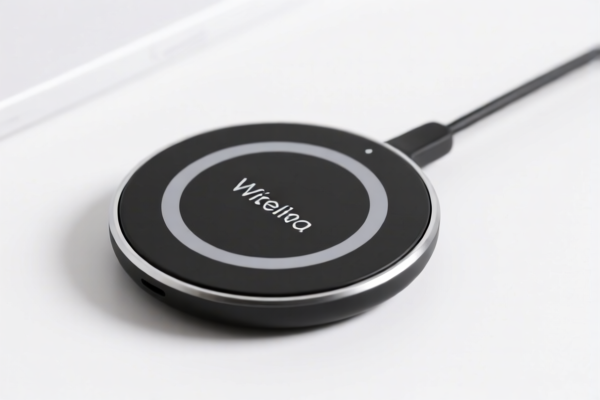
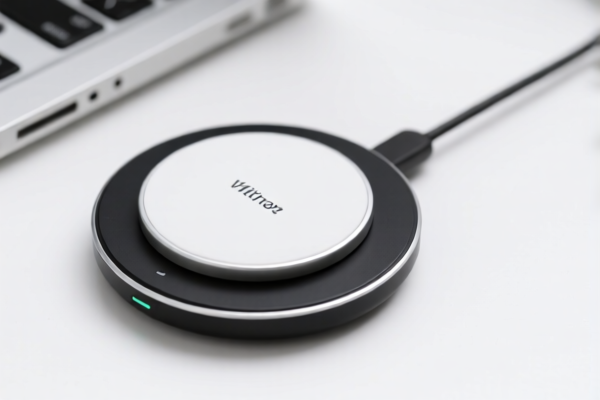
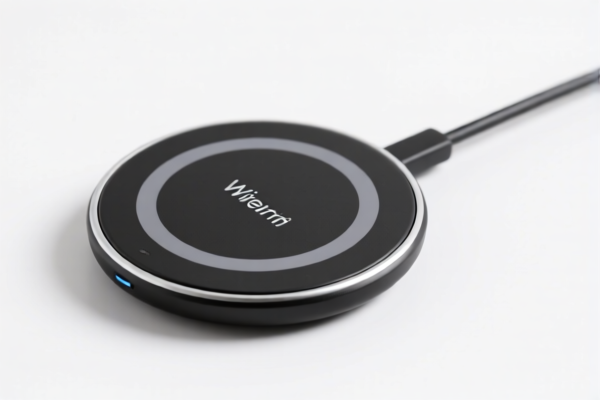
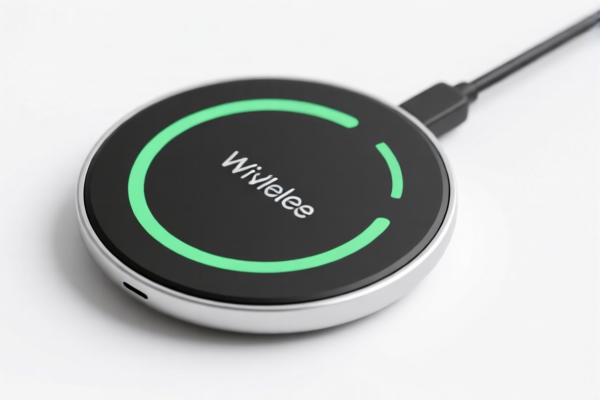
AI Analysis
🔋 Multi-Function Wireless Charger (Multifunctional Charging Station)
🌐 HS Code Reference & Customs Clearance Guide | 2026 Latest Tariff Analysis | Professional Clearance Strategy
📌 I. Product Definition & Classification: What Exactly Is a "Multi-Function Wireless Charger"?
A Multi-Function Wireless Charger is a versatile power conversion device designed to charge multiple devices (e.g., smartphones, smartwatches, earbuds) simultaneously via induction or magnetic alignment. In international trade, it is primarily classified under Chapter 85 (Electrical Machinery and Equipment) because its core function is the conversion and transmission of electrical energy.
Key Classification Distinction: * Power Converter/Adapter (Primary Function): If the device primarily acts as a stationary transformer/converter (AC to DC) with integrated charging coils, it falls under Heading 8504. * Specific Power Supply: If the device is explicitly identified as a "Power Supply" unit within the 8504 category, it may fall under specific subheadings for Rectifiers. * Other Electrical Machines: If the device has unique, non-standard functions that do not fit the specific definitions of converters or power supplies, it might be classified as a "Machine or Apparatus" under Heading 8543.
⚠️ Critical Note:
- The term "Multi-Function" often implies additional features (e.g., LED lights, power banks, fans). However, for customs purposes, the primary function (power conversion/charging) dictates the HS Code.
- Misclassification as a generic "Electronic Accessory" (e.g., 8543) instead of a "Converter" (8504) can lead to incorrect tax calculations and customs delays.
📦 II. HS Code Classification Details (2026 Latest Tariff Authority Comparison)
Based on the provided data, here are the three most likely HS Code classifications for a Multi-Function Wireless Charger:
| HS Code | Product Description | Application Scenario | Classification Logic |
|--------|----------|--------------------------|
| 8504.40.95.80 | Static Converters: Other | General wireless charging stations where the core function is energy conversion, fitting the "Other" category for static converters. | ✅ Primary Function: Static Converter. No material conflict. Fits "Other" subcategory. |
| 8543.70.98.60 | Electrical Machines & Apparatus: Other | Devices with independent functions that do not strictly fit the narrow definition of a simple converter, or those with complex integrated functionalities. | ✅ Function: Independent machine/apparatus. Assumed plastic/metal components. Fallback "Other" category. |
| 8504.40.95.40 | Static Converters: Power Supplies | Specifically categorized as a "Power Supply" or "Rectifier" device. Wireless chargers convert AC to DC, fitting the "Rectifier" scope. | ✅ Function: Energy conversion (Rectification). Fits "Power Supply" subcategory under Static Converters. |
🔍 Key Distinction:
-8504.40.95.80is the broadest "Other Static Converter" category.
-8504.40.95.40is more specific to "Power Supplies" (Rectifiers).
-8543.70.98.60is the "Catch-all" for machines/apparatus not elsewhere specified.
- Customs Preference: Classifying under 8504 (Converters) is generally more accurate for wireless chargers than 8543, as their primary physical operation is electrical transformation.
💰 III. 2026 Latest Tariff Rate Details (Including Additional Taxes & Policy Add-ons)
✅ Applicable Country: United States (US)
✅ Country of Origin: China (CN)
✅ Effective Date: November 10, 2025 (and subsequent imports)
🎯 1. 8504.40.95.80 —— Static Converters: Other
| Item | Content |
|---|---|
| Base Tariff | 0.0% |
| Section 301 Additional Tariff | +25.0% |
| IEEPA Additional Tariff (Section 122) | +10.0% |
| Total Tax Rate | 35.0% |
| Tax Calculation | CIF Value × 35% |
| De Minimis Exemption | ❌ Not Eligible (deny_de_minimis) |
| Legal Basis Path | USITC:8504.40.95.80 → Section 301: Footnote 9903.88.01 → IEEPA:9903.01.25 |
📌 Explanation:
- Base 0%: Standard MFN rate for static converters.
- 25% (Section 301): Tariff imposed under U.S. Trade Act Section 301 against Chinese goods.
- 10% (IEEPA 122): Additional tariff under International Emergency Economic Powers Act, specifically targeting certain Chinese electronics.
- Total 35%: This is the standard high-risk tariff for generic electronic converters from China.
🎯 2. 8543.70.98.60 —— Electrical Machines & Apparatus: Other
| Item | Content |
|---|---|
| Base Tariff | 2.6% |
| Section 301 Additional Tariff | +25.0% |
| IEEPA Additional Tariff (Section 122) | +10.0% |
| Total Tax Rate | 37.6% |
| Tax Calculation | CIF Value × 37.6% |
| De Minimis Exemption | ❌ Not Eligible (deny_de_minimis) |
| Legal Basis Path | USITC:8543.70.98.60 → Section 301 → IEEPA:9903.01.24 |
📌 Note:
- Base 2.6%: Slightly higher base rate than 8504.
- Total 37.6%: This is the highest possible rate among the three options.
- Risk: Classifying under 8543 increases the base tax burden. Only use this if the device has highly specialized functions not covered by 8504.
🎯 3. 8504.40.95.40 —— Static Converters: Power Supplies
| Item | Content |
|---|---|
| Base Tariff | 0.0% |
| Section 301 Additional Tariff | +25.0% |
| IEEPA Additional Tariff (Section 122) | +10.0% |
| Total Tax Rate | 35.0% |
| Tax Calculation | CIF Value × 35.0% |
| De Minimis Exemption | ❌ Not Eligible (deny_de_minimis) |
| Legal Basis Path | USITC:8504.40.95.40 → Section 301 → IEEPA:9903.01.25 |
📌 Interpretation:
- Base 0%: Same favorable base rate as the "Other" converter category.
- Total 35%: Identical total rate to8504.40.95.80.
- Precision: This code is more precise if the device is marketed specifically as a "Power Supply Unit" (PSU) with integrated charging coils. It demonstrates higher classification accuracy to customs.
🛠️ IV. Customs Clearance Practical Advice (Battle-Tested Pitfall Guide)
✅ 1. Required Documentation Checklist (Non-Negotiable)
| Document | Must Provide | Description |
|---|---|---|
| ✅ Product Specifications | ✔️ | Input/Output Voltage, Current, Wattage, Number of Ports |
| ✅ Circuit Diagram/Structure | ✔️ | Critical to prove it is a "Static Converter" (8504) and not a generic "Machine" (8543) |
| ✅ Product Photos (with Label) | ✔️ | Clear view of model number, brand, input/output specs |
| ✅ Third-Party Test Reports | ✔️ | FCC (USA), CE (EU), RoHS, UL (Safety) |
| ✅ Commercial Invoice | ✔️ | Must state: "Multi-Function Wireless Charger, Static Converter for AC to DC Conversion" |
| ✅ Packing List | ✔️ | Detail all components (charger, cables, adapters) to avoid partial shipment issues |
✅ 2. Declaration Tips (Key Mnemonics)
🔥 "Declare as Converter, Not Accessory! 8504 Wins, 8543 Burns!"
| Scenario | Correct Declaration | Wrong Practice |
|---|---|---|
| Standard Wireless Charger | 8504.40.95.40 (Power Supply) or 8504.40.95.80 (Other Converter) |
Misdeclare as "Electronic Gadget" → 8543 → 37.6% Tax |
| Charger + Power Bank | Declare as "Wireless Charging Station" (Primary function: Conversion) | Split into "Battery" + "Charger" → Complex, risky, potential higher tax |
| Charger with LED Lights | Still 8504 (Primary function is conversion, LED is ancillary) |
Declare as "Lighting Fixture" → Wrong chapter, customs hold |
| OEM Custom Charger | Provide OEM contract + design specs | Use generic names → Customs suspicion of misclassification |
✅ 3. Special Case Handling
| Situation | Handling Advice |
|---|---|
| High-Power Chargers (>50W) | Ensure documentation specifies power range. If it exceeds standard converter limits, customs may scrutinize under 8543. |
| Multi-Device Stations | Emphasize "Simultaneous Charging" but clarify "Single Power Conversion Core" to justify 8504. |
| Pre-Clearance (Advance Ruling) | Strongly Recommended. Submit product specs to CBP for an Advance Ruling to lock in the 35% rate and avoid 37.6%. |
| Material Composition | If the device is 100% plastic with no metal parts, it still fits 8504. No conflict. |
🌍 V. Global Market Comparison (2026 Latest)
| Country/Region | Recommended HS Code | Total Tariff (CN Origin) | Certification Required | Notes |
|---|---|---|---|---|
| 🇺🇸 USA | 8504.40.95.40 / 85.04.40.95.80 |
35.0% | FCC + UL + RoHS | High Tax. Avoid 8543 (37.6%). |
| 🇨🇳 China | 8504.40.95.40 |
5.0% | CCC + SRRC | No additional tariffs. Standard rate. |
| 🇪🇺 EU | 8504.40.95 |
0% | CE + ErP + RoHS | No additional tariffs if CE compliant. |
| 🇦🇺 Australia | 8504.40.95 |
5.0% | RCM + SAA | No additional tariffs. |
| 🇯🇵 Japan | 8504.40.95 |
0% | PSE + JIS | No additional tariffs. |
📌 Conclusion:
- USA is the most expensive market due to Section 301 and IEEPA tariffs.
- EU/Australia/Japan offer 0-5% rates, making them highly competitive for Chinese exports.
- Strategic Tip: If targeting the US, consider supply chain diversification (e.g., assembly in Vietnam or Malaysia) to potentially access lower tariff rates or exemptions.
📌 VI. Common Mistakes & Pitfall Guide (Lessons Learned)
❌ Mistake 1: Declaring as "Electronic Accessory" (HS 8543)
👉 Result: 37.6% Tax instead of 35%. Unnecessary cost increase.
👉 Fix: Use 8504 codes for power conversion devices.
❌ Mistake 2: Failing to provide Circuit Diagrams
👉 Result: Customs cannot verify if it's a converter. May lead to reclassification to 8543 or detention.
👉 Fix: Always include a block diagram showing AC input → Transformer/Rectifier → DC output.
❌ Mistake 3: Vague Invoice Description ("Charger")
👉 Result: Customs officer assigns their own code, possibly at a higher rate.
👉 Fix: Use precise language: "Wireless Charging Pad, Static Converter, AC to DC, Model XYZ."
❌ Mistake 4: Ignoring IEEPA 122 Tariff
👉 Result: Unexpected 10% charge on top of 301.
👉 Fix: Budget for 35% total for US imports from China.
✅ Correct Practice:
"Wireless Charging Station, Multi-Device, Static Converter (AC to DC), 15W Output, FCC Certified, Model ABC, HS 8504.40.95.40"
🎯 VII. Conclusion: Professional Declaration Saves Money!
🎯 Remember the Rule:
🔹 "Converters are 8504, Machines are 8543. 35% is better than 37.6%!"
🔹 "Precision in Declaration, Precision in Tariff. Don't let ambiguity cost you profit!"
📌 Pro Tip:
If your wireless charger is assembled in Vietnam, Thailand, or Malaysia, you may qualify for IEEPA Exemptions or lower Section 301 rates.
Consider applying for an Advance Ruling (CBP) before shipping to lock in the 35% rate and avoid surprises.
📣 Take Action Now:
📞 Contact a licensed Customs Broker
📝 Prepare Circuit Diagrams & FCC Reports
🚀 Clear Customs Smoothly, Protect Your Margins, Scale Your Business!
✨ Professional Clearance Starts with Accurate Classification!
💼 Every Percent Matters in Global Trade!
Customer Reviews
About HS Code Classification
The Harmonized System (HS) is an internationally standardized nomenclature developed by the World Customs Organization (WCO) to classify traded products. Over 200 countries use the HS system as the basis for customs tariffs, trade statistics, and import/export regulations.
Each HS code follows a hierarchical structure:
- Chapter (2 digits) — Broad category of goods (e.g., Chapter 84: Machinery and Mechanical Appliances)
- Heading (4 digits) — More specific grouping within the chapter
- Subheading (6 digits) — Internationally standardized breakdown, used by all WCO member countries
- National subdivisions (8-10 digits) — Country-specific extensions for further classification, such as US HTSUS 10-digit codes
Correct HS code classification is essential for smooth customs clearance, accurate duty payment, and compliance with trade regulations. Misclassification can lead to customs delays, overpayment of duties, or penalties.
When importing from CN to US, the applicable tariff rates may include:
- Most-Favored-Nation (MFN) rate — The standard duty rate applied to WTO members
- General rate — Applied to countries without trade agreements
- Trade remedy duties — Additional tariffs such as Section 301 (anti-dumping), Section 232 (national security), or countervailing duties
The information provided on this page is for reference purposes only. For official classification, please consult with your local customs authority or a licensed customs broker.