multifunctional power strip
CN → US| HS Code | Tariff Rate | Origin | Destination | Doc |
|---|---|---|---|---|
| 8537109150 | 37.7% | CN | US | Official Doc |
| 8536698000 | 37.7% | CN | US | Official Doc |
| 8536694020 | 35.0% | CN | US | Official Doc |
| 8537109170 | 37.7% | CN | US | Official Doc |
| 8544429010 | 87.6% | CN | US | Official Doc |
Product Images
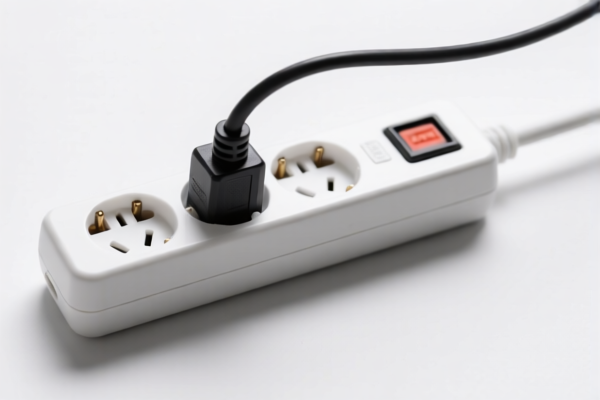
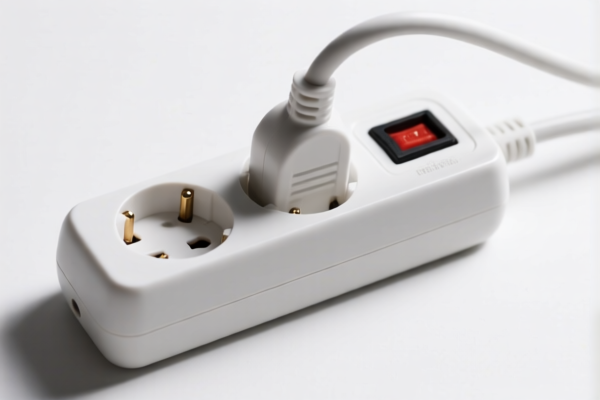
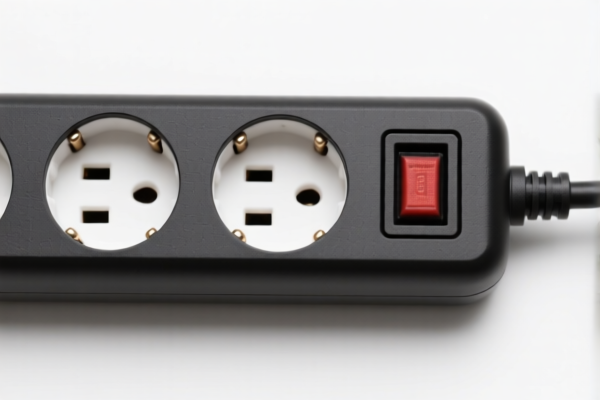
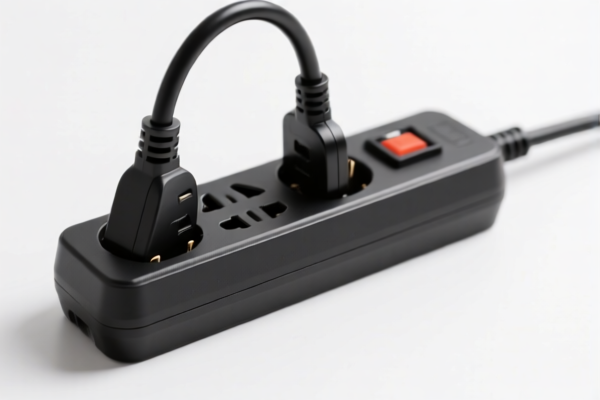
AI Analysis
🔌 Multi-Function Power Strip (Extension Cord/Surge Protector)
🌐 HS Code Reference & Customs Clearance Guide | 2026 Latest Tariff Analysis | Professional Clearance Strategy
📌 I. Product Definition & Classification: Do You Really Understand the "Multi-Function Power Strip"?
A multi-function power strip is a critical component in modern electrical distribution, serving as the bridge between the main grid and end-user devices. In international trade, its classification hinges on whether it is viewed as a circuit control/distribution apparatus or a simple electrical connector/adapter.
1. Distribution & Control Category (8537):
If the power strip includes switching mechanisms, surge protection circuits, or complex internal wiring designed for power distribution and control of voltages ≤ 1,000V.
2. Connector/Adapter Category (8536):
If the product is primarily viewed as a device for making electrical connections (plugs/adapters) without significant control circuitry, falling under devices for voltages ≤ 1,000V.
3. Wire/Cable Category (8544):
Less common but possible if classified strictly as insulated conductors with specific configurations, though rare for complete strips.
⚠️ Key Distinction Point:
- If it has switches, breakers, or indicator lights → Likely 8537 (Distribution/Control).
- If it is a simple plug-to-socket adapter or basic extension → Likely 8536 (Connector).
- Note: Regardless of the sub-category, products from China face significant additional tariffs in the US market.
📦 II. HS Code Classification Details (2026 Latest Tariff Authority Comparison)
Based on the provided data, here are the possible HS Codes and their corresponding tax implications.
| HS Code | Product Description & Logic | Tax Category | Total Tax Rate (China Origin → US) |
|---|---|---|---|
8537.10.91.50 |
Multi-Function Socket (Distribution/Control): Belongs to panel/distribution boards. Fits the category of electrical connection and distribution for power distribution/control. | 8537 (Distribution Apparatus) | 37.7% |
8536.69.80.00 |
Socket (Connector): Directly corresponds to sockets/adapters. Electrical apparatus for voltage ≤ 1,000V, categorized as "Other." | 8536 (Connectors/Adapters) | 37.7% |
8536.69.40.20 |
Socket (Cylindrical Multi-Core Connector): Fits the usage of electrical connection equipment, consistent with cylindrical multi-core connectors. | 8536 (Connectors/Adapters) | 35.0% |
8537.10.91.70 |
Socket (Power Distribution): Inferred as power distribution/control apparatus. Matches characteristics of power distribution equipment for voltage ≤ 1,000V. | 8537 (Distribution Apparatus) | 37.7% |
8544.42.90.10 |
Conductor (Wire/Cable): Classified as an electrical conductor for voltage ≤ 1,000V. No conflict with socket/extension use. | 8544 (Insulated Wires/Cables) | 87.6% |
🔍 Critical Observation:
- The majority of classifications (8537and8536.69.80.00) carry a 37.7% total tax rate.
- One specific connector code (8536.69.40.20) offers a slightly lower rate of 35.0%.
- The wire classification (8544.42.90.10) is exceptionally high at 87.6% and is generally not recommended for standard power strips unless misclassified intentionally (risky).
💰 III. 2026 Latest Tariff Rate Breakdown (Including Additional Taxes & Policy Surcharges)
✅ Applicable Country: USA (US)
✅ Country of Origin: China (CN)
✅ Effective Time: Ongoing (Section 301 & IEEPA measures)
🎯 1. Standard Distribution & Socket Codes (8537.10.91.50, 8536.69.80.00, 8537.10.91.70)
| Item | Content |
|---|---|
| Basic Tariff | 2.7% (Standard MFN rate) |
| Section 301 Additional Tariff | +25.0% (Trade Act Section 301) |
| IEEPA Additional Tariff | +10.0% (Bipartisan Policy on China) |
| Total Tax Rate | 37.7% |
| Tax Calculation | CIF Value × 37.7% |
| De Minimis Eligibility | ❌ Not Eligible (Deny De Minimis for Section 301 goods) |
| Legal Basis Path | USITC:8537.10.91 → FOOTNOTE:301.9903 → IEEPA:9903.01.25 |
📌 Explanation:
- 2.7% is the standard Most Favored Nation (MFN) duty for electrical distribution apparatus or connectors.
- 25% is the mandatory Section 301 tariff on Chinese goods in this HS list.
- 10% is the additional IEEPA tariff applied to Chinese-origin products.
- Sum = 37.7%. This is a high-cost scenario.
🎯 2. Specific Connector Code (8536.69.40.20)
| Item | Content |
|---|---|
| Basic Tariff | 0.0% (Duty-free for this specific subheading) |
| Section 301 Additional Tariff | +25.0% |
| IEEPA Additional Tariff | +10.0% |
| Total Tax Rate | 35.0% |
| Tax Calculation | CIF Value × 35.0% |
| De Minimis Eligibility | ❌ Not Eligible |
| Legal Basis Path | USITC:8536.69.40.20 → FOOTNOTE:301 → IEEPA |
📌 Note:
- This code benefits from a 0% base rate, resulting in the lowest total tax (35.0%) among the valid options.
- It is only applicable if the product is strictly classified as a "cylindrical multi-core connector" or similar specific connector type, not a general power strip with switches.
🎯 3. Wire/Cable Code (8544.42.90.10) - ⚠️ High Risk
| Item | Content |
|---|---|
| Basic Tariff | 2.6% |
| Section 301 Additional Tariff | +25.0% |
| IEEPA Additional Tariff | +10.0% |
| Metal Surcharge (Steel/Aluminum/Copper) | +50.0% (If applicable due to material composition) |
| Total Tax Rate | 87.6% (or higher with metal surcharge) |
| Tax Calculation | CIF Value × 87.6%+ |
| De Minimis Eligibility | ❌ Not Eligible |
📌 Warning:
- This rate is prohibitively high.
- Do not use this classification for a complete power strip. It is likely for raw insulated conductors. Misclassification here leads to severe penalties.
🛠️ IV. Customs Clearance Practical Advice (Battle-Tested Pitfall Avoidance)
✅ 1. Documentation Checklist (Non-Negotiable)
| Document | Required? | Description |
|---|---|---|
| ✅ Product Specification Sheet | ✔️ | Must detail: Voltage (≤1000V), Amperage, Number of Outlets, Switch Types, Cord Length. |
| ✅ Circuit Diagram / Schematic | ✔️ | Crucial for proving if it contains control circuits (8537) or is just a connector (8536). |
| ✅ Product Photos (Label & Interior) | ✔️ | Show UL/ETL certification labels, plug type, and internal components if visible. |
| ✅ Third-Party Test Reports | ✔️ | UL, ETL, or CSA certifications are mandatory for electrical safety in the US. |
| ✅ Commercial Invoice | ✔️ | Clearly state: "Multi-Function Power Strip," "Extension Cord," or "Surge Protector." |
| ✅ Packing List | ✔️ | List units clearly. Avoid vague terms like "Electrical Parts." |
✅ 2. Classification Strategy & Declaration Tips
🔥 "Smart Declaration: Control vs. Connect, Lower Tax is Best!"
| Scenario | Recommended HS Code | Reasoning | Tax Rate |
|---|---|---|---|
| Standard Power Strip (with switches/light) | 8537.10.91.50 or 8537.10.91.70 |
Best fits "Distribution Apparatus" with control features. | 37.7% |
| Simple Plug Adapter/Splitter (no switches) | 8536.69.80.00 |
Fits "Electrical Apparatus for Making Connections." | 37.7% |
| Cylindrical Multi-Core Connector Type | 8536.69.40.20 |
Best Option if product design allows this specific connector classification. | 35.0% |
| Insulated Wire/Extension Cord Body Only | 8544.42.90.10 |
❌ AVOID. Too high tax (87.6%). Only for raw wire. | 87.6% |
📌 Critical Advice:
- Try to qualify for8536.69.40.20if the product design permits (e.g., if it's primarily a connector module). The 2.7% savings (37.7% vs 35.0%) adds up significantly on large shipments.
- Never declare a power strip as "Wire" (8544) to avoid the 301/IEEPA taxes unless you are willing to pay 87.6%—which is illogical. Actually, even with 0% base, the 35% is better than 87.6%.
✅ 3. Special Case Handling
| Situation | Handling Advice |
|---|---|
| Surge Protector with Electronics | Must declare as 8537 (Control Apparatus) due to internal surge protection circuitry. Cannot be classified as simple connector (8536). |
| OEM Custom Strips | Provide client design specs. If the design is unique, argue for the most specific connector code (8536.69.40.20) if possible. |
| Battery-Powered USB Strips | Still generally 8537 or 8536 unless it contains a substantial battery (which might shift it to 8507, but rare for strips). |
| De Minimis (Section 321) | ❌ NO. Due to Section 301 and IEEPA tariffs, goods from China do not qualify for the $800 de minimis exemption. All shipments are subject to full duty calculation. |
🌍 V. Global Market Clearance Comparison (2026 Latest)
| Country/Region | Recommended HS Code | Duty (China Origin) | Certification Required | Notes |
|---|---|---|---|---|
| 🇺🇸 USA | 8537.10.91.50 / 8536.69.40.20 |
35.0% - 37.7% | UL/ETL/CSA + FCC (if applicable) | High tariffs. De Minimis not available. |
| 🇨🇳 China | 8536.69.80.00 / 8537.10.91 |
0% - 5% | CCC (Mandatory for safety) | No additional tariffs. |
| 🇪🇺 EU | 8536.69.80.00 |
0% - 4.5% | CE + RoHS + REACH | No Section 301 equivalent. |
| 🇬🇧 UK | 8536.69.80.00 |
0% - 4.5% | UKCA + BS Standards | Post-Brexit standards apply. |
| 🇯🇵 Japan | 8536.69.80.00 |
0% - 5.5% | PSE (Diamond mark) | Strict electrical safety standards. |
📌 Conclusion:
- The US market is the most expensive due to the combination of MFN + Section 301 + IEEPA tariffs.
- Canada and Mexico (under USMCA) may have different rules, but for direct US imports, the 35-38% rate is fixed.
📌 VI. Common Errors & Pitfall Guide (Blood-Tested Lessons)
❌ Error 1: Classifying a power strip as "Furniture" or "Accessory"
👉 Consequence: Incorrect HS Code, delays, and potential fines.
❌ Error 2: Omitting "Surge Protection" in description if present
👉 Consequence: If it has surge protection circuitry, it must be 8537 (Control). Misdeclaring as simple connector (8536) can be seen as fraud or misclassification.
❌ Error 3: Assuming De Minimis ($800) applies
👉 Consequence: CBP will seize the shipment and assess full duties (35-38%) plus storage fees. Do not use B13 entry for Chinese goods.
❌ Error 4: Using 8544.42.90.10 to "save" money
👉 Consequence: The 87.6% tax is much higher than the correct 35-37%. This is a false economy that leads to massive losses.
✅ Correct Declaration Example:
"Multi-Function Power Strip, 120V, 15A, 6 Outlets, 3 USB Ports, with Circuit Breaker and Surge Protection, UL Certified, Model XYZ"
🎯 VII. Conclusion: Smart Classification Saves Money!
🎯 Remember the Key Takeaways:
🔹 "Switches & Breakers = 8537 (37.7%)"
🔹 "Simple Connectors = 8536 (35.0% - Best Rate)"
🔹 "Wires = 8544 (87.6% - AVOID)"
🔹 "No De Minimis for China!"
📌 Pro Tip:
- For large volume imports, consider applying for an HTSUS Binding Ruling from US Customs and Border Protection (CBP) to secure the 35.0% rate if your product design allows it.
- Ensure your UL/ETL certification is valid and referenced in the customs entry to avoid safety holds.
📣 Immediate Action:
📞 Consult with a licensed customs broker to review your product's internal circuitry.
📄 Request a Pre-Ruling if shipment volume is significant.
🚀 Optimize your HS Code to save 2.7% on every single dollar!
✨ Professional Clearance Starts with Precise Classification!
💼 Every percentage point counts in high-tariff trade!
Customer Reviews
About HS Code Classification
The Harmonized System (HS) is an internationally standardized nomenclature developed by the World Customs Organization (WCO) to classify traded products. Over 200 countries use the HS system as the basis for customs tariffs, trade statistics, and import/export regulations.
Each HS code follows a hierarchical structure:
- Chapter (2 digits) — Broad category of goods (e.g., Chapter 84: Machinery and Mechanical Appliances)
- Heading (4 digits) — More specific grouping within the chapter
- Subheading (6 digits) — Internationally standardized breakdown, used by all WCO member countries
- National subdivisions (8-10 digits) — Country-specific extensions for further classification, such as US HTSUS 10-digit codes
Correct HS code classification is essential for smooth customs clearance, accurate duty payment, and compliance with trade regulations. Misclassification can lead to customs delays, overpayment of duties, or penalties.
When importing from CN to US, the applicable tariff rates may include:
- Most-Favored-Nation (MFN) rate — The standard duty rate applied to WTO members
- General rate — Applied to countries without trade agreements
- Trade remedy duties — Additional tariffs such as Section 301 (anti-dumping), Section 232 (national security), or countervailing duties
The information provided on this page is for reference purposes only. For official classification, please consult with your local customs authority or a licensed customs broker.