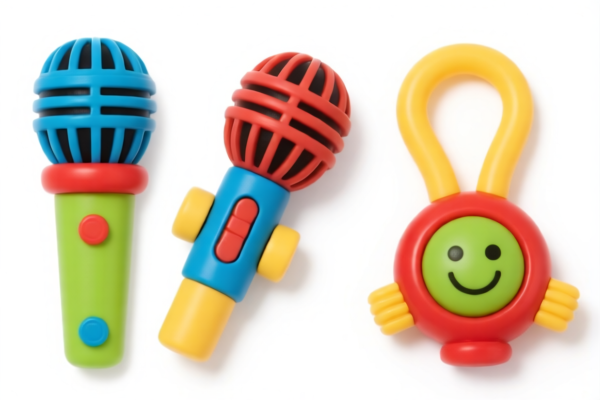
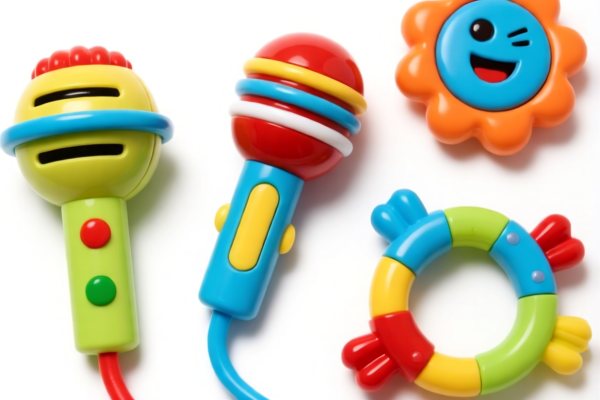
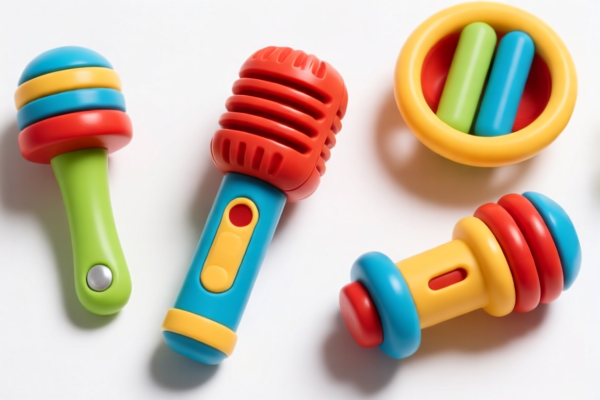
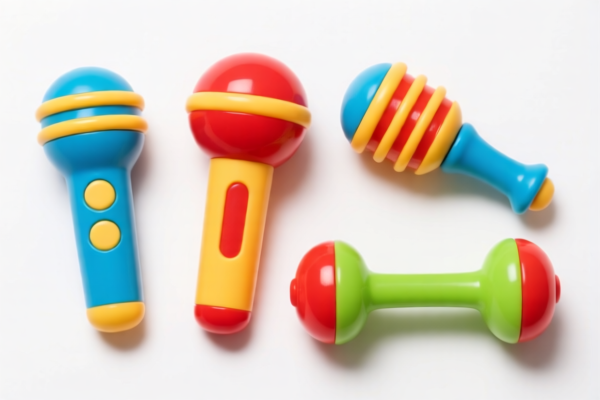
musical instrument set toys
CN → US| HS Code | Tariff Rate | Origin | Destination | Doc |
|---|---|---|---|---|
| 9207100065 | 22.9% | CN | US | Official Doc |
| 9207900080 | 22.5% | CN | US | Official Doc |
| 9503000073 | 10.0% | CN | US | Official Doc |
| 9503000071 | 10.0% | CN | US | Official Doc |
| 9503000090 | 10.0% | CN | US | Official Doc |
Product Images
AI Analysis
🎸 Musical Instrument Set Toys
🌐 HS Code Reference & Customs Clearance Guide | 2026 Latest Tariff Analysis | Professional Clearance Strategy
📌 I. Product Definition & Classification: Do You Really Understand "Musical Instrument Set Toys"?
Musical instrument set toys are hybrid products that blend the characteristics of toys and musical instruments. In international trade, their classification depends primarily on their primary function and target audience:
- Toy Classification (Chapter 95): Designed primarily for children’s play, imitation, or educational purposes. These sets often include simplified versions of instruments (e.g., plastic guitars, toy drums) intended for entertainment rather than professional performance.
- Instrument Classification (Chapter 92): Designed primarily for actual musical production. Even if marketed as "sets," if the items meet the technical definition of musical instruments (capable of producing harmonic sounds through vibration), they fall under Chapter 92.
⚠️ Key Distinction Point:
- If the item is made of plastic/wood, lacks precise tuning mechanisms, and is clearly for play/imitation →归类 as Toys (HS 9503).
- If the item produces actual musical tones, has strings/pads, and is used for music performance (even for beginners/kids) →归类 as Musical Instruments (HS 9207).
📦 II. HS Code Classification Details (2026 Latest Tariff Authority Comparison)
| HS Code | Product Description | Applicable Scenario | Material/Feature Conflict |
|---|---|---|---|
9503.00.00.73 |
Other toys; Musical instrument sets classified as toys | Kids' play sets, imitation instruments, plastic/wooden play tools | ✅ No conflict; inferred plastic/wood |
9503.00.00.71 |
Other toys; Musical instrument sets as toys | General toy sets, no specific material conflict | ✅ No conflict; toy usage defined |
9207.10.00.65 |
Other musical instruments; Electronic instruments | Sets with electronic components, sound generation | ✅ No conflict; electronic nature |
9207.90.00.80 |
Other musical instruments; Miscellaneous | Non-electronic or mixed-type instrument sets | ✅ No conflict; general instrument use |
9503.00.00.90 |
Other toys; Toy sets | Comprehensive toy kits including play instruments | ✅ No conflict; pure toy definition |
🔍 Important Reminder:
- Plastic/Wooden Play Sets without complex electronics should ideally be classified under 9503 to benefit from lower base tariffs, but add-on tariffs may still apply. - Electronic Instrument Sets or those with genuine sound-producing mechanisms must be classified under 9207, triggering higher base tariffs and additional levies.
💰 III. 2026 Latest Tariff Rate Breakdown (Including Surtaxes & Policy Add-ons)
✅ Applicable Country: United States (US)
✅ Origin: China (CN)
✅ Effective Date: 2025 November 10 onwards
🎯 1. 9503.00.00.73 & 9503.00.00.71 & 9503.00.00.90 —— Classified as Toys
| Item | Details |
|---|---|
| Base Tariff | 0% (ad valorem) |
| USITC Additional Tariff | 0% |
| Section 122 Tariff | +10% (Specific to Chinese imports under this provision) |
| Total Tax Rate | 10.0% |
| Tax Calculation | CIF Value × 10% |
| De Minimis Eligibility | ❌ Not Eligible (Section 122 applies regardless of value) |
| Legal Basis Path | Section 122 → HS 9503 |
📌 Explanation:
- These HS codes fall under the Toy category. - The 10% Section 122 tariff is the primary cost driver. - Base tariff is 0%, making it significantly cheaper than instrument classifications, but the 10% surtax is mandatory.
🎯 2. 9207.10.00.65 —— Classified as Electronic Musical Instruments
| Item | Details |
|---|---|
| Base Tariff | 5.4% |
| USITC Additional Tariff | +7.5% |
| Section 122 Tariff | +10% |
| Total Tax Rate | 22.9% |
| Tax Calculation | CIF Value × 22.9% |
| De Minimis Eligibility | ❌ Not Eligible |
| Legal Basis Path | Base Rate → USITC Footnote → Section 122 |
📌 Note:
- Higher base rate due to electronic nature. - Section 122 adds another 10% on top of existing duties. - Total 22.9% is more than double the toy rate.
🎯 3. 9207.90.00.80 —— Classified as Other Musical Instruments
| Item | Details |
|---|---|
| Base Tariff | 5.0% |
| USITC Additional Tariff | +7.5% |
| Section 122 Tariff | +10% |
| Total Tax Rate | 22.5% |
| Tax Calculation | CIF Value × 22.5% |
| De Minimis Eligibility | ❌ Not Eligible |
| Legal Basis Path | Base Rate → USITC Footnote → Section 122 |
📌 Note:
- Applies to non-electronic or miscellaneous instrument sets. - Slightly lower than electronic instruments due to a lower base rate (5.0% vs 5.4%). - Section 122 still applies at 10%.
🛠️ IV. Customs Clearance Practical Advice (Battle-Tested Pitfall Guide)
✅ 1. Required Document Checklist (None Optional)
| Document | Required | Notes |
|---|---|---|
| ✅ Product Specification Sheet | ✔️ | Must clarify if it’s for "Play" (Toy) or "Music Production" (Instrument). |
| ✅ Photos of the Set | ✔️ | Show materials (plastic/wood vs metal/electronic components). |
| ✅ Bill of Lading/Packing List | ✔️ | Consistent description with commercial invoice. |
| ✅ Commercial Invoice | ✔️ | Accurately describe items (e.g., "Toy Drum Set" vs "Electronic Drum Kit"). |
| ✅ Material Composition Statement | ✔️ | Helps customs determine if it’s a toy or instrument. |
✅ 2. Declaration Strategy (Key Mantra)
🔥 “If it’s for kids to play, call it a TOY. If it makes real music, call it an INSTRUMENT.”
| Scenario | Correct Declaration | Wrong Action |
|---|---|---|
| Plastic guitar, toy drum set, no electronics | HS 9503.00.00.73 (Toy) | Declaring as Instrument → 22.9% tax |
| Electronic keyboard set with speakers | HS 9207.10.00.65 (Instrument) | Declaring as Toy → Risk of penalty |
| Mixed set with both toy and real instruments | Split Declaration or Primary Function Test | Mixed declaration → Delays |
| Wooden xylophone for kids | HS 9503.00.00.71 (Toy) | Declaring as 9207 → Higher tax |
✅ 3. Special Circumstances Handling
| Situation | Handling Advice |
|---|---|
| Hybrid Sets (Toy + Real Instruments) | Declare based on primary function. If mostly for play, use 9503. |
| Electronic Toys with Sound Effects | If sound is pre-recorded and not tunable, it’s still a Toy (9503). |
| Professional Kids’ Kits (e.g., Mini Guitar Kit) | If it requires tuning and produces harmonic notes, it may be Instrument (9207). |
| Gift Sets Including Books/Accessories | Ensure the instrument is not just an accessory. If dominant, classify as instrument. |
🌍 V. Global Market Customs Comparison (2026 Latest)
| Country/Region | Recommended HS Code | Tariff | Certification | Notes |
|---|---|---|---|---|
| 🇺🇸 USA | 9503.00.00.73 |
10% (Toy) | CPC (Children’s Product Certificate) | Instruments: 22.5%+ |
| 🇨🇳 China | 9503.00.00.73 |
0% | CCC (if applicable) | No Section 122 |
| 🇪🇺 EU | 9503.00.00.73 |
0% | CE + EN71 | No add-on tariffs |
| 🇬🇧 UK | 9503.00.00.73 |
0% | UKCA + EN71 | No add-on tariffs |
| 🇯🇵 Japan | 9503.00.00.73 |
0% | PSE (if electronic) | Low base tariffs |
📌 Conclusion:
- USA has the highest effective tax rate for toys (10% Section 122) compared to 0% in many other markets. - Misclassification is costly: Declaring a toy as an instrument raises taxes from 10% to ~22.5%. - Toy classification (9503) is preferred for cost efficiency, provided the product qualifies.
📌 VI. Common Mistakes & Pitfall Guide (Lessons from Experience)
❌ Mistake 1: Declaring an electronic drum kit as a toy to save taxes.
👉 Consequence: Customs inspection reveals electronic components → Re-classified to 9207 → Back taxes + penalties.
❌ Mistake 2: Declaring a wooden xylophone for kids as an instrument.
👉 Consequence: Unnecessary 22.5% tax instead of 10%.
❌ Mistake 3: Failing to specify material in the description.
👉 Consequence: Customs suspects instrument → Delays for additional documentation.
❌ Mistake 4: Ignoring Section 122 applicability.
👉 Consequence: Surprise 10% charge at customs, even for toys.
✅ Correct Action:
“Plastic Musical Toy Set (Guitar, Drum, Xylophone) – For Children’s Play Only, No Electronic Components, CPC Certified”
🎯 VII. Conclusion: Precise Classification, Smooth Clearance, Cost Efficiency!
🎯 Remember the Mantra:
🔹 “Toys pay 10%, Instruments pay 22.5% – Choose wisely!”
🔹 “Section 122 is unavoidable for China-origin toys – Plan ahead!”
📌 Tips:
- If your musical instrument set is primarily for play, ensure your documentation emphasizes "Toy" characteristics.
- If it includes electronic sound generation, be prepared for 9207 classification and higher duties.
- Pre-classification Ruling is recommended for hybrid sets to avoid customs disputes.
📣 Take Action Now:
📞 Consult a professional customs broker + Provide product photos + Apply for HS Code pre-ruling
🚀 Ensure your musical instrument sets clear customs smoothly, efficiently, and profitably!
✨ Professional clearance starts with accurate classification!
💼 Every dollar in duty savings counts!
Customer Reviews
About HS Code Classification
The Harmonized System (HS) is an internationally standardized nomenclature developed by the World Customs Organization (WCO) to classify traded products. Over 200 countries use the HS system as the basis for customs tariffs, trade statistics, and import/export regulations.
Each HS code follows a hierarchical structure:
- Chapter (2 digits) — Broad category of goods (e.g., Chapter 84: Machinery and Mechanical Appliances)
- Heading (4 digits) — More specific grouping within the chapter
- Subheading (6 digits) — Internationally standardized breakdown, used by all WCO member countries
- National subdivisions (8-10 digits) — Country-specific extensions for further classification, such as US HTSUS 10-digit codes
Correct HS code classification is essential for smooth customs clearance, accurate duty payment, and compliance with trade regulations. Misclassification can lead to customs delays, overpayment of duties, or penalties.
When importing from CN to US, the applicable tariff rates may include:
- Most-Favored-Nation (MFN) rate — The standard duty rate applied to WTO members
- General rate — Applied to countries without trade agreements
- Trade remedy duties — Additional tariffs such as Section 301 (anti-dumping), Section 232 (national security), or countervailing duties
The information provided on this page is for reference purposes only. For official classification, please consult with your local customs authority or a licensed customs broker.