nail polish
CN → US| HS Code | Tariff Rate | Origin | Destination | Doc |
|---|---|---|---|---|
| 3304300000 | 35.0% | CN | US | Official Doc |
| 3210000000 | 36.8% | CN | US | Official Doc |
| 3304995000 | 35.0% | CN | US | Official Doc |
Product Images
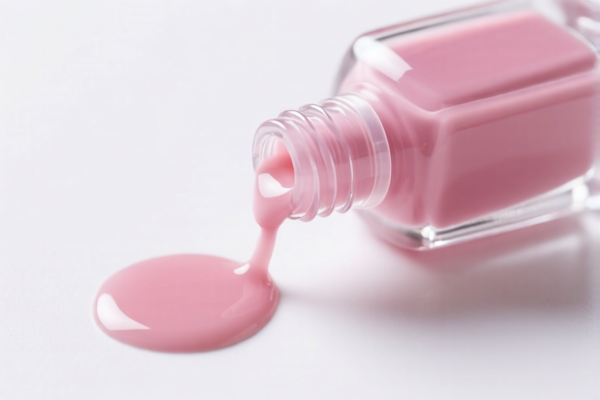
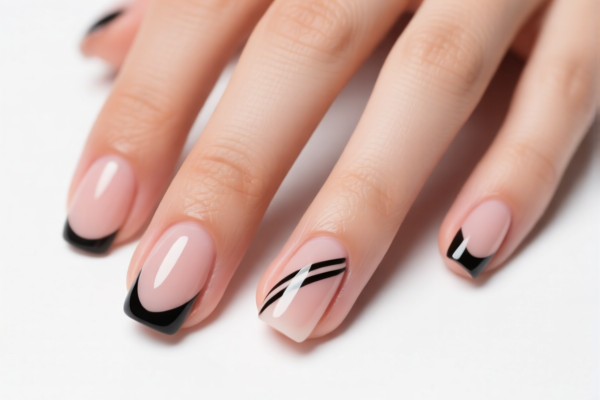
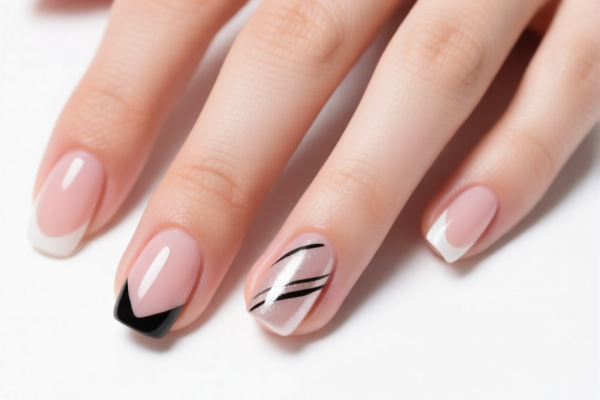

AI Analysis
💅 Nail Polish (Manicure & Pedicure Preparations)
🌐 HS Code Reference & Clearance Guide | 2025-2026 Duty Rate Analysis | Strategic Customs Compliance
📌 I. Product Definition & Classification: Is "Nail Polish" Just One Thing?
Nail Polish is a cosmetic lacquer used to color, protect, or decorate fingernails and toenails. In international trade, its classification is highly sensitive due to its composition (solvents, pigments, film-formers) and potential regulatory overlaps between "cosmetics" and "paints."
Two Main Classifications Exist:
1. Cosmetic Preparations (3304.30/3304.99): Products primarily intended for beauty/manicure (e.g., standard colored polishes, nail hardeners).
2. Paints/Varnishes (3210.00): Products containing solvents and pigments that are technically "other paints/varnishes" (often flagged as industrial or solvent-heavy).
⚠️ Key Distinction Point:
- If the product is explicitly marketed and formulated for nail care/beauty (cosmetic use) → 3304.30.00.00 or 3304.99.50.00
- If the product is classified as a solvent-based paint/varnish with pigments, regardless of intended use (or if customs deems it as such) → 3210.00.00.00
📦 II. HS Code Classification Details (2025-2026 Data)
| HS Code | Product Description | Summary | Applicable Scenario |
|---|---|---|---|
3304.30.00.00 |
Nail Enamel (Nail Polish) | "Nail Polish belongs to nail care preparations" | Standard Cosmetic: Colored nail polish, beauty-focused formulations. |
3304.99.50.00 |
Nail or Foot Care Preparations | "Nail Polish belongs to manicure or pedicure preparations" | General Care: Base coats, top coats, cuticle oils, or non-enamel nail treatments. |
3210.00.00.00 |
Other Paints & Varnishes (Solvent-Based) | "Nail Polish belongs to other paints/varnishes containing solvents and pigments" | Technical/Industrial: High-solvent formulations, or when misclassified as generic paint by authorities. |
🔍 Critical Reminder:
- Even though most "Nail Polish" is cosmetic (3304), customs officers often flag solvent-heavy formulas under 3210.00.00.00 to apply different tax rules.
- All three codes in your data share the same Aggravated Tariff (25%) and Section 122 Tariff (10%) structure, but the Base Tariff differs significantly (0% vs 1.8%).
💰 III. 2025-2026 Tariff Rate Breakdown (Detailed Analysis)
✅ Applicable Jurisdiction: United States (US)
✅ Origin: China (CN)
✅ Active Measures: Section 301 (25%), Section 122 (10%)
🎯 1. 3304.30.00.00 — Nail Enamel (Nail Care)
| Item | Content |
|---|---|
| Base Tariff | 0.0% |
| Aggravated Tariff (301) | +25.0% |
| Section 122 Tariff | +10.0% |
| Total Tax Rate | 35.0% |
| Calculation | CIF Value × 35% |
| De Minimis? | ❌ No (Subject to high duties) |
📌 Explanation:
- This is the standard cosmetic rate.
- Total Duty: 35% (Base 0% + 25% Trade War + 10% Section 122).
- Why? While the base duty is free, the US-China trade tariffs apply heavily.
🎯 2. 3304.99.50.00 — Manicure & Pedicure Preparations
| Item | Content |
|---|---|
| Base Tariff | 0.0% |
| Aggravated Tariff (301) | +25.0% |
| Section 122 Tariff | +10.0% |
| Total Tax Rate | 35.0% |
| Calculation | CIF Value × 35% |
| De Minimis? | ❌ No |
📌 Explanation:
- Same as3304.30.00.00.
- Total Duty: 35%.
- Applies to all "non-enamel" nail care items or general manicure kits if not explicitly "enamel."
🎯 3. 3210.00.00.00 — Other Paints & Varnishes (Solvent-Based)
| Item | Content |
|---|---|
| Base Tariff | 1.8% |
| Aggravated Tariff (301) | +25.0% |
| Section 122 Tariff | +10.0% |
| Total Tax Rate | 36.8% |
| Calculation | CIF Value × 36.8% |
| De Minimis? | ❌ No |
📌 Critical Warning:
- If customs reclassifies your cosmetic nail polish as "paint" (3210), your Base Duty jumps to 1.8%.
- Total Duty: 36.8% (0.2% higher than cosmetic rates, but risky if the product is actually cosmetics).
- Section 122 (10%) and Section 301 (25%) apply to ALL Chinese-origin goods in this category.
🛠️ IV. Customs Clearance Practical Advice (Avoiding Pitfalls)
✅ 1. Preparation Checklist (Must-Have)
| Document | Requirement | Why? |
|---|---|---|
| Product Label | ✔️ Must state "Nail Polish" or "Manicure Prep" | Avoids misclassification as "Paint" (3210). |
| Safety Data Sheet (SDS) | ✔️ Must show solvent composition (Ethyl Acetate, Butyl Acetate) | Proves if it's cosmetic or industrial paint. |
| Ingredient List | ✔️ Full cosmetic formulation | Confirms "cosmetic use" under 3304. |
| Marketing Material | ✔️ Photos showing cosmetic packaging | Evidence of intended "beauty" use. |
| Invoice | ✔️ Precise description (e.g., "Cosmetic Nail Enamel") | Prevents "Other Paints" classification. |
✅ 2. Declaration Strategy (Golden Rules)
🔥 "Cosmetic First, Paint Last, Label is Law!"
| Situation | Correct Declaration | Risk of Error |
|---|---|---|
| Standard Nail Polish | 3304.30.00.00 |
If declared as 3210.00.00.00 → 0.2% higher tax + audit risk. |
| Nail Polish + Base Coat Kit | 3304.99.50.00 |
Splitting kit may trigger separate duties. |
| Solvent-Heavy "Gel" Polish | 3304.30.00.00 (if UV cured) |
Declaring as 3210 if it's a cosmetic gel → Unnecessary higher tax. |
| Industrial Nail Coating | 3210.00.00.00 |
Only if truly for industrial protection, not beauty. |
📌 Key Tip:
- Never declare nail polish as "Paint" unless it is specifically an industrial coating.
- Always emphasize "Cosmetic" and "Nail Care" in the description to lock in the 35.0% rate (vs 36.8% or higher risk).
✅ 3. Special Cases & Mitigation
| Scenario | Action |
|---|---|
| High-Solvent Formulations | Provide SDS to prove cosmetic intent; argue for 3304. |
| Section 122 (10%) Impact | This is a new tariff on specific Chinese imports; no exemption for cosmetics. |
| De Minimis (800 USD) | ❌ NOT APPLICABLE for these HS codes. Small shipments still pay full duties. |
| Country of Origin | If not China, Section 301 & 122 may not apply, drastically reducing tax. |
🌍 V. Global Market Comparison (2025-2026)
| Country | Recommended HS Code | Total Duty (CN Origin) | Key Requirement | Note |
|---|---|---|---|---|
| 🇺🇸 USA | 3304.30.00.00 |
35.0% | FDA Cosmetic Notice | 3210 = 36.8% |
| 🇨🇳 China | 3304.30.00.00 |
5.0% (approx) | Cosmetic Permit | No Section 301 |
| 🇪🇺 EU | 3304.30.00.00 |
0% - 6% | CPNP Notification | No Section 122 |
| 🇯🇵 Japan | 3304.30.00.00 |
0% - 8% | PSE (if electrical) | No Section 301 |
📌 Conclusion:
- USA is the most expensive market due to Section 301 (25%) + Section 122 (10%).
- Classification as3210.00.00.00is a minor rate difference (36.8% vs 35.0%) but carries high compliance risk.
- China and EU offer significantly lower duty structures.
📌 VI. Common Errors & Pitfalls (Learn from Mistakes)
❌ Error 1: Declaring "Nail Polish" as "Industrial Paint" (3210.00.00.00).
👉 Consequence: 1.8% base tax + audit for misdeclaration.
❌ Error 2: Ignoring Section 122 (10%).
👉 Consequence: Unexpected 10% surcharge on all shipments.
❌ Error 3: Shipping small amounts via "De Minimis."
👉 Consequence: Shipment SEIZED or RETURNED (De Minimis does not apply to Section 301/122 items).
❌ Error 4: Missing Ingredient List on Invoice.
👉 Consequence: Customs delays, reclassification to 3210.
✅ Correct Approach:
"Nail Enamel, Cosmetic Grade, Color: Red, Model XYZ, Solvent: Ethyl Acetate, For Beauty Use Only."
🎯 VII. Conclusion: Precision Classification = Cost Savings!
🎯 Remember the Formula:
🔹 "Cosmetic = 3304 (35%) | Paint = 3210 (36.8%) | No De Minimis | Section 122 + 301 Apply!"
🔹 "Base 0% + 25% + 10% = 35% | Base 1.8% + 25% + 10% = 36.8%"📌 Pro Tip:
- If you can shift sourcing to Vietnam, Thailand, or Mexico, you avoid Section 301 (25%) and Section 122 (10%).
- Request an Advance Ruling (CBP) for your specific formula to confirm3304classification.
📣 Immediate Action Required:
📞 Contact Customs Broker + Provide SDS + Verify HS Code Pre-approval
🚀 Avoid 36.8% traps, secure 35.0%, and keep your margins healthy!
✨ Professional Clearance Starts with Correct Classification!
💼 Every 0.2% counts in high-volume cosmetic trade!
Customer Reviews
About HS Code Classification
The Harmonized System (HS) is an internationally standardized nomenclature developed by the World Customs Organization (WCO) to classify traded products. Over 200 countries use the HS system as the basis for customs tariffs, trade statistics, and import/export regulations.
Each HS code follows a hierarchical structure:
- Chapter (2 digits) — Broad category of goods (e.g., Chapter 84: Machinery and Mechanical Appliances)
- Heading (4 digits) — More specific grouping within the chapter
- Subheading (6 digits) — Internationally standardized breakdown, used by all WCO member countries
- National subdivisions (8-10 digits) — Country-specific extensions for further classification, such as US HTSUS 10-digit codes
Correct HS code classification is essential for smooth customs clearance, accurate duty payment, and compliance with trade regulations. Misclassification can lead to customs delays, overpayment of duties, or penalties.
When importing from CN to US, the applicable tariff rates may include:
- Most-Favored-Nation (MFN) rate — The standard duty rate applied to WTO members
- General rate — Applied to countries without trade agreements
- Trade remedy duties — Additional tariffs such as Section 301 (anti-dumping), Section 232 (national security), or countervailing duties
The information provided on this page is for reference purposes only. For official classification, please consult with your local customs authority or a licensed customs broker.