nail sharpening plate
CN → US| HS Code | Tariff Rate | Origin | Destination | Doc |
|---|---|---|---|---|
| 3926903500 | 16.5% | CN | US | Official Doc |
| 8214209000 | 14.1% | CN | US | Official Doc |
| 8214203000 | 14.0% | CN | US | Official Doc |
| 9615906000 | 21.0% | CN | US | Official Doc |
| 9615904000 | 15.3% | CN | US | Official Doc |
Product Images
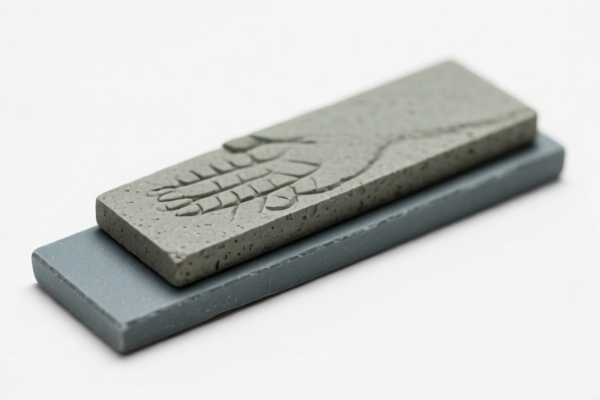
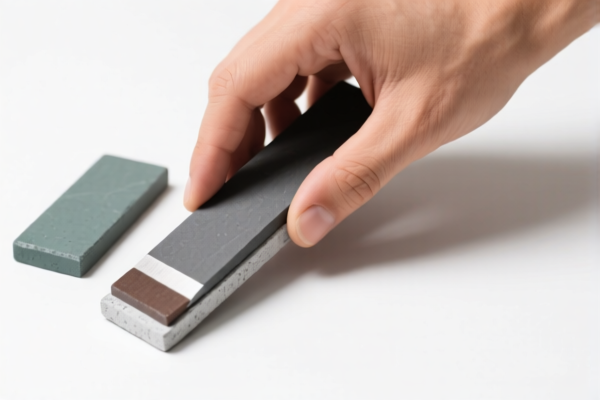
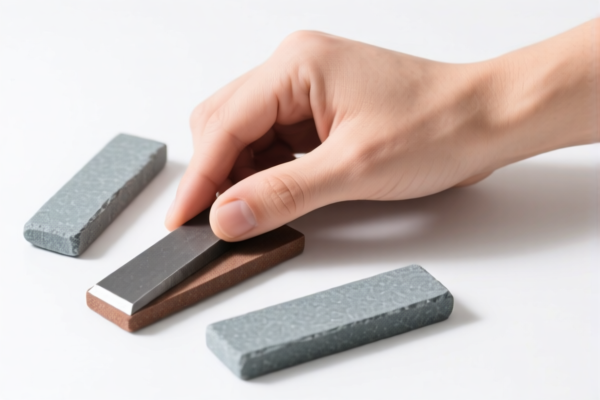
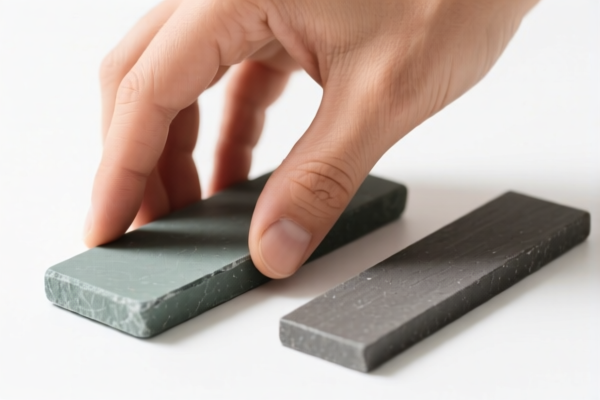
AI Analysis
💅 Nail Sharpening Plate / Nail File (Manicure Tools)
🌐 HS Code Reference & Customs Clearance Guide | 2026 Latest Tariff Analysis | Professional Clearance Strategy
📌 I. Product Definition & Classification: Do You Really Understand the "Nail Sharpening Plate"?
A "Nail Sharpening Plate" (commonly known as a Nail File or Emery Board) is a fundamental tool in personal care and manicure sets. In international trade, its classification depends heavily on its primary material, structure, and intended use. It is generally categorized under two main headings: 1. Manicure/Pedicure Tools (Chapter 82): If classified based on its function as a tool, even if made of simple materials. 2. Plastics Articles (Chapter 39): If classified strictly by its material composition (e.g., plastic boards with abrasive surface). 3. Hair Combs/Beauty Accessories (Chapter 96): If considered a personal grooming accessory similar to combs or clips.
⚠️ Key Distinction Point:
- If the item is a simple plastic board with an abrasive surface → Often grouped under Plastics (3926) or Beauty Accessories (9615).
- If the item is marketed explicitly as a manicure/pedicure set component or metal/plastic file → Often grouped under Manicure Tools (8214).
- Note: The term "Nail Sharpening Plate" is ambiguous. US Customs and Border Protection (CBP) may scrutinize the material and design to determine if it fits "Tools" or "General Articles."
📦 II. HS Code Classification Details (2026 Latest Tariff Authority Comparison)
| HS Code | Product Description | Application Scenario | Material/Nature |
|---|---|---|---|
3926.90.35.00 |
Other articles of plastic | Plastic nail files/blocks, general plastic cosmetic tools | ✅ Plastic |
8214.20.90.00 |
Manicure or pedicure sets & combinations | Nail files sold as part of a manicure kit, general nail tools | ✅ Tool/Accessory |
8214.20.30.00 |
Manicure or pedicure tools (specifically files) | Nail files classified specifically as "manicure tools" | ✅ Tool |
9615.90.60.00 |
Combs, hair-slides, and similar articles | Nail files categorized broadly as beauty/personal care accessories | ✅ Accessory |
9615.90.40.00 |
Hair ornaments & similar beauty articles | Nail files considered similar to hair accessories or beauty ornaments | ✅ Accessory |
🔍 Key Reminder:
- Chapter 82 (8214) is the most common classification for tools used for manicures.
- Chapter 39 (3926) applies if the item is purely a plastic article without specific "tool" characteristics recognized by CBP.
- Chapter 96 (9615) is a broader category for personal care items, sometimes used if the item is more "ornamental" or "general use."
💰 III. 2026 Latest Tariff Rate Breakdown (Including Surtaxes & Policy Add-ons)
✅ Applicable Country: United States (US)
✅ Origin: China (CN)
✅ Effective Time: From November 10, 2025 (Including subsequent imports)
🎯 1. 3926.90.35.00 — Articles of Plastic (Plastic Nail Files)
| Item | Content |
|---|---|
| Base Tariff Rate | 6.5% (ad valorem) |
| Section 301 Surtax | 0.0% |
| Section 122 Surtax | +10% (Specific duty on Chinese goods) |
| Total Rate | 16.5% |
| Tax Calculation | CIF Value × 16.5% |
| De Minimis Eligibility | ❌ Not Eligible (deny_de_minimis) |
| Legal Basis Path | 122:3926.90.35.00 → USITC:3926.90.35.00 |
📌 Explanation:
- This classification treats the item as a plastic product.
- The 10% Section 122 tariff applies to many plastic articles from China.
- Total burden: 16.5%. While lower than some tool classifications, it still carries significant tariffs for low-value items.
🎯 2. 8214.20.90.00 — Manicure/Pedicure Sets & Combinations
| Item | Content |
|---|---|
| Base Tariff Rate | 4.1% (ad valorem) |
| Section 301 Surtax | 0.0% |
| Section 122 Surtax | +10% (Specific duty on Chinese goods) |
| Total Rate | 14.1% |
| Tax Calculation | CIF Value × 14.1% |
| De Minimis Eligibility | ❌ Not Eligible (deny_de_minimis) |
| Legal Basis Path | 122:8214.20.90.00 → USITC:8214.20.90.00 |
📌 Explanation:
- This is a competitive rate for "sets" or general tool categories.
- The 10% Section 122 applies.
- Total burden: 14.1%. Preferred if the product is marketed as a "manicure tool" or part of a kit.
🎯 3. 8214.20.30.00 — Manicure/Pedicure Tools (Files)
| Item | Content |
|---|---|
| Base Tariff Rate | 4.0% (ad valorem) |
| Section 301 Surtax | 0.0% |
| Section 122 Surtax | +10% (Specific duty on Chinese goods) |
| Total Rate | 14.0% |
| Tax Calculation | CIF Value × 14.0% |
| De Minimis Eligibility | ❌ Not Eligible (deny_de_minimis) |
| Legal Basis Path | 122:8214.20.30.00 → USITC:8214.20.30.00 |
📌 Explanation:
- This is the most specific classification for "Nail Files" as tools.
- The 10% Section 122 applies.
- Total burden: 14.0%. This is the lowest tax rate among the options provided, making it the most cost-effective if CBP accepts this classification.
🎯 4. 9615.90.60.00 — Combs, Hair-slides, and Similar Articles
| Item | Content |
|---|---|
| Base Tariff Rate | 11.0% (ad valorem) |
| Section 301 Surtax | 0.0% |
| Section 122 Surtax | +10% (Specific duty on Chinese goods) |
| Total Rate | 21.0% |
| Tax Calculation | CIF Value × 21.0% |
| De Minimis Eligibility | ❌ Not Eligible (deny_de_minimis) |
| Legal Basis Path | 122:9615.90.60.00 → USITC:9615.90.60.00 |
📌 Explanation:
- Higher base tariff due to broader "accessory" classification.
- Total burden: 21.0%. Not recommended unless other classifications are rejected.
🎯 5. 9615.90.40.00 — Hair Ornaments & Similar Beauty Articles
| Item | Content |
|---|---|
| Base Tariff Rate | 5.3% (ad valorem) |
| Section 301 Surtax | 0.0% |
| Section 122 Surtax | +10% (Specific duty on Chinese goods) |
| Total Rate | 15.3% |
| Tax Calculation | CIF Value × 15.3% |
| De Minimis Eligibility | ❌ Not Eligible (deny_de_minimis) |
| Legal Basis Path | 122:9615.90.40.00 → USITC:9615.90.40.00 |
📌 Explanation:
- Moderate rate, but higher than8214.20.30.00.
- Total burden: 15.3%.
🛠️ IV. Customs Clearance Practical Advice (Real-World Pitfall Avoidance Guide)
✅ 1. Preparation Checklist (Mandatory Items)
| Document | Mandatory | Explanation |
|---|---|---|
| ✅ Product Description | ✔️ | Clearly state "Nail File" or "Manicure Tool," not just "Sharpening Plate" |
| ✅ Material Composition | ✔️ | Specify % of plastic, metal, or wood |
| ✅ Function Statement | ✔️ | Explain it is for shaping/filing nails, not industrial sharpening |
| ✅ Photos | ✔️ | Show the item as sold, including packaging |
| ✅ HS Code Justification | ✔️ | Briefly explain why 8214.20.30.00 is appropriate (e.g., "It is a manicure tool") |
| ✅ Commercial Invoice | ✔️ | Match product description exactly |
| ✅ Packing List | ✔️ | Include quantity and weight |
✅ 2. Declaration Tips (Key Mantras)
🔥 "Be Specific, Don't Generalize! 'Nail File' beats 'Plate'!"
| Scenario | Correct Declaration | Incorrect Action |
|---|---|---|
| Plastic Nail File | 8214.20.30.00 (Tool) |
Misclassify as 3926.90.35.00 → Higher tax if CBP disagrees, or 16.5% vs 14.0% |
| Metal Nail File | 8214.20.30.00 (Tool) |
Do not classify as 73... (Metal tools) unless specific |
| Nail File in a Kit | 8214.20.90.00 (Set) |
Declare components separately → Higher complexity |
| Decorative Nail File | 9615.90.40.00 (Accessory) |
Only if primarily ornamental, not functional |
📌 Critical Note:
- Use "Nail File" or "Manicure Tool" in your description. Avoid "Sharpening Plate" as it sounds industrial (e.g., for sharpening pencils or knives), which could lead to misclassification. - Section 122 applies to all these codes. The difference lies in the Base Rate.
✅ 3. Special Circumstances
| Situation | Handling Advice |
|---|---|
| OEM Custom Design | Provide design specs to prove it is a "tool" not a "plastic article" |
| Gift Set with Nail File | Declare as a "Manicure Set" (8214.20.90.00) to leverage the specific tool rate |
| Plastic Board with Abrasive Coating | CBP may still classify as 3926 if the base is dominant. Argue for 8214 based on principal use |
| Metal Nail File | Definitely 8214.20.30.00. Ensure it is not classified under metal tools (73...) unless specifically exempt |
🌍 V. Global Market Clearance Comparison (2026 Latest)
| Country/Region | Recommended HS Code | Tariff Rate (CN Origin) | Certification Requirements | Notes |
|---|---|---|---|---|
| 🇺🇸 USA | 8214.20.30.00 |
14.0% (incl. 122) | None specific for nails | Highest scrutiny on "Section 122" applicability |
| 🇨🇳 China | 8214.20.30.00 |
Varies (Check latest) | N/A | Domestic trade rules apply |
| 🇪🇺 EU | 8214.20.00 |
0-4% | CE (if electric), CPSR (cosmetic contact) | No Section 122, but watch for anti-dumping |
| 🇬🇧 UK | 8214.20.00 |
0-4% | UKCA | Post-Brexit rules apply |
| 🇯🇵 Japan | 8214.20.00 |
0% | PSE (if applicable) | Low tariffs, high standards for safety |
📌 Conclusion:
- USA has the highest effective cost due to Section 122 (10%) added to base rates.
-8214.20.30.00is the optimal choice for cost efficiency (14.0% total).
- Avoid9615.90.60.00(21.0%) unless no other option is viable.
📌 VI. Common Errors & Pitfall Avoidance (Lessons Learned)
❌ Error 1: Using "Sharpening Plate" in the description
👉 Consequence: CBP may misclassify as industrial tool or plastic article → Delay or higher tariff.
✅ Fix: Use "Nail File" or "Manicure Tool".
❌ Error 2: Classifying as 3926.90.35.00 (Plastic) when it's a tool
👉 Consequence: You pay 16.5% instead of 14.0%. Small difference, but unnecessary cost.
✅ Fix: Argue for Chapter 82 based on principal use.
❌ Error 3: Ignoring Section 122
👉 Consequence: Unexpected tax bill at customs.
✅ Fix: Budget for 10% Surtax on all these codes.
❌ Error 4: Claiming De Minimis Exemption
👉 Consequence: Denied. All these codes are deny_de_minimis.
✅ Fix: Prepare for full duty payment on every shipment.
🎯 VII. Conclusion: Professional Declaration, Cost Savings!
🎯 Remember the Mantra:
🔹 "Tool over Plastic, 'File' over 'Plate'!"
🔹8214.20.30.00is the King (14.0% Total).
🔹 Section 122 is unavoidable (10% Flat Add-on).
🔹 No De Minimis (Full duty always applies).
📌 Pro Tip:
If you are shipping bulk quantities, consider applying for an Advance Ruling from CBP to lock in the
8214.20.30.00classification and avoid future disputes.
📣 Immediate Action:
📞 Contact your customs broker with a clear product description: "Nail File, Manicure Tool, Plastic/Metal."
🚀 Optimize your HS Code to8214.20.30.00for the lowest duty rate of 14.0%.
✨ Professional Clearance, Start with Precise Classification!
💼 Every cent saved on duty is pure profit!
Customer Reviews
About HS Code Classification
The Harmonized System (HS) is an internationally standardized nomenclature developed by the World Customs Organization (WCO) to classify traded products. Over 200 countries use the HS system as the basis for customs tariffs, trade statistics, and import/export regulations.
Each HS code follows a hierarchical structure:
- Chapter (2 digits) — Broad category of goods (e.g., Chapter 84: Machinery and Mechanical Appliances)
- Heading (4 digits) — More specific grouping within the chapter
- Subheading (6 digits) — Internationally standardized breakdown, used by all WCO member countries
- National subdivisions (8-10 digits) — Country-specific extensions for further classification, such as US HTSUS 10-digit codes
Correct HS code classification is essential for smooth customs clearance, accurate duty payment, and compliance with trade regulations. Misclassification can lead to customs delays, overpayment of duties, or penalties.
When importing from CN to US, the applicable tariff rates may include:
- Most-Favored-Nation (MFN) rate — The standard duty rate applied to WTO members
- General rate — Applied to countries without trade agreements
- Trade remedy duties — Additional tariffs such as Section 301 (anti-dumping), Section 232 (national security), or countervailing duties
The information provided on this page is for reference purposes only. For official classification, please consult with your local customs authority or a licensed customs broker.