narrow mouth bottle
CN → US| HS Code | Tariff Rate | Origin | Destination | Doc |
|---|---|---|---|---|
| 3923300090 | 38.0% | CN | US | Official Doc |
| 7013496090 | 24.7% | CN | US | Official Doc |
| 7013993000 | 26.5% | CN | US | Official Doc |
| 3923300010 | 38.0% | CN | US | Official Doc |
| 3923300090 | 38.0% | CN | US | Official Doc |
Product Images
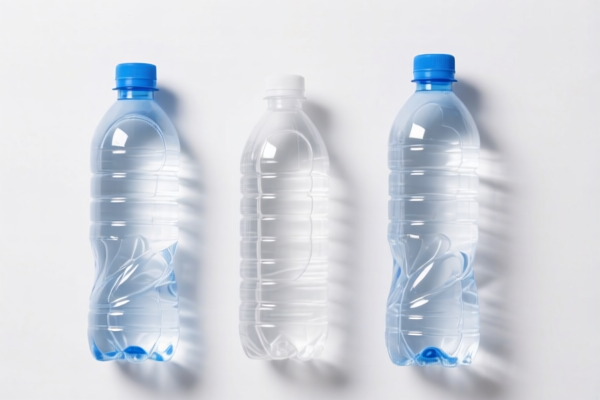
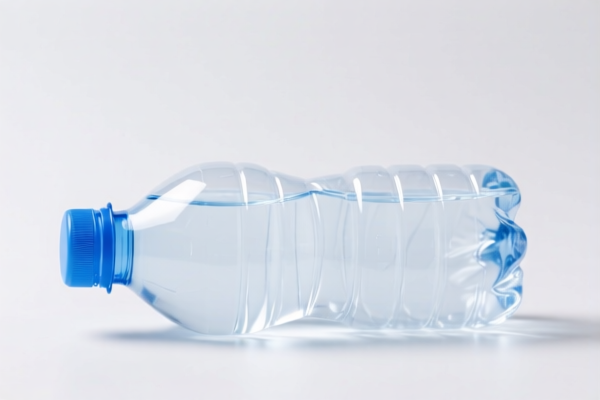
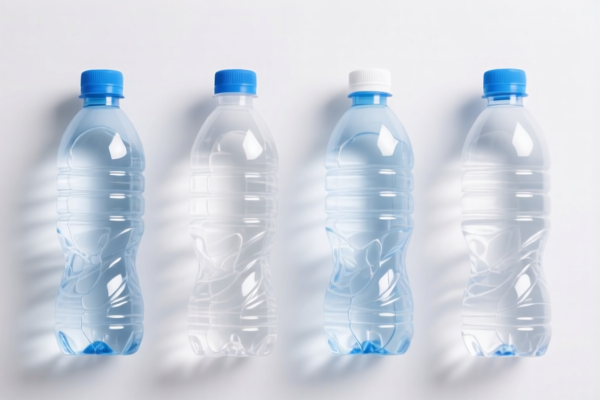
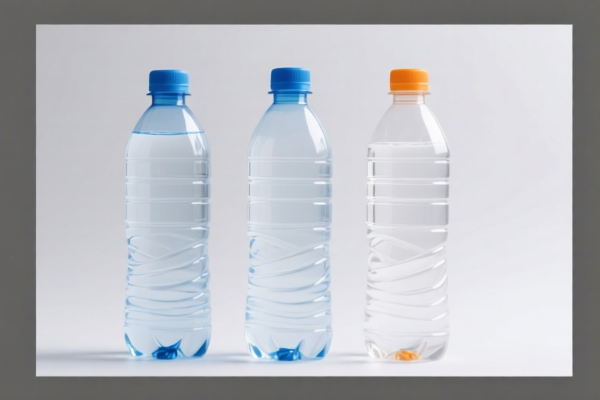
AI Analysis
🧪 Narrow Mouth Bottles: HS Code Classification & US Customs Strategy | 2026 Tariff Deep Dive
🌐 HS Code Reference & Customs Clearance Guide | Latest 2026 Tariff Analysis | Professional Clearance Strategy
📌 I. Product Definition & Classification: What Exactly Is a "Narrow Mouth Bottle"?
In international trade, the term "Narrow Mouth Bottle" is a descriptive functional term, not a specific legal HS Code description. The correct classification depends entirely on the material and intended use.
Two Primary Categories:
1. Plastic Narrow Mouth Bottles (3923.30): Typically used for cosmetics, pharmaceuticals, food sauces, or chemicals.
2. Glass Narrow Mouth Bottles (7013.49 or 7013.99): Typically used for kitchenware, tableware, or perfume bottles.
⚠️ Critical Distinction:
- If the bottle is made of plastic, it falls under Chapter 39 (Plastics).
- If the bottle is made of glass, it falls under Chapter 70 (Glass).
- Do not mix materials. A plastic cap on a glass bottle does not change the glass classification.
📦 II. HS Code Classification Details (2026 Latest Tariff Reference)
Based on the provided data, here are the exact HS Codes, summaries, and tax rates for Narrow Mouth Bottles imported into the United States.
| HS Code | Product Description | Summary & Use Case | Total Tax Rate |
|---|---|---|---|
| 3923.30.00.90 | Plastic Narrow Mouth Bottles | Plastic bottles, matching form and use; no material conflict. | 38.0% |
| 3923.30.00.10 | Plastic Narrow Mouth Bottles | Plastic bottles, classified under "bottles and similar articles"; no material conflict. | 38.0% |
| 7013.49.60.90 | Glass Narrow Mouth Bottles | Glass bottles for kitchen or table use; classified under "other" items. | 24.7% |
| 7013.99.30.00 | Glass Narrow Mouth Bottles | Glass bottles, similar form to perfume bottles; classified under "table/ kitchen glassware". | 26.5% |
🔍 Key Reminder:
- Plastic vs. Glass: The biggest error is misidentifying the material. Plastic bottles incur a 38% total tax, while glass bottles range from 24.7% to 26.5%.
- Use Case Matters: For glass, "kitchen/table use" (7013.49) differs from "perfume-like" (7013.99) in tax rate and specific heading.
💰 III. 2026 Latest Tariff Rate Breakdown (Including Surcharges & Policy Add-ons)
✅ Applicable Country: United States (US)
✅ Origin: China (CN)
✅ Effective Time: Ongoing (as per current IEEPA and USITC rules)
🎯 1. Plastic Narrow Mouth Bottles (3923.30.00.90 & .10)
| Item | Content |
|---|---|
| Base Tariff | 3.0% |
| Section 301 Tariff | 25.0% (USITC Footnote 9903.88.01) |
| IEEPA Tariff (122) | 10.0% (Against China/HK products) |
| Total Tax Rate | 38.0% |
| Tax Calculation | CIF Value × 38% |
| De Minimis Exemption | ❌ Not Applicable |
| Legal Basis Path | IEEPA:9903.01.25 → USITC:3923.30.00.90 → FOOTNOTE:9903.88.01 |
📌 Explanation:
- The 25% surcharge is from the US Trade Act Section 301 (targeting Chinese goods).
- The 10% is the IEEPA "122 clause" tariff.
- Total 38% is high. Plastic packaging is heavily impacted by US-China trade policies.
🎯 2. Glass Narrow Mouth Bottles (7013.49.60.90)
| Item | Content |
|---|---|
| Base Tariff | 7.2% |
| Section 301 Tariff | 7.5% (USITC Footnote 9903.88.01) |
| IEEPA Tariff (122) | 10.0% |
| Total Tax Rate | 24.7% |
| Tax Calculation | CIF Value × 24.7% |
| De Minimis Exemption | ❌ Not Applicable |
| Legal Basis Path | IEEPA:9903.01.24 → USITC:7013.49.60.90 → FOOTNOTE:9903.88.01 |
📌 Note:
- Glass kitchen/table items have a lower base tariff (7.2%) but still face significant add-ons.
- Total 24.7% is lower than plastic but still substantial.
🎯 3. Glass Narrow Mouth Bottles (7013.99.30.00)
| Item | Content |
|---|---|
| Base Tariff | 9.0% |
| Section 301 Tariff | 7.5% (USITC Footnote 9903.88.01) |
| IEEPA Tariff (122) | 10.0% |
| Total Tax Rate | 26.5% |
| Tax Calculation | CIF Value × 26.5% |
| De Minimis Exemption | ❌ Not Applicable |
| Legal Basis Path | IEEPA:9903.01.24 → USITC:7013.99.30.00 → FOOTNOTE:9903.88.01 |
📌 Note:
- This code is for glass bottles similar to perfume bottles.
- Higher base tariff (9.0%) than kitchen glass, leading to a slightly higher total rate (26.5%).
🛠️ IV. Customs Clearance Practical Advice (Avoid Pitfalls)
✅ 1. Required Documentation Checklist
| Document | Mandatory? | Description |
|---|---|---|
| ✅ Product Specifications | ✔️ | Material (Plastic/Glass), Capacity, Closure type. |
| ✅ Product Photos | ✔️ | Clear shots of the bottle, label, and closure. |
| ✅ Commercial Invoice | ✔️ | Must specify "Narrow Mouth Bottle" and HS Code. |
| ✅ Packing List | ✔️ | Show unit weight/volume for CIF calculation. |
| ✅ Origin Certificate | ✔️ | If applicable for non-China origin (to avoid tariffs). |
✅ 2. Classification Tips (Key Rules)
🔥 "Material First, Use Second, Form Third!"
| Scenario | Correct HS Code | Wrong Approach |
|---|---|---|
| Plastic bottle for lotion | 3923.30.00.90 |
Misclassified as glass → 26.5% error |
| Glass bottle for jam | 7013.49.60.90 |
Misclassified as perfume → 26.5% vs 24.7% |
| Glass bottle for perfume | 7013.99.30.00 |
Misclassified as kitchenware → 24.7% vs 26.5% |
| Plastic bottle with metal cap | 3923.30.00.90 |
Split classification → Higher risk & fees |
✅ 3. Special Cases
| Scenario | Handling Advice |
|---|---|
| Custom Printed Bottles | Provide design proof. If printing involves ink/paint, ensure compliance with FDA/REACH if for food/cosmetics. |
| Mixed Containers (Set) | If sold as a "gift set" with bottle + cream, the set is classified by its essential character. Usually, the bottle determines the code if it's reusable. |
| OEM Private Label | Ensure invoice shows both manufacturer and brand. Do not hide origin. |
🌍 V. Global Market Comparison (2026)
| Country/Region | Recommended HS Code | Tariff (China Origin) | Certification | Notes |
|---|---|---|---|---|
| 🇺🇸 USA | 3923.30.00.90 / 7013.49.60.90 |
24.7% - 38.0% | FDA (if food/cosmetic) | High tariffs due to 301/IEEPA |
| 🇨🇳 China | 3923.30 / 7013.49 |
Varies (0-10%) | CCC (if applicable) | Lower tariffs for domestic sales |
| 🇪🇺 EU | 3923.30 / 7013.49 |
0-6% | CE, REACH, LFGB | No Section 301 tariffs |
| 🇬🇧 UK | 3923.30 / 7013.49 |
0-6% | UKCA, REACH | Post-Brexit rules apply |
| 🇯🇵 Japan | 3923.30 / 7013.49 |
0-6% | FSL, JIS | Low tariffs, strict safety standards |
📌 Conclusion:
- USA is the most expensive market for Narrow Mouth Bottles from China due to Section 301 + IEEPA.
- Consider diversifying supply chain (Vietnam, India, EU) to avoid US tariffs.
📌 VI. Common Mistakes & Pitfalls (Lessons Learned)
❌ Mistake 1: Using "Bottle" generic term without material | 👉 Consequence: Customs may default to highest tariff or hold shipment for classification review.
❌ Mistake 2: Misidentifying Glass as Plastic | 👉 Consequence: Wrong HS Code → Penalties + Back Duties.
❌ Mistake 3: Ignoring "122 Clause" (IEEPA) | 👉 Consequence: Unexpected 10% surcharge on top of Section 301.
✅ Correct Approach:
"Plastic Narrow Mouth Bottle, PET, 500ml, for Cosmetic Use, Made in China"
OR
"Glass Narrow Mouth Bottle, Borosilicate, 100ml, for Perfume, Made in China"
🎯 VII. Conclusion: Professional Classification, Cost Efficiency!
🎯 Remember:
🔹 "Plastic 38%, Glass 25-27% – USA Tariffs are High!"
🔹 "Material is King, Use is Queen, Form is the Judge!"
📌 Pro Tip:
If your bottles are originating from Vietnam, India, or Mexico, you may avoid US Section 301 and IEEPA tariffs.
Consider pre-ruling application with US Customs (CBP) for certainty.
📣 Take Action Now:
📞 Consult a Customs Broker + Provide Product Specs + Apply for Pre-Ruling
🚀 Ensure Smooth Clearance, Lower Costs, Faster Delivery!
✨ Professional Customs Clearance Starts with Accurate Classification!
💼 Every Percent of Tariff Matters!
Customer Reviews
About HS Code Classification
The Harmonized System (HS) is an internationally standardized nomenclature developed by the World Customs Organization (WCO) to classify traded products. Over 200 countries use the HS system as the basis for customs tariffs, trade statistics, and import/export regulations.
Each HS code follows a hierarchical structure:
- Chapter (2 digits) — Broad category of goods (e.g., Chapter 84: Machinery and Mechanical Appliances)
- Heading (4 digits) — More specific grouping within the chapter
- Subheading (6 digits) — Internationally standardized breakdown, used by all WCO member countries
- National subdivisions (8-10 digits) — Country-specific extensions for further classification, such as US HTSUS 10-digit codes
Correct HS code classification is essential for smooth customs clearance, accurate duty payment, and compliance with trade regulations. Misclassification can lead to customs delays, overpayment of duties, or penalties.
When importing from CN to US, the applicable tariff rates may include:
- Most-Favored-Nation (MFN) rate — The standard duty rate applied to WTO members
- General rate — Applied to countries without trade agreements
- Trade remedy duties — Additional tariffs such as Section 301 (anti-dumping), Section 232 (national security), or countervailing duties
The information provided on this page is for reference purposes only. For official classification, please consult with your local customs authority or a licensed customs broker.