natural cork granules carving raw material
CN → US| HS Code | Tariff Rate | Origin | Destination | Doc |
|---|---|---|---|---|
| 4501904000 | 35.0% | CN | US | Official Doc |
| 4501100000 | 35.0% | CN | US | Official Doc |
Product Images
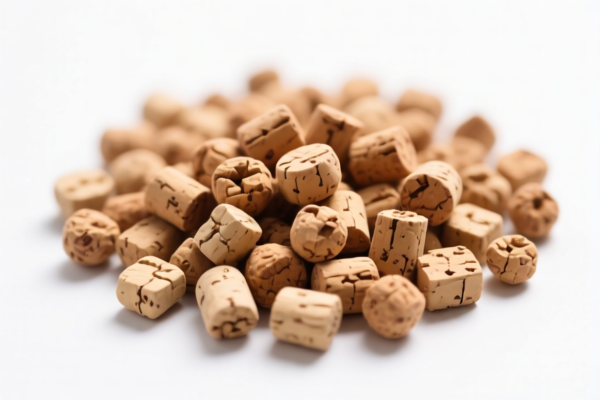
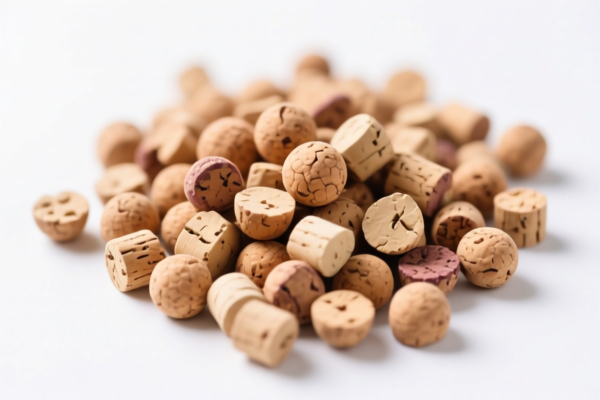
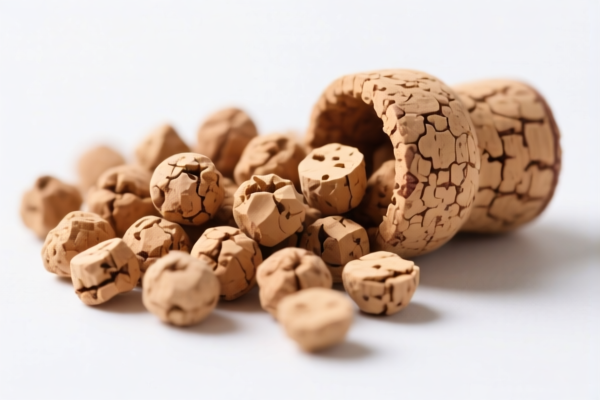
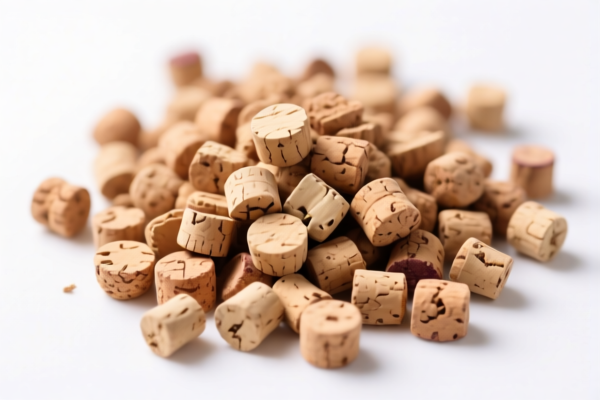
AI Analysis
🍷 Natural Cork Granules for Carving (Raw Material)
🌐 HS Code Reference & Customs Clearance Guide | 2026 Latest Tariff Analysis | Professional Clearance Strategy
📌 I. Product Definition & Classification: What Exactly is "Natural Cork Granules for Carving"?
"Natural cork granules" in the context of carvings are not the recycled cork used for wine stoppers or flooring. They are raw, processed cork particles intended for artistic or industrial carving. The key distinction lies in the processing level:
- Recycled/Agglomerated Cork: Usually bound with glue/resin. If glued, it might fall under different chapters (e.g., Chapter 48 or 95 depending on final use).
- Natural Cork Granules (Raw/Prepared): These are pieces of natural cork that have been crushed, granulated, or ground but are NOT bound with adhesives to form a solid block yet, or they are loose particles ready for compression molding by the buyer. The data provided specifically points to "Crushed, granulated or ground cork" under Heading 4501.
⚠️ Critical Distinction:
- If the material is loose granules/particles without binder → HS 4501.90.40.00
- If the material is a solid block of raw cork (even if partially shaped) → HS 4501.10.00.00
- Note: The prompt specifies "granules," which strongly aligns with the "crushed/granulated" category.
📦 II. HS Code Classification Details (2026 Latest Tariff Authority Comparison)
Based on the provided <DATA>, there are two primary HS Codes relevant to natural cork products. We must determine which fits "granules for carving."
| HS Code | Product Description | Applicability to "Granules" | Processing Level |
|---|---|---|---|
4501.90.40.00 |
Natural cork, waste cork; crushed, granulated or ground cork: Other: Crushed, granulated or ground cork | ✅ High Match | The term "granules" directly maps to "crushed, granulated or ground." This is for cork that has been mechanically broken down but is not yet in its natural, raw block form. |
4501.10.00.00 |
Natural cork, raw or simply prepared | ❌ Low Match | This refers to intact, natural cork logs or blocks that have been stripped of bark. It does not typically cover loose granules or crushed particles. Unless the "granules" are reconstituted into a block before import and declared as a "simply prepared" block, this code is less accurate for loose granules. |
🔍 Key Insight:
- "Granules" implies a processed state (crushed/granulated). Therefore,4501.90.40.00is the most accurate classification for loose natural cork granules intended for carving (where the carving or molding happens post-import or is part of a larger granule-based process).
- If the "granules" are actually compressed cork blocks shaped for carving, customs may argue for4501.10.00.00if they consider it "simply prepared." However, given the explicit word "granules,"4501.90.40.00is the safer, more precise bet.
💰 III. 2026 Latest Tariff Rate Details (Including Surtaxes)
✅ Applicable Country: United States (US)
✅ Origin: China (CN) (Assuming standard trade context based on typical tariff queries, as no origin was specified, but the "25% surtax" pattern is typical for US-China trade under Section 301)
✅ Effective Date: Ongoing (as per provided data)
🎯 1. 4501.90.40.00 —— Crushed, Granulated or Ground Cork (Granules)
| Item | Content |
|---|---|
| Base Tariff | 0.0% (ad valorem) |
| Surtax (Section 301 / Additional Duty) | +25.0% |
| Total Tariff Rate | 25.0% |
| Tax Calculation | CIF Value × 25% |
| De Minimis Exemption | ❌ Not Applicable (Usually, goods over $800 are subject; below $800 may be exempt under Section 321, but bulk imports are taxed) |
| Legal Basis Path | HTSUS: 4501.90.40.00 → Section 301 Surtax: 25% |
📌 Explanation:
- The base duty is 0%, making the tariff straightforward.
- The 25% surtax is the critical cost driver. This is consistent with the provided data for both HS codes.
- No other complex附加税 (like IEEPA) are listed in the<DATA>for this specific code, so the total is strictly 25%.
🎯 2. 4501.10.00.00 —— Natural Cork, Raw or Simply Prepared (If Misclassified or if Blocks are Imported)
| Item | Content |
|---|---|
| Base Tariff | 0.0% (ad valorem) |
| Surtax (Section 301 / Additional Duty) | +25.0% |
| Total Tariff Rate | 25.0% |
| Tax Calculation | CIF Value × 25% |
| De Minimis Exemption | ❌ Not Applicable |
| Legal Basis Path | HTSUS: 4501.10.00.00 → Section 301 Surtax: 25% |
📌 Note:
- Even if the importer chooses to classify loose granules as "raw cork" (risky), the tax rate remains identical at 25%.
- This highlights that misclassification here has no tax benefit, only legal risk.
🛠️ IV. Customs Clearance Practical Advice (Real-World Pitfall Guide)
✅ 1. Required Documentation Checklist
| Document | Mandatory? | Explanation |
|---|---|---|
| ✅ Commercial Invoice | ✔️ | Must clearly state "Natural Cork Granules, Crushed/Granulated" and not just "Cork." |
| ✅ Packing List | ✔️ | Specify weight of net/cork and gross weight. |
| ✅ Certificate of Origin (CO) | ✔️ | If claiming any potential exemptions (though unlikely with 25% surtax), a CO is standard. |
| ✅ Product Description | ✔️ | Include: "Natural cork, granulated, for carving purposes, not bound with resin." |
| ✅ Photos | ✔️ | Show the texture (loose granules vs. compressed blocks). |
✅ 2. Declaration Tips (Key Mnemonics)
🔥 “Granules = 4501.90, Raw Blocks = 4501.10, Tax is 25% Either Way!”
| Scenario | Correct Declaration | Incorrect Declaration |
|---|---|---|
| Loose Cork Granules | 4501.90.40.00 - "Natural cork, granulated" |
4501.10.00.00 - "Raw Cork" (Risk of correction) |
| Compressed Cork Blocks | 4501.10.00.00 - "Raw cork, simply prepared" |
4501.90.40.00 - "Granules" (Under-declaring value/type) |
| Cork Stoppers (Finished) | Chapter 45 or 95 (depending on type) | 4501.xx (Wrong chapter) |
✅ 3. Special Handling for Carving Material
- No Glue/Resin: Ensure the shipment does not contain any binding agents. If it’s glued, it may be considered "reconstituted cork," which could fall under Chapter 48 (paper/pulp products) or Chapter 39 (plastics/resins), leading to different HS codes and potentially different tariffs.
- Pest Control: Cork is organic. Customs may require a Phytosanitary Certificate or proof of treatment to prevent pest infestation.
- Value Declaration: Declare the CIF value accurately. The 25% tax is significant, and under-declaring value can lead to severe penalties.
🌍 V. Global Market Comparison (2026 Latest)
| Country/Region | Recommended HS Code | Tariff Rate | Notes |
|---|---|---|---|
| 🇺🇸 USA | 4501.90.40.00 |
25% | High surtax. Must declare as "granulated." |
| 🇨🇳 China | 4501.90.40.00 |
5-10% | Import duty is lower, but check for VAT. |
| 🇪🇺 EU | 4501.90.40.00 |
0% | Generally duty-free for natural cork, but check for VAT. |
| 🇬🇧 UK | 4501.90.40.00 |
0% | Post-Brexit tariff may still be 0% for natural cork. |
📌 Conclusion:
- USA is the most costly market due to the 25% surtax.
- EU/UK are favorable markets with 0% duty.
- If you are shipping to the US, factor the 25% tax into your pricing model.
📌 VI. Common Mistakes & Pitfalls (Lessons Learned)
❌ Mistake 1: Declaring "Granules" as "Raw Cork Blocks" (4501.10.00.00)
👉 Consequence: Customs may reject the classification if physical inspection shows loose granules. Risk of delay, re-filing, and penalties.
👉 Tax Impact: No change (still 25%), but compliance risk is high.
❌ Mistake 2: Failing to disclose "Granulated" status, leading to classification as "Finished Cork Products"
👉 Consequence: If classified as a finished good (e.g., stoppers), the HS code might be different (e.g., 4503.00), potentially with different surtaxes.
👉 Tax Impact: Could be higher or lower, but misdeclaration is fraudulent.
❌ Mistake 3: Ignoring Phytosanitary Requirements
👉 Consequence: Shipment held at port for pest inspection.
👉 Tax Impact: Storage fees and demurrage charges.
✅ Correct Practice:
"Natural Cork Granules, Crushed/Granulated, 100% Natural, No Binders, for Carving/Compression Use"
🎯 VII. Conclusion: Professional Declaration Saves Time and Money!
🎯 Remember the Golden Rule:
🔹 "Granules = 4501.90.40.00 | Raw Blocks = 4501.10.00.00 | Tax = 25% Either Way!"
🔹 "Declare as 'Granulated' to match4501.90.40.00. Do not overcomplicate with 'Raw' if it's not a block."
📌 Pro Tip:
If you are shipping large volumes to the US, consider applying for a Section 301 Exclusion if available (though rare for raw cork). Alternatively, explore origin shifting to non-China countries (e.g., Portugal, Spain) to avoid the 25% surtax.
📣 Immediate Action:
📞 Consult with a licensed customs broker.
🚀 Provide photos of the granules and specifications to confirm no binders are used.
💼 Ensure your invoice clearly states 'Granulated Cork' to avoid customs queries.
✨ Professional Customs Clearance Starts with Accurate Classification!
💼 Every Percentage Point Counts in International Trade!
Customer Reviews
About HS Code Classification
The Harmonized System (HS) is an internationally standardized nomenclature developed by the World Customs Organization (WCO) to classify traded products. Over 200 countries use the HS system as the basis for customs tariffs, trade statistics, and import/export regulations.
Each HS code follows a hierarchical structure:
- Chapter (2 digits) — Broad category of goods (e.g., Chapter 84: Machinery and Mechanical Appliances)
- Heading (4 digits) — More specific grouping within the chapter
- Subheading (6 digits) — Internationally standardized breakdown, used by all WCO member countries
- National subdivisions (8-10 digits) — Country-specific extensions for further classification, such as US HTSUS 10-digit codes
Correct HS code classification is essential for smooth customs clearance, accurate duty payment, and compliance with trade regulations. Misclassification can lead to customs delays, overpayment of duties, or penalties.
When importing from CN to US, the applicable tariff rates may include:
- Most-Favored-Nation (MFN) rate — The standard duty rate applied to WTO members
- General rate — Applied to countries without trade agreements
- Trade remedy duties — Additional tariffs such as Section 301 (anti-dumping), Section 232 (national security), or countervailing duties
The information provided on this page is for reference purposes only. For official classification, please consult with your local customs authority or a licensed customs broker.