natural full grain cowhide lining leather
CN → US| HS Code | Tariff Rate | Origin | Destination | Doc |
|---|---|---|---|---|
| 4113903000 | 38.3% | CN | US | Official Doc |
| 4115100000 | 35.0% | CN | US | Official Doc |
| 4113906000 | 36.6% | CN | US | Official Doc |
| 4107191040 | 35.0% | CN | US | Official Doc |
| 4107111040 | 35.0% | CN | US | Official Doc |
Product Images
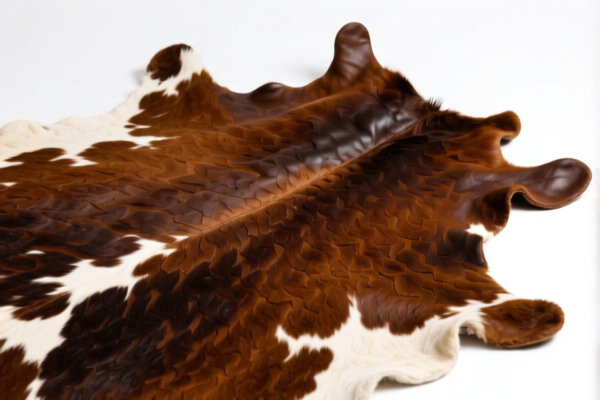
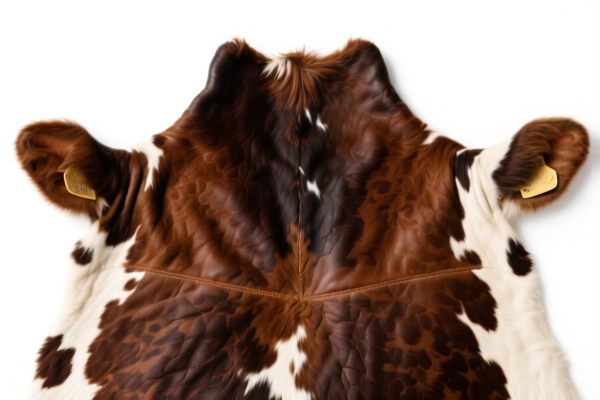
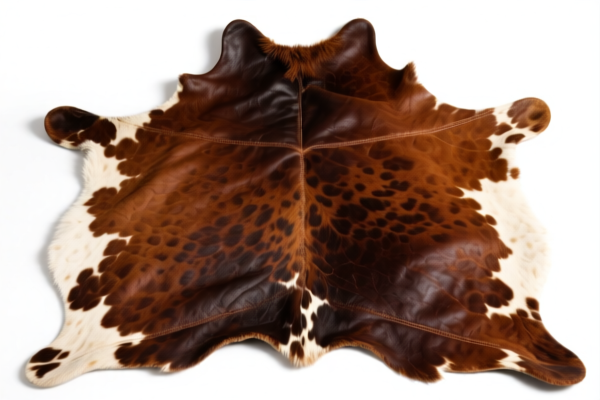
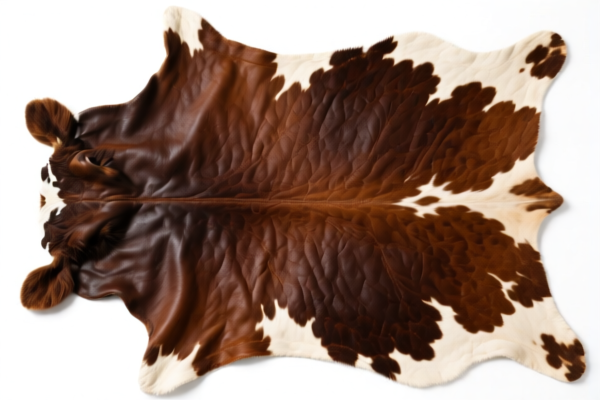
AI Analysis
🐂 Natural Full Grain Cowhide Lining Leather
🌐 HS Code Reference & Customs Clearance Guide | 2026 Latest Tariff Analysis | Professional通关 Strategy for "Lining Leather"
📌 I. Product Definition & Classification: What Exactly is "Lining Leather"?
Natural Full Grain Cowhide Lining Leather is a specialized type of leather used primarily as an inner lining in footwear, bags, and apparel. Unlike top-grain leather used for the exterior, lining leather prioritizes softness, breathability, and durability on the inside.
In international trade, the classification hinges on two critical factors: 1. Physical Form: Is it just a processed hide (raw material), or is it a finished product like "fancy leather" or "composite leather"? 2. Specific Usage: Does it fit the legal definition of "Lining Leather" (衬里革) under Chapter 41 notes?
⚠️ Key Distinction:
- If it is a specialized lining meeting specific thickness/softness criteria for inner use → Likely 4107.19.10.40 or 4107.11.10.40.
- If it is generic processed cowhide without specific "lining" designation → Could fall under 4113.90 (Other processed leather) or 4115.10 (Composite leather base).
- Crucial Note: The term "Lining" (内衬/衬里) is a legal classifier. If the product does not meet the strict definition of "Lining Leather" in the Harmonized System, it cannot use the favorable rates associated with HS codes ending in .10.40.
📦 II. HS Code Classification Details (2026 Latest Tariff Mapping)
| HS Code | Product Description | Key Classification Logic | Tax Rate Context |
|---|---|---|---|
4113.90.30.00 |
Other processed bovine leather (General Category) | Classified as "Other animal leather" (其他动物皮革). No specific "lining" status claimed. | 38.3% |
4115.10.00.00 |
Composite Leather Base/Sheets (复合皮革基底) | Classified as the base material for composite leather. Used if the product is a sheet for further processing into composite leather. | 35.0% |
4113.90.60.00 |
Fancy Leather (花式皮革) | Classified as "Fancy leather" (花式皮革). Applies if the leather has specific decorative finishes or textures distinct from plain lining. | 36.6% |
4107.19.10.40 |
Lining Leather (衬里皮) | Best Fit for Specific Use. Fully complies with classification limits for "Lining Leather" (用途为衬里皮). | 35.0% |
4107.11.10.40 |
Full-Grain Lining Leather (全粒面内衬革) | Best Fit for Material + Use. Matches key elements: Full-grain material (材质为牛皮全粒面) + Lining purpose (用途为内衬/衬里革). | 35.0% |
🔍 Critical Analysis:
- Codes4107.19.10.40&4107.11.10.40are the most accurate for "Lining Leather" if the product is specifically manufactured and declared as such. They offer a lower total tax (35.0%) compared to the generic4113.90.30.00(38.3%).
- Codes4113.90.30.00,4115.10.00.00,4113.90.60.00are fallback categories. Use them only if the product cannot be legally proven to be "Lining Leather" or if it is processed into "Fancy Leather" or "Composite Base."
💰 III. 2026 Tariff Rate Breakdown (Detailed Tax Policy)
✅ Applicable Country: United States (US)
✅ Origin: China (CN)
✅ Effective Date: From November 10, 2025 (and subsequent imports)
🎯 1. 4113.90.30.00 – Other Processed Bovine Leather
| Item | Details |
|---|---|
| Base Tariff | 3.3% (ad valorem) |
| Section 301 Surcharge | +25.0% |
| IEEPA Surcharge (Section 122) | +10.0% |
| Total Effective Tax Rate | 38.3% |
| Calculation Basis | CIF Value × 38.3% |
| De Minimis Eligibility | ❌ Not Eligible (deny_de_minimis) |
| Legal Basis Path | USITC:4113.90.30.00 → FOOTNOTE:301 → IEEPA:9903.01.24 |
📌 Explanation:
- This is a generic classification. The 3.3% base rate is low, but the 35% combined surcharges make it expensive.
- Risk: If you claim this but the goods are clearly "Lining Leather," customs may reclassify them to4107..., potentially changing duty liability and triggering audits.
🎯 2. 4115.10.00.00 – Composite Leather Base
| Item | Details |
|---|---|
| Base Tariff | 0.0% (ad valorem) |
| Section 301 Surcharge | +25.0% |
| IEEPA Surcharge (Section 122) | +10.0% |
| Total Effective Tax Rate | 35.0% |
| Calculation Basis | CIF Value × 35.0% |
| De Minimis Eligibility | ❌ Not Eligible |
| Legal Basis Path | USITC:4115.10.00.00 → FOOTNOTE:301 → IEEPA:9903.01.24 |
📌 Explanation:
- Lower base rate (0%) helps, but the same high surcharges apply.
- Only use if the product is technically a "base material" for composite leather, not a finished lining.
🎯 3. 4113.90.60.00 – Fancy Leather
| Item | Details |
|---|---|
| Base Tariff | 1.6% (ad valorem) |
| Section 301 Surcharge | +25.0% |
| IEEPA Surcharge (Section 122) | +10.0% |
| Total Effective Tax Rate | 36.6% |
| Calculation Basis | CIF Value × 36.6% |
| De Minimis Eligibility | ❌ Not Eligible |
| Legal Basis Path | USITC:4113.90.60.00 → FOOTNOTE:301 → IEEPA:9903.01.24 |
📌 Explanation:
- Middle ground. Useful if the leather has a distinct "fancy" finish (e.g., embossed, patterned) that disqualifies it from being plain "lining leather."
🎯 4. 4107.19.10.40 & 4107.11.10.40 – Lining Leather (Recommended)
| Item | Details |
|---|---|
| Base Tariff | 0.0% (ad valorem) |
| Section 301 Surcharge | +25.0% |
| IEEPA Surcharge (Section 122) | +10.0% |
| Total Effective Tax Rate | 35.0% |
| Calculation Basis | CIF Value × 35.0% |
| De Minimis Eligibility | ❌ Not Eligible |
| Legal Basis Path | USITC:4107.19.10.40 / 4107.11.10.40 → FOOTNOTE:301 → IEEPA:9903.01.24 |
📌 Explanation:
- Best Value: Same total rate as4115.10.00.00(35.0%) but correctly classified for the product's specific use.
- Compliance: Using these codes requires proving the product is intended and used as "Lining Leather." Misclassification here is a major audit risk if the goods are used for exterior purposes.
🛠️ IV. Customs Clearance Practical Advice (Avoiding Pitfalls)
✅ 1. Documentation Checklist (Mandatory)
| Document | Required? | Why? |
|---|---|---|
| ✅ Product Specification Sheet | ✔️ | Must explicitly state "Lining Leather," "For Interior Use," and physical properties (thickness, softness). |
| ✅ Material Declaration | ✔️ | Confirm "100% Natural Full Grain Cowhide" (牛皮全粒面). |
| ✅ Commercial Invoice | ✔️ | Description must match HS code: "Natural Full Grain Cowhide Lining Leather, for footwear/bag lining." |
| ✅ Usage Confirmation Letter | ✔️ | From the buyer, confirming the leather will be used internally as a lining, not on the exterior. |
| ✅ Photos of Product & Finished Good | ✔️ | Show the leather alone AND how it looks when sewn inside a shoe/bag to prove "lining" function. |
| ✅ Certificate of Origin | ✔️ | Required for US origin determination. |
✅ 2. Classification Strategy (Key Mantra)
🔥 "Use Determines Code, Lining = 4107, Generic = 4113"
| Scenario | Correct HS Code | Risk if Wrong |
|---|---|---|
| Product is explicitly for inner lining | 4107.19.10.40 or 4107.11.10.40 |
If classified as 4113.90.30.00 (38.3%), you overpay by 3.3%. If classified as 4113.90.60.00 (36.6%), you overpay by 1.6%. |
| Product is generic processed cowhide (no specific lining use) | 4113.90.30.00 |
If declared as "Lining" but used externally, customs may penalize for false declaration. |
| Product is a base for composite leather | 4115.10.00.00 |
Cannot be used as finished lining directly. |
📌 Warning:
- Do NOT use4107...codes if the leather is intended for exterior use. Customs will reject this, leading to reclassification, fines, and delays.
- The term "Full Grain" (全粒面) is a material characteristic, not a usage characteristic. It supports the4107.11...code but doesn't override the "Lining" requirement.
✅ 3. Special Handling Tips
| Situation | Recommendation |
|---|---|
| Mixed Shipments | If a shipment contains both lining leather and exterior leather, separate them on the commercial invoice. Do not lump them under one HS code. |
| Sample Shipments | Even small samples are subject to the 35%-38.3% tariff. Do not use "Gift" or "Sample" to avoid taxes unless the value is below the de minimis threshold (which is denied for these codes anyway). |
| Pre-Ruling Application | Given the high stakes of "Lining" vs. "Other" classification, consider applying for an Advance Ruling from CBP if this is a high-volume trade. |
🌍 V. Global Market Comparison (2026)
| Country/Region | Recommended HS Code | Tariff (China Origin) | Notes |
|---|---|---|---|
| 🇺🇸 USA | 4107.11.10.40 / 4107.19.10.40 |
35.0% | Highest cost due to 35% surcharges. Section 301 & IEEPA apply. |
| 🇨🇳 China | 4107.11.10.40 |
0% - 5% (VAT + Tariff) | No Section 301 taxes. Favorable for import. |
| 🇪🇺 EU | 4107.11.10 |
0% - 6% | No Section 301. Standard EU duties apply. |
| 🇬🇧 UK | 4107.11.10 |
0% - 6% | Post-Brexit rules, but generally lower than US. |
| 🇦🇺 Australia | 4107.11.10 |
5% | No Section 301. |
📌 Conclusion:
- The USA is the most expensive market for this product due to the layered tariffs (Base + 301 + IEEPA).
- Cost Saving Tip: If possible, source lining leather from non-China origins (e.g., Italy, Brazil) to avoid Section 301/IEEPA surcharges, potentially reducing the tariff burden significantly.
📌 VI. Common Mistakes & Pitfalls (Blood & Tears Lessons)
❌ Mistake 1: Declaring "Leather" generically as 4104 or 4105 (Chrom/Tanned) without specifying "Lining"
👉 Consequence: May be audited for misclassification. If deemed "Exterior Leather," duties might change, and you lose the "Lining" benefit.
❌ Mistake 2: Using 4113.90.30.00 (38.3%) when 4107.11.10.40 (35.0%) is applicable
👉 Consequence: Overpaying by 3.3% on every shipment. For large volumes, this is significant waste.
❌ Mistake 3: Claiming "Lining Leather" for product used on the outside of a bag
👉 Consequence: Customs Fraud. Severe fines, seizure of goods, and blacklisting of the importer.
✅ Correct Practice:
"Natural Full Grain Cowhide Lining Leather, 0.8mm thick, dyed black, for use as inner lining of women's shoes. HS Code: 4107.11.10.40."
🎯 VII. Conclusion: Precision Classification for Cost Control
🎯 Key Takeaway:
🔹 "If it's for the inside, use 4107. If it's for the outside, use 4113."
🔹 "35% vs 38.3% – A 3.3% difference that adds up to thousands!"
🔹 "No De Minimis – All shipments are taxed."
📌 Pro Tip:
- Ensure your Commercial Invoice clearly states "Lining Leather".
- Provide photos showing the leather being used inside a product.
- Consider pre-classification with a customs broker if your volume is high.
📣 Immediate Action:
📞 Contact your customs broker with the product specs and photos.
📝 Request an HS Code Pre-Ruling if shipping >$10,000 value per shipment.
🚀 Optimize your supply chain – Can you source lining leather from outside China to avoid the 35% US surcharge?
✨ Professional Customs Clearance Starts with Accurate Classification!
💼 Every Percentage Point Saved is Pure Profit!
Customer Reviews
About HS Code Classification
The Harmonized System (HS) is an internationally standardized nomenclature developed by the World Customs Organization (WCO) to classify traded products. Over 200 countries use the HS system as the basis for customs tariffs, trade statistics, and import/export regulations.
Each HS code follows a hierarchical structure:
- Chapter (2 digits) — Broad category of goods (e.g., Chapter 84: Machinery and Mechanical Appliances)
- Heading (4 digits) — More specific grouping within the chapter
- Subheading (6 digits) — Internationally standardized breakdown, used by all WCO member countries
- National subdivisions (8-10 digits) — Country-specific extensions for further classification, such as US HTSUS 10-digit codes
Correct HS code classification is essential for smooth customs clearance, accurate duty payment, and compliance with trade regulations. Misclassification can lead to customs delays, overpayment of duties, or penalties.
When importing from CN to US, the applicable tariff rates may include:
- Most-Favored-Nation (MFN) rate — The standard duty rate applied to WTO members
- General rate — Applied to countries without trade agreements
- Trade remedy duties — Additional tariffs such as Section 301 (anti-dumping), Section 232 (national security), or countervailing duties
The information provided on this page is for reference purposes only. For official classification, please consult with your local customs authority or a licensed customs broker.