natural rubber foam o ring
CN → US| HS Code | Tariff Rate | Origin | Destination | Doc |
|---|---|---|---|---|
| 4016931010 | 37.5% | CN | US | Official Doc |
| 4016910000 | 37.7% | CN | US | Official Doc |
Product Images
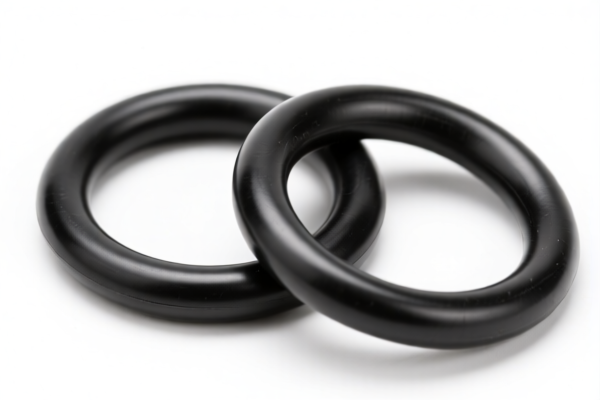
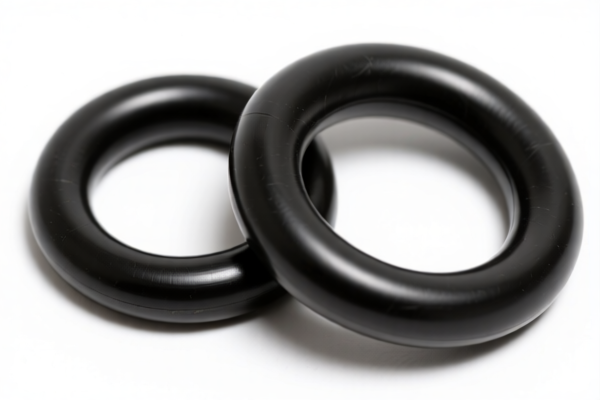
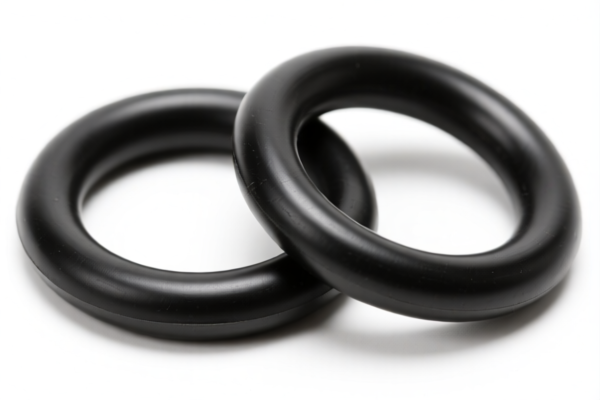
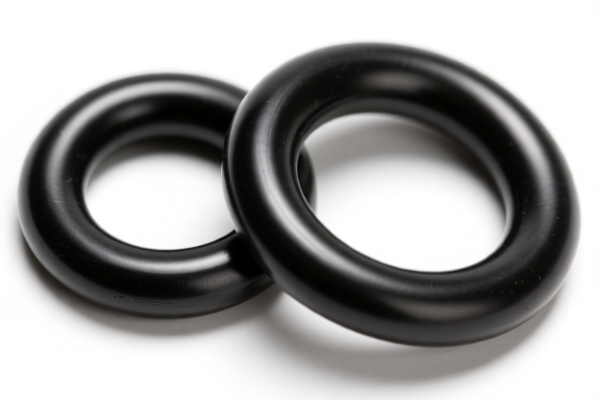
AI Analysis
🍩 O-Rings of Natural Rubber Foam (Gaskets, Washers & Seals)
🌐 HS Code Reference & Customs Clearance Guide | 2026 Latest Tariff Full Analysis | Professional Clearance Strategy
📌 1. Product Definition and Classification: Do You Really Understand "Vulcanized Rubber Articles"?
Natural Rubber Foam O-Rings are elastic sealing elements made from vulcanized natural rubber, characterized by a foamed (porous) structure. In international trade, they fall under the broad category of "Other articles of vulcanized rubber other than hard rubber."
The critical distinction for classification lies in application and form:
- Sealing Elements (O-Rings, Gaskets, Washers): Specifically designed to prevent leakage of fluids or gases in mechanical assemblies.
- Floor Coverings/Mats: Used for walking surfaces, protection, or decoration.
⚠️ Key Distinction:
- If the product is an O-Ring, Gasket, or Seal used in machinery or vehicles → It belongs to the "Seals" sub-category.
- If it is a Mat, Carpet, or Flooring piece → It belongs to the "Floor Coverings" sub-category.
- Crucial Note for Automotive: If these O-rings are of a kind used in automotive goods (Chapter 87), they may have a more specific tariff sub-heading. However, based on the provided<DATA>, we focus on the general classification provided.
📦 2. HS Code Classification Details (2026 Latest Tariff Authoritative Comparison)
Based strictly on the provided <DATA>, there are two possible HS codes depending on the specific use/form of the foam rubber article. For an O-Ring, the primary classification is under Seals.
| HS Code | Product Description | Applicable Scenario | Tax Rate (China Origin to US) |
|---|---|---|---|
| 4016.93.10.10 | Other articles of vulcanized rubber: Gaskets, washers and other seals: Of a kind used in the automotive goods of chapter 87: O-Rings | O-Rings, seals, gaskets used in automotive applications. | 27.5% |
| 4016.91.00.00 | Other articles of vulcanized rubber: Other: Floor coverings and mats | Foam mats, floor coverings, non-sealing foam rubber sheets. | 27.7% |
🔍 Important Clarification:
- Although "Natural Rubber Foam" might sound like it could be a "Mat" (4016.91.00.00), an O-Ring is functionally a Seal.
- Therefore, 4016.93.10.10 is the correct and most precise HS code for O-Rings.
- 4016.91.00.00 is incorrect for O-Rings, unless the O-ring is being misdeclared as a "mat" (which is illegal and risks penalties).
- The tax difference is small (0.2%), but the description accuracy is critical for customs compliance.
💰 3. 2026 Latest Tariff Rate Breakdown (Detailed Tax Clause Explanation)
✅ Applicable Country: United States (US)
✅ Origin: China (CN)
✅ Effective Time: 2025/2026 (Current Trade Policy Context)
🎯 1. 4016.93.10.10 — O-Rings (Automotive Seals)
| Item | Content |
|---|---|
| Basic Tariff Rate | 2.5% (Ad Valorem) |
| Section 301 Additional Tariff | +25.0% (Due to US-China Trade War) |
| Total Effective Tariff | 27.5% |
| Tax Calculation Basis | CIF Value (Cost, Insurance, Freight) × 27.5% |
| De Minimis Eligibility | ❌ Not Eligible (High-value rubber goods typically excluded or subject to strict scrutiny) |
| Legal Basis Path | HTSUS: 4016.93.10.10 → Section 301 Footnote: 9903.88.01 → IEEPA: 9903.01.24 |
📌 Explanation:
- Base Rate (2.5%): This is the standard Most Favored Nation (MFN) rate for rubber seals under HTS 4016.93.
- Additional Tariff (25.0%): Imposed under Section 301 of the Trade Act of 1974 against Chinese imports. This applies to "Other articles of vulcanized rubber" (Chapter 40).
- Total Tax (27.5%): This is the final landed cost multiplier for customs duties. It does not include VAT, excise taxes, or port fees.
🎯 2. 4016.91.00.00 — Floor Coverings and Mats (If Misclassified or Misused)
| Item | Content |
|---|---|
| Basic Tariff Rate | 2.7% |
| Section 301 Additional Tariff | +25.0% |
| Total Effective Tariff | 27.7% |
| Tax Calculation Basis | CIF Value × 27.7% |
| De Minimis Eligibility | ❌ Not Eligible |
| Legal Basis Path | HTSUS: 4016.91.00.00 → Section 301 Footnote: 9903.88.01 |
📌 Note: While the rate is slightly higher, classifying an O-Ring as a "Floor Mat" is a customs violation and can lead to fines, cargo hold, or legal action.
🛠️ 4. Customs Clearance Practical Advice (Real-World Pitfall Avoidance Guide)
✅ 1. Required Documentation Checklist (All Mandatory)
| Document | Required | Explanation |
|---|---|---|
| ✅ Product Specification Sheet | ✔️ | Must clearly state: Material (Natural Rubber Foam), Shape (O-Ring), Diameter, Cross-section, Shore Hardness, Durometer. |
| ✅ Product Photographs | ✔️ | Clear images showing the cross-section (foam structure) and the O-ring shape. Label must show "O-Ring" or "Seal". |
| ✅ Commercial Invoice | ✔️ | Description must read: "O-Ring, Vulcanized Natural Rubber Foam, For Automotive Seal". Avoid vague terms like "Rubber Part". |
| ✅ Certificate of Origin (CO) | ✔️ | Proves Chinese origin (triggers 25% additional tax). |
| ✅ Packing List | ✔️ | Details quantity, weight, and packaging. |
| ✅ Test Report | ✔️ | Optional but helpful: ASTM D2000 standard compliance report to prove material composition. |
✅ 2. Declaration Tips (Critical Keywords)
🔥 "Declare the Function, Not Just the Material!"
| Scenario | Correct Declaration | Incorrect Declaration | Consequence |
|---|---|---|---|
| Automotive O-Ring | 4016.93.10.10 "O-Ring, Natural Rubber Foam, Seal" |
4016.91.00.00 "Rubber Mat" |
Customs Penalty for misdeclaration; potential duty fraud investigation. |
| General Industrial Seal | 4016.93.10.10 "Gasket/Seal, Rubber" |
4016.99.00.00 "Other Rubber Articles" |
Overpayment (if 4016.93.10.10 is lower) or Underpayment if wrong rate applied. |
| Foam Sheet (Not O-Ring) | 4016.91.00.00 "Rubber Foam Mat" |
4016.93.10.10 "O-Ring" |
Customs Hold for inspection; delay in clearance. |
✅ 3. Special Situation Handling
| Situation | Handling Advice |
|---|---|
| OEM Custom O-Rings | Provide customer PO + technical drawing. Ensure description matches the drawing (e.g., "Custom O-Ring, ID 50mm, Section 3mm"). |
| Foam vs. Solid Rubber | Clearly specify "Foam" in the description. Foam rubber may have different physical properties, but the HS code for seals (4016.93) applies to both foam and solid if used as seals. |
| Mixed Shipments | If shipping both O-Rings and Foam Mats in one container, separate them in the commercial invoice with distinct HS codes to avoid cross-contamination of duties. |
| Chapter 87 Reference | If the O-Rings are exclusively for automotive use, ensure the invoice explicitly states "For Use in Automotive Goods of Chapter 87" to support the 4016.93.10.10 classification. |
🌍 5. Global Main Market Customs Comparison (2026 Latest)
| Country/Region | Recommended HS Code | Tariff Rate | Certification | Note |
|---|---|---|---|---|
| 🇺🇸 USA | 4016.93.10.10 |
27.5% (2.5% + 25%) | None Required | High duty due to Section 301. |
| 🇨🇳 China | 4016.93.10.10 |
2.5% | None Required | Import duty is low. |
| 🇪🇺 EU | 4016.93.10.00 |
0% - 3% | REACH Compliance | No Section 301 equivalent. |
| 🇬🇧 UK | 4016.93.10.00 |
0% - 3% | UKCA Marking | Post-Brexit rules apply. |
| 🇯🇵 Japan | 4016.93.10.00 |
0% | JIS Standard | Preferential rates under EPA. |
📌 Conclusion:
- USA has the highest tariff burden (27.5%) due to trade tensions.
- EU, UK, Japan have lower or zero tariffs for rubber seals.
- Consider supply chain diversification if shipping to the US to mitigate 25% additional tariffs.
📌 6. Common Errors & Pitfall Guide (Blood and Tears Lessons)
❌ Error 1: Declaring O-Rings as "Rubber Parts" (Generic)
👉 Consequence: Customs may assign a higher default rate (e.g., 4016.99) or request detailed classification, causing clearance delays.
👉 Fix: Use specific HS code 4016.93.10.10 and explicit description.
❌ Error 2: Confusing "Foam Rubber Mat" with "Foam Rubber O-Ring"
👉 Consequence: If you declare O-Rings as "Mats", you risk fraud charges. If you declare Mats as "O-Rings", you pay 27.5% instead of 27.7% (minor) but risk rejection due to mismatched description.
👉 Fix: Always match product function (Seal vs. Floor Covering) to HS code.
❌ Error 3: Ignoring "Chapter 87" Specification
👉 Consequence: If O-Rings are for automotive use but the invoice doesn't state it, customs might classify them under a different "Other Seals" sub-heading, potentially affecting duty or audit risk.
👉 Fix: Include "For Automotive Application" in the invoice description.
✅ Correct Practice:
"O-Ring, Vulcanized Natural Rubber Foam, Size: 25mm ID x 3mm Section, For Automotive Seal, HS Code: 4016.93.10.10"
🎯 7. Conclusion: Professional Declaration, Save Time, Reduce Cost!
🎯 Remember the Mantra:
🔹 "O-Ring is a Seal, not a Mat!"
🔹 "Natural Foam doesn't mean Low Tax!" (27.5% is high!)
🔹 "Specify 'Chapter 87' for Automotive O-Rings to Ensure Correct Classification."
📌 Pro Tip:
If your O-Rings are shipped in bulk rolls (not cut to shape), they might be classified differently (e.g., as rubber sheeting). Ensure they are finished articles (cut into O-rings) before shipping to qualify for 4016.93.10.10.
📣 Immediate Action:
📞 Contact your customs broker with the technical drawing and invoice draft.
🚀 Ensure the description explicitly mentions "O-Ring" and "Automotive Seal" to avoid misclassification.
💡 Your profit margin depends on precise customs classification!
✨ Professional clearance starts with accurate classification!
💼 Every percentage point of tax counts!
Customer Reviews
About HS Code Classification
The Harmonized System (HS) is an internationally standardized nomenclature developed by the World Customs Organization (WCO) to classify traded products. Over 200 countries use the HS system as the basis for customs tariffs, trade statistics, and import/export regulations.
Each HS code follows a hierarchical structure:
- Chapter (2 digits) — Broad category of goods (e.g., Chapter 84: Machinery and Mechanical Appliances)
- Heading (4 digits) — More specific grouping within the chapter
- Subheading (6 digits) — Internationally standardized breakdown, used by all WCO member countries
- National subdivisions (8-10 digits) — Country-specific extensions for further classification, such as US HTSUS 10-digit codes
Correct HS code classification is essential for smooth customs clearance, accurate duty payment, and compliance with trade regulations. Misclassification can lead to customs delays, overpayment of duties, or penalties.
When importing from CN to US, the applicable tariff rates may include:
- Most-Favored-Nation (MFN) rate — The standard duty rate applied to WTO members
- General rate — Applied to countries without trade agreements
- Trade remedy duties — Additional tariffs such as Section 301 (anti-dumping), Section 232 (national security), or countervailing duties
The information provided on this page is for reference purposes only. For official classification, please consult with your local customs authority or a licensed customs broker.