natural rubber raw material
CN → US| HS Code | Tariff Rate | Origin | Destination | Doc |
|---|---|---|---|---|
| 4002800000 | 35.0% | CN | US | Official Doc |
| 4001290000 | 35.0% | CN | US | Official Doc |
| 4001220050 | 35.0% | CN | US | Official Doc |
| 4005990000 | 35.0% | CN | US | Official Doc |
| 4005910000 | 35.0% | CN | US | Official Doc |
Product Images
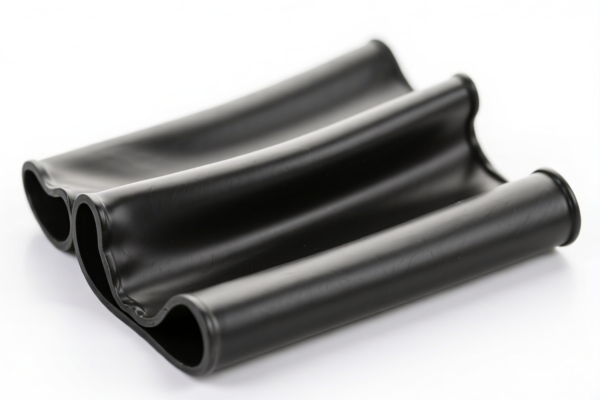
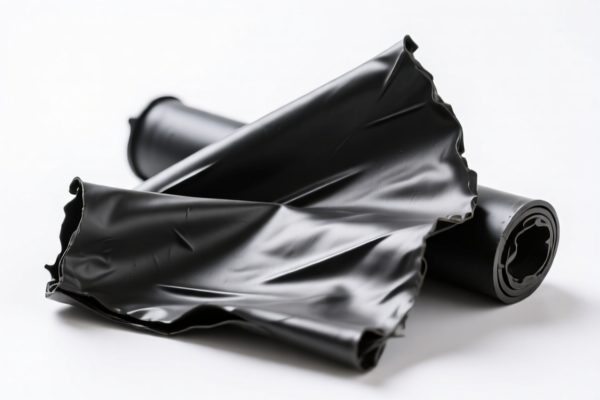
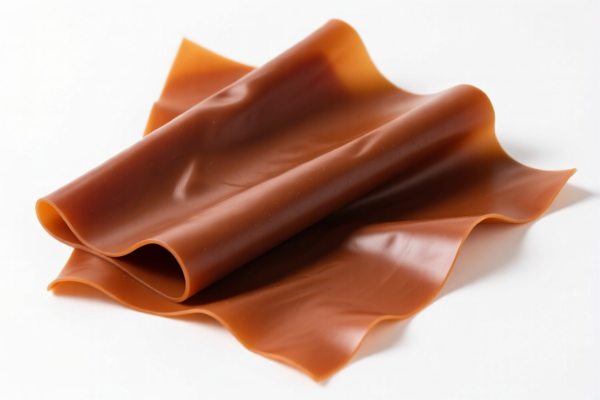
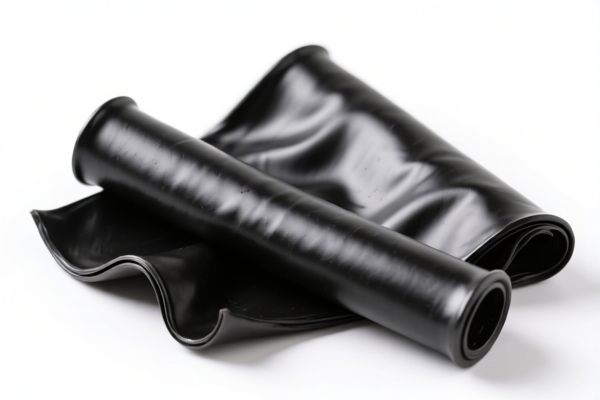
AI Analysis
🌿 Natural Rubber Raw Material (天然橡胶原料)
🌐 HS Code Reference & Customs Clearance Guide | 2026 Latest Tariff Breakdown | Professional Clearance Strategy
📌 I. Product Definition & Classification: What Exactly Is "Natural Rubber"?
Natural Rubber is a polymeric hydrocarbon resin primarily derived from the latex of Hevea brasiliensis (rubber trees). In international trade, it is not a single monolithic product but is classified based on its physical state, processing level, and composition.
It is critical to distinguish between: 1. Primary Forms (Latex & Solid Sheets): Raw material directly extracted or lightly processed from the tree. 2. Compounds & Mixtures: Natural rubber blended with synthetic rubber or compounded with additives (sulfur, accelerators, etc.), falling under "Rubber Compound" categories.
⚠️ Key Distinction Point:
- If the rubber is unvulcanized but compounded (mixed with other substances for specific properties) → It falls under Chapter 40.05 or 40.02.
- If the rubber is in its raw, primary state (latex, sheets, crumb rubber) without synthetic mixing → It falls under Chapter 40.01.
- Do not confuse "Natural Rubber Compound" (40.05) with "Pure Natural Rubber" (40.01). The tax implications differ significantly based on composition.
📦 II. HS Code Classification Details (2026 Latest Tariff Authority Reference)
| HS Code | Product Description | Application Scenario | Composition Type |
|---|---|---|---|
4002.80.00.00 |
Natural Rubber Compounds, mixtures of natural and synthetic rubber | Blended rubbers for high-performance tires, industrial hoses | ✅ Mixed (Natural + Synthetic) |
4001.29.00.00 |
Natural Rubber in primary forms, other (e.g., sheets, crumb) | Standard raw material for general rubber manufacturing | ✅ Pure Natural (Primary) |
4001.22.00.50 |
Natural Rubber in intermediate forms (e.g., stabilized latex, compacted) | Semi-processed latex, compacted rubber for specific industries | ✅ Pure Natural (Intermediate) |
4005.99.00.00 |
Rubber Compounds, other (e.g., milled rubber, non-sulfurized) | Milled rubber sheets, non-vulcanized rubber ready for further processing | ✅ Compounded (Natural-based) |
4005.91.00.00 |
Rubber Compounds, in primary forms or shapes (unvulcanized) | Unvulcanized rubber blocks, sheets, or shapes for molding | ✅ Unvulcanized Compound |
🔍 Important Note:
- Chapter 40.01 covers raw natural rubber in its basic forms (latex, sheets, crumbs).
- Chapter 40.02 covers synthetic rubber and mixtures of natural and synthetic rubber.
- Chapter 40.05 covers compounds of rubber (natural or synthetic) with additives, but not vulcanized.
- Misclassification between "Primary Form" (4001) and "Compound" (4005) can lead to customs delays or incorrect duty assessments.
💰 III. 2026 Latest Tariff Rate Breakdown (Including Additional Taxes & Policy Surcharges)
✅ Applicable Country: United States (US)
✅ Country of Origin: China (CN)
✅ Effective Date: November 10, 2025 (and subsequent imports)
🎯 1. 4002.80.00.00 —— Natural Rubber Compounds (Mixtures of Natural & Synthetic)
| Item | Detail |
|---|---|
| Base Tariff Rate | 0% (ad valorem) |
| USITC Additional Duty | +25% (Under USITC Footnote for Section 301) |
| IEEPA Additional Duty | +10% (Under International Emergency Economic Powers Act, targeting China/HK goods) |
| Total Tariff Rate | 35% |
| Tax Calculation | CIF Value × 35% |
| De Minimis Exemption Eligible? | ❌ No (deny_de_minimis applies) |
| Legal Authority Path | IEEPA:9903.01.25 → IEEPA:9903.01.24 → USITC:4002.80.00.00 → FOOTNOTE:301/122 |
📌 Explanation:
- "25% USITC Additional Duty": Result of Section 301 tariffs on Chinese goods.
- "10% IEEPA Additional Duty": Specific surcharge under the International Emergency Economic Powers Act for rubber-related imports from China.
- Total 35%: This is a high tariff, requiring precise classification to avoid penalties.
- 122 Clause: Refers to specific administrative provisions often linked to agricultural or raw material imports, adding complexity.
🎯 2. 4001.29.00.00 —— Natural Rubber, Primary Forms (Other)
| Item | Detail |
|---|---|
| Base Tariff Rate | 0% |
| USITC Additional Duty | +25% |
| IEEPA Additional Duty | +10% |
| Total Tariff Rate | 35% |
| Tax Calculation | CIF × 35% |
| De Minimis Exemption Eligible? | ❌ No |
| Legal Authority Path | IEEPA:9901.25 → IEEPA:9903.01.24 → USITC:4001.29.00.00 → FOOTNOTE:301/122 |
📌 Note:
- Includes standard smoked sheets, technical specifications (TSRs), and crumb rubber.
- Even though it is "raw," the trade tensions lead to the same 35% effective rate.
🎯 3. 4001.22.00.50 —— Natural Rubber, Intermediate Forms
| Item | Detail |
|---|---|
| Base Tariff Rate | 0% |
| USITC Additional Duty | +25% |
| IEEPA Additional Duty | +10% |
| Total Tariff Rate | 35% |
| Tax Calculation | CIF × 35% |
| De Minimis Exemption Eligible? | ❌ No |
| Legal Authority Path | IEEPA:9901.25 → IEEPA:9903.01.24 → USITC:4001.22.00.50 → FOOTNOTE:301/122 |
📌 Note:
- Applies to stabilized latex or compacted rubber that is not in final primary shape but not yet compounded.
🎯 4. 4005.99.00.00 —— Rubber Compounds (Other, e.g., Milled Rubber)
| Item | Detail |
|---|---|
| Base Tariff Rate | 0% |
| USITC Additional Duty | +25% |
| IEEPA Additional Duty | +10% |
| Total Tariff Rate | 35% |
| Tax Calculation | CIF × 35% |
| De Minimis Exemption Eligible? | ❌ No |
| Legal Authority Path | IEEPA:9903.01.25 → IEEPA:9903.01.24 → USITC:4005.99.00.00 → FOOTNOTE:301/122 |
📌 Note:
- Milled rubber (rubber processed through rollers to break down structure) is considered a "compound" in some contexts due to processing additives.
🎯 5. 4005.91.00.00 —— Rubber Compounds, Primary Forms (Unvulcanized)
| Item | Detail |
|---|---|
| Base Tariff Rate | 0% |
| USITC Additional Duty | +25% |
| IEEPA Additional Duty | +10% |
| Total Tariff Rate | 35% |
| Tax Calculation | CIF × 35% |
| De Minimis Exemption Eligible? | ❌ No |
| Legal Authority Path | IEEPA:9901.25 → IEEPA:9903.01.24 → USITC:4005.91.00.00 → FOOTNOTE:301/122 |
📌 Note:
- Includes unvulcanized rubber in blocks, sheets, or shapes, but not pure primary latex/sheets (which go to 40.01).
- Often contains plasticizers or processing oils.
🛠️ IV. Customs Clearance Practical Advice (Real-World Pitfall Guide)
✅ 1. Required Documentation Checklist (Essential)
| Document | Must Provide | Explanation |
|---|---|---|
| ✅ Product Specification Sheet | ✔️ | Detail the type of rubber (e.g., TSR 20, Latex 60%), viscosity, protein content. |
| ✅ Material Safety Data Sheet (MSDS) | ✔️ | Required for chemical handling and customs hazard assessment. |
| ✅ Certificate of Origin (CO) | ✔️ | Critical for proving origin; if from China, 35% duty applies. If from Thailand/Vietnam, potential 0% under USMCA/FTAs (check eligibility). |
| ✅ Commercial Invoice | ✔️ | Must clearly state "Natural Rubber" and HS Code. Avoid vague terms like "Rubber Sheets." |
| ✅ Packing List | ✔️ | Detail gross/net weight, number of packages, and palletization. |
| ✅ Bill of Lading/Air Waybill | ✔️ | Standard transport document. |
| ✅ Testing Report | ✔️ | Proof of composition (e.g., ASTM D129 for rubber compounds) to justify HS Code. |
✅ 2. Declaration Tips (Key Mnemonics)
🔥 “Pure is 4001, Mixed is 4002, Compounded is 4005. Don’t Mix ‘Em, or You’ll Pay 35% Plus Fines!”
| Scenario | Correct Declaration | Wrong Practice |
|---|---|---|
| Raw Latex / Smoked Sheets | 4001.29.00.00 |
Declare as "Compound" → 4005 may require more documentation. |
| Rubber Mixed with Synthetic | 4002.80.00.00 |
Declare as "Natural Rubber" → Misclassification Risk. |
| Milled Rubber with Additives | 4005.99.00.00 |
Declare as "Primary Form" → Customs may reject due to additives. |
| Unvulcanized Blocks for Molding | 4005.91.00.00 |
Declare as "Raw Material" → Ambiguous; specify "Unvulcanized Compound." |
✅ 3. Special Handling for "122 Clause" & "IEEPA"
- 122 Clause: Refers to specific administrative provisions in US Customs regulations. For rubber, this often involves anti-dumping duties (AD) or countervailing duties (CVD) checks. While the provided data shows a flat 35% (25% + 10%), always verify if Section 201 or AD/CVD orders apply to specific types of natural rubber.
- IEEPA 10%: This is a specific surcharge. Ensure your Certificate of Origin is accurate. If the rubber is processed in a third country (e.g., Vietnam) with substantial transformation, you may qualify for exemption, but natural rubber is often considered "directly originating" to the tree country.
🌍 V. Global Market Comparison (2026 Latest)
| Country/Region | Recommended HS Code | Tariff (China Origin) | Certification | Notes |
|---|---|---|---|---|
| 🇺🇸 USA | 4001.29.00.00 / 4005.99.00.00 |
35% (25% + 10%) | None Specific | High tariff; avoid de minimis. |
| 🇨🇳 China | 4001.29.00.00 |
0% - 5% (Varies) | CCC (if applicable) | Low entry barrier. |
| 🇪🇺 EU | 4001.29.00.00 |
0% (GSP) | REACH | May qualify for 0% under GSP if from eligible countries. |
| 🇦🇺 Australia | 4001.29.00.00 |
0% (ChAFTA) | None | Free trade agreement benefits. |
| 🇯🇵 Japan | 4001.29.00.00 |
0% (JTEPA) | None | Free trade agreement benefits. |
📌 Conclusion:
- USA is the most expensive market for Chinese natural rubber due to the 35% effective tariff.
- EU, Australia, and Japan offer 0% tariffs under Free Trade Agreements (FTAs), provided the origin criteria are met.
- Strategy: If exporting to the US, consider supply chain diversification (e.g., sourcing from Thailand, Indonesia, or Vietnam) to mitigate the 35% cost.
📌 VI. Common Mistakes & Pitfall Guide (Lessons Learned)
❌ Mistake 1: Declaring "Compound Rubber" as "Raw Natural Rubber" (4001)
👉 Consequence: Customs may reclassify to 4005, adding complexity and potential penalties for misdeclaration.
👉 Fix: Provide ASTM test reports showing composition.
❌ Mistake 2: Assuming "De Minimis" applies to rubber shipments under $800
👉 Consequence: Denied. Rubber is explicitly excluded from de minimis exemptions for Chinese goods under current trade policies.
👉 Fix: Pay full 35% duty on all shipments, regardless of value.
❌ Mistake 3: Ignoring the "122 Clause"
👉 Consequence: Customs may hold the shipment for additional review, leading to storage fees and delays.
👉 Fix: Pre-clear with a customs broker and provide all origin and composition documentation.
✅ Correct Practice:
"TSR 20 Natural Rubber, Unvulcanized, in Bales, Origin: China, HS Code: 4001.29.00.00, CIF: $X, Duty: 35%"
🎯 VII. Conclusion: Precision in Classification Saves Money
🎯 Key Takeaway:
🔹 "Pure is 4001, Mixed is 4002, Compounded is 4005. All 35% in the US!"
🔹 "De Minimis is Dead for Rubber; Plan for Full Duty."
🔹 "Origin is Key: Consider Southeast Asia for US Market to Avoid Tariffs."
📌 Pro Tip:
If your natural rubber is sourced from Thailand, Indonesia, or Vietnam, you may be eligible for 0% tariffs under USMCA or other FTAs, or at least avoid the IEEPA surcharge if substantial transformation occurs.
Recommendation: Apply for an Advance Ruling from U.S. Customs and Border Protection (CBP) to confirm the correct HS Code and duty rate before shipment.
📣 Immediate Action:
📞 Contact a Licensed Customs Broker + Provide Test Reports + Apply for HS Code Advance Ruling
🚀 Ensure your Natural Rubber flows smoothly, compliantly, and cost-effectively!
✨ Professional Customs Clearance Starts with Accurate Classification!
💼 Every Dollar of Duty Saved is Pure Profit!
Customer Reviews
About HS Code Classification
The Harmonized System (HS) is an internationally standardized nomenclature developed by the World Customs Organization (WCO) to classify traded products. Over 200 countries use the HS system as the basis for customs tariffs, trade statistics, and import/export regulations.
Each HS code follows a hierarchical structure:
- Chapter (2 digits) — Broad category of goods (e.g., Chapter 84: Machinery and Mechanical Appliances)
- Heading (4 digits) — More specific grouping within the chapter
- Subheading (6 digits) — Internationally standardized breakdown, used by all WCO member countries
- National subdivisions (8-10 digits) — Country-specific extensions for further classification, such as US HTSUS 10-digit codes
Correct HS code classification is essential for smooth customs clearance, accurate duty payment, and compliance with trade regulations. Misclassification can lead to customs delays, overpayment of duties, or penalties.
When importing from CN to US, the applicable tariff rates may include:
- Most-Favored-Nation (MFN) rate — The standard duty rate applied to WTO members
- General rate — Applied to countries without trade agreements
- Trade remedy duties — Additional tariffs such as Section 301 (anti-dumping), Section 232 (national security), or countervailing duties
The information provided on this page is for reference purposes only. For official classification, please consult with your local customs authority or a licensed customs broker.