neck massager
CN → US| HS Code | Tariff Rate | Origin | Destination | Doc |
|---|---|---|---|---|
| 9019102020 | 10.0% | CN | US | Official Doc |
| 8543708500 | 35.0% | CN | US | Official Doc |
| 8543709860 | 37.6% | CN | US | Official Doc |
| 8509805095 | 14.2% | CN | US | Official Doc |
| 8509805080 | 14.2% | CN | US | Official Doc |
Product Images
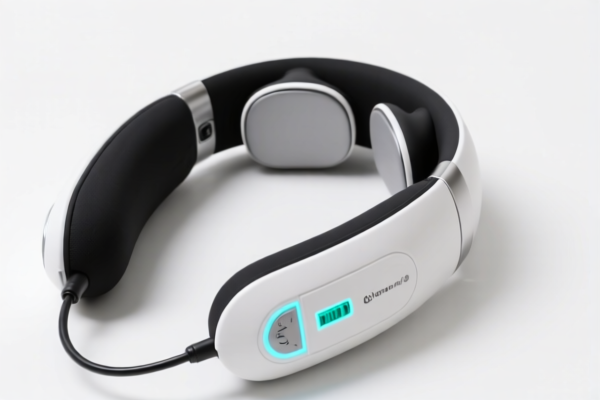
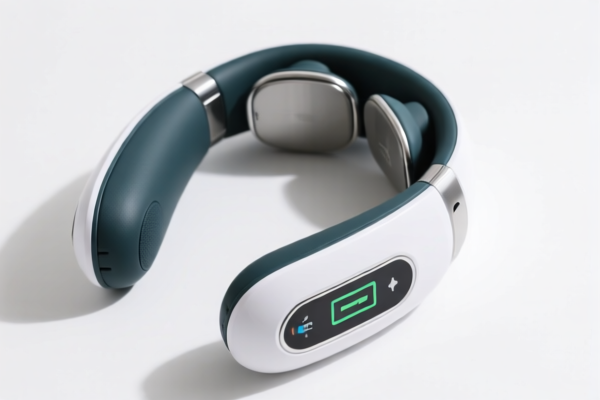
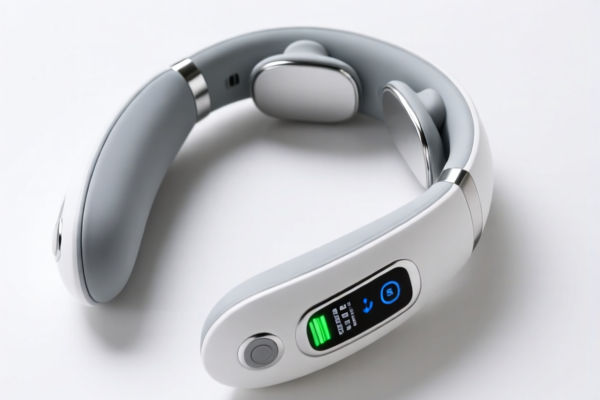

AI Analysis
💆♂️ Neck Massager (颈部按摩仪)
🌐 HS Code Reference & Customs Clearance Guide | 2026 Latest Tariff Analysis | Professional Clearance Strategy
📌 I. Product Definition & Classification: What Exactly is a "Neck Massager"?
The Neck Massager is a consumer health and wellness device designed to alleviate muscle tension, pain, and fatigue in the neck area. In international trade, these devices are typically categorized based on their operating principle (mechanical vs. electrical stimulation) and functionality.
There are two primary types often encountered in customs declarations: 1. Mechanical/Electric Vibration Massagers: Devices with motors, gears, or rollers that physically knead or vibrate the muscles. These are often classified under household appliances or specific medical/health apparatus. 2. TENS/EMS Units (Electrical Stimulators): Devices that use low-voltage electrical currents to stimulate nerves and muscles. These fall under electrical machinery or apparatus for therapeutic purposes.
⚠️ Key Distinction Point:
- If the device primarily uses physical movement (vibration, kneading, air pressure) → Look at 9019 (Mechanical Therapy) or 8509 (Household Appliances).
- If the device primarily uses electrical impulses (TENS/EMS) → Look at 8543 (Electrical Apparatus).
- Misclassification Risk: Declaring a TENS unit as a "Health Appliance" (9019) to avoid tariffs, when it functions as an electrical stimulator (8543), can lead to severe penalties due to the significant tariff difference (especially under Section 301/IEEPA duties).
📦 II. HS Code Classification Details (Based on Provided Data)
Based on the provided dataset, the Neck Massager is classified into five potential HS Codes. Below is the detailed breakdown of why each code applies and its corresponding tax implications.
| HS Code | Classification Logic & Summary | Total Tax Rate | Tax Detail Breakdown |
|---|---|---|---|
| 9019.10.20.20 | Mechanical/Massage Apparatus: Matches the purpose (massage instrument) and form factor (common handheld/electric massager shape). No conflict with material or structure. | 10.0% | Base Tariff: 0.0% Addl. Tariff: 0.0% Section 301 (122 Clause): 10% |
| 8543.70.85.00 | Electrical Nerve Stimulator: Matches purpose (electrical/mechanical stimulation of nerves/muscles). Fits the definition of "Electrical Nerve Stimulation Equipment." No material conflict. | 35.0% | Base Tariff: 0.0% Addl. Tariff: 25.0% Section 301 (122 Clause): 10% |
| 8543.70.98.60 | General Electrical Apparatus: Classified as a "Machine or Apparatus" with independent function. Based on common sense, it is an electronic appliance fitting this "other machinery" catch-all category. No material/form conflict. | 37.6% | Base Tariff: 2.6% Addl. Tariff: 25.0% Section 301 (122 Clause): 10% |
| 8509.80.50.95 | Household Electrical Appliance: Classified as a household appliance with a built-in electric motor. Purpose (massage) falls under "Other Electrical Appliances." Excludes specific items like electric toothbrushes or humidifiers. No material conflict. | 14.2% | Base Tariff: 4.2% Addl. Tariff: 0.0% Section 301 (122 Clause): 10% |
| 8509.80.50.80 | Household Electrical Appliance (Other): Similar to above, classified as a mechanical/electrical household appliance. "Massage" is considered a reasonable extension of "Other" categories within humidifier-like classifications if not evaporative/ultrasonic. | 14.2% | Base Tariff: 4.2% Addl. Tariff: 0.0% Section 301 (122 Clause): 10% |
💰 III. 2026 Latest Tariff Rate Details (Including Surcharges & Policy Add-ons)
✅ Applicable Country: United States (US)
✅ Origin: China (CN)
✅ Effective Time: Includes imports post-2025/2026 (based on Section 301/IEEPA rules)
🎯 1. 9019.10.20.20 —— Mechanical Massage Instrument (Lowest Tariff Option)
| Item | Content |
|---|---|
| Base Tariff | 0% |
| Section 301 Add-on | 0% |
| IEEPA / Section 122 | +10% |
| Total Tax Rate | 10.0% |
| Calculation | CIF Value × 10% |
| De Minimis Eligibility | ❌ No (Deny De Minimis typically applies to these categories or high-value shipments) |
| Legal Basis Path | USITC:9019.10.20.20 → Section 122: 10% |
📌 Explanation:
- This is the most favorable tariff rate among the options provided.
- It relies on classifying the device as a "Mechanical Therapy/Massage Apparatus" under Chapter 90.
- Critical Success Factor: The product must be demonstrably a "massage apparatus" in form and function. If it relies heavily on TENS/EMS technology, Customs may reclassify it to 8543, doubling the tax.
🎯 2. 8509.80.50.95 & 8509.80.50.80 —— Household Electrical Appliances (Mid-Range Tariff)
| Item | Content |
|---|---|
| Base Tariff | 4.2% |
| Section 301 Add-on | 0% |
| IEEPA / Section 122 | +10% |
| Total Tax Rate | 14.2% |
| Calculation | CIF Value × 14.2% |
| De Minimis Eligibility | ❌ No |
| Legal Basis Path | USITC:8509.80.50.95/80 → Section 122: 10% |
📌 Explanation:
- These codes classify the massager as a household appliance with a motor.
- The 0% Section 301 is a significant advantage compared to the 8543 codes.
- Risk: This classification is slightly less common for modern TENS units and is more suitable for vibration/motor-based massagers that are marketed as "home appliances" rather than medical devices. The summary notes it fits the "Other" category logically.
🎯 3. 8543.70.85.00 & 8543.70.98.60 —— Electrical Apparatus / Nerve Stimulators (High Tariff Options)
| Item | Content |
|---|---|
| Base Tariff | 0.0% (85.85) or 2.6% (98.60) |
| Section 301 Add-on | +25% |
| IEEPA / Section 122 | +10% |
| Total Tax Rate | 35.0% (85.00) / 37.6% (98.60) |
| Calculation | CIF Value × 35% / 37.6% |
| De Minimis Eligibility | ❌ No |
| Legal Basis Path | USITC:8543.70.x → Section 301: 25% → Section 122: 10% |
📌 Explanation:
- These codes apply if the device is deemed an electrical nerve stimulator (TENS/EMS) or a general electrical machine.
- High Cost Warning: The 25% Section 301 tariff is the main driver of this high cost.
- If your massager uses electrical electrodes to stimulate muscles, Customs is likely to enforce this classification unless you can prove it is primarily a mechanical device (justifying 9019 or 8509).
🛠️ IV. Customs Clearance Practical Advice (Real-World Pitfall Prevention)
✅ 1. Documentation Checklist (Must-Haves)
| Document | Required | Description |
|---|---|---|
| ✅ Product Specification Sheet | ✔️ | Must clearly state: Operating Principle (Vibration vs. Electrical Stimulation), Power Source, and Intended Use. |
| ✅ Technical Schematic/Wiring Diagram | ✔️ | Crucial for distinguishing between motor-driven (8509/9019) and electrode-driven (8543) devices. |
| ✅ Product Photos (Labeled) | ✔️ | Show electrodes (if any), motor housing, and control panel. |
| ✅ Third-Party Test Report | ✔️ | FCC (for electrical), CE, RoHS, UL. Proves it's a regulated electronic device. |
| ✅ Commercial Invoice | ✔️ | Use precise description: "Electric Vibration Neck Massager" (for 9019/8509) vs. "TENS Unit" (for 8543). |
| ✅ Certificate of Origin (CO) | ✔️ | Essential for proving Chinese origin and applying correct Section 301 rates. |
✅ 2. Classification Strategy (Key Mnemonic)
🔥 "Motor = Lower Tax, Electrodes = Higher Tax. Prove the Mechanism!"
| Scenario | Recommended HS Code | Risk Level | Why? |
|---|---|---|---|
| Vibration/Kneading Massager (No electrodes) | 9019.10.20.20 or 8509.80.50.95 |
🟢 Low Risk | Clearly mechanical/appliance. Lowest tariff (10-14.2%). |
| TENS/EMS Unit (Uses pads/electrodes) | 8543.70.85.00 |
🔴 High Cost | High tariff (35%) due to Section 301. Cannot easily avoid if electrodes are present. |
| Hybrid Device (Motor + EMS) | 8543.70.85.00 |
🔴 High Risk | Customs usually classifies based on the primary function. If it stimulates nerves, it goes to 8543. |
| Accessories (Straps, Gel Pads) | 8543.90.95 (Est.) |
🟡 Medium | Must be declared separately or with main unit. Check tariff for parts. |
✅ 3. Special Considerations
| Situation | Handling Advice |
|---|---|
| OEM/White Label Products | Ensure the marketing materials align with the HS Code. If you declare as "Massager" (9019) but ads show "TENS Therapy," Customs may challenge the classification. |
| Medical Device Claims | If marketed as a "Medical Device" for treating cervical spondylosis, it may attract stricter scrutiny and require FDA registration, potentially affecting HS code choice. |
| Section 301 Exemptions | Check if your specific HS Code was excluded from Section 301 tariffs in the past. Note: As of 2025/2026, most consumer electronics remain subject to tariffs. |
| De Minimis (Section 321) | ⚠️ Warning: Many of these HS codes (especially 8543 and 9019 for certain uses) may be excluded from the $800 de minimis exemption for Chinese goods. Always verify current USCBP rules. |
🌍 V. Global Market Comparison (2026 Overview)
| Market | Recommended HS Code | Est. Tariff (China Origin) | Key Compliance |
|---|---|---|---|
| 🇺🇸 USA | 9019.10.20.20 (Best Case) |
10% | FCC, UL, State 321 Rules |
| 🇺🇸 USA | 8543.70.85.00 (TENS) |
35% | FDA Registration (if medical), FCC |
| 🇪🇺 EU | 9019.10.90 |
0% - 2% | CE Mark, RoHS, REACH |
| 🇬🇧 UK | 9019.10.90 |
0% | UKCA Mark, RoHS |
| 🇨🇳 China | 9019.10.20.20 |
10% | CCC (if applicable), NMPA |
📌 Conclusion:
- The USA is the most challenging market due to Section 301 and IEEPA tariffs.
- Strategy: If possible, structure the product as a mechanical massage device (9019) to enjoy the 10% tariff, rather than an electrical stimulator (8543) which incurs 35%.
- EU/UK markets are far more tariff-friendly, focusing instead on CE/UKCA safety standards.
📌 VI. Common Errors & Pitfalls (Lessons Learned)
❌ Error 1: Declaring a TENS Unit as a "Massage Cushion" (9019)
👉 Result: Customs audits the product, finds electrodes, reclassifies to 8543. Back taxes + Penalties.
👉 Fix: Be honest about the technology. If it's TENS, pay the 35%. If it's Vibration, use 9019.
❌ Error 2: Ignoring Section 122 Tariffs
👉 Result: Assuming only Base + Section 301. Forgetting the additional 10% IEEPA levy.
👉 Fix: Always calculate Base + 301 + IEEPA.
❌ Error 3: Splitting the Shipment to Avoid De Minimis
👉 Result: CBP may consolidate shipments based on "Same Consignee, Same Date, Same Origin" and apply full duties.
👉 Fix: Ensure legitimate separate shipments with different order dates or suppliers if using B2B channels.
🎯 VII. Conclusion: Precise Classification Saves Money!
🎯 Remember the Golden Rule:
🔹 "Mechanical Vibration = 10% (9019)"
🔹 "Electrical Stimulation = 35% (8543)"
🔹 "Home Appliance Motor = 14.2% (8509)"
📌 Pro Tip:
If your neck massager can be marketed as a mechanical vibration device (without TENS electrodes), prioritize 9019.10.20.20. It offers the lowest tariff burden and is the most cost-effective for the US market.
📣 Action Required:
📞 Consult a Customs Broker: Provide technical drawings to confirm if your device is "Mechanical" or "Electrical."
📄 Pre-Ruling Application: Consider filing an Advance Ruling with USCBP for clarity, especially if your product is a hybrid.
🚀 Cost Optimization: Choose the correct HS Code to save 21-27% in tariffs compared to misclassification.
✨ Smart Clearance, Maximize Profit!
💼 Your Product, Your Tariff Strategy, Your Success!
Customer Reviews
About HS Code Classification
The Harmonized System (HS) is an internationally standardized nomenclature developed by the World Customs Organization (WCO) to classify traded products. Over 200 countries use the HS system as the basis for customs tariffs, trade statistics, and import/export regulations.
Each HS code follows a hierarchical structure:
- Chapter (2 digits) — Broad category of goods (e.g., Chapter 84: Machinery and Mechanical Appliances)
- Heading (4 digits) — More specific grouping within the chapter
- Subheading (6 digits) — Internationally standardized breakdown, used by all WCO member countries
- National subdivisions (8-10 digits) — Country-specific extensions for further classification, such as US HTSUS 10-digit codes
Correct HS code classification is essential for smooth customs clearance, accurate duty payment, and compliance with trade regulations. Misclassification can lead to customs delays, overpayment of duties, or penalties.
When importing from CN to US, the applicable tariff rates may include:
- Most-Favored-Nation (MFN) rate — The standard duty rate applied to WTO members
- General rate — Applied to countries without trade agreements
- Trade remedy duties — Additional tariffs such as Section 301 (anti-dumping), Section 232 (national security), or countervailing duties
The information provided on this page is for reference purposes only. For official classification, please consult with your local customs authority or a licensed customs broker.