new radial pneumatic bus tires
CN → US| HS Code | Tariff Rate | Origin | Destination | Doc |
|---|---|---|---|---|
| 4012124025 | 39.0% | CN | US | Official Doc |
| 4011201015 | 39.0% | CN | US | Official Doc |
| 4011201035 | 39.0% | CN | US | Official Doc |
| 4012124035 | 39.0% | CN | US | Official Doc |
| 4012124025 | 39.0% | CN | US | Official Doc |
Product Images
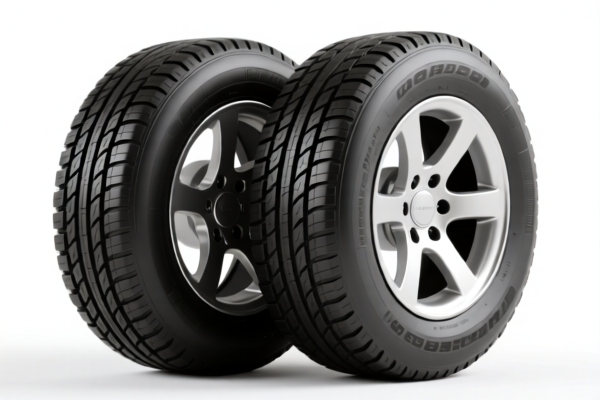
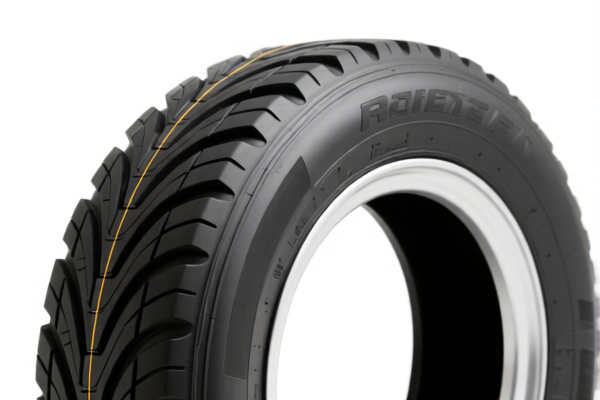
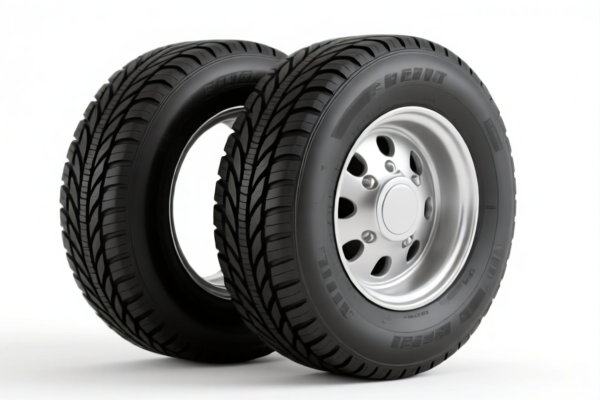
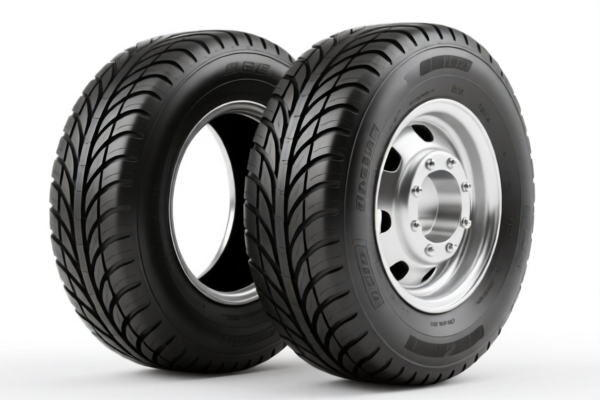
AI Analysis
🚛 New Radial Pneumatic Bus Tires
🌐 HS Code Reference & Customs Clearance Guide | 2026 Latest Tariff Analysis | Professional Entry Strategy
📌 Part I: Product Definition & Classification: Do You Really Understand "Bus Tires"?
New radial pneumatic bus tires are heavy-duty tires designed for commercial passenger vehicles (buses) operating on roads. In international trade, they are primarily classified under Heading 4011 (New pneumatic tires).
Key Distinction: * New Tires (径向轮胎): Manufactured fresh, not retreaded. Classified under 4011. * Retreaded Tires (翻新轮胎): Used casings re-treaded. Classified under 4012 (Part 11 or 12). * Application: Must be specifically for "buses" (passenger transport vehicles). If used for trucks or cars, the classification differs.
⚠️ Critical Classification Point:
- If the tire is NEW and for BUSES →归入 4011.20 (New pneumatic tires, of a kind used on buses or locomotives).
- If the tire is RETREADED and for BUSES →归入 4012.12 (Retreaded pneumatic tires, of a kind used on buses or locomotives).
- Do not confuse with truck tires (4011.61/62) or car tires (4011.10/20/11/12).
📦 Part II: HS Code Classification Details (2026 Latest Tariff Reference)
Based on the provided data, the classification depends on whether the tires are New or Retreaded, and their specific suffix codes (likely representing specific size/ply specifications not fully detailed in the summary but critical for entry).
| HS Code | Product Description | Status | Application |
|---|---|---|---|
4011.20.10.15 |
New radial pneumatic tires, for buses, other specifications | ✅ New | Primary entry for standard new bus radial tires |
4011.20.10.35 |
New radial pneumatic tires, for buses, other specifications | ✅ New | Alternative entry for specific new bus radial tire specs |
4012.12.40.25 |
Retreaded radial tires, for buses, other specifications | ✅ Retreaded | For re-treaded bus tires |
4012.12.40.35 |
Retreaded radial tires, for buses, other specifications | ✅ Retreaded | For re-treaded bus tires (duplicate entry in data) |
🔍 Important Note:
- The input "New radial pneumatic bus tires" strictly points to the 4011.20 series.
- 4012.12 is for Retreaded tires. If your product is new, do not use 4012.12 codes, as this is a misclassification that can lead to seizures or penalties.
- The suffixes.15,.35,.25likely refer to specific size, load index, or ply rating distinctions in the local tariff schedule. Ensure the product matches the exact technical specification of the selected code.
💰 Part III: 2026 Latest Tariff Rate Breakdown (Including Additional Duties)
✅ Applicable Country: United States (US)
✅ Country of Origin: China (CN) (Assumed based on the specific "122 Clause" and 39% total rate structure typical for US-China trade)
✅ Effective Date: Current (2025-2026)
🎯 1. For New Bus Radial Tires (4011.20.10.15 / 4011.20.10.35)
| Item | Details |
|---|---|
| Base Tariff Rate | 4.0% (Ad Valorem) |
| Section 301 Additional Tariff | +25.0% |
| Section 122 Clause Tariff | +10.0% |
| Total Tariff Rate | 39.0% |
| Tax Calculation | CIF Value × 39% |
| De Minimis Eligibility | ❌ No (Deny de minimis) |
| Legal Basis Path | USITC:4011.20.10 → Footnote:301 → IEEPA:122Clause |
📌 Explanation:
- 4.0%: Standard Most-Favored-Nation (MFN) base rate for new tires.
- 25.0%: Additional duty under Section 301 of the Trade Act of 1974, targeting Chinese imports.
- 10.0%: Additional duty under "Section 122" (U.S. Code Title 19, Section 1671j), imposed on specific categories of imports to protect domestic manufacturing.
- Total 39%: This is a high-cost import. Profit margins must account for this significant duty burden.
🎯 2. For Retreaded Bus Radial Tires (4012.12.40.25 / 4012.12.40.35)
| Item | Details |
|---|---|
| Base Tariff Rate | 4.0% (Ad Valorem) |
| Section 301 Additional Tariff | +25.0% |
| Section 122 Clause Tariff | +10.0% |
| Total Tariff Rate | 39.0% |
| Tax Calculation | CIF Value × 39% |
| De Minimis Eligibility | ❌ No (Deny de minimis) |
| Legal Basis Path | USITC:4012.12.40 → Footnote:301 → IEEPA:122Clause |
📌 Explanation:
- Retreaded tires face the same 39% total tariff as new tires under these specific trade restrictions.
- Warning: Retreaded tires often face stricter environmental and safety regulations in addition to tariffs. Ensure compliance with DOT standards.
🛠️ Part IV: Customs Clearance Practical Advice (Real-World Pitfall Avoidance)
✅ 1. Required Documentation Checklist (Non-negotiable)
| Document | Must Provide | Notes |
|---|---|---|
| ✅ Commercial Invoice | ✔️ | Must clearly state: "New Radial Pneumatic Bus Tires" or "Retreaded..." and exact HS Code. |
| ✅ Packing List | ✔️ | Detail number of tires, dimensions, gross/net weight. |
| ✅ Certificate of Origin | ✔️ | Essential for proving origin (China) and applying correct duties. |
| ✅ DOT Compliance Proof | ✔️ | Critical for US. Tires must meet U.S. Department of Transportation (DOT) safety standards. Provide DOT certification or proof of manufacture for the U.S. market. |
| ✅ Product Specifications | ✔️ | Include size, ply rating, load index, and tread pattern. This helps justify the specific suffix (.15 vs .35). |
| ✅ Bill of Lading / Air Waybill | ✔️ | Standard shipping document. |
✅ 2. Declaration Tips (Key Mantras)
🔥 “New vs. Retreaded must be clear; DOT compliance is key; 39% tax is real!”
| Scenario | Correct Declaration | Incorrect Approach |
|---|---|---|
| New Tires | HS 4011.20.10.15/35 |
Misdeclare as "Retreaded" (4012) to seek lower rates → Penalty/Fraud |
| Retreaded Tires | HS 4012.12.40.25/35 |
Misdeclare as "New" → Seizure & Heavy Fines |
| Mixed Shipment | Split lines in invoice by HS Code | Combine into one line item → Customs Delay/Reclassification |
| Origin | Clearly state "Made in China" | Ambiguous origin → Audit Risk |
✅ 3. Special Considerations
| Situation | Handling Advice |
|---|---|
| DOT Marking | Every tire must have a visible DOT serial number molded into the sidewall. No DOT code = No Entry. |
| Anti-Dumping/Countervailing Duties | Check if additional AD/CVD duties apply. While the provided data shows 39%, some tire categories may have separate AD/CVD orders. |
| Environmental Regulations | Retreaded tires may require additional environmental declarations depending on the port of entry. |
| Section 122 Application | The 10% Section 122 duty is specific. Ensure your broker applies this correctly; it is not automatic in all systems. |
🌍 Part V: Global Market Comparison (2026 Latest)
| Country/Region | Recommended HS Code | Tariff (China Origin) | Certification | Notes |
|---|---|---|---|---|
| 🇺🇸 USA | 4011.20.10.15 (New)4012.12.40.25 (Retread) |
39% (4% Base + 25% Sec 301 + 10% Sec 122) | DOT Mandatory | High barrier due to multiple surcharges. |
| 🇨🇳 China | 4011.20.10 (New)4012.12.00 (Retread) |
5% - 10% | CCC (if applicable) | Lower tariffs for domestic import. |
| 🇪🇺 EU | 4011.20 (New)4012.12 (Retread) |
4.5% - 8% | ECE Mark / UN301 | No Section 301/122 duties. |
| 🇬🇧 UK | 4011.20 (New)4012.12 (Retread) |
4.5% - 8% | ECE Mark | Post-Brexit tariffs. |
| 🇦🇺 Australia | 4011.20 (New)4012.12 (Retread) |
5% - 8% | ADR Compliance | Moderate tariffs. |
📌 Conclusion:
- The USA market is exceptionally difficult for Chinese bus tires due to the 39% combined tariff.
- DOT compliance is the primary non-tariff barrier.
- For cost optimization, consider non-Chinese origins (e.g., Vietnam, Thailand) if available, though Section 301 may still apply if rules of origin are not met.
📌 Part VI: Common Errors & Pitfall Guide (Lessons Learned)
❌ Error 1: Misdeclaring New tires as Retreaded (or vice versa)
👉 Consequence: HS Code mismatch → Customs audit, fines, and potential seizure. The physical appearance is very different, and inspectors will check.
❌ Error 2: Ignoring DOT Compliance
👉 Consequence: Goods held at port until DOT proof is provided. If not manufactured for the US, goods may be destroyed or re-exported.
❌ Error 3: Incorrectly applying Section 122 Duty
👉 Consequence: Underpayment leads to penalties and interest. The 10% Section 122 duty is specific and must be manually applied in the entry summary.
❌ Error 4: Using "Other Tires" as a generic description
👉 Consequence: Customs may reclassify the goods, leading to delays and incorrect duty assessments.
✅ Correct Practice:
"New Radial Pneumatic Bus Tires, Size 11R22.5, 16 Ply, DOT Certified, Made in China, HS Code 4011.20.10.15"
🎯 Part VII: Conclusion: Professional Declaration, Cost Control, Efficiency!
🎯 Remember the Mantra:
🔹 "New is 4011, Retread is 4012; 39% Tax is the reality; DOT Compliance is the key!"
🔹 "HS Code determines duty; 39% is high, declare correctly to avoid delays!"
📌 Tips:
- If your tires are not from China (e.g., from Vietnam, Thailand, Germany), the Section 301 (25%) and potentially Section 122 duties may not apply, significantly reducing the total tariff.
- Always consult a licensed US customs broker before shipping to verify the latest status of Section 122 duties and DOT requirements.
📣 Immediate Action:
📞 Contact a professional customs broker + Provide DOT Certification + Verify HS Code Pre-ruling
🚀 Let your bus tires, clear customs smoothly, reduce costs, and maximize profits!
✨ Professional clearance starts with accurate classification!
💼 Every dollar of cost deserves precise calculation!
Customer Reviews
About HS Code Classification
The Harmonized System (HS) is an internationally standardized nomenclature developed by the World Customs Organization (WCO) to classify traded products. Over 200 countries use the HS system as the basis for customs tariffs, trade statistics, and import/export regulations.
Each HS code follows a hierarchical structure:
- Chapter (2 digits) — Broad category of goods (e.g., Chapter 84: Machinery and Mechanical Appliances)
- Heading (4 digits) — More specific grouping within the chapter
- Subheading (6 digits) — Internationally standardized breakdown, used by all WCO member countries
- National subdivisions (8-10 digits) — Country-specific extensions for further classification, such as US HTSUS 10-digit codes
Correct HS code classification is essential for smooth customs clearance, accurate duty payment, and compliance with trade regulations. Misclassification can lead to customs delays, overpayment of duties, or penalties.
When importing from CN to US, the applicable tariff rates may include:
- Most-Favored-Nation (MFN) rate — The standard duty rate applied to WTO members
- General rate — Applied to countries without trade agreements
- Trade remedy duties — Additional tariffs such as Section 301 (anti-dumping), Section 232 (national security), or countervailing duties
The information provided on this page is for reference purposes only. For official classification, please consult with your local customs authority or a licensed customs broker.