nfc标签
CN → US| HS Code | Tariff Rate | Origin | Destination | Doc |
|---|---|---|---|---|
| 3926100000 | 15.3% | CN | US | Official Doc |
| 8523520090 | 35.0% | CN | US | Official Doc |
| 8523510000 | 17.5% | CN | US | Official Doc |
| 3926904800 | 13.4% | CN | US | Official Doc |
| 4823903100 | 35.0% | CN | US | Official Doc |
Product Images
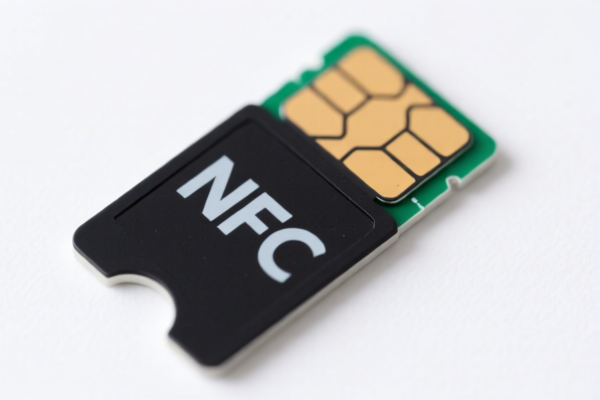
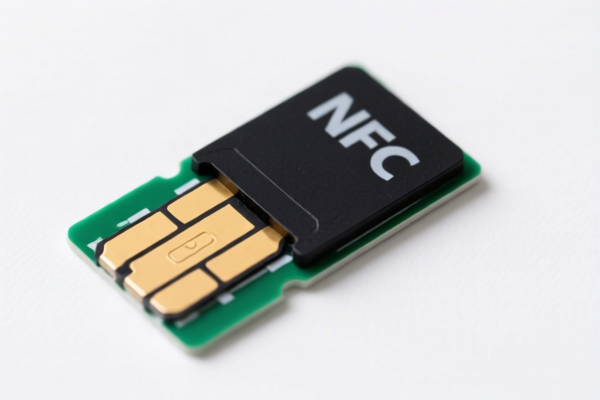
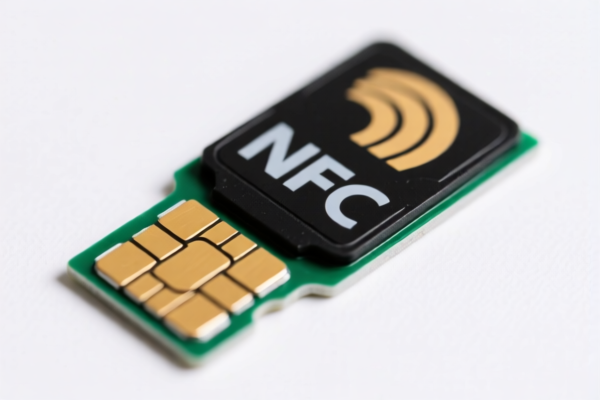
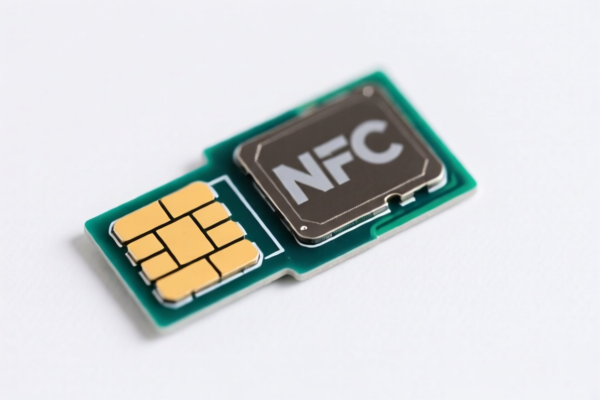
AI Analysis
📡 NFC Tags (Near Field Communication Labels)
🌐 HS Code Reference & Customs Clearance Guide | 2026 Latest Tariff Analysis | Professional Clearance Strategy
📌 I. Product Definition & Classification: What Exactly Are "NFC Tags"?
NFC Tags are active electronic components used in Radio Frequency Identification (RFID) systems. They consist of a microchip and an antenna, encapsulated in various materials (plastic, paper, or composite). In international trade, the classification depends heavily on function (smart card vs. general plastic item) and composition.
Core Components: * Chip: Stores data (semiconductor application). * Antenna: Enables wireless communication (inductive coil). * Substrate: The physical carrier (plastic, paper, or composite film).
⚠️ Key Classification Divergence:
- If the tag functions as a Smart Card/Data Medium with wireless RF identification capabilities → It may fall under Chapter 85 (Electrical Machinery).
- If the tag is primarily viewed as a Plastic/Adhesive Label without specific electronic complexity declared → It may fall under Chapter 39 (Plastics) or Chapter 48 (Paper/Cardboard).
📦 II. HS Code Classification Details (2026 Latest Tariff Authority Comparison)
| HS Code | Product Description | Application Scenario | Material/Function Conflict? |
|---|---|---|---|
8523.52.00.90 |
Other smart cards & other media for recording data | NFC tags considered as "Smart Cards" using RF technology; thin film/media format. | ✅ No conflict (Inferred material fits) |
8523.51.00.00 |
Smart cards & other media for recording phenomena | NFC tags as media for recording phenomena (RFID); includes coil/chip, semiconductor application. | ✅ No conflict (No material conflict) |
3926.10.00.00 |
Other articles of plastics & articles of other materials of heading 39.01 to 39.14 | Inferred as plastic/film office supplies; no material conflict with general plastic office items. | ✅ No conflict |
3926.90.48.00 |
Other articles of plastics & articles of other materials of heading 39.01 to 39.14 | Inferred as plastic/composite labels/stickers; fits "other plastic products" attribute. | ✅ No conflict |
4823.90.31.00 |
Other paper, paperboard, cellulose fiberboard & articles thereof | "Card" form factor matches; NFC cards are often plastic/composite but lack clear material match, so "catch-all" rule applies. | ⚠️ Inferential fit (Fallback category) |
🔍 Key Reminder:
- Electronic vs. Material View: If the primary characteristic is the chip/antenna, classify under 8523. If the primary characteristic is the adhesive/plastic label, classify under 3926 or 4823. - "Catch-All" Rule: For4823.90.31.00, if the material is composite (plastic+paper) and cannot be clearly defined, it is reasonably inferred as a paper/cardboard article for customs purposes.
💰 III. 2026 Latest Tariff Rate Details (Including Surcharges & Policy Add-ons)
✅ Applicable Country: United States (US)
✅ Origin: China (CN)
✅ Effective Date: From November 10, 2025 (including subsequent imports)
🎯 1. 8523.52.00.90 —— Other Smart Cards & Media (High Risk)
| Item | Content |
|---|---|
| Base Tariff | 0% (ad valorem) |
| USITC Surcharge | +25% (From USITC Footnote 9903.88.01 - Section 301) |
| IEEPA Surcharge | +10% (Targeting China/HK products, from Nov 10, 2025) |
| Total Rate | 35.0% |
| Tax Calculation | CIF Value × 35% |
| De Minimis Exemption? | ❌ No (deny_de_minimis) |
| Legal Basis Path | IEEPA:9903.01.25 → IEEPA:9903.01.24 → USITC:8523.52.00.90 → FOOTNOTE:9903.88.01 |
📌 Explanation:
- Although the base tariff is 0%, the 301 Section surcharge (25%) and IEEPA surcharge (10%) make this a high-cost entry point. - This applies if customs views the NFC tag strictly as an electronic "Smart Card" or data medium.
🎯 2. 8523.51.00.00 —— Smart Cards & Recording Media (Moderate Risk)
| Item | Content |
|---|---|
| Base Tariff | 0% |
| USITC Surcharge | +7.5% (Specific rate for this subheading under certain footnotes) |
| IEEPA Surcharge | +10% |
| Total Rate | 17.5% |
| Tax Calculation | CIF Value × 17.5% |
| De Minimis Exemption? | ❌ No |
| Legal Basis Path | IEEPA:9901.25 → IEEPA:9903.01.24 → USITC:8523.51.00.00 |
📌 Note:
- Lower than8523.52.00.90due to a different surcharge structure for "recording phenomena" media. - Still subject to the 10% IEEPA tariff.
🎯 3. 3926.10.00.00 —— Plastic Office Supplies (Low Risk)
| Item | Content |
|---|---|
| Base Tariff | 5.3% |
| USITC Surcharge | 0.0% |
| IEEPA Surcharge | +10% (122 Clause Tariff) |
| Total Rate | 15.3% |
| Tax Calculation | CIF Value × 15.3% |
| De Minimis Exemption? | ❌ No |
| Legal Basis Path | IEEPA:9903.01.25 → USITC:3926.10.00.00 |
📌 Explanation:
- If declared as "Plastic Office Supplies" (e.g., plastic stickers/tags), the base tax is 5.3%, plus 10% IEEPA. - Total 15.3%, significantly lower than the electronic classification.
🎯 4. 3926.90.48.00 —— Other Plastic Articles (Lowest Risk)
| Item | Content |
|---|---|
| Base Tariff | 3.4% |
| USITC Surcharge | 0.0% |
| IEEPA Surcharge | +10% (122 Clause Tariff) |
| Total Rate | 13.4% |
| Tax Calculation | CIF Value × 13.4% |
| De Minimis Exemption? | ❌ No |
| Legal Basis Path | IEEPA:9903.01.25 → USITC:3926.90.48.00 |
📌 Note:
- Best tariff rate if classified as a generic plastic label/sticker. - Base 3.4% + 10% IEEPA = 13.4%.
🎯 5. 4823.90.31.00 —— Paper/Cardboard Articles (High Risk)
| Item | Content |
|---|---|
| Base Tariff | 0% |
| USITC Surcharge | +25% |
| IEEPA Surcharge | +10% |
| Total Rate | 35.0% |
| Tax Calculation | CIF Value × 35.0% |
| De Minimis Exemption? | ❌ No |
| Legal Basis Path | IEEPA:9901.25 → IEEPA:9903.01.24 → USITC:4823.90.31.00 |
📌 Warning:
- Despite being "paper-based," it incurs the full 301 Section (25%) + IEEPA (10%) surcharge. - Total 35.0%, same as the high-risk electronic category. Do not assume paper = cheap tax!
🛠️ IV. Customs Clearance Practical Advice (Combat Pitfall Guide)
✅ 1. Preparation Checklist (Missing Items Will Cause Delays)
| Material | Required | Description |
|---|---|---|
| ✅ Product Spec Sheet | ✔️ | Must detail chip type (e.g., NTAG213), antenna type, and substrate material. |
| ✅ Photos (Clear Labels) | ✔️ | Show the tag, the chip side (if visible), and the packaging. |
| ✅ Commercial Invoice | ✔️ | Clear description: "NFC Tag, Plastic, for Inventory Tracking" or "Smart Card, Plastic". |
| ✅ Origin Certificate (CO) | ✔️ | If not China-origin, to avoid IEEPA surcharges. |
| ✅ Packing List | ✔️ | Indicate quantity per carton. |
✅ 2. Declaration Strategy (Key Mnemonic)
🔥 "Material Defines Value, Function Defines Code! Don't Split, Don't Guess!"
| Scenario | Correct Declaration | Wrong Approach |
|---|---|---|
| Standard Plastic NFC Sticker | 3926.90.48.00 (13.4%) |
Declaring as 8523 → 35% Tax! |
| High-End Smart Card with Chip | 8523.51.00.00 (17.5%) |
Declaring as "Plastic Toy" → Seizure/Fine! |
| Paper-based NFC Ticket | 4823.90.31.00 (35.0%) |
Assuming 0% base tax = Safe! (It's 35% total) |
| Mixed Package (Tags + Reader) | Split Declaration | Bundling reader (HS 8517) with tags → Confusion/Delay |
✅ 3. Special Situation Handling
| Situation | Handling Advice |
|---|---|
| OEM Custom Chips | Provide chip datasheet. If the chip is the key value, lean towards 8523. |
| Bulk Roll Labels | Declare as "Plastic Labels" (3926) to avoid electronic scrutiny, if technically accurate. |
| Small Quantity Samples | Still subject to tariffs if value > de minimis threshold (currently $800 for US, but checks apply). |
| Material Uncertainty | If plastic+paper mix, use 3926.90.48.00 (Plastic is usually the dominant structural material). |
🌍 V. Global Market Comparison (2026 Latest)
| Country/Region | Recommended HS Code | Tariff Rate | Certification Required | Notes |
|---|---|---|---|---|
| 🇺🇸 USA | 3926.90.48.00 or 8523.51.00.00 |
13.4% ~ 17.5% | FCC (if wireless) | Avoid 8523.52 (35%) if possible. |
| 🇨🇳 China | 8523.51.00.00 or 3926.10.00.00 |
5% ~ 10% | N/A | Low tariffs, focus on accurate description. |
| 🇪🇺 EU | 8523.51.00.00 |
0% ~ 2.7% | CE / RoHS | No US-style surcharges. |
| 🇬🇧 UK | 8523.51.00.00 |
0% ~ 2.7% | UKCA | Post-Brexit rules similar to EU. |
| 🇯🇵 Japan | 8523.51.00.00 |
0% ~ 6% | PSE (if applicable) | Generally low tariffs. |
📌 Conclusion:
- USA is the most challenging market due to IEEPA (10%) and Section 301 (25%) surcharges on electronic/paper items. - Optimization Strategy: If the product is a simple plastic sticker with a printed NFC chip, argue for3926.90.48.00(13.4%) instead of8523.52.00.90(35.0%). The difference is 21.6% in tax cost!
📌 VI. Common Errors & Pitfall Guide (Blood-Teach Lessons)
❌ Error 1: Declaring all NFC tags as "Smart Cards" (8523.52.00.90)
👉 Consequence: 35.0% Tax. If it's just a plastic sticker, you're overpaying by ~20%.
❌ Error 2: Declaring Plastic NFC Tags as "Paper Cards" (4823.90.31.00)
👉 Consequence: 35.0% Tax. Base is 0%, but surcharges kill the savings. Same as high-end smart cards.
❌ Error 3: Failing to provide Chip Specifications
👉 Consequence: Customs may misclassify as "General Plastic" (low tax) but later audit and demand back-taxes + penalties, or classify as "Electronic" (high tax).
✅ Correct Practice:
"NFC Label, Plastic Substrate, with Integrated Antenna & Chip, for Asset Tracking, Model XYZ, FCC ID: ABC123"
🎯 VII. Conclusion: Precision Classification Saves Money!
🎯 Remember the Mnemonic:
🔹 "Plastic Sticker? Go 3926 (13.4%)!"
🔹 "Smart Card Tech? Go 8523.51 (17.5%)!"
🔹 "Paper Card? Beware! 35.0% Tax Hit!"
🔹 "Electronics? Watch for IEEPA 10% + 301 25%!"
📌 Pro Tip:
If your NFC tags are manufactured in Vietnam, Mexico, Thailand, or Malaysia, you can apply for IEEPA Exemption, reducing the total tax to 0%~7.5%.
Recommendation: Apply for Advance Ruling or consult a customs broker to confirm the "Primary Characteristic" (Material vs. Function) for your specific product.
📣 Immediate Action:
📞 Contact Professional Customs Broker + Provide Product Photos + Apply for HS Code Pre-Ruling
🚀 Ensure your NFC Tags Clear Customs Smoothly, Boost Profits, and Avoid Surprises!
✨ Professional Clearance Starts with Accurate Classification!
💼 Every Penny of Cost Deserves Precise Calculation!
Customer Reviews
About HS Code Classification
The Harmonized System (HS) is an internationally standardized nomenclature developed by the World Customs Organization (WCO) to classify traded products. Over 200 countries use the HS system as the basis for customs tariffs, trade statistics, and import/export regulations.
Each HS code follows a hierarchical structure:
- Chapter (2 digits) — Broad category of goods (e.g., Chapter 84: Machinery and Mechanical Appliances)
- Heading (4 digits) — More specific grouping within the chapter
- Subheading (6 digits) — Internationally standardized breakdown, used by all WCO member countries
- National subdivisions (8-10 digits) — Country-specific extensions for further classification, such as US HTSUS 10-digit codes
Correct HS code classification is essential for smooth customs clearance, accurate duty payment, and compliance with trade regulations. Misclassification can lead to customs delays, overpayment of duties, or penalties.
When importing from CN to US, the applicable tariff rates may include:
- Most-Favored-Nation (MFN) rate — The standard duty rate applied to WTO members
- General rate — Applied to countries without trade agreements
- Trade remedy duties — Additional tariffs such as Section 301 (anti-dumping), Section 232 (national security), or countervailing duties
The information provided on this page is for reference purposes only. For official classification, please consult with your local customs authority or a licensed customs broker.