nickel iron concentrate
CN → US| HS Code | Tariff Rate | Origin | Destination | Doc |
|---|---|---|---|---|
| 2604000040 | 35.0% | CN | US | Official Doc |
| 2604000080 | 35.0% | CN | US | Official Doc |
| 2605000000 | 35.0% | CN | US | Official Doc |
| 7501100000 | 35.0% | CN | US | Official Doc |
| 7501200000 | 35.0% | CN | US | Official Doc |
Product Images
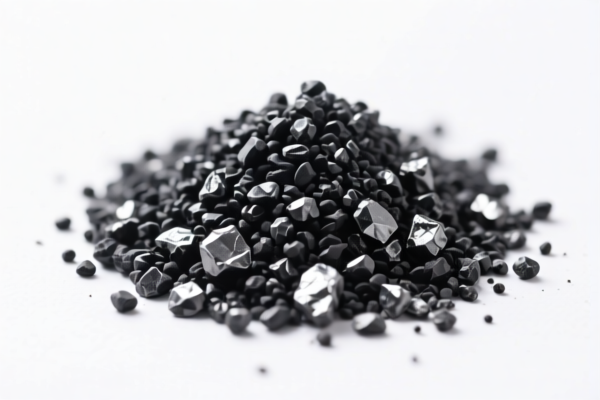
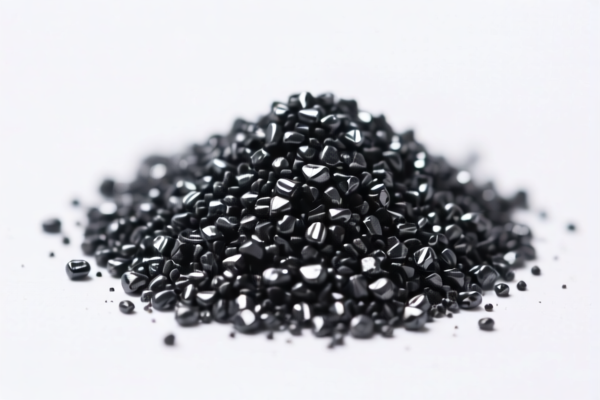
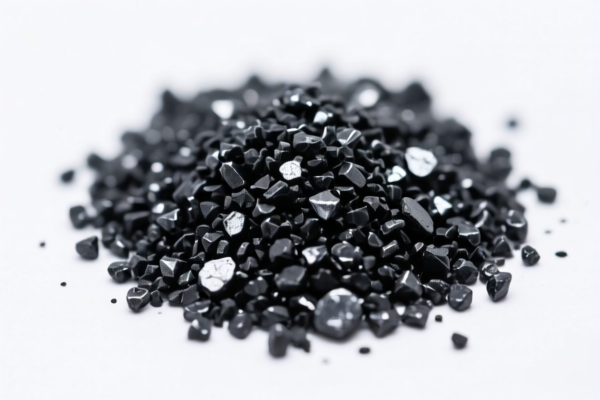
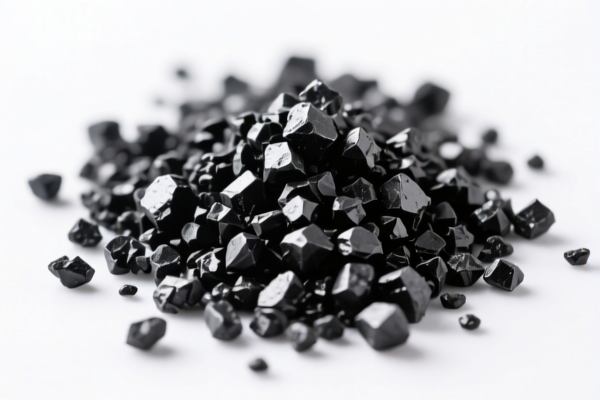
AI Analysis
🌋 Nickel Iron Concentrate (Nickel Ore & Concentrates)
🌐 HS Code Reference & Customs Clearance Guide | 2026 Tariff Code Breakdown | Strategic Import Strategy for US Market
📌 I. Product Definition & Classification: Understanding "Nickel Iron Concentrate"
Nickel Iron Concentrate refers to the mineral resources rich in nickel and iron, obtained through mining and enrichment processes. In international trade, it is primarily categorized under Chapter 26 (Ores, Slag and Ash) and Chapter 75 (Nickel and Articles Thereof). The classification depends heavily on the physical state (powder, lump, sintered) and the processing stage (raw concentrate vs. metallurgical intermediate).
Key Distinctions: * Raw Mineral Concentrates (Ch 26): Natural or beneficiated ores (powder/lump) that have not undergone significant metallurgical transformation. * Metallurgical Intermediates (Ch 75): Products like sintered nickel oxide or primary nickel forms, which are already partially processed for smelting.
⚠️ Critical Classification Point:
- If the product is a natural mineral concentrate (powder, ore, or coarse grains) primarily composed of nickel/iron oxides/sulfides → Classify under HS 2604 or 2605.
- If the product is a metallurgical intermediate (e.g., sintered oxide, primary nickel form) → Classify under HS 7501.
📦 II. HS Code Classification Matrix (2026 Latest Tariff Book)
| HS Code | Product Description | Applicable Scenario | Material Form |
|---|---|---|---|
2604.00.00.40 |
Nickel Iron Ore and Concentrates | Raw nickel-iron mineral concentrates,符合材质与形态特征 | Raw Ore/Concentrate |
2604.00.00.80 |
Other Nickel Ore and Concentrates | Nickel ores fitting the coding logic, high metal content attribute | Raw Ore/Concentrate |
2605.00.00.00 |
Cobalt Ores and Concentrates | Nickel-bearing ores that align with cobalt ore classification logic (mineral form consistency) | Raw Mineral Form |
7501.10.00.00 |
Nickel Mattes and Other Intermediate Products of Nickel Metallurgy | Primary form of nickel, intermediate product for smelting | Metallurgical Intermediate |
7501.20.00.00 |
Sintered Nickel Oxides and Other Intermediate Products | Sintered nickel oxide and intermediates; concentrates belong to primary metallurgical forms | Sintered/Intermediate |
🔍 Key Reminder:
- Chapter 26 (2604/2605) is for mineral raw materials. If it's dug out of the ground and slightly crushed/washed, it goes here.
- Chapter 75 (7501) is for metallurgical intermediates. If it has been sintered, roasted, or partially smelted (like matte), it goes here.
- Do not mix forms: Sending a sintered product under 2604 or raw ore under 7501 will cause customs delays.
💰 III. 2026 Latest Tariff Rate Detailed Analysis (Including Surcharges & Policy Add-ons)
✅ Applicable Country: United States (US)
✅ Country of Origin: China (CN)
✅ Effective Date: November 10, 2025 (and subsequent imports)
All listed HS Codes below carry a Total Tax Rate of 35.0%.
🎯 1. 2604.00.00.40 & 2604.00.00.80 —— Nickel Iron Ore and Concentrates
| Item | Content |
|---|---|
| Basic Tariff Rate | 0.0% (ad valorem) |
| Section 301 Surcharge (USITC) | +25.0% |
| Section 122 Tariff (IEEPA) | +10.0% |
| Total Tax Rate | 35.0% |
| Tax Calculation | CIF Value × 35% |
| De Minimis Exemption | ❌ Not Eligible (deny_de_minimis) |
| Legal Basis Path | USITC:2604.00.00.40/80 → Section 301: 25% → Section 122: 10% |
📌 Explanation:
- "Basic 0%": Standard MFN rate for these mineral products.
- "301 Surcharge 25%": Imposed on Chinese-origin goods under Trade Act Section 301.
- "Section 122 Tariff 10%": Additional levy under the International Emergency Economic Powers Act (IEEPA) targeting specific Chinese imports.
- Total 35%: A significant cost factor. Must be factored into landed cost calculations immediately.
🎯 2. 2605.00.00.00 —— Cobalt Ores and Concentrates (Includes Nickel)
| Item | Content |
|---|---|
| Basic Tariff Rate | 0.0% |
| Section 301 Surcharge | +25.0% |
| Section 122 Tariff | +10.0% |
| Total Tax Rate | 35.0% |
| Tax Calculation | CIF Value × 35% |
| De Minimis Exemption | ❌ Not Eligible |
| Legal Basis Path | USITC:2605.00.00.00 → Section 301: 25% → Section 122: 10% |
📌 Note:
- Although named "Cobalt," this code is used for nickel ores that share the same mineral form and metal mineral category characteristics.
- The tariff structure is identical to2604codes.
🎯 3. 7501.10.00.00 & 7501.20.00.00 —— Nickel Intermediates (Mattes & Sintered Oxides)
| Item | Content |
|---|---|
| Basic Tariff Rate | 0.0% |
| Section 301 Surcharge | +25.0% |
| Section 122 Tariff | +10.0% |
| Total Tax Rate | 35.0% |
| Tax Calculation | CIF Value × 35% |
| De Minimis Exemption | ❌ Not Eligible |
| Legal Basis Path | USITC:7501.10.00.00/20 → Section 301: 25% → Section 122: 10% |
📌 Explanation:
- These codes cover processed nickel forms (e.g., nickel matte, sintered nickel oxide).
- Even though they are "intermediate products," they are still subject to the same 35% total duty as raw ores when imported from China.
- Key Distinction: Ensure the documentation matches the state of the goods (raw vs. sintered) to avoid misclassification penalties.
🛠️ IV. Customs Clearance Practical Advice (Real-World Pitfall Guide)
✅ 1. Required Documentation Checklist (All Mandatory)
| Document | Mandatory? | Description |
|---|---|---|
| ✅ Product Specification Sheet | ✔️ | Must detail chemical composition (Ni%, Fe%), moisture content, and physical form (powder/lump/sinter). |
| ✅ Certificate of Analysis (COA) | ✔️ | Third-party lab report confirming metal content and mineral nature. |
| ✅ Commercial Invoice | ✔️ | Must clearly state "Nickel Iron Concentrate" or "Sintered Nickel Oxide" and HS Code. |
| ✅ Packing List | ✔️ | Detail weight, volume, and packaging type (bulk, bagged). |
| ✅ Bill of Lading (B/L) | ✔️ | Standard shipping document. |
| ✅ Origin Certificate | ✔️ | Proof of Chinese origin (triggers tariffs). |
⚠️ Critical Warning:
- Moisture Content: For raw concentrates, specify if it is "dry" or "wet." Wet concentrates may require different handling notes but do not change HS classification.
- Sintered vs. Raw: If submitting2604(raw), do not provide specs that show "sintered pellets." If submitting7501(sintered), do not describe it as "raw ore." Consistency is key to avoiding audits.
✅ 2. Declaration Tips (Key Mantra)
🔥 "Raw Goes to Ch 26, Sintered to Ch 75, Always Pay the 35%!"
| Scenario | Correct HS Code | Common Mistake |
|---|---|---|
| Raw Nickel Iron Concentrate (Powder/Granules) | 2604.00.00.40 or 2604.00.00.80 |
Misdeclaring as 7501 (Penalty for misclassification) |
| Sintered Nickel Oxide (Pellets/Briquettes) | 7501.20.00.00 |
Misdeclaring as 2604 (Penalty for misclassification) |
| Nickel Matte (Partial Smelt) | 7501.10.00.00 |
N/A (Clear distinction) |
| Small Sample (< $800) | ❌ Still 35% | Assuming De Minimis applies (It does not) |
✅ 3. Special Circumstances Handling
| Situation | Handling Advice |
|---|---|
| Mixed Shipments | If a shipment contains both raw ore and sintered product, they must be split into two separate entries with distinct HS codes. Do not lump them under one code. |
| High Iron Content | If the product is extremely high in iron (like magnetite) with nickel as a byproduct, confirm if 2601 (Iron Ore) is more appropriate, but typically Nickel-rich concentrates stay in 2604. |
| Transshipment | If goods transit through a third country (e.g., Singapore, Malaysia), ensure the Certificate of Origin still shows China as the country of manufacture to comply with US rules. |
🌍 V. Global Market Comparison (2026 Latest)
| Country/Region | Recommended HS Code | Tariff Rate (China Origin) | Certification/Notes |
|---|---|---|---|
| 🇺🇸 United States | 2604 / 7501 |
35% (0% Base + 25% + 10%) | High duty barrier. Strict origin checks. |
| 🇨🇳 China | 2604 / 7501 |
0% - 5% (Import Duty) | Main importer of such materials. |
| 🇪🇺 European Union | 2604 / 7501 |
0% | No Section 301 equivalent. CBAM (Carbon Border Adjustment) may apply later. |
| 🇮🇳 India | 2604 / 7501 |
0% - 7.5% | Various duties may apply depending on specific form. |
📌 Conclusion:
- USA is the most expensive market due to the combined 35% tariff.
- EU and India offer significantly lower tariff barriers, but supply chain logistics to China remain dominant for nickel processing.
📌 VI. Common Errors & Pitfall Guide (Blood & Tears Lessons)
❌ Error 1: Declaring Sintered Oxide as Raw Concentrate (2604)
👉 Consequence: Customs may suspect undervaluation or misclassification. If detected, retroactive duties + penalties.
👉 Fix: Use 7501.20.00.00 for sintered products.
❌ Error 2: Assuming De Minimis ($800) exemption applies
👉 Consequence: Package seized, taxes owed + storage fees. Section 301 and 122 tariffs do not apply to de minimis shipments.
👉 Fix: Plan logistics for B2B shipments only.
❌ Error 3: Vague Description on Invoice ("Nickel Minerals")
👉 Consequence: Customs officer has to manually classify, causing 7-14 day delays.
👉 Fix: Use precise descriptions: "Nickel Iron Concentrate, Powder, Ni>1.5%, HS 2604.00.00.40".
✅ Correct Approach:
"Nickel Iron Concentrate, Raw Form, Powder, CIF New York, HS 2604.00.00.40, Origin: China, Duty: 35%"
🎯 VII. Conclusion: Professional Classification, Cost Control, and Efficiency!
🎯 Remember the Mantra:
🔹 "Raw is 2604, Sintered is 7501, China Origin = 35% Duty."
🔹 "HS Code defines your cost, 35% is the floor, misclassification is the floor's enemy!"
📌 Pro Tip:
For large-volume shipments, consider applying for an Antidumping/Countervailing Duty (AD/CVD) exclusion if applicable, or verify if any specific industry exemptions exist for raw material intermediates in 2026.
Consult a licensed customs broker to verify the physical state of your product before shipment.
📣 Immediate Action Required:
📞 Contact a Customs Broker + Provide COA + Confirm HS Code 2604/7501.
🚀 Ensure your landed cost includes the 35% tariff to protect your margins.
✨ Professional Clearance, Start with Accurate Classification!
💼 Every percentage point in duty affects your bottom line!
Customer Reviews
About HS Code Classification
The Harmonized System (HS) is an internationally standardized nomenclature developed by the World Customs Organization (WCO) to classify traded products. Over 200 countries use the HS system as the basis for customs tariffs, trade statistics, and import/export regulations.
Each HS code follows a hierarchical structure:
- Chapter (2 digits) — Broad category of goods (e.g., Chapter 84: Machinery and Mechanical Appliances)
- Heading (4 digits) — More specific grouping within the chapter
- Subheading (6 digits) — Internationally standardized breakdown, used by all WCO member countries
- National subdivisions (8-10 digits) — Country-specific extensions for further classification, such as US HTSUS 10-digit codes
Correct HS code classification is essential for smooth customs clearance, accurate duty payment, and compliance with trade regulations. Misclassification can lead to customs delays, overpayment of duties, or penalties.
When importing from CN to US, the applicable tariff rates may include:
- Most-Favored-Nation (MFN) rate — The standard duty rate applied to WTO members
- General rate — Applied to countries without trade agreements
- Trade remedy duties — Additional tariffs such as Section 301 (anti-dumping), Section 232 (national security), or countervailing duties
The information provided on this page is for reference purposes only. For official classification, please consult with your local customs authority or a licensed customs broker.