non coniferous firewood
CN → US| HS Code | Tariff Rate | Origin | Destination | Doc |
|---|---|---|---|---|
| 4401120000 | 35.0% | CN | US | Official Doc |
| 4404200080 | 35.0% | CN | US | Official Doc |
| 4403120050 | 35.0% | CN | US | Official Doc |
| 4404200040 | 35.0% | CN | US | Official Doc |
| 4403990128 | 35.0% | CN | US | Official Doc |
Product Images
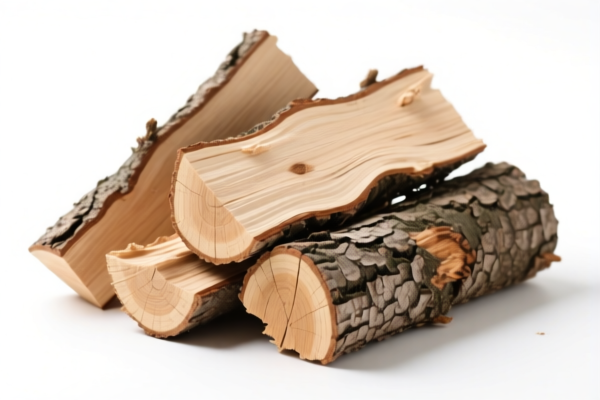
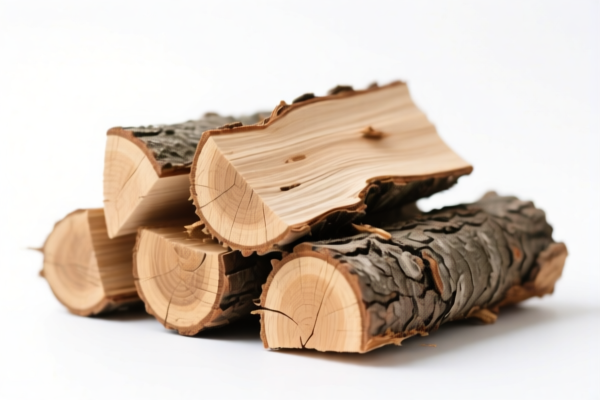
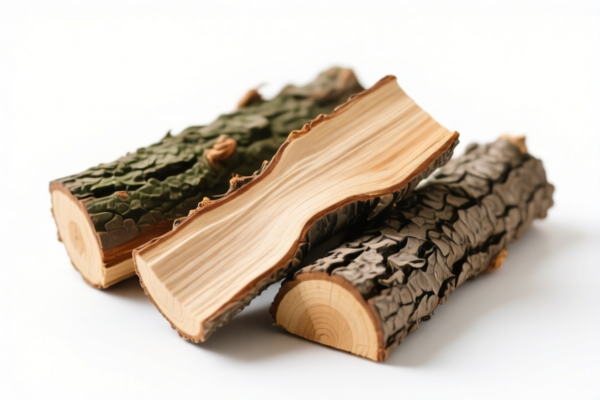
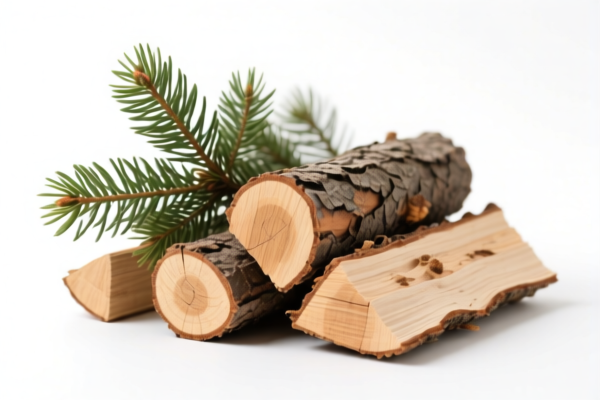
AI Analysis
🔥 Non-Coniferous Firewood (Wooden Stakes/Piles)
🌐 HS Code Reference & Customs Clearance Guide | 2026 Tariff Analysis | Strategic Import Strategy for Wooden Stakes
📌 I. Product Definition & Classification: What Exactly is "Non-Coniferous Firewood" in Trade Terms?
In international trade, "Non-Coniferous Firewood" often refers to processed wooden stakes, piles, or posts derived from broadleaf trees (hardwoods like oak, eucalyptus, acacia, etc.), rather than softwoods (conifers like pine, spruce, fir).
The key distinction lies in the material origin (Non-Coniferous = Broadleaf/Hardwood) and the physical form (Stakes, Piles, Posts, or Fuel Wood). These items are typically used for: 1. Agricultural/Garden Support: Staking plants, trees, and vines. 2. Landscaping & Fencing: Decorative stakes, fence posts, or retaining wall supports. 3. Fuel: If specifically processed as small logs or chunks for burning.
⚠️ Critical Classification Point:
- If the wood is untreated, unplaned, and simply cut into stakes/posts → It falls under Chapter 44 (Wood and Wood Products), specifically headings 4403 (Wood prepared for construction) or 4404 (Wooden stakes, pales, pickets).
- If it is shredded, chipped, or specifically processed for fuel (small pieces) → It may fall under 4401.12 (Firewood).
- Material Specificity: Must confirm it is Non-Coniferous (hardwood). If it is coniferous (softwood), the HS codes will differ significantly (e.g., 4403.10 vs. 4403.12).
📦 II. HS Code Classification Details (2026 Latest Tariff Data)
Based on the provided data, the following HS Codes are applicable for Non-Coniferous Wooden Stakes/Piles/Firewood. All listed codes carry a Total Tax Rate of 35.0% for imports from China to the US.
| HS Code | Product Description & Logic | Application Scenario | Tax Rate Breakdown |
|---|---|---|---|
| 4401.12.00.00 | Firewood (Non-Coniferous) Matches material (non-coniferous wood) and purpose (fuel wood). Represents primary form of wood for energy. |
Small logs, chopped wood, or bulk firewood intended for burning. | 35.0% |
| 4404.20.00.80 | Wooden Stakes, Pales, Pickets (Non-Coniferous) Material matches (non-coniferous); Form matches (stakes, piles, posts). |
Garden stakes, structural wooden posts, retaining wall supports. | 35.0% |
| 4403.12.00.50 | Wood Prepared for Construction (Non-Coniferous) Material matches exactly; Form (stakes/posts) matches classification requirements. |
Treated or prepared wood stakes used in construction or heavy-duty landscaping. | 35.0% |
| 4404.20.00.40 | Wooden Hedge Stakes (Non-Coniferous) Material matches; Form specifically matches "Hedge Stakes" under this subheading. |
Decorative garden stakes, trellis supports, light-duty fencing. | 35.0% |
| 4403.99.01.28 | Other Wood (Non-Coniferous Stakes/Posts) Matches "Logs, Stakes, and Poles" form; Non-coniferous is a further material limitation. |
General hardwood stakes/posts not specifically listed in other subheadings (e.g., oak, maple stakes). | 35.0% |
🔍 Key Insight:
- All five codes listed above share the same total tax rate of 35.0%.
- The choice among them depends on the specific use case (Fuel vs. Garden Stake vs. Construction Post) and exact physical dimensions (round vs. squared, treated vs. untreated).
- Non-Coniferous is a critical filter. Misdeclaring hardwood as softwood (or vice versa) leads to classification errors and potential fines.
💰 III. 2026 Tariff Rate Details (Including Additional Taxes & Policy Surcharges)
✅ Applicable Country: United States (US)
✅ Origin: China (CN)
✅ Effective Date: Ongoing (as per 2026 data context)
🎯 1. Universal Tariff Structure for Non-Coniferous Wood Products (HS 4401/4403/4404)
All the HS codes above (4401.12.00.00, 4404.20.00.80, 4403.12.00.50, 4404.20.00.40, 4403.99.01.28) share the identical tariff structure:
| Item | Content | Details |
|---|---|---|
| Base Tariff | 0.0% | Standard MFN (Most Favored Nation) duty for wood products. |
| Section 301 Tariff | +25.0% | Additional duty under US Trade Act Section 301 against Chinese goods. |
| Section 122 Tariff | +10.0% | Additional duty under Section 122 of the Trade Expansion Act (often applied to specific imports for national security/trade balance reasons). |
| Total Tax Rate | 35.0% | Base (0%) + 301 (25%) + 122 (10%) |
| Calculation Basis | Ad Valorem | Calculated on CIF (Cost, Insurance, and Freight) value. |
| De Minimis Exemption | ❌ Not Eligible | Deny De Minimis |
| Legal Authority Path | USITC:440x.xx.xx.xx → FOOTNOTE:301 + FOOTNOTE:122 |
Combined effect of Section 301 and Section 122 footnotes. |
📌 Explanation:
- "Section 301 Tariff 25%": Reflects the ongoing trade dispute tariffs on Chinese manufacturing and raw materials, including wood products.
- "Section 122 Tariff 10%": A less common but active surcharge under Section 122, often applied to imports that may affect domestic industries or trade balances.
- Total 35%: This is a high tariff burden. Importers must factor this into their landed cost calculations. There is no de minimis exemption (Section 321), meaning even small sample shipments or low-value orders are subject to the full 35% duty.
🛠️ IV. Customs Clearance Practical Advice (Real-World Pitfall Avoidance)
✅ 1. Essential Documentation Checklist (Mandatory)
| Document | Required | Notes |
|---|---|---|
| ✅ Product Specification Sheet | ✔️ | Must specify: Wood species (e.g., Oak, Eucalyptus), dimensions (length, diameter), treatment status (untreated, heat-treated, chemically treated). |
| ✅ Material Declaration | ✔️ | Crucial: Must explicitly state "Non-Coniferous" (Hardwood). Misdeclaration as Coniferous (Softwood) can lead to penalties. |
| ✅ Phytosanitary Certificate | ✔️ | Mandatory for all wood imports. Issued by the exporting country’s plant protection agency. Must confirm no pests/diseases. |
| ✅ ISPM 15 Compliance Proof | ✔️ | If packaged in wood pallets/crates, packaging must bear the ISPM 15 mark (heat-treated or fumigated). |
| ✅ Commercial Invoice | ✔️ | Clearly describe goods as "Non-Coniferous Wooden Stakes/Firewood," not just "Wood." |
| ✅ Packing List | ✔️ | Detail net/gross weight, number of packages, and dimensions. |
| ✅ HTS Code Pre-Ruling (Optional but Recommended) | ✔️ | Request an Advance Ruling from CBP to confirm the specific HS code (e.g., 4404.20.00.40 vs. 4404.20.00.80) based on exact product specs. |
✅ 2. Declaration Strategy (Key Tips)
🔥 "Species Matters, Form Defines, Duty is Fixed!"
| Scenario | Correct Declaration | Common Mistake |
|---|---|---|
| Garden Stakes (Round, Untreated) | 4404.20.00.40 (Hedge Stakes) or 4404.20.00.80 (Other Stakes) |
Declaring as "Firewood" → May trigger unnecessary scrutiny or misclassification. |
| Chopped Firewood (Small Pieces) | 4401.12.00.00 |
Declaring as "Stakes" → Incorrect form factor. |
| Treated Construction Posts | 4403.12.00.50 |
Declaring as "Natural Wood" → If treated, must declare treatment type (e.g., CCA, ACQ) for phytosanitary compliance. |
| Broadleaf vs. Coniferous | Must Specify "Non-Coniferous" | Assuming "Wood" is sufficient → CBP may query the material source. |
📌 Critical Note:
- ISPM 15 is non-negotiable. Even if the product itself is wood, the packaging must comply.
- Phytosanitary Certificate is required even for processed wood (stakes) in many cases, depending on the wood species and origin. Check with your customs broker.
✅ 3. Special Cases & Risk Management
| Case | Handling Advice |
|---|---|
| Mixed Loads (Stakes + Firewood) | Declare separately. Do not mix HS codes in one line item. Use separate line items on the commercial invoice. |
| Heat-Treated vs. Chemically Treated | Clearly state treatment method. Chemically treated wood may require additional safety data sheets (SDS) for handling. |
| Wood Species Identification | If unsure, provide a botanical name (e.g., Eucalyptus globulus, Quercus robur). Avoid vague terms like "Exotic Wood." |
| Origin Verification | Ensure the country of origin is correctly marked. If wood is sourced from multiple countries (e.g., logs from Brazil, processed in China), the origin may be China, triggering the 35% tariff. |
🌍 V. Global Market Comparison (2026 Context)
| Country/Region | Recommended HS Code | Tariff Rate (China Origin) | Certification Requirements | Notes |
|---|---|---|---|---|
| 🇺🇸 USA | 4404.20.00.40 / 4401.12.00.00 |
35.0% (0% Base + 25% Sec 301 + 10% Sec 122) | Phytosanitary Cert + ISPM 15 | High tariff burden. No de minimis exemption. |
| 🇨🇳 China | 4404.20.00.40 |
Varies (0-10%) | Phytosanitary Cert (if imported) | Lower duty burden if exporting from non-China sources. |
| 🇪🇺 EU | 4404.20 |
0-6.5% (depending on species) | Fytosanitary Cert + ISPM 15 | Stricter phytosanitary rules. No 301/122 tariffs. |
| 🇬🇧 UK | 4404.20 |
0-6.5% | Phytosanitary Cert | Post-Brexit rules apply. |
| 🇦🇺 Australia | 4404.20 |
5% | Biosecurity Permit + Phytosanitary Cert | Extremely strict biosecurity. Pre-shipment inspection required. |
📌 Conclusion:
- USA imposes the highest effective tariff (35%) due to Section 301 and 122.
- EU/UK/AU have lower tariffs but stricter phytosanitary and biosecurity regulations.
- Diversification Strategy: Consider sourcing non-coniferous wood from non-China countries (e.g., Vietnam, Thailand, Brazil) to avoid Section 301/122 tariffs, if possible.
📌 VI. Common Mistakes & Pitfall Guide (Lessons Learned)
❌ Mistake 1: Declaring "Wooden Stakes" without specifying "Non-Coniferous".
👉 Consequence: CBP may reclassify as Coniferous (different HS code) or delay for verification, causing demurrage charges.
❌ Mistake 2: Ignoring ISPM 15 on wooden pallets.
👉 Consequence: Shipment rejected or destroyed at US port. No exceptions.
❌ Mistake 3: Assuming De Minimis applies.
👉 Consequence: Small shipments under $800 are still subject to 35% duty. Budget accordingly.
❌ Mistake 4: Mixing Firewood and Structural Stakes in one HS Code.
👉 Consequence: Incorrect valuation and potential fraud allegations. Always separate.
✅ Best Practice:
"Non-Coniferous Hardwood Garden Stakes, Heat-Treated (ISPM 15), Length: 1m, Diameter: 2cm, Origin: China. HS Code: 4404.20.00.40."
🎯 VII. Conclusion: Strategic Sourcing & Cost Optimization
🎯 Key Takeaway:
🔹 "35% Duty is Real: No De Minimis, No Exceptions!"
🔹 "Phytosanitary Cert & ISPM 15 are Mandatory for Wood Imports."
🔹 "Specify 'Non-Coniferous' Clearly to Avoid Misclassification."
📌 Pro Tip:
If you are importing large volumes, consider Advance Rulings from CBP to lock in the HS code. Also, evaluate supply chain diversification (e.g., sourcing from Vietnam or Mexico) to mitigate Section 301/122 tariffs.
📣 Immediate Action Items:
📞 Consult a Licensed Customs Broker for phytosanitary requirements.
📄 Request ISPM 15 Marking from your supplier before shipment.
📊 Calculate Landed Cost including the 35% duty, freight, and insurance.
✨ Precision in Classification, Compliance in Documentation, Efficiency in Clearance!
💼 Your Bottom Line Depends on the Details!
Customer Reviews
About HS Code Classification
The Harmonized System (HS) is an internationally standardized nomenclature developed by the World Customs Organization (WCO) to classify traded products. Over 200 countries use the HS system as the basis for customs tariffs, trade statistics, and import/export regulations.
Each HS code follows a hierarchical structure:
- Chapter (2 digits) — Broad category of goods (e.g., Chapter 84: Machinery and Mechanical Appliances)
- Heading (4 digits) — More specific grouping within the chapter
- Subheading (6 digits) — Internationally standardized breakdown, used by all WCO member countries
- National subdivisions (8-10 digits) — Country-specific extensions for further classification, such as US HTSUS 10-digit codes
Correct HS code classification is essential for smooth customs clearance, accurate duty payment, and compliance with trade regulations. Misclassification can lead to customs delays, overpayment of duties, or penalties.
When importing from CN to US, the applicable tariff rates may include:
- Most-Favored-Nation (MFN) rate — The standard duty rate applied to WTO members
- General rate — Applied to countries without trade agreements
- Trade remedy duties — Additional tariffs such as Section 301 (anti-dumping), Section 232 (national security), or countervailing duties
The information provided on this page is for reference purposes only. For official classification, please consult with your local customs authority or a licensed customs broker.