non coniferous wooden posts for fencing
CN → US| HS Code | Tariff Rate | Origin | Destination | Doc |
|---|---|---|---|---|
| 4403120040 | 35.0% | CN | US | Official Doc |
| 4421997040 | 35.0% | CN | US | Official Doc |
| 4407290296 | 35.0% | CN | US | Official Doc |
| 4407990295 | 35.0% | CN | US | Official Doc |
| 4418999195 | 38.2% | CN | US | Official Doc |
Product Images
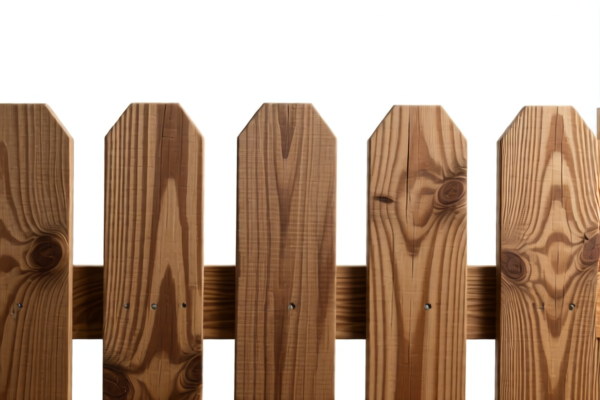
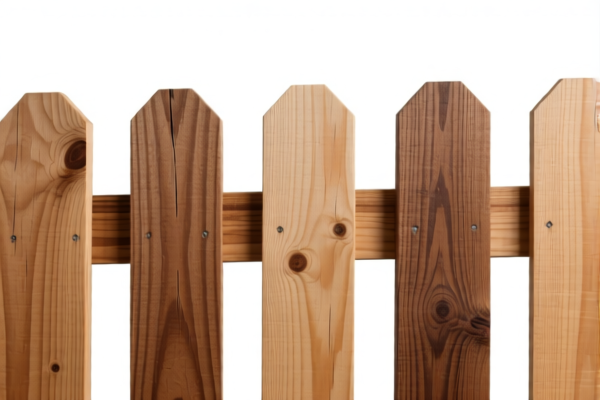
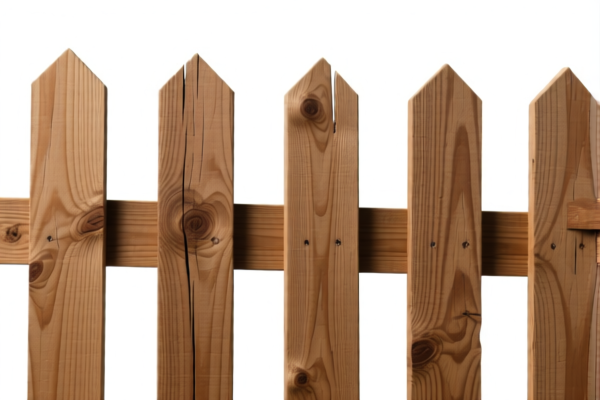
AI Analysis
🌲 Non-Coniferous Wooden Posts for Fencing (Hardwood Fence Posts)
🌐 HS Code Reference & Customs Clearance Guide | 2026 Latest Tariff Analysis | Professional Clearance Strategy
📌 I. Product Definition & Classification: What Exactly Are "Non-Coniferous Wooden Posts"?
Non-coniferous wooden posts for fencing are structural timber elements made from hardwoods (deciduous trees) rather than softwoods (pines, firs, spruces). They are primarily used for boundary marking, agricultural fencing, or landscaping.
In international trade, classification depends heavily on two factors: 1. State of Processing: Is it a rough log (sawn longitudinally) or a finished manufactured good (processed into a specific shape)? 2. Specific Use/Shape: Is it a simple cylindrical post, or does it fall under a broader "other wood products" category?
⚠️ Critical Distinction:
- If the wood is sawed longitudinally (even if shaped into a post), it often falls under Chapter 44 Section II (Wood and articles of wood; wood charcoal).
- If it is considered a finished construction component or an "other" manufactured article, it may fall under 4418 or 4421.
- Misclassification Risk: Declaring a processed post as "raw timber" (4407) or vice versa can lead to severe penalties due to the high tariff differentials.
📦 II. HS Code Classification Details (2026 Latest Tariff Authority Reference)
Based on the provided data, there are 5 potential HS Codes for this product. The correct code depends on the exact physical form and manufacturing depth.
| HS Code | Product Description | Applicable Scenario | Processing Level |
|--------|--------------------------|--------------------------|
| 4403.12.00.40 | Non-coniferous wood, untreated, fence posts | Rough-cut posts, bark still on, minimal processing | 🟡 Primary Wood |
| 4421.99.70.40 | Other articles of wood, non-coniferous fence posts | Posts considered as "finished goods" not elsewhere specified | 🔵 Finished Article |
| 4407.29.02.96 | Non-coniferous wood, sawn longitudinally, tropical | Wood planks/strips used as fence boards or split posts | 🟢 Sawn Timber |
| 4407.99.02.95 | Non-coniferous wood, sawn longitudinally, other | General hardwood lumber used for fencing | 🟢 Sawn Timber |
| 4418.99.91.95 | Other construction wood制品, non-coniferous | Fence components treated as building materials | 🔴 Construction Component |
🔍 Key Insight:
- 4403.12.00.40 is the most direct match if the item is specifically identified as "posts" in trade documents.
- 4421.99.70.40 is a fallback if the posts are considered "other wooden articles" rather than raw timber.
- 4407 series applies if the "posts" are actually sawn strips or boards that will be assembled into a fence, rather than standalone posts.
- 4418.99.91.95 applies if the fence posts are considered part of a larger "construction" kit or system.
💰 III. 2026 Latest Tariff Rate Breakdown (Including Surtaxes & Policy Add-ons)
✅ Applicable Country: United States (US)
✅ Country of Origin: China (CN)
✅ Effective Date: From November 10, 2025 (including subsequent imports)
🎯 1. 4403.12.00.40 — Non-coniferous Wood, Fence Posts
| Item | Content |
|---|---|
| Base Tariff | 0.0% (ad valorem) |
| Section 301 Surtax | +25.0% (USITC Footnote 9903.44.03) |
| IEEPA Surtax | +10.0% (Against China/HK products, effective Nov 10, 2025) |
| Total Effective Rate | 35.0% |
| Tax Calculation | CIF Value × 35% |
| De Minimis Exemption | ❌ No (deny_de_minimis) |
| Legal Basis Path | IEEPA:9903.01.25 → USITC:4403.12.00.40 → FOOTNOTE:9903.44.03 |
📌 Explanation:
- Although the base tariff is 0%, the 35% total duty is significant.
- The 25% is the standard Section 301 tariff for wood products.
- The additional 10% is the new IEEPA tariff targeting specific Chinese imports.
🎯 2. 4421.99.70.40 — Other Articles of Wood (Fence Posts)
| Item | Content |
|---|---|
| Base Tariff | 0.0% |
| Section 301 Surtax | +25.0% |
| IEEPA Surtax | +10.0% |
| Total Effective Rate | 35.0% |
| Tax Calculation | CIF Value × 35% |
| De Minimis Exemption | ❌ No |
| Legal Basis Path | IEEPA:9903.01.24 → USITC:4421.99.70.40 → FOOTNOTE:9903.55.21 |
📌 Note:
- Same total rate (35%) as4403.
- Use this if customs rejects "4403" because the wood has been treated, painted, or shaped beyond "rough" status.
🎯 3 & 4. 4407.29.02.96 / 4407.99.02.95 — Sawn Wood (Tropical/Other)
| Item | Content |
|---|---|
| Base Tariff | 0.0% |
| Section 301 Surtax | +25.0% |
| IEEPA Surtax | +10.0% |
| Total Effective Rate | 35.0% |
| Tax Calculation | CIF Value × 35% |
| De Minimis Exemption | ❌ No |
| Legal Basis Path | IEEPA:9903.01.24 → USITC:4407.xx.xx.xx → FOOTNOTE:9903.29.02 |
📌 Note:
- If the "posts" are actually sawn planks used as fencing material, these codes apply.
- Rate remains 35%.
🎯 5. 4418.99.91.95 — Other Construction Wood Products
| Item | Content |
|---|---|
| Base Tariff | 3.2% |
| Section 301 Surtax | +25.0% |
| IEEPA Surtax | +10.0% |
| Total Effective Rate | 38.2% |
| Tax Calculation | CIF Value × 38.2% |
| De Minimis Exemption | ❌ No |
| Legal Basis Path | IEEPA:9903.01.25 → USITC:4418.99.91.95 → FOOTNOTE:9903.44.18 |
📌 Warning:
- This is the most expensive option at 38.2%.
- Only use this if the fence posts are marketed as "prefabricated building components" or part of a construction kit.
- Avoid this classification unless necessary, as it adds an extra 3.2% base duty.
🛠️ IV. Customs Clearance Practical Advice (Pitfall Avoidance Guide)
✅ 1. Preparation Checklist (Essential Documents)
| Document | Required | Description |
|---|---|---|
| ✅ Product Specification Sheet | ✔️ | Must specify wood type (e.g., Oak, Teak, Eucalyptus), dimensions, and treatment (untreated/treated). |
| ✅ Photos (Clear Labeling) | ✔️ | Show the end grain, bark status, and any markings. Distinguish between "log" vs. "sawn plank". |
| ✅ Commercial Invoice | ✔️ | Clearly state "Non-Coniferous Wooden Fence Posts". Avoid vague terms like "Wooden Planks" if they are posts. |
| ✅ Packing List | ✔️ | Detail net/gross weight. Ensure weight matches the declared volume. |
| ✅ Fumigation Certificate (ISPM 15) | ✔️ | Critical for Wood! Must show heat treatment or methyl bromide fumigation to prevent pest entry. |
| ✅ Phytosanitary Certificate | ✔️ | Often required by USDA APHIS for raw wood products. |
✅ 2. Declaration Tips (Key Mnemonics)
🔥 “Be Specific, Be Honest, Avoid ‘Construction’ unless Necessary!”
| Scenario | Correct Declaration | Wrong Practice |
|---|---|---|
| Rough-cut posts | 4403.12.00.40 as "Wooden Fence Posts" |
Calling them "Timber Logs" → May trigger more inspections |
| Treated/Shaped posts | 4421.99.70.40 as "Finished Wood Posts" |
Declaring as "Raw Wood" → Misdeclaration penalty |
| Sawn strips for fencing | 4407.29.02.96 as "Sawn Hardwood" |
Calling them "Posts" when they are planks → Confusion |
| Prefabricated fence kits | 4418.99.91.95 as "Construction Components" |
Calling them "Posts" → Higher tax (38.2%) |
📌 Note:
- If you declare4418.99.91.95, you pay 38.2% instead of 35%.
- Always provide ISPM 15 compliance info to avoid detention at the port.
✅ 3. Special Handling
| Situation | Handling Advice |
|---|---|
| Treated Wood | If wood is pressure-treated with chemicals, declare explicitly. May require additional EPA documentation. |
| Bark Status | If bark is removed, it’s not "roundwood". Use 4407 or 4421 instead of 4403. |
| Mixed Shipments | If a container has both "posts" and "panels", declare separately to avoid ambiguity. |
| Value Declaration | Ensure CIF value includes freight and insurance. Under-declaration leads to audits. |
🌍 V. Global Market Clearance Comparison (2026 Latest)
| Country/Region | Recommended HS Code | Tariff Rate | Certification Requirement | Notes |
|---|---|---|---|---|
| 🇺🇸 USA | 4403.12.00.40 |
35% | ISPM 15 + USDA | High duty due to 301 + IEEPA |
| 🇨🇳 China | 4403.12.00.40 |
0-5% | None | Low duty, easy clearance |
| 🇪🇺 EU | 4403.12.00.00 |
0% | FSC/PEFC (Optional) | No additional surtaxes |
| 🇬🇧 UK | 4403.12.00.00 |
0% | FSC/PEFC (Optional) | Post-Brexit rules apply |
| 🇨🇦 Canada | 4403.12.00.00 |
0% | CFIA Permit | Strict phytosanitary rules |
📌 Conclusion:
- USA is the most expensive market for Chinese wooden posts due to 35% effective duty.
- EU and Canada are more favorable (0% base duty), but phytosanitary rules are strict.
- Always check ISPM 15 compliance before shipping to avoid port rejection.
📌 VI. Common Errors & Pitfall Guide (Lessons Learned)
❌ Error 1: Declaring "Finished Posts" as "Raw Logs" (4403 instead of 4421)
👉 Consequence: If customs determines the wood is processed beyond rough sawing, they may reassess and fine you for misdeclaration.
❌ Error 2: Omitting ISPM 15 Certification
👉 Consequence: The shipment will be held or destroyed at the port. No exceptions for "non-coniferous" wood.
❌ Error 3: Using 4418.99.91.95 unnecessarily
👉 Consequence: You pay 3.2% extra base duty (Total 38.2% vs 35%). Only use 4418 if the item is part of a prefabricated building system.
❌ Error 4: Vague Description "Wooden Posts"
👉 Consequence: Customs may select the highest applicable rate or require additional testing to determine wood species.
✅ Correct Practice:
“Non-Coniferous Hardwood Fence Posts, Untreated, Heat-Treated (ISPM 15), Dimension: 100mm x 100mm x 2m, Species: Eucalyptus, HS Code: 4403.12.00.40”
🎯 VII. Conclusion: Professional Declaration Saves Money!
🎯 Remember the Golden Rules:
🔹 “Specify the Wood Type & Process”
🔹 “ISPM 15 is Mandatory”
🔹 “Avoid ‘Construction’ Codes unless Necessary (Save 3.2%)”
🔹 “35% is the Standard Rate for Wood Posts to the US”
📌 Pro Tip:
If your wood posts are sourced from Vietnam, Thailand, or Malaysia, you may still face the 25% Section 301 tariff if they are substantially transformed from Chinese components, or if they are transshipped through China. Always declare the true country of origin.
📣 Immediate Action:
📞 Contact a licensed customs broker before shipping.
📸 Provide clear photos of the wood grain and treatment stamps.
🚀 Ensure your shipment is pest-free, properly declared, and tax-optimized!
✨ Professional clearance starts with accurate classification!
💼 Every percentage point saved is pure profit!
Customer Reviews
About HS Code Classification
The Harmonized System (HS) is an internationally standardized nomenclature developed by the World Customs Organization (WCO) to classify traded products. Over 200 countries use the HS system as the basis for customs tariffs, trade statistics, and import/export regulations.
Each HS code follows a hierarchical structure:
- Chapter (2 digits) — Broad category of goods (e.g., Chapter 84: Machinery and Mechanical Appliances)
- Heading (4 digits) — More specific grouping within the chapter
- Subheading (6 digits) — Internationally standardized breakdown, used by all WCO member countries
- National subdivisions (8-10 digits) — Country-specific extensions for further classification, such as US HTSUS 10-digit codes
Correct HS code classification is essential for smooth customs clearance, accurate duty payment, and compliance with trade regulations. Misclassification can lead to customs delays, overpayment of duties, or penalties.
When importing from CN to US, the applicable tariff rates may include:
- Most-Favored-Nation (MFN) rate — The standard duty rate applied to WTO members
- General rate — Applied to countries without trade agreements
- Trade remedy duties — Additional tariffs such as Section 301 (anti-dumping), Section 232 (national security), or countervailing duties
The information provided on this page is for reference purposes only. For official classification, please consult with your local customs authority or a licensed customs broker.