notebook suit
CN → US| HS Code | Tariff Rate | Origin | Destination | Doc |
|---|---|---|---|---|
| 4820104000 | 35.0% | CN | US | Official Doc |
| 3926100000 | 15.3% | CN | US | Official Doc |
| 4820900000 | 35.0% | CN | US | Official Doc |
Product Images
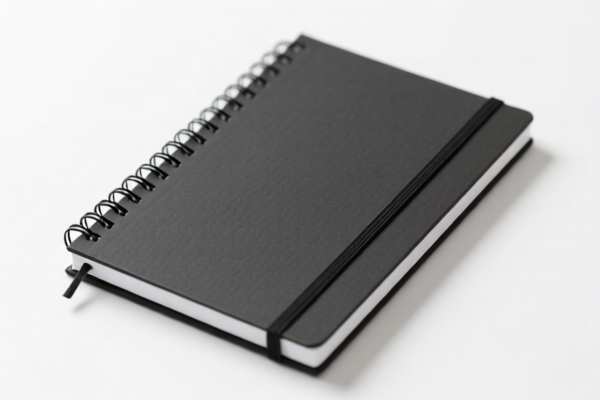
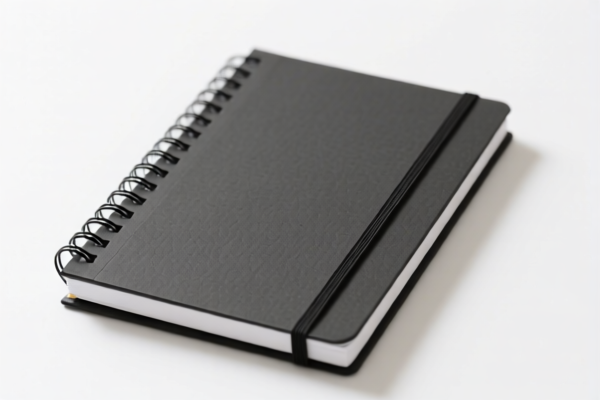
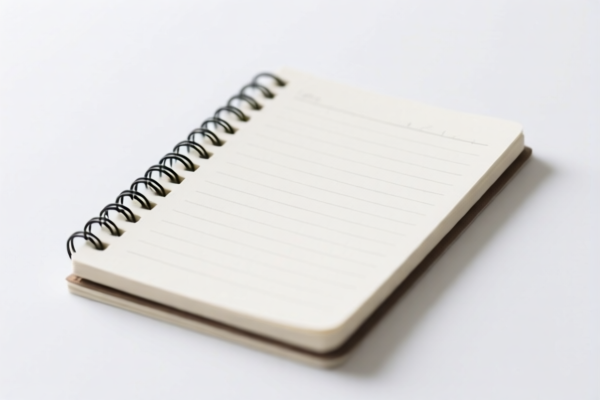

AI Analysis
📚 Notebook Sets (Stationery Kits)
🌐 HS Code Reference & Customs Clearance Guide | 2026 Latest Tariff Analysis | Professional Clearance Strategy
📌 1. Product Definition & Classification: Do You Really Understand "Notebook Sets"?
A "Notebook Set" (often referred to as a stationery kit or notepad set) generally consists of notebooks, pads, or similar writing instruments packaged together. In international trade, the classification depends heavily on the material composition of the primary surface (cover/paper) and its intended use (office/school supplies).
There are two main material pathways for customs classification: * Paper/Cardboard Based: If the set is primarily made of paper, paperboard, or cardboard (e.g., standard spiral notebooks, composition books), it falls under Chapter 48. * Plastic Based: If the set features significant plastic components (e.g., hard plastic covers, plastic bindings, or if the set is defined by its plastic housing), it may fall under Chapter 39.
⚠️ Key Distinction Point:
- If the product is primarily paper/cardboard notebooks →归入 Chapter 48 (Higher Tariff for US Imports due to Section 301).
- If the product is primarily plastic accessories/cases → 归入 Chapter 39 (Lower Base Tariff, but still subject to specific additional duties).
📦 2. HS Code Classification Details (2026 Latest Tariff Authority Comparison)
Based on the provided data, here are the specific HS Codes and their corresponding tariff structures for US imports from China.
| HS Code | Product Description | Material/Type | Applicability |
|--------|--------------------------|---------------------|
| 4820.10.40.00 | Notebooks, loose-leaf binders, and folders; Specific to paper-based notebook sets | Paper/Cardboard | ✅ Standard Paper Notebooks, School/Office Sets |
| 3926.10.00.00 | Articles of plastic: Office or school supplies | Plastic | ✅ Plastic-covered notebooks, Plastic stationery kits |
| 4820.90.00.00 | Notebooks, loose-leaf binders, and folders; Other | Paper/Cardboard | ✅ General Paper Notebooks, Register Books |
🔍 Critical Reminder:
-4820.xxCodes: These are classified as "Paper/Board" articles. They attract 0% Base Tariff but suffer from heavy additional tariffs (Section 301 + IEEPA). -3926.10.xxCode: Classified as "Plastic Articles." It attracts a 5.3% Base Tariff but has 0% Section 301 additional tariff (though IEEPA still applies). - Do NOT split shipments: If a set contains both paper and plastic parts, customs may classify based on the "essential character" (usually the paper content if it's a notebook). Mixing codes in one shipment without justification can lead to audits.
💰 3. 2026 Latest Tariff Rate Breakdown (Including Surtaxes & Policy Surcharges)
✅ Applicable Country: United States (US)
✅ Origin: China (CN)
✅ Effective Date: Post-2025 Adjustments (Including Section 301 & IEEPA)
🎯 1. 4820.10.40.00 —— Paper-Based Notebook Sets
| Item | Content |
|---|---|
| Base Tariff | 0.0% (ad valorem) |
| Section 301 Additional Tariff | +25.0% |
| IEEPA Additional Tariff | +10.0% (Specific to China/HK products) |
| Total Tariff Rate | 35.0% |
| Tax Calculation | CIF Value × 35% |
| De Minimis Eligibility | ❌ Not Eligible (Section 301 goods are generally exempt from de minimis thresholds if value is high enough to trigger scrutiny, but structurally, the high rate makes it costly for small parcels too if not managed correctly. Note: Data indicates high tax, implying strict enforcement.) |
| Legal Basis Path | Section 301: Footnote 9903.88.01 → IEEPA:9903.01.25 → USITC:4820.10.40.00 |
📌 Explanation:
- The 25% comes from the US Trade Representative’s Section 301 tariffs on Chinese goods (List 4A/B). - The 10% is the IEEPA (International Emergency Economic Powers Act) surcharge specifically targeting Chinese imports. - Total 35% is a very high entry barrier for paper stationery.
🎯 2. 3926.10.00.00 —— Plastic Office/School Supplies
| Item | Content |
|---|---|
| Base Tariff | 5.3% (ad valorem) |
| Section 301 Additional Tariff | 0.0% |
| IEEPA Additional Tariff | +10.0% |
| Total Tariff Rate | 15.3% |
| Tax Calculation | CIF Value × 15.3% |
| De Minimis Eligibility | ❌ Not Eligible (Plastic articles are also scrutinized, and the 10% IEEPA applies regardless.) |
| Legal Basis Path | IEEPA:9901.25 → USITC:3926.10.00.00 |
📌 Note:
- This code is significantly cheaper than the paper-based codes. - It applies if the product is deemed an "article of plastic" (e.g., plastic cover notebooks, plastic stationery boxes containing notebooks). - Strategy: If your product allows, ensuring the primary characteristic is "plastic" (e.g., durable plastic binders) can reduce the total tax burden from 35% to 15.3%.
🎯 3. 4820.90.00.00 —— Other Paper Notebooks/Registers
| Item | Content |
|---|---|
| Base Tariff | 0.0% (ad valorem) |
| Section 301 Additional Tariff | +25.0% |
| IEEPA Additional Tariff | +10.0% |
| Total Tariff Rate | 35.0% |
| Tax Calculation | CIF Value × 35% |
| De Minimis Eligibility | ❌ Not Eligible |
| Legal Basis Path | Section 301: Footnote 9903.88.01 → IEEPA:9903.01.25 → USITC:4820.90.00.00 |
📌 Explanation:
- Same high-tiff structure as4820.10.40.00. - Applies to notebooks that do not fit into the specific "loose-leaf/folder" sub-category but are clearly paper-based stationery.
🛠️ 4. Practical Customs Clearance Advice (Real-World Pitfall Avoidance)
✅ 1. Essential Documentation Checklist (None Can Be Missing)
| Document | Required | Explanation |
|---|---|---|
| ✅ Product Specification Sheet | ✔️ | Must detail material composition (e.g., "Cover: 200gsm Cardboard, Pages: 80gsm Paper" vs. "Cover: Hard Plastic"). |
| ✅ High-Resolution Photos | ✔️ | Show the full set, close-ups of materials (paper texture vs. plastic sheen), and any branding. |
| ✅ Commercial Invoice | ✔️ | Clear description: "Notebook Set, Paper/Plastic, for School Use." Avoid vague terms like "Stationery." |
| ✅ Packing List | ✔️ | List quantities and weights. Ensure the declared HS Code matches the physical goods. |
| ✅ Materials Breakdown | ✔️ | If claiming plastic (3926), provide evidence that plastic is the essential character (e.g., thick rigid plastic covers). |
✅ 2. Declaration Strategy (Key Mnemonic)
🔥 "Material Defines Code, Code Defines Cost!"
| Scenario | Correct Declaration | Common Mistake |
|---|---|---|
| Standard Paper Notebooks | 4820.10.40.00 or 4820.90.00.00 |
Declaring as 3926 to save tax → Audit Risk & Penalties |
| Plastic Cover/Case Notebooks | 3926.10.00.00 |
Declaring as 4820 unnecessarily → Overpaying 19.7% |
| Mixed Set (Paper + Plastic) | Analyze Essential Character | Splitting the shipment improperly → Delays & Rejection |
📌 Strategy Tip:
- If your product has hard plastic covers or is sold in a plastic box, consider3926.10.00.00. The total tax is 15.3% vs. 35%.
- However, if the core value is the paper content (e.g., a set of 50 paper notebooks with a thin plastic binder), customs may insist on4820.
- Recommendation: Consult a customs broker with physical samples to determine "Essential Character" under General Rules of Interpretation (GRI) 3(b).
✅ 3. Special Circumstances Handling
| Situation | Handling Advice |
|---|---|
| OEM/Custom Branding | Provide OEM contract. Ensure description reflects "Private Label Stationery." |
| Gift Sets | If marketed as "Gifts," still classified by material. No special "Gift" tariff exemption for stationery. |
| Plastic Components | If >50% by weight/value is plastic, argue for 3926. Provide weight breakdown. |
| Paper Components | If >50% is paper, argue for 4820. |
🌍 5. Global Market Comparison (2026 Latest)
| Country/Region | Recommended HS Code | Estimated Tariff (China Origin) | Certification Required | Notes |
|---|---|---|---|---|
| 🇺🇸 USA | 3926.10.00.00 (Plastic) |
15.3% | None (Standard) | Best Option if plastic-heavy. Paper (4820) = 35%. |
| 🇺🇸 USA | 4820.xx (Paper) |
35.0% | None (Standard) | High barrier due to Section 301. |
| 🇪🇺 EU | 4820.10.00 |
~5-12% | CE (if applicable) | No Section 301 equivalent. Lower overall cost. |
| 🇨🇳 China | 4820.10.00 |
0-8% | CCC (if applicable) | Domestic trade favorable. |
📌 Conclusion:
- The US market imposes a 20% tariff difference between plastic (3926) and paper (4820) notebook sets due to geopolitical tariffs.
- Optimization: For US exports, maximizing plastic content (e.g., durable plastic covers, plastic packaging) can save nearly 20% in duties.
📌 6. Common Errors & Pitfall Guide (Blood & Tears Lessons)
❌ Mistake 1: Declaring Paper Notebooks as 3926 to save tax.
👉 Consequence: Customs inspection reveals paper material → Classification Error, Back Taxes + 25% Penalty.
❌ Mistake 2: Declaring Plastic Stationery as 4820 out of caution.
👉 Consequence: Overpayment of ~19.7% in duties. No refund for over-declaration without complex audit.
❌ Mistake 3: Vague Description "Stationery Set."
👉 Consequence: Customs may default to the highest possible duty rate or hold the shipment for "Insufficient Particulars."
❌ Mistake 4: Ignoring IEEPA 10%.
👉 Consequence: Underestimating landed cost by 10% → Profit Margin Erosion.
✅ Correct Approach:
"Plastic-Covered Notebook Set, Office Use, 5-Notebook Kit, Model XYZ" (For
3926)
OR
"Paper Composition Notebooks, School Set, 10-Pack" (For4820)
🎯 7. Conclusion: Professional Declaration, Cost Optimization!
🎯 Remember the Mnemonic:
🔹 "Plastic is 15%, Paper is 35%. Declare the truth, avoid the mess!"
🔹 "Material is King, Tariff is Queen. Get it wrong, and your margin is gone!"
📌 Pro Tip:
If your product is a hybrid (e.g., paper notebooks in a plastic case), consult a customs broker for a Pre-Ruling on "Essential Character." Proper classification can save nearly 20% in costs.
📣 Immediate Action:
📞 Contact a licensed customs broker + Provide Physical Samples + Request HS Code Pre-Ruling
🚀 Optimize your packaging material to Plastic-heavy if targeting the US, or ensure accurate Paper declaration if that's the product.
💼 Every penny saved on duty is pure profit!
✨ Professional Clearance Starts with Accurate Classification!
💼 Your Cost Structure Deserves Precision!
Customer Reviews
About HS Code Classification
The Harmonized System (HS) is an internationally standardized nomenclature developed by the World Customs Organization (WCO) to classify traded products. Over 200 countries use the HS system as the basis for customs tariffs, trade statistics, and import/export regulations.
Each HS code follows a hierarchical structure:
- Chapter (2 digits) — Broad category of goods (e.g., Chapter 84: Machinery and Mechanical Appliances)
- Heading (4 digits) — More specific grouping within the chapter
- Subheading (6 digits) — Internationally standardized breakdown, used by all WCO member countries
- National subdivisions (8-10 digits) — Country-specific extensions for further classification, such as US HTSUS 10-digit codes
Correct HS code classification is essential for smooth customs clearance, accurate duty payment, and compliance with trade regulations. Misclassification can lead to customs delays, overpayment of duties, or penalties.
When importing from CN to US, the applicable tariff rates may include:
- Most-Favored-Nation (MFN) rate — The standard duty rate applied to WTO members
- General rate — Applied to countries without trade agreements
- Trade remedy duties — Additional tariffs such as Section 301 (anti-dumping), Section 232 (national security), or countervailing duties
The information provided on this page is for reference purposes only. For official classification, please consult with your local customs authority or a licensed customs broker.