nylon bath towel
CN → US| HS Code | Tariff Rate | Origin | Destination | Doc |
|---|---|---|---|---|
| 6307102028 | 22.8% | CN | US | Official Doc |
| 6307909884 | 24.5% | CN | US | Official Doc |
| 6302932000 | 24.5% | CN | US | Official Doc |
Product Images
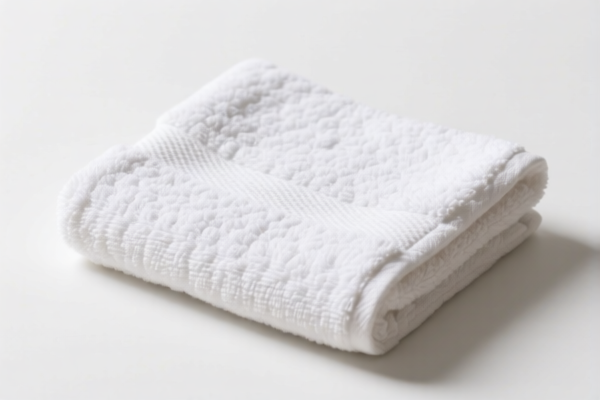
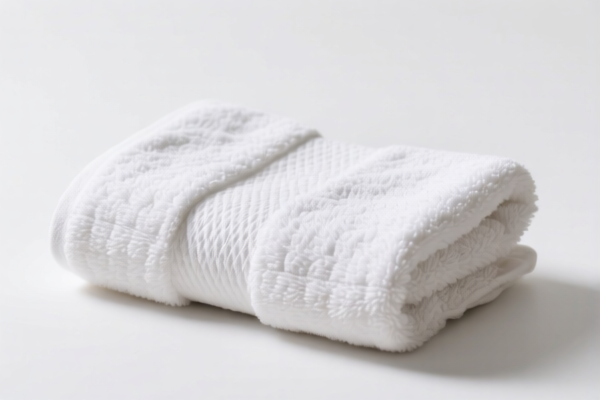
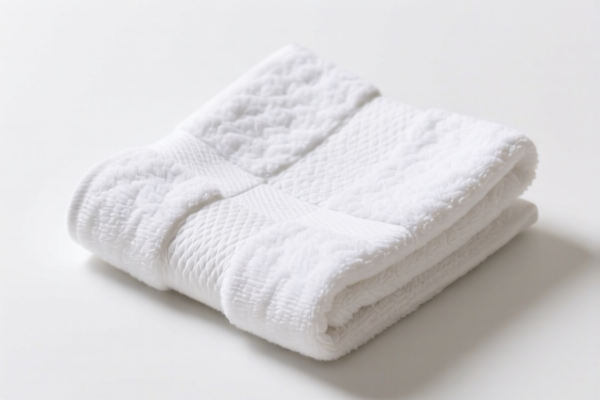
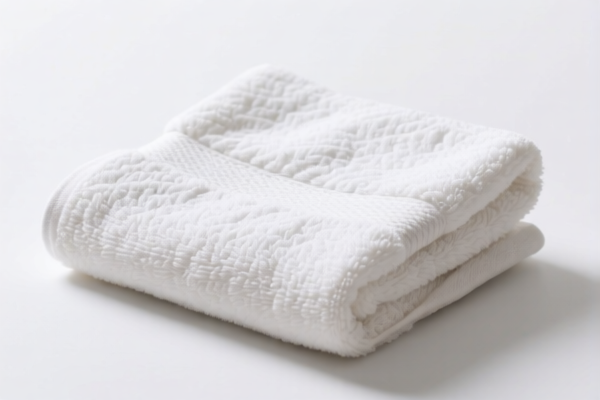
AI Analysis
🧼 Nylon Bath Towel (Nylon Exfoliating Cloth/Bath Mitt)
🌐 HS Code Reference & Customs Clearance Guide | 2026 Latest Tariff Analysis | Professional Clearance Strategy
📌 1. Product Definition and Classification: Do You Really Understand "Nylon Bath Towel"?
In international trade, the term "Nylon Bath Towel" is often used loosely by consumers. However, customs authorities distinguish between products based on material structure, specific use, and manufacturing form. The data provided indicates three distinct classification paths depending on whether the item is viewed as a "cleaning cloth," a "towel-like textile," or a "toiletry accessory."
⚠️ Key Distinction Points:
- Form Factor: Is it a flat woven cloth (Clean Cloth)? A looped pile fabric (Towel)? Or a shaped glove/mitt (Toiletry)?
- Material Specification: "Nylon" falls under Man-made Fibers (Chapter 54/55).
- Usage Context: Is it used for general drying (Towel) or specifically for scrubbing/exfoliating (Cleaning Cloth/Toiletry)?
📦 2. HS Code Classification Details (2026 Latest Tariff Authority Comparison)
Based on the provided data, here are the three valid HS Codes for Nylon Bath Towels, categorized by their specific descriptive attributes:
| HS Code | Product Description | Key Characteristics | Classification Logic |
|---|---|---|---|
| 6307.10.20.28 | Nylon Exfoliating Cloth | Form: Cleaning Cloth (清洁布) Material: Nylon Category: Other Material |
Classified primarily as a special cleaning cloth rather than a standard towel. Focuses on the "scrubbing/cleaning" function. |
| 6307.90.98.84 | Nylon Towel-like Product | Form: Towel-like article (毛巾类制品) Material: Nylon (Man-made Fiber) Category: Man-made Fiber Towel |
Classified based on its textile nature as a towel, but under the "Other" category because it doesn't fit standard cotton/linen towel codes. |
| 6302.93.20.00 | Nylon Toiletry Article | Form: Bathroom/Toiletry Use (盥洗用品) Material: Nylon (Man-made Fiber) Category: Other Toiletry Articles of Man-made Fibers |
Classified by its end-use in the bathroom as a toiletry accessory, emphasizing the "washing/bathing" context. |
🔍 Critical Analysis:
- 6307.10 emphasizes the function (cleaning/scrubbing).
- 6307.90 emphasizes the form (textile/towel).
- 6302.93 emphasizes the location/usage (toiletry/bathroom).
- Note: The US Harmonized Tariff Schedule (HTS) often scrutinizes "towel" claims for synthetic fibers to prevent misclassification from higher-duty categories. Ensure your product description matches the primary intent.
💰 3. 2026 Latest Tariff Rate Breakdown (Including Surtaxes & Policy Add-ons)
✅ Applicable Country: United States (US)
✅ Origin: China (CN)
✅ Effective Time: Current US-China Trade Regime (Section 301 & IEEPA)
🎯 1. 6307.10.20.28 – Nylon Cleaning Cloth (Exfoliating Towel)
| Item | Content |
|---|---|
| Base Duty Rate | 5.3% (Standard MFN Rate for "Other Made-up Articles") |
| Section 301 Surcharge | +7.5% (List 3/4A Items) |
| Section 122 Surcharge | +10% (Specific Policy Add-on for Certain Textiles/Clothing) |
| Total Tax Rate | 22.8% |
| Tax Calculation | CIF Value × 22.8% |
| De Minimis Eligibility | ❌ NO (Denied for Section 301/122 items) |
| Legal Basis Path | HTS: 6307.10.20.28 → Section 301: Footnote 2 → Section 122: Specific Provision |
📌 Explanation:
- The 5.3% base rate reflects the standard duty for miscellaneous textile articles.
- The 7.5% is the standard Section 301 tariff applicable to many Chinese textile goods.
- The 10% "Section 122" tariff is a specific additional levy often applied to certain Chinese textile imports under current trade enforcement measures.
- Total 22.8% is significantly lower than electronic goods but high for basic textiles.
🎯 2. 6307.90.98.84 – Other Towel-like Products (Man-made Fiber)
| Item | Content |
|---|---|
| Base Duty Rate | 7.0% (Standard MFN Rate for "Other Made-up Textile Articles") |
| Section 301 Surcharge | +7.5% (List 3/4A Items) |
| Section 122 Surcharge | +10% (Specific Policy Add-on) |
| Total Tax Rate | 24.5% |
| Tax Calculation | CIF Value × 24.5% |
| De Minimis Eligibility | ❌ NO |
| Legal Basis Path | HTS: 6307.90.98.84 → Section 301: Footnote 2 → Section 122 |
📌 Explanation:
- The base rate is 7.0%, slightly higher than cleaning cloths because "other towel-like articles" often face stricter scrutiny regarding fiber content.
- Surtaxes remain identical (7.5% + 10%) due to origin and trade policy.
🎯 3. 6302.93.20.00 – Other Toiletry Articles (Man-made Fiber)
| Item | Content |
|---|---|
| Base Duty Rate | 7.0% (Standard MFN Rate for Toiletry Items) |
| Section 301 Surcharge | +7.5% (List 3/4A Items) |
| Section 122 Surcharge | +10% (Specific Policy Add-on) |
| Total Tax Rate | 24.5% |
| Tax Calculation | CIF Value × 24.5% |
| De Minimis Eligibility | ❌ NO |
| Legal Basis Path | HTS: 6302.93.20.00 → Section 301 → Section 122 |
📌 Explanation:
- Chapter 62/63 toiletry items (bathroom textiles) generally carry a 7.0% base duty.
- The classification here hinges on the product being deemed a "toiletry article" rather than a general household cleaning cloth.
🛠️ 4. Customs Clearance Practical Advice (Real-World Pitfall Avoidance)
✅ 1. Preparation Checklist (Essential Documents)
| Document | Required? | Purpose |
|---|---|---|
| ✅ Product Specifications | ✔️ | Must explicitly state: 100% Nylon (or blend %), Weight (GSM), and Weave Type (e.g., "Waffle Weave," "Looped Pile"). |
| ✅ Product Photos | ✔️ | Show the item as packaged. Is it a flat sheet? A glove? A mitt? This determines if it's 6307.10 (cloth) or 6307.90 (article). |
| ✅ Commercial Invoice | ✔️ | Description must be precise: "Nylon Exfoliating Bath Cloth, For Scrubbing Skin" vs. "Nylon Bath Towel for Drying Body." |
| ✅ Origin Certificate | ✔️ | Proof of China origin to apply correct Section 301 rates. |
| ✅ Material Test Report | ✔️ | To prove it is Nylon (Polyamide) and not Cotton or Viscose, which would change the HS Code entirely. |
✅ 2. Declaration Tips (Key Mnemonics)
🔥 "Describe Function, Specify Fiber, Avoid Generic Terms!"
| Scenario | Correct Declaration | Wrong Practice | Consequence |
|---|---|---|---|
| Flat Scrubbing Cloth | "Nylon Cleaning Cloth, 6307.10" |
"Bath Towel" |
Risk of reclassification to 6302 (higher duty) or 6307.90. |
| Glove/Mitt Shape | "Nylon Exfoliating Glove, 6307.90/6302.93" |
"Cloth" |
Misleading description leads to delays. |
| Material | "100% Nylon (Man-made Fiber)" |
"Synthetic Fiber" (Vague) |
Customs may question the exact fiber, leading to lab tests. |
| Use Case | "For personal hygiene/exfoliation" |
"Household cleaning" |
If declared as "household cleaning," it might face different scrutiny than "toilet articles." |
✅ 3. Special Situation Handling
| Situation | Handling Advice |
|---|---|
| "Turkish Towel" Design in Nylon | Even if styled like a Turkish towel, if made of Nylon, it cannot be classified as Cotton Towel (6302.61). It must go to 6307/6302 with Nylon rates. |
| Packaged as Set (Shower Cap + Cloth) | Declare separately. The shower cap (non-woven?) may have a different HS Code. Do not lump them into one HS Code unless legally permitted. |
| OEM Branding | Ensure the brand name on the invoice matches the trademark owner. Mismatches cause customs holds. |
🌍 5. Global Market Clearance Comparison (2026 Latest)
| Country/Region | Recommended HS Code (Base) | Base Duty | Surcharge (China) | Total Est. Duty | Notes |
|---|---|---|---|---|---|
| 🇺🇸 USA | 6307.10.20.28 / 6307.90.98.84 |
5.3% - 7.0% | +17.5% (301+122) | 22.8% - 24.5% | High Impact: Section 122 adds significant cost. |
| 🇨🇳 China | 6307.90 / 6302.93 |
7.0% - 10% | 0% | 7.0% - 10% | Import duty only. No US-style surcharges. |
| 🇪🇺 EU | 6307.90 / 6302.93 |
4.0% - 6.0% | 0% | 4.0% - 6.0% | No Section 301/122. Easier clearance. |
| 🇬🇧 UK | 6307.90 |
4.0% - 6.0% | 0% | 4.0% - 6.0% | Post-Brexit rules align closely with EU for textiles. |
| 🇯🇵 Japan | 6307.90 |
6.0% - 8.0% | 0% | 6.0% - 8.0% | CPTPP benefits may apply if from signatory countries (not CN). |
📌 Conclusion:
- USA is the most expensive market for Nylon Bath Towels due to the Section 301 (7.5%) + Section 122 (10%) combined with the base rate.
- Total effective duty in the US ranges from 22.8% to 24.5%.
- EU/UK/JP are far more competitive (~4-8% total), making China-to-US exports for this specific item highly tax-sensitive.
📌 6. Common Mistakes & Pitfall Guide (Lessons from Blood and Tears)
❌ Mistake 1: Labeling as "100% Cotton" to avoid Section 301
👉 Consequence: Customs lab tests will prove it's Nylon. Seizure, fines, and 301 penalties.
❌ Mistake 2: Using "Bath Towel" as the generic name for a Scrubbing Cloth
👉 Consequence: Misclassification. "Bath Towel" implies 6302 (Toiletry), but "Scrubbing Cloth" is 6307. If the product is used for scrubbing, 6307 is more accurate. Incorrect declaration leads to audit risks.
❌ Mistake 3: Ignoring Section 122
👉 Consequence: Assuming only Section 301 (7.5%) applies. Missing the 10% Section 122 means underpaying by 10% of the CIF value. Customs will demand back payment + interest.
❌ Mistake 4: Declaring as "Household Cleaning Cloth" (6307.90) for a Product Meant for Skin
👉 Consequence: If the marketing clearly targets "skin exfoliation," customs may view it as a Toiletry Article (6302). While rates are similar (24.5% vs 22.8%), the legal basis differs. Inconsistent marketing materials can trigger investigations.
✅ Correct Practice:
"Nylon Exfoliating Bath Cloth, 100% Polyamide (Nylon), Woven Loop Texture, For Personal Hygiene, Model XYZ, Certified Non-Toxic"
🎯 7. Conclusion: Precise Classification Saves Money!
🎯 Remember the Mnemonic:
🔹 "Nylon is Man-made, Base 5-7%, 301 is 7.5%, 122 adds 10%.
Don't guess the 'Towel', be specific!
22.8% to 24.5% is the reality,
Clear declaration prevents liability!"📌 Pro Tip:
- If you are selling in the US, consider supply chain diversification (e.g., sourcing from Vietnam or Turkey) if the 22-24.5% duty erodes margins, as these surcharges do not apply to non-China origins.
- For China-origin goods, ensure your Invoice Description matches the HS Code logic exactly (e.g., if using6307.10, describe it as a "Cleaning Cloth," not just "Towel").
📣 Immediate Action:
📞 Contact a Licensed Customs Broker to file a Pre-Booking Ruling if the volume is high.
🚀 Audit Your Marketing: Ensure "Exfoliating" or "Cleaning" keywords align with the 6307 classification to justify the lower base rate if possible.
✨ Professional Clearance Starts with Precise Classification!
💼 Every Percent of Duty Matters in the Textile Trade!
Customer Reviews
About HS Code Classification
The Harmonized System (HS) is an internationally standardized nomenclature developed by the World Customs Organization (WCO) to classify traded products. Over 200 countries use the HS system as the basis for customs tariffs, trade statistics, and import/export regulations.
Each HS code follows a hierarchical structure:
- Chapter (2 digits) — Broad category of goods (e.g., Chapter 84: Machinery and Mechanical Appliances)
- Heading (4 digits) — More specific grouping within the chapter
- Subheading (6 digits) — Internationally standardized breakdown, used by all WCO member countries
- National subdivisions (8-10 digits) — Country-specific extensions for further classification, such as US HTSUS 10-digit codes
Correct HS code classification is essential for smooth customs clearance, accurate duty payment, and compliance with trade regulations. Misclassification can lead to customs delays, overpayment of duties, or penalties.
When importing from CN to US, the applicable tariff rates may include:
- Most-Favored-Nation (MFN) rate — The standard duty rate applied to WTO members
- General rate — Applied to countries without trade agreements
- Trade remedy duties — Additional tariffs such as Section 301 (anti-dumping), Section 232 (national security), or countervailing duties
The information provided on this page is for reference purposes only. For official classification, please consult with your local customs authority or a licensed customs broker.